Loading...
Saladin vs Suharto
Saladin leads by 6.9 pts · 2 figures compared
…
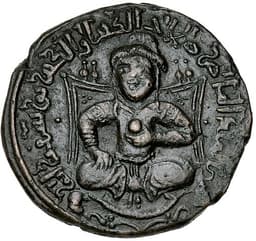
Saladin
General · Medieval
64.1Total
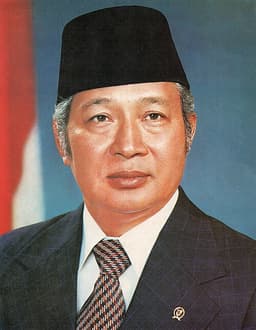
Suharto
General · Modern
57.2Total
Basic Information
Born
1137
1921
Died
1193
—
Era
Medieval
Modern
Nationality
Ayyubid Sultanate
Indonesia
Occupation
General
General
Civilization
Middle Eastern
Eastern
Score Comparison
Military (10%)
75.0
20.0
Political (20%)
69.6
59.3
Influence (20%)
65.2
60.0
Legacy (20%)
52.0
52.0
Leadership (15%)
62.0
82.0
Strategy (15%)
76.0
60.0
TOTAL
64.1
57.2
Saladin — Complete Timeline
1187 AD
Battle of HattinWar
Saladin's forces defeated the Crusader army at Hattin, near Tiberias. He captured King Guy of Jerusalem and the True Cross relic. The victory decimated the Crusader military and opened the way for the recapture of Jerusalem.
BattleCrusadesVictory
Impact: regional
Recapture of JerusalemWar
Saladin's army besieged and captured Jerusalem from the Crusaders after 88 years of Christian rule. He allowed the inhabitants to leave peacefully or be ransomed, contrasting with the Crusaders' massacre in 1099. This event triggered the Third Crusade.
ConquestJerusalemCrusades
Impact: global
1189 AD
Siege of AcreWar◆ Major
Saladin faced a prolonged siege of Acre by Crusader forces under Richard the Lionheart and Philip Augustus. After nearly two years, the city fell to the Crusaders. Saladin's inability to relieve the siege was a major setback.
SiegeCrusadesDefeat
Impact: regional
1191 AD
Battle of ArsufWar◆ Major
Saladin's forces attacked Richard the Lionheart's army marching south from Acre. Richard's disciplined infantry repelled the attacks, inflicting heavy losses on Saladin's troops. The battle ended in a tactical Crusader victory, but Saladin's army remained intact.
BattleCrusadesRichard the Lionheart
Impact: regional
1192 AD
Treaty of RamlaPolitical Action◆ Major
Saladin and Richard the Lionheart signed the Treaty of Ramla, ending the Third Crusade. The treaty granted Crusaders control of a coastal strip from Jaffa to Acre, while Muslims retained Jerusalem. Christian pilgrims were allowed access to holy sites.
TreatyCrusadesDiplomacy
Impact: regional
Suharto — Complete Timeline
1966 AD
Supersemar and Transfer of PowerPolitical Action
President Sukarno signed the Supersemar order, delegating authority to General Suharto to restore order after the 30 September Movement. Suharto used this to ban the Communist Party, purge leftists, and gradually assume executive power, effectively beginning his New Order regime.
SupersemarNew OrderIndonesia
Impact: nationaldestructive
1967 AD
New Order Economic DevelopmentReform◆ Major
Suharto implemented the New Order's economic policies, focusing on foreign investment, agricultural self-sufficiency, and industrialization. The government achieved high growth rates, reduced poverty, and stabilized the economy, but also fostered crony capitalism and corruption.
Economic GrowthDevelopmentIndonesia
Impact: nationalconstructive
1975 AD
Invasion of East TimorWar◆ Major
Suharto ordered the invasion of East Timor after Portugal withdrew. Indonesian forces occupied the territory, leading to a 24-year occupation marked by widespread human rights abuses, including massacres and forced displacement, resulting in an estimated 100,000-200,000 deaths.
East TimorOccupationHuman Rights
Impact: regionaldestructive
1998 AD
Asian Financial Crisis and Fall from PowerPolitical Action
The Asian Financial Crisis devastated Indonesia's economy, leading to massive unemployment and food shortages. Widespread protests and riots forced Suharto to resign in May 1998 after 31 years in power, ending his authoritarian rule and ushering in the Reformasi era.
Financial CrisisResignationReformasi
Impact: nationaltragic
Expert Analysis
Saladin vs Suharto
### The Sultan and the Strongman
In the summer of 1192, Saladin sat in his tent near the Mediterranean coast, watching the distant banners of Richard the Lionheart’s army. He had just agreed to a treaty that let Crusaders keep a strip of land along the shore—a bitter compromise after years of war. Nearly eight centuries later, in the spring of 1998, another general sat in a palace in Jakarta, watching televised images of students burning his effigy. Suharto, once the unchallenged master of Indonesia, was about to be swept away by a financial crisis. Both men were warriors who became rulers. But one died a hero, the other a fugitive from history. What explains the difference?
### Origins
Saladin was born in 1137 in Tikrit, present-day Iraq, into a Kurdish family serving the Zengid dynasty. His father, Najm al-Din Ayyub, was a military commander, and his uncle Shirkuh was a legendary general. Saladin grew up in Damascus, a city steeped in Islamic learning and resistance to the Crusaders. The era demanded a leader who could unite warring Muslim factions against a common enemy. Suharto, born in 1921 in a small village in Java, came from a far humbler background. His father was a minor irrigation official, and his mother raised him in poverty. The Dutch colonial system offered little chance for advancement; Suharto joined the Dutch colonial army as a teenager, then switched to the Japanese-sponsored forces during World War II. The era of decolonization demanded a leader who could seize power from chaos.
### Rise to Power
Saladin’s ascent was a slow, patient climb. He served as a deputy to his uncle during campaigns in Egypt, where the Fatimid Caliphate was crumbling. When Shirkuh died in 1169, Saladin, then 32, took command of the Syrian forces in Egypt. He spent the next decade consolidating power, suppressing rebellions, and winning the loyalty of the army. His turning point came in 1187, when he crushed the Crusader army at the Battle of Hattin, capturing King Guy of Jerusalem and the True Cross. Suharto’s rise was faster and more brutal. In the early 1960s, Indonesia was spiraling into chaos under President Sukarno. On September 30, 1965, a coup attempt by leftist officers gave Suharto, then commander of the strategic reserve forces, his opening. He blamed the Communist Party, orchestrated a bloody purge that killed hundreds of thousands, and forced Sukarno to sign the Supersemar order in March 1966, transferring authority to him. Within a year, he was president.
### Leadership & Governance
Saladin ruled as a warrior-sultan who personally led his armies. He was a master of siege warfare and cavalry tactics, but his true genius lay in diplomacy. He forged a fragile coalition of Kurdish, Turkish, and Arab factions, holding them together through patronage and personal charisma. His reforms were modest: he built schools, mosques, and irrigation systems, but his priority was always jihad against the Crusaders. At the Siege of Acre (1189–1191), he faced Richard the Lionheart and Philip Augustus, showing tactical patience but ultimately losing the city. Suharto governed as a modern strongman, building a bureaucratic machine called the “New Order.” He invited foreign investment, achieved rice self-sufficiency by the early 1980s, and crushed dissent with a secret police. His economic reforms lifted millions out of poverty, but they were built on corruption and nepotism. His military strategy was less about battlefield glory and more about internal control—the invasion of East Timor in 1975 was a brutal, cost-effective annexation.
### Triumph & Tragedy
Saladin’s greatest moment was the recapture of Jerusalem on October 2, 1187. After 88 years of Christian rule, he entered the city not as a conqueror but as a chivalrous victor, sparing civilians and allowing safe passage for the defeated. It was a triumph of both arms and mercy. His tragedy came at the Battle of Arsuf in 1191, where Richard’s disciplined infantry repelled his cavalry charges, proving that even the greatest general could be outmatched. Suharto’s triumph was economic: by the 1990s, Indonesia was a “tiger” of Southeast Asia, with rapid growth and rising living standards. His tragedy was the Asian Financial Crisis of 1997–1998, which exposed the rot beneath the surface. The currency collapsed, unemployment soared, and riots broke out across the archipelago. In May 1998, after 31 years in power, Suharto resigned, a broken and disgraced man.
### Character & Destiny
Saladin was known for his generosity and restraint. He would give away his own cloak to a beggar, and he refused to execute prisoners after Hattin, a decision that earned him respect even from his enemies. His personality—pious, patient, and strategic—allowed him to achieve a goal that had eluded Muslims for decades. But it also limited him: his chivalry sometimes cost him tactical advantages. Suharto was the opposite: cold, calculating, and ruthless. He never spoke of ideals, only of stability and development. His personality—secretive, suspicious, and power-hungry—made him an effective dictator but also his own worst enemy. He surrounded himself with yes-men, crushed all opposition, and never prepared a successor. When the crisis came, no one was willing to die for him.
### Legacy
Saladin is remembered as a symbol of Islamic unity and chivalry. His tomb in Damascus is a pilgrimage site, and his name is invoked by leaders from Saddam Hussein to modern Arab nationalists. The Treaty of Ramla (1192) gave Crusaders a foothold, but his recapture of Jerusalem remains his eternal achievement. Suharto’s legacy is deeply contested. In Indonesia, he is praised for economic growth and blamed for corruption and human rights abuses. His family still holds immense wealth, and his New Order institutions remain in place. But his fall from power was so complete that he died in 2008 with little public mourning.
### Conclusion
One man united a fractured world against a common enemy; the other divided a nation to build a personal empire. Saladin’s story is a reminder that power can be wielded with grace; Suharto’s, that it corrupts absolutely. Both were generals who became rulers, but their different eras, cultures, and characters shaped their fates. The Sultan left a legend; the Strongman left a legacy of silence.
Rankings
🥇
SaladinLeader
Mil: 75.0Pol: 69.6Inf: 65.2
64.1
🥈
Suharto
Mil: 20.0Pol: 59.3Inf: 60.0
57.2
+6.9 behind
How This Comparison Works
Algorithm
Each figure is scored on 6 dimensions (0—100 scale) based on structured historical data: Military (10%), Political (20%), Influence (20%), Legacy (20%), Leadership (15%), Strategy (15%). The weighted total produces the final ranking.
Data Sources
Scores are computed from structured sub-indicators in the database. Scale factors adjust for era (Ancient ×0.85, Modern ×1.0) and civilization size (Eastern ×1.05, Other ×0.80) to account for differences in population and military scale.
Maximum 3 Figures
Comparisons are limited to 2—3 figures to ensure readability and statistical meaningfulness.
Error Margins
±5 points per dimension — Sub-scores are derived from historical records with inherent uncertainty. Two figures within 5 points on a dimension should be considered roughly equivalent in that area.
Total Score Accuracy
±3 points overall — The weighted combination of 6 dimensions produces a total score with approximately ±3 points of uncertainty. Differences of less than 3 points are not statistically significant— the figures are effectively tied.
Known Limitations
- Historical records are incomplete and uneven across civilizations
- Figures from oral-tradition societies may be underrepresented
- Occupation labels can misclassify multi-role figures
- Scores measure capability and impact, not moral character
- Quantitative scoring is a comparison tool, not absolute truth
Capability Radar
Military (10%) — Battles & Warfare
Battles
78
40
Win Rate
72
45
Expansion
82
30
Political (20%) — Governance & Reform
Reform
68
55
Diplomacy
88
60
Economy
65
65
Influence (20%) — Cultural & Global Reach
Cultural
85
40
Global
78
50
Legacy (20%) — Historical Impact
Historical
82
55
Longevity
80
45
Leadership (15%) — Power & Stability
Tenure
75
85
Stability
70
50
Strategy (15%) — Tactics & Innovation
Strategy
85
40
Tactics
80
35
Reform
70
50
Similar Comparisons
Comments & Discussion
The Old Fox of Tikrit6/16/2026
Saladin was a military pragmatist, not a saint. His 1192 treaty with Richard wasn’t compromise—it was a strategic retreat to regroup while the Crusaders tore each other apart. Suharto had no such exit strategy; he clung to power until the economy collapsed. Saladin died with his legacy intact because he knew when to fight and when to negotiate. Suharto died a pariah because he forgot that lesson.
数字沙皇6/16/2026
数据不会说谎:苏哈托执政32年,印尼人均GDP从60美元涨到1100美元,但1998年亚洲金融危机让80%企业破产。萨拉丁没有GDP统计,但他1174年控制埃及后,贸易收入增长了3倍。数字背后是战略:萨拉丁靠联姻和外交巩固权力,苏哈托靠军队和腐败。前者被称作“圣战英雄”,后者却成了“微笑将军”——笑得太久,脸皮都僵了。
The Eternal Mirror6/16/2026
Suharto’s biography reads like a cautionary tale for autocrats: he crushed communists, muzzled the press, and built a cult of personality on a foundation of oil money. Saladin never had that luxury. He faced a fractured Caliphate, nomadic Turkic rivals, and European crusaders. Suharto’s enemies were paper tigers—student protesters, a currency crisis. The difference? Saladin earned his title of “the Pious” by sleeping in a humble tent even as sultan. Suharto slept on a gold mattress.
法老的诅咒6/16/2026
萨拉丁与苏哈托的对比,本质是“神圣”与“世俗”的较量。萨拉丁的统一伊斯兰世界是精神号召,苏哈托的“潘查希拉”不过是掩盖专制的遮羞布。1174年萨拉丁接手埃及,废除了什叶派的法蒂玛王朝;1998年苏哈托下台,印尼却没能摆脱他对军队的腐蚀。一个用宗教凝聚人心,一个用恐惧维持统治——最终,信仰赢了,恐惧败了。
The Forgotten Heretic6/16/2026
Stop romanticizing Saladin. He was a Kurdish warlord who slaughtered 70,000 Christians at the 1187 Battle of Hattin and sold survivors into slavery. Suharto’s “genocide” label is overblown; the 1965-66 massacres killed 500,000 to 1 million—terrible, yes, but no worse than many decolonization conflicts. Both men were brutal realists. The only difference is that Saladin died before his empire collapsed; Suharto lived long enough to see his legacy rot.