Loading...
Ram Khamhaeng vs Wenceslaus IV of Bohemia
Ram Khamhaeng leads by 12.6 pts · 2 figures compared
…
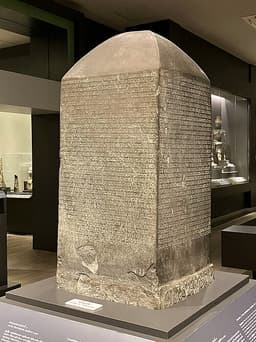
Ram Khamhaeng
Emperor · Medieval
58.3Total

Wenceslaus IV of Bohemia
Emperor · Medieval
45.7Total
Basic Information
Born
1237
1361
Died
1298
1419
Era
Medieval
Medieval
Nationality
Thailand
Bohemia
Occupation
Emperor
Emperor
Civilization
Eastern
Western
Score Comparison
Military (10%)
40.0
21.2
Political (20%)
68.0
33.6
Influence (20%)
55.0
54.9
Legacy (20%)
72.0
48.3
Leadership (15%)
53.2
58.8
Strategy (15%)
43.3
39.6
TOTAL
58.3
45.7
Ram Khamhaeng — Complete Timeline
1280 AD
Expansion of the Sukhothai KingdomWar◆ Major
King Ram Khamhaeng expanded Sukhothai's territory through military campaigns, extending its influence from modern-day Laos to the Malay Peninsula. This created the largest Thai kingdom of its time.
Territorial ExpansionSukhothaiThai History
Impact: regional
1283 AD
Invention of the Thai AlphabetInvention
King Ram Khamhaeng created the Thai alphabet, based on Mon and Khmer scripts. This writing system allowed for the recording of Thai language and literature, becoming the foundation of modern Thai script.
AlphabetLanguageThai Culture
Impact: nationalconstructive
1292 AD
Promulgation of the Ram Khamhaeng InscriptionCultural◆ Major
King Ram Khamhaeng commissioned the Ram Khamhaeng Inscription, a stone stele that describes the kingdom's prosperity, governance, and culture. It is considered the earliest known example of Thai writing and a key historical source.
InscriptionHistorical RecordThai Culture
Impact: nationalconstructive
1294 AD
Establishment of Diplomatic Relations with ChinaPolitical Action
King Ram Khamhaeng sent an embassy to the Yuan dynasty court of Kublai Khan, establishing formal diplomatic and trade relations. This opened Sukhothai to Chinese influence and trade.
DiplomacyYuan DynastyTrade
Impact: regional
Wenceslaus IV of Bohemia — Complete Timeline
1402 AD
Conflict with the HussitesPolitical Action
Wenceslaus IV initially supported Jan Hus and the reform movement, but later opposed them under pressure from the Catholic Church. His inconsistent policies alienated both Hussites and Catholics, weakening his authority.
Religious ConflictJan HusPolitical Instability
Impact: national
1419 AD
Defenestration of PraguePolitical Action
Wenceslaus IV's refusal to release Hussite prisoners led to a mob storming the New Town Hall in Prague. The crowd threw the city councillors out of a window, triggering the Hussite Wars that would devastate Bohemia for decades.
Hussite WarsRebellionReligious Conflict
Impact: regionaldestructive
Death of Wenceslaus IVOther◆ Major
Wenceslaus IV died of a heart attack shortly after the Defenestration of Prague. His death left Bohemia without a strong ruler, allowing the Hussite movement to gain momentum and plunging the kingdom into civil war.
DeathSuccession CrisisHussite Wars
Impact: regionaltragic
Expert Analysis
Origins
Ram Khamhaeng (c. 1239–1298) was a son of King Si Inthrathit, the founder of the Sukhothai Kingdom in present-day central Thailand. Little is known of his early life, but he likely received military and administrative training as a prince. He ascended the throne around 1279 after his brother Ban Mueang. In contrast, Wenceslaus IV (1361–1419) was born into the Luxembourg dynasty, the son of Holy Roman Emperor Charles IV and Anna of Świdnica. He was raised in the imperial court of Prague, receiving a thorough education in governance, theology, and languages. His father secured his election as King of the Romans in 1376, ensuring early exposure to high politics.
Rise to Power
Ram Khamhaeng's rise was marked by military expansion. He campaigned against neighboring kingdoms, extending Sukhothai's borders to encompass much of modern Thailand, Laos, and the Malay Peninsula. His key turning point was the creation of the Thai alphabet in 1283, which unified the kingdom’s administration and culture. Wenceslaus IV inherited the Bohemian crown in 1378 upon his father's death, but his reign was plagued by conflicts with the nobility and clergy. His initial support for reformer Jan Hus alienated the Catholic Church, yet he later vacillated, leading to the Hussite movement’s radicalization. The Defenestration of Prague in 1419, where Hussite rebels threw councillors from a window, marked the climax of his ineffective rule.
Leadership & Governance
Ram Khamhaeng governed with a paternalistic style, emphasizing justice and prosperity. The Ram Khamhaeng Inscription (1292) describes a kingdom where all citizens had access to justice via a bell at the palace gate, reflecting his concern for equity. He established diplomatic ties with Yuan China (1282), boosting trade. In contrast, Wenceslaus IV’s leadership was inconsistent. He alienated both the Catholic Church and the Hussite reformers. He was imprisoned twice by rebellious nobles (1394, 1402) and failed to suppress the growing Hussite movement. His scores reflect this: Ram Khamhaeng scored 68.0 in political acumen, while Wenceslaus scored only 33.6.
Triumph & Tragedy
Ram Khamhaeng’s greatest triumph was the invention of the Thai alphabet, which remains the basis of written Thai today. He also expanded Sukhothai to its greatest territorial extent. His tragedy is the lack of detailed historical records beyond the inscription; his later life and death are obscure. Wenceslaus IV’s triumph was his initial patronage of Jan Hus, which encouraged reform, but his tragedy was his inability to manage the resulting conflict. His death from a heart attack soon after the Defenestration left Bohemia in chaos, leading to the Hussite Wars. He scored 58.8 in leadership but only 21.2 in military, indicating his weakness in crisis.
Character & Destiny
Ram Khamhaeng was decisive and culturally innovative, traits that shaped his legacy as a nation-builder. His character is reflected in the inscription's benevolent tone. Wenceslaus IV, by contrast, was indecisive and prone to vacillation, a character flaw that exacerbated the Hussite schism. Historians often view him as a weak ruler whose personal failings led to civil war. His total score of 45.7 versus Ram Khamhaeng’s 58.3 underscores this difference.
Legacy
Ram Khamhaeng’s legacy is monumental: the Thai alphabet is a living script used by over 60 million people. His inscription is a cornerstone of Thai history. Sukhothai’s administrative model influenced later Thai kingdoms. Wenceslaus IV’s legacy is more ambivalent; he is remembered for triggering the Hussite Wars, which reshaped Bohemian religion and politics. However, his lack of decisive action prevented a peaceful resolution. His influence score of 54.9 is close to Ram Khamhaeng’s 55.0, but his legacy score of 48.3 lags behind Ram Khamhaeng’s 72.0.
Conclusion
Ram Khamhaeng had a greater impact on history. His creation of the Thai alphabet provided a lasting cultural foundation, while his expansion and governance created a stable kingdom. Wenceslaus IV’s reign, though historically significant due to the Hussite movement, was marked by failure and chaos. The score gap of 12.6 points reflects this: Ram Khamhaeng’s total of 58.3 demonstrates more effective leadership and enduring influence. While both faced challenges, Ram Khamhaeng’s constructive contributions outweigh Wenceslaus’s reactive and divisive rule.
Rankings
🥇
Ram KhamhaengLeader
Mil: 40.0Pol: 68.0Inf: 55.0
58.3
🥈
Wenceslaus IV of Bohemia
Mil: 21.2Pol: 33.6Inf: 54.9
45.7
+12.6 behind
How This Comparison Works
Algorithm
Each figure is scored on 6 dimensions (0—100 scale) based on structured historical data: Military (10%), Political (20%), Influence (20%), Legacy (20%), Leadership (15%), Strategy (15%). The weighted total produces the final ranking.
Data Sources
Scores are computed from structured sub-indicators in the database. Scale factors adjust for era (Ancient ×0.85, Modern ×1.0) and civilization size (Eastern ×1.05, Other ×0.80) to account for differences in population and military scale.
Maximum 3 Figures
Comparisons are limited to 2—3 figures to ensure readability and statistical meaningfulness.
Error Margins
±5 points per dimension — Sub-scores are derived from historical records with inherent uncertainty. Two figures within 5 points on a dimension should be considered roughly equivalent in that area.
Total Score Accuracy
±3 points overall — The weighted combination of 6 dimensions produces a total score with approximately ±3 points of uncertainty. Differences of less than 3 points are not statistically significant— the figures are effectively tied.
Known Limitations
- Historical records are incomplete and uneven across civilizations
- Figures from oral-tradition societies may be underrepresented
- Occupation labels can misclassify multi-role figures
- Scores measure capability and impact, not moral character
- Quantitative scoring is a comparison tool, not absolute truth
Capability Radar
Military (10%) — Battles & Warfare
Battles
40
15
Win Rate
45
10
Expansion
50
5
Political (20%) — Governance & Reform
Reform
70
30
Diplomacy
55
25
Economy
50
30
Influence (20%) — Cultural & Global Reach
Cultural
75
40
Global
55
30
Legacy (20%) — Historical Impact
Historical
70
50
Longevity
80
40
Leadership (15%) — Power & Stability
Tenure
60
60
Stability
60
15
Strategy (15%) — Tactics & Innovation
Strategy
40
10
Tactics
35
10
Reform
30
5
Similar Comparisons
Comments & Discussion
No comments yet. Be the first to share your thoughts!