Loading...
Bappa Rawal vs Ram Khamhaeng
Ram Khamhaeng leads by 10.5 pts · 2 figures compared
…

Bappa Rawal
Emperor · Medieval
47.8Total
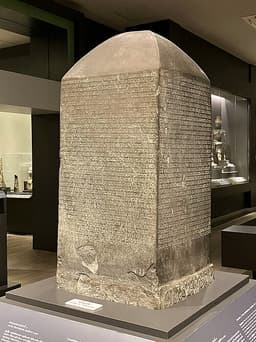
Ram Khamhaeng
Emperor · Medieval
58.3Total
Basic Information
Born
713
1237
Died
780
1298
Era
Medieval
Medieval
Nationality
India
Thailand
Occupation
Emperor
Emperor
Civilization
Indian
Eastern
Score Comparison
Military (10%)
10.0
40.0
Political (20%)
35.1
68.0
Influence (20%)
58.0
55.0
Legacy (20%)
50.0
72.0
Leadership (15%)
67.0
53.2
Strategy (15%)
45.0
43.3
TOTAL
47.8
58.3
Bappa Rawal — Complete Timeline
734 AD
Conquest of ChittorWar◆ Major
Bappa Rawal captured the fort of Chittor from the Mori Rajputs, establishing it as the capital of the Mewar kingdom. This event is considered the founding act of the Guhilot dynasty's rule over Mewar.
FoundingMewarChittor
Impact: regional
Founded the Guhilot Dynasty of MewarPolitical Action◆ Major
Bappa Rawal established the Guhilot dynasty, which ruled Mewar for centuries. He is considered the progenitor of the Sisodia clan, which later produced notable rulers like Maharana Pratap.
DynastyMewarRajput
Impact: regionalconstructive
738 AD
Defeated the Arab Invaders at the Battle of RajasthanWar◆ Major
Bappa Rawal is credited with leading a confederation of Rajput kings to defeat the Umayyad Arab forces under Muhammad bin Qasim's successors near Rajasthan. This victory halted Arab expansion into northern India.
Arab InvasionDefenseRajput Confederation
Impact: regional
Ram Khamhaeng — Complete Timeline
1280 AD
Expansion of the Sukhothai KingdomWar◆ Major
King Ram Khamhaeng expanded Sukhothai's territory through military campaigns, extending its influence from modern-day Laos to the Malay Peninsula. This created the largest Thai kingdom of its time.
Territorial ExpansionSukhothaiThai History
Impact: regional
1283 AD
Invention of the Thai AlphabetInvention
King Ram Khamhaeng created the Thai alphabet, based on Mon and Khmer scripts. This writing system allowed for the recording of Thai language and literature, becoming the foundation of modern Thai script.
AlphabetLanguageThai Culture
Impact: nationalconstructive
1292 AD
Promulgation of the Ram Khamhaeng InscriptionCultural◆ Major
King Ram Khamhaeng commissioned the Ram Khamhaeng Inscription, a stone stele that describes the kingdom's prosperity, governance, and culture. It is considered the earliest known example of Thai writing and a key historical source.
InscriptionHistorical RecordThai Culture
Impact: nationalconstructive
1294 AD
Establishment of Diplomatic Relations with ChinaPolitical Action
King Ram Khamhaeng sent an embassy to the Yuan dynasty court of Kublai Khan, establishing formal diplomatic and trade relations. This opened Sukhothai to Chinese influence and trade.
DiplomacyYuan DynastyTrade
Impact: regional
Expert Analysis
Origins
Bappa Rawal, born around 713 AD in present-day Rajasthan, India, was a Rajput prince of the Guhilot clan. His early life is shrouded in legend, but historical accounts suggest he was orphaned or exiled, and raised by a Brahmin family. He received military training and developed a strong sense of Rajput honor. In contrast, Ram Khamhaeng, born around 1239 AD in Sukhothai (modern Thailand), was the son of King Si Inthrathit, the founder of the Phra Ruang dynasty. He grew up in a royal household, learning statecraft and military tactics. His early experiences included participating in his father's campaigns, which shaped his later expansionist policies.
Rise to Power
Bappa Rawal's rise began with his conquest of the Chittor fort from the Mori Rajputs around 734 AD. This victory established him as a powerful ruler and laid the foundation of the Mewar kingdom. He then led a confederation of Rajput kings at the Battle of Rajasthan (c. 738 AD), defeating the Umayyad Arab forces under Muhammad bin Qasim's successors. This victory secured his reputation and solidified his control over Mewar. Ram Khamhaeng ascended the throne of Sukhothai around 1279 AD after the death of his brother Ban Muang. He quickly consolidated power by expanding the kingdom through military campaigns, subjugating neighboring principalities. His key turning point was the invention of the Thai alphabet in 1283 AD, which enhanced his prestige and administrative control. He also established diplomatic relations with the Yuan dynasty in 1294 AD, gaining recognition and trade benefits.
Leadership & Governance
Bappa Rawal's leadership was characterized by military prowess and the establishment of a feudal system. He divided conquered lands among his loyal chieftains, creating a decentralized governance structure that relied on clan loyalty. He promoted Rajput culture and Hinduism, erecting temples and patronizing Brahmins. His governance focused on defense and expansion, with little emphasis on administration or public works. Ram Khamhaeng, by contrast, implemented a more centralized and benevolent rule. The Ram Khamhaeng Inscription (1292 AD) describes a kingdom where justice was accessible, trade was free, and the king was accessible to commoners. He promoted Theravada Buddhism and supported the construction of monasteries. His creation of the Thai alphabet enabled the recording of laws, literature, and history, fostering cultural unity. While Bappa Rawal scored 67.0 in leadership, Ram Khamhaeng scored 53.2, but the latter's political score of 68.0 far exceeds the former's 35.1, reflecting a more sophisticated governance system.
Triumph & Tragedy
Bappa Rawal's greatest triumph was the defense of India against Arab expansion at the Battle of Rajasthan, which halted Islamic incursions into the subcontinent for centuries. His founding of the Guhilot dynasty led to the later rise of the Sisodia clan, including Maharana Pratap. However, his tragedy lies in the lack of detailed historical records; much of his life is mythologized, and his dynasty faced internal strife and later Mughal conquest. Ram Khamhaeng's triumphs include the creation of the Thai alphabet, which remains in use today, and the expansion of Sukhothai to its greatest territorial extent. His inscription provides a rare contemporary account of medieval Thai society. Yet, his tragedy is that after his death, Sukhothai declined, and the kingdom was absorbed by Ayutthaya. The authenticity of the Ram Khamhaeng Inscription has also been questioned by some scholars, casting doubt on his legacy.
Character & Destiny
Bappa Rawal was a warrior king, driven by honor and defiance against foreign invaders. His character was shaped by Rajput ideals of bravery and sacrifice. This led him to confront the Arabs, but also resulted in a lack of administrative innovation. His destiny was to be remembered as a legendary founder, but his historical impact is limited by the absence of concrete achievements beyond warfare. Ram Khamhaeng was a visionary and pragmatic ruler, combining military expansion with cultural and administrative reforms. His character was more inclusive and diplomatic, as seen in his trade relations with China. His destiny was to create enduring cultural contributions, but his kingdom's fragility after his death reveals a reliance on his personal leadership. Historical assessments often praise Ram Khamhaeng's civilizational impact, while Bappa Rawal is celebrated in regional folklore.
Legacy
Bappa Rawal's legacy is primarily regional and symbolic. He is revered as the founder of the Mewar dynasty and a defender of Hindu India. His military score of 10.0 reflects limited strategic impact, while his legacy score of 50.0 is tied to his role in Rajput identity. In contrast, Ram Khamhaeng's legacy is national and lasting. The Thai alphabet he created is used by over 60 million people today. His political and governance model influenced later Thai kingdoms. He scored 72.0 in legacy, the highest among the metrics. The Ram Khamhaeng Inscription is a UNESCO Memory of the World document. While Bappa Rawal's influence is confined to Rajasthan, Ram Khamhaeng's contributions shaped Thai national identity.
Conclusion
Ram Khamhaeng had a greater impact than Bappa Rawal, both in scope and enduring significance. With a total score of 58.3 compared to Bappa Rawal's 47.8, the data supports this. Ram Khamhaeng's creation of the Thai alphabet and his administrative reforms have lasting effects on a nation, while Bappa Rawal's military victories, though important, did not lead to sustained political or cultural innovation. Ram Khamhaeng's legacy is tangible and widespread, whereas Bappa Rawal remains a regional folk hero. Thus, in the comparison of these two medieval rulers, Ram Khamhaeng stands as the more consequential figure.
Rankings
🥇
Ram KhamhaengLeader
Mil: 40.0Pol: 68.0Inf: 55.0
58.3
🥈
Bappa Rawal
Mil: 10.0Pol: 35.1Inf: 58.0
47.8
+10.5 behind
How This Comparison Works
Algorithm
Each figure is scored on 6 dimensions (0—100 scale) based on structured historical data: Military (10%), Political (20%), Influence (20%), Legacy (20%), Leadership (15%), Strategy (15%). The weighted total produces the final ranking.
Data Sources
Scores are computed from structured sub-indicators in the database. Scale factors adjust for era (Ancient ×0.85, Modern ×1.0) and civilization size (Eastern ×1.05, Other ×0.80) to account for differences in population and military scale.
Maximum 3 Figures
Comparisons are limited to 2—3 figures to ensure readability and statistical meaningfulness.
Error Margins
±5 points per dimension — Sub-scores are derived from historical records with inherent uncertainty. Two figures within 5 points on a dimension should be considered roughly equivalent in that area.
Total Score Accuracy
±3 points overall — The weighted combination of 6 dimensions produces a total score with approximately ±3 points of uncertainty. Differences of less than 3 points are not statistically significant— the figures are effectively tied.
Known Limitations
- Historical records are incomplete and uneven across civilizations
- Figures from oral-tradition societies may be underrepresented
- Occupation labels can misclassify multi-role figures
- Scores measure capability and impact, not moral character
- Quantitative scoring is a comparison tool, not absolute truth
Capability Radar
Military (10%) — Battles & Warfare
Battles
40
40
Win Rate
45
45
Expansion
35
50
Political (20%) — Governance & Reform
Reform
30
70
Diplomacy
35
55
Economy
25
50
Influence (20%) — Cultural & Global Reach
Cultural
40
75
Global
20
55
Legacy (20%) — Historical Impact
Historical
45
70
Longevity
50
80
Leadership (15%) — Power & Stability
Tenure
50
60
Stability
40
60
Strategy (15%) — Tactics & Innovation
Strategy
30
40
Tactics
35
35
Reform
25
30
Similar Comparisons
Comments & Discussion
No comments yet. Be the first to share your thoughts!