Loading...
King Chungjeong of Goryeo vs Ram Khamhaeng
Ram Khamhaeng leads by 6.3 pts · 2 figures compared
…
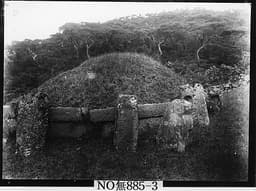
King Chungjeong of Goryeo
Emperor · Medieval
52.0Total

Ram Khamhaeng
Emperor · Medieval
58.3Total
Basic Information
Born
1338
1237
Died
1352
1298
Era
Medieval
Medieval
Nationality
Korea
Thailand
Occupation
Emperor
Emperor
Civilization
Eastern
Eastern
Score Comparison
Military (10%)
54.4
40.0
Political (20%)
39.4
68.0
Influence (20%)
60.0
55.0
Legacy (20%)
42.5
72.0
Leadership (15%)
55.3
53.2
Strategy (15%)
67.5
43.3
TOTAL
52.0
58.3
King Chungjeong of Goryeo — Complete Timeline
1348 AD
Ascended Throne as Child KingPolitical Action◆ Major
King Chungjeong became king at age 10 after the death of King Chungmok. Like his predecessor, he was a minor and real power was held by Yuan officials and Goryeo aristocrats, continuing the pattern of weak, puppet rulers.
Child KingSuccessionFigurehead
Impact: national
1351 AD
Deposed by Yuan CourtPolitical Action◆ Major
King Chungjeong was deposed by the Yuan court after a brief reign, due to political intrigues in the Yuan capital. He was exiled to China, and his uncle King Gongmin was installed as king, marking the end of the line of Yuan-dominated puppet rulers.
DepositionYuan InterventionEnd of Era
Impact: nationaldestructive
Ram Khamhaeng — Complete Timeline
1280 AD
Expansion of the Sukhothai KingdomWar◆ Major
King Ram Khamhaeng expanded Sukhothai's territory through military campaigns, extending its influence from modern-day Laos to the Malay Peninsula. This created the largest Thai kingdom of its time.
Territorial ExpansionSukhothaiThai History
Impact: regional
1283 AD
Invention of the Thai AlphabetInvention
King Ram Khamhaeng created the Thai alphabet, based on Mon and Khmer scripts. This writing system allowed for the recording of Thai language and literature, becoming the foundation of modern Thai script.
AlphabetLanguageThai Culture
Impact: nationalconstructive
1292 AD
Promulgation of the Ram Khamhaeng InscriptionCultural◆ Major
King Ram Khamhaeng commissioned the Ram Khamhaeng Inscription, a stone stele that describes the kingdom's prosperity, governance, and culture. It is considered the earliest known example of Thai writing and a key historical source.
InscriptionHistorical RecordThai Culture
Impact: nationalconstructive
1294 AD
Establishment of Diplomatic Relations with ChinaPolitical Action
King Ram Khamhaeng sent an embassy to the Yuan dynasty court of Kublai Khan, establishing formal diplomatic and trade relations. This opened Sukhothai to Chinese influence and trade.
DiplomacyYuan DynastyTrade
Impact: regional
Expert Analysis
Origins
King Chungjeong of Goryeo (born 1338) was the son of King Chunghye and ascended to the throne at age 10 after the death of his half-brother King Chungmok. Born into a period of heavy Mongol Yuan influence, his early life was marked by political manipulation from Yuan officials and the Goryeo aristocracy. In contrast, Ram Khamhaeng (born c. 1237–1247) was the second son of King Si Inthrathit, the founder of the Sukhothai Kingdom. His formative years were spent in a fledgling kingdom seeking to assert independence from the Khmer Empire. While Chungjeong's upbringing was in a court dominated by foreign powers, Ram Khamhaeng grew up in a warrior society where he proved himself in battle.
Rise to Power
Chungjeong became king in 1349 after the Yuan court approved his succession, but real power remained with Yuan-backed officials. His reign was brief and turbulent; in 1351, the Yuan court deposed him due to political intrigues and exiled him to China, where he died in 1352. Ram Khamhaeng rose to power after his father's death in 1279, reportedly defeating a Khmer-backed rival. He quickly expanded Sukhothai through military campaigns, subduing principalities in modern-day Laos and the Malay Peninsula. By 1283, he had established diplomatic relations with the Yuan dynasty, sending an embassy to Kublai Khan.
Leadership & Governance
Chungjeong's leadership was constrained by Yuan authority; he had little autonomy and his governance was largely reactive. His total score of 52.0 reflects his inability to assert control, with political score 39.4 and leadership 55.3. Ram Khamhaeng, scoring 58.3 overall, governed with a more independent hand. He promoted trade, agriculture, and law, as evidenced by the Ram Khamhaeng Inscription (c. 1292), which describes a prosperous kingdom with fair governance. His political score of 68.0 indicates his skill in managing internal and external relations.
Triumph & Tragedy
Chungjeong's greatest achievement was surviving to become king, but his tragedy was being a pawn in Yuan power struggles. He failed to strengthen Goryeo's autonomy, and his deposition without any lasting reforms left his legacy score at 42.5. Ram Khamhaeng's triumphs include creating the Thai alphabet (influence score 55.0), expanding Sukhothai to its greatest extent, and fostering cultural development. However, his later years saw rebellions and succession issues, and after his death (c. 1298), Sukhothai declined. His military score of 40.0 reflects that his conquests were not consolidated.
Character & Destiny
Chungjeong was a minor dominated by others, his character largely unknown. His fate was sealed by the Yuan court's interference. Ram Khamhaeng was depicted as a capable, enlightened ruler; the inscription portrays him as accessible to subjects and just. His strategic score of 43.3 suggests his military decisions were not always optimal, but his overall leadership (53.2) and political acumen allowed Sukhothai to flourish.
Legacy
Chungjeong's legacy is minimal; he is a footnote in Goryeo history, overshadowed by the later reformer King Gongmin. His reign highlighted the weakness of the monarchy under Yuan control. Ram Khamhaeng's legacy is enduring: the Thai alphabet remains in use, and his inscription is a key historical source. His legacy score of 72.0 reflects this cultural impact. However, his territorial gains were lost within decades.
Conclusion
Ram Khamhaeng had greater impact than King Chungjeong. Despite similar total scores (58.3 vs 52.0), Ram Khamhaeng's creation of the Thai alphabet and diplomatic achievements have lasting significance, while Chungjeong's reign was a failure. Ram Khamhaeng's legacy score of 72.0 far exceeds Chungjeong's 42.5, and his influence on Thai culture is undeniable. Chungjeong, by contrast, left no enduring mark. Thus, Ram Khamhaeng is the more significant historical figure.
Rankings
🥇
Ram KhamhaengLeader
Mil: 40.0Pol: 68.0Inf: 55.0
58.3
🥈
King Chungjeong of Goryeo
Mil: 54.4Pol: 39.4Inf: 60.0
52.0
+6.3 behind
How This Comparison Works
Algorithm
Each figure is scored on 6 dimensions (0—100 scale) based on structured historical data: Military (10%), Political (20%), Influence (20%), Legacy (20%), Leadership (15%), Strategy (15%). The weighted total produces the final ranking.
Data Sources
Scores are computed from structured sub-indicators in the database. Scale factors adjust for era (Ancient ×0.85, Modern ×1.0) and civilization size (Eastern ×1.05, Other ×0.80) to account for differences in population and military scale.
Maximum 3 Figures
Comparisons are limited to 2—3 figures to ensure readability and statistical meaningfulness.
Error Margins
±5 points per dimension — Sub-scores are derived from historical records with inherent uncertainty. Two figures within 5 points on a dimension should be considered roughly equivalent in that area.
Total Score Accuracy
±3 points overall — The weighted combination of 6 dimensions produces a total score with approximately ±3 points of uncertainty. Differences of less than 3 points are not statistically significant— the figures are effectively tied.
Known Limitations
- Historical records are incomplete and uneven across civilizations
- Figures from oral-tradition societies may be underrepresented
- Occupation labels can misclassify multi-role figures
- Scores measure capability and impact, not moral character
- Quantitative scoring is a comparison tool, not absolute truth
Capability Radar
Military (10%) — Battles & Warfare
Battles
44
40
Win Rate
47
45
Expansion
53
50
Political (20%) — Governance & Reform
Reform
0
70
Diplomacy
5
55
Economy
0
50
Influence (20%) — Cultural & Global Reach
Cultural
0
75
Global
0
55
Legacy (20%) — Historical Impact
Historical
5
70
Longevity
0
80
Leadership (15%) — Power & Stability
Tenure
5
60
Stability
5
60
Strategy (15%) — Tactics & Innovation
Strategy
54
40
Tactics
58
35
Reform
62
30
Similar Comparisons
Comments & Discussion
No comments yet. Be the first to share your thoughts!