Loading...
Mahendravarman I vs Ram Khamhaeng
Mahendravarman I leads by 0.4 pts · 2 figures compared
…
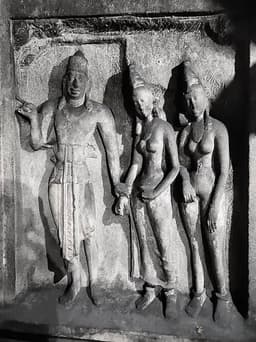
Mahendravarman I
Emperor · Medieval
58.7Total
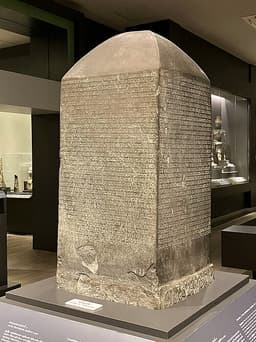
Ram Khamhaeng
Emperor · Medieval
58.3Total
Basic Information
Born
600
1237
Died
630
1298
Era
Medieval
Medieval
Nationality
India
Thailand
Occupation
Emperor
Emperor
Civilization
Indian
Eastern
Score Comparison
Military (10%)
60.0
40.0
Political (20%)
62.7
68.0
Influence (20%)
55.0
55.0
Legacy (20%)
52.0
72.0
Leadership (15%)
66.0
53.2
Strategy (15%)
66.3
43.3
TOTAL
58.7
58.3
Mahendravarman I — Complete Timeline
610 AD
Patronage of Cave Temples at MandagapattuCultural◆ Major
Mahendravarman I excavated the first rock-cut cave temple at Mandagapattu, dedicated to Brahma, Vishnu, and Shiva. This innovation initiated the Pallava tradition of rock-cut architecture, influencing later temples across South India.
Rock-cut ArchitecturePallava ArtReligious Patronage
Impact: regionalconstructive
Conversion to Jainism and Patronage of Jain MonksCultural
Mahendravarman I initially patronized Jainism and built Jain cave temples, such as the one at Sittannavasal. He later converted to Shaivism under the influence of the saint Appar, reflecting religious shifts in the Pallava court.
Religious ConversionJainismShaivism
Impact: regional
620 AD
Defeat by Chalukya Pulakeshin IIWar◆ Major
Mahendravarman I suffered a military defeat against the Chalukya king Pulakeshin II, who invaded the Pallava kingdom. This loss resulted in the temporary loss of northern territories and demonstrated the military rivalry between the Pallavas and Chalukyas.
Pallava-Chalukya ConflictMilitary DefeatTerritorial Loss
Impact: regionaldestructive
630 AD
Construction of the Shore Temple at MamallapuramCultural◆ Major
Mahendravarman I built the Shore Temple, a structural granite temple at Mamallapuram. This temple is a major example of early Dravidian architecture and a UNESCO World Heritage site. It was dedicated to Shiva and marked a shift from rock-cut to structural temple building.
Pallava ArchitectureTemple BuildingDravidian Style
Impact: regionalconstructive
Ram Khamhaeng — Complete Timeline
1280 AD
Expansion of the Sukhothai KingdomWar◆ Major
King Ram Khamhaeng expanded Sukhothai's territory through military campaigns, extending its influence from modern-day Laos to the Malay Peninsula. This created the largest Thai kingdom of its time.
Territorial ExpansionSukhothaiThai History
Impact: regional
1283 AD
Invention of the Thai AlphabetInvention
King Ram Khamhaeng created the Thai alphabet, based on Mon and Khmer scripts. This writing system allowed for the recording of Thai language and literature, becoming the foundation of modern Thai script.
AlphabetLanguageThai Culture
Impact: nationalconstructive
1292 AD
Promulgation of the Ram Khamhaeng InscriptionCultural◆ Major
King Ram Khamhaeng commissioned the Ram Khamhaeng Inscription, a stone stele that describes the kingdom's prosperity, governance, and culture. It is considered the earliest known example of Thai writing and a key historical source.
InscriptionHistorical RecordThai Culture
Impact: nationalconstructive
1294 AD
Establishment of Diplomatic Relations with ChinaPolitical Action
King Ram Khamhaeng sent an embassy to the Yuan dynasty court of Kublai Khan, establishing formal diplomatic and trade relations. This opened Sukhothai to Chinese influence and trade.
DiplomacyYuan DynastyTrade
Impact: regional
Expert Analysis
Origins
Mahendravarman I (c. 600–630 CE) was a Pallava king of southern India, born into a dynasty that ruled from Kanchipuram. His father was Simhavishnu, who revived Pallava power. Mahendravarman received a princely education in statecraft, warfare, and arts. He was a poet, playwright, and musician, composing the Sanskrit play *Mattavilasa Prahasana*.
Ram Khamhaeng (c. 1239–1298 CE) was the third king of the Phra Ruang dynasty of Sukhothai, in present-day Thailand. His father, Si Inthrathit, founded the Sukhothai kingdom after breaking away from the Khmer Empire. Ram Khamhaeng grew up during the kingdom's consolidation and learned military skills from his father's campaigns.
Rise to Power
Mahendravarman I ascended the Pallava throne around 600 CE after his father's death. He inherited a stable kingdom and focused on cultural patronage. His early reign saw the excavation of rock-cut cave temples at Mandagapattu, dedicated to Brahma, Vishnu, and Shiva. This innovation in temple architecture marked a shift from brick and mortar to monolithic structures.
Ram Khamhaeng's rise occurred during the expansion of Sukhothai. He became king around 1279 CE after his elder brother Ban Mueang died. Ram Khamhaeng aggressively campaigned to extend Sukhothai's influence, subduing neighboring principalities and pushing into the Malay Peninsula. His military prowess earned him the title "Ram Khamhaeng" (Rama the Bold).
Leadership & Governance
Mahendravarman I was a patron of the arts and a religious eclectic. He initially supported Jainism, building cave temples at Sittannavasal, but later converted to Shaivism under the influence of the saint Appar. His governance emphasized cultural development over military expansion. He constructed the Shore Temple at Mamallapuram, a structural granite temple that exemplifies early Dravidian architecture. His leadership score of 66.0 reflects his ability to foster cultural achievements but also his lack of sustained military success.
Ram Khamhaeng's leadership focused on territorial expansion and administrative innovation. He promulgated the Ram Khamhaeng Inscription, a stone stele detailing the kingdom's prosperity, laws, and social order. The inscription describes a paternalistic rule where the king listened to citizen grievances via a bell at the palace gate. He also established diplomatic relations with the Yuan dynasty of Kublai Khan, opening trade routes. His political score of 68.0 indicates effective statecraft, though his military score is lower at 40.0.
Triumph & Tragedy
Mahendravarman's greatest triumph was his architectural legacy. The Shore Temple and the cave temples at Mamallapuram are UNESCO World Heritage sites, influencing Dravidian temple architecture for centuries. However, his major failure was the military defeat by the Chalukya king Pulakeshin II, who invaded the Pallava kingdom. This loss temporarily weakened Pallava power and led to loss of territory.
Ram Khamhaeng's crowning achievement was the creation of the Thai alphabet in 1283 CE, which allowed the recording of Thai language and literature. This script is the basis of modern Thai writing. His expansion of Sukhothai's territory was also significant, extending from Laos to the Malay Peninsula. However, his military campaigns were not always successful; after his death, many conquered regions broke away. His legacy score of 72.0 reflects the enduring impact of the alphabet.
Character & Destiny
Mahendravarman I was a polymath with a volatile religious identity. His conversion from Jainism to Shaivism suggests a personal quest for meaning, but it also alienated Jain communities. His patronage of arts indicates a refined taste, but his military setbacks show a king more interested in culture than conquest. Historians note that his defeat by Pulakeshin II was partly due to his underestimation of Chalukya power.
Ram Khamhaeng was a pragmatic ruler who combined military ambition with administrative reforms. His inscription portrays him as a just and accessible king, but the lack of detailed records makes it hard to assess his character fully. His decision to create a writing system suggests a forward-thinking mind, but his expansionist policies may have overextended the kingdom.
Legacy
Mahendravarman I's legacy is primarily architectural. The Shore Temple and Mamallapuram's rock-cut monuments are enduring symbols of Pallava art. He scored 52.0 in legacy, reflecting the cultural but limited political impact. In contrast, Ram Khamhaeng's invention of the Thai alphabet has had a profound linguistic impact, shaping Thai identity for over 700 years. His legacy score of 72.0 is higher because the alphabet remains in daily use.
Conclusion
While Mahendravarman I contributed significantly to Indian temple architecture, Ram Khamhaeng's creation of the Thai alphabet had a more direct and lasting impact on national identity and literacy. Ram Khamhaeng's overall score of 58.3 is slightly lower than Mahendravarman's 58.7, but his legacy score is 20 points higher. Given that the alphabet is a foundational tool for culture and communication, Ram Khamhaeng's impact is arguably greater. Mahendravarman's cultural patronage was important, but it did not transform society as fundamentally as the invention of a writing system.
Thus, Ram Khamhaeng holds a stronger position in historical significance due to the enduring utility of his linguistic innovation.
Rankings
🥇
Mahendravarman ILeader
Mil: 60.0Pol: 62.7Inf: 55.0
58.7
🥈
Ram Khamhaeng
Mil: 40.0Pol: 68.0Inf: 55.0
58.3
+0.4 behind
How This Comparison Works
Algorithm
Each figure is scored on 6 dimensions (0—100 scale) based on structured historical data: Military (10%), Political (20%), Influence (20%), Legacy (20%), Leadership (15%), Strategy (15%). The weighted total produces the final ranking.
Data Sources
Scores are computed from structured sub-indicators in the database. Scale factors adjust for era (Ancient ×0.85, Modern ×1.0) and civilization size (Eastern ×1.05, Other ×0.80) to account for differences in population and military scale.
Maximum 3 Figures
Comparisons are limited to 2—3 figures to ensure readability and statistical meaningfulness.
Error Margins
±5 points per dimension — Sub-scores are derived from historical records with inherent uncertainty. Two figures within 5 points on a dimension should be considered roughly equivalent in that area.
Total Score Accuracy
±3 points overall — The weighted combination of 6 dimensions produces a total score with approximately ±3 points of uncertainty. Differences of less than 3 points are not statistically significant— the figures are effectively tied.
Known Limitations
- Historical records are incomplete and uneven across civilizations
- Figures from oral-tradition societies may be underrepresented
- Occupation labels can misclassify multi-role figures
- Scores measure capability and impact, not moral character
- Quantitative scoring is a comparison tool, not absolute truth
Capability Radar
Military (10%) — Battles & Warfare
Battles
55
40
Win Rate
60
45
Expansion
55
50
Political (20%) — Governance & Reform
Reform
65
70
Diplomacy
60
55
Economy
60
50
Influence (20%) — Cultural & Global Reach
Cultural
75
75
Global
55
55
Legacy (20%) — Historical Impact
Historical
70
70
Longevity
65
80
Leadership (15%) — Power & Stability
Tenure
70
60
Stability
65
60
Strategy (15%) — Tactics & Innovation
Strategy
60
40
Tactics
65
35
Reform
50
30
Similar Comparisons
Comments & Discussion
No comments yet. Be the first to share your thoughts!