Loading...
Qasim Khan of Astrakhan vs Wenceslaus IV of Bohemia
Wenceslaus IV of Bohemia leads by 6.8 pts · 2 figures compared
…

Qasim Khan of Astrakhan
Emperor · Medieval
38.9Total
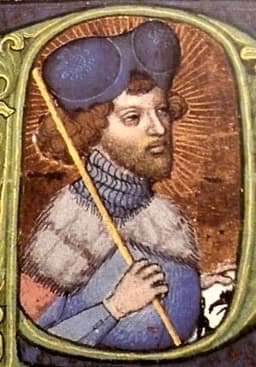
Wenceslaus IV of Bohemia
Emperor · Medieval
45.7Total
Basic Information
Born
1480
1361
Died
1532
1419
Era
Medieval
Medieval
Nationality
Astrakhan Khanate
Bohemia
Occupation
Emperor
Emperor
Civilization
Eastern
Western
Score Comparison
Military (10%)
21.2
21.2
Political (20%)
29.3
33.6
Influence (20%)
47.1
54.9
Legacy (20%)
35.8
48.3
Leadership (15%)
41.5
58.8
Strategy (15%)
54.8
39.6
TOTAL
38.9
45.7
Qasim Khan of Astrakhan — Complete Timeline
1520 AD
Alliance with the Crimean KhanatePolitical Action◆ Major
Qasim Khan formed an alliance with the Crimean Khanate, recognizing Crimean suzerainty in exchange for military support. This alliance shaped Astrakhan's foreign policy, aligning it with Crimea against Muscovy and the Nogai Horde.
AllianceCrimean KhanateForeign Policy
Impact: regional
1521 AD
Raid on MoscowWar◆ Major
Qasim Khan of Astrakhan joined the Crimean khan Mehmed I Giray in a raid on Moscow. The allied forces reached the outskirts of the city, forcing Grand Prince Vasily III to pay tribute and recognize Crimean suzerainty.
RaidMoscowCrimean Khanate
Impact: regional
1525 AD
Conflict with the Nogai HordeWar
Qasim Khan fought against the Nogai Horde, which was encroaching on Astrakhan's territory. The conflict ended in a stalemate, with both sides suffering heavy losses and the border remaining unchanged.
ConflictNogai HordeBorder Dispute
Wenceslaus IV of Bohemia — Complete Timeline
1402 AD
Conflict with the HussitesPolitical Action
Wenceslaus IV initially supported Jan Hus and the reform movement, but later opposed them under pressure from the Catholic Church. His inconsistent policies alienated both Hussites and Catholics, weakening his authority.
Religious ConflictJan HusPolitical Instability
Impact: national
1419 AD
Defenestration of PraguePolitical Action
Wenceslaus IV's refusal to release Hussite prisoners led to a mob storming the New Town Hall in Prague. The crowd threw the city councillors out of a window, triggering the Hussite Wars that would devastate Bohemia for decades.
Hussite WarsRebellionReligious Conflict
Impact: regionaldestructive
Death of Wenceslaus IVOther◆ Major
Wenceslaus IV died of a heart attack shortly after the Defenestration of Prague. His death left Bohemia without a strong ruler, allowing the Hussite movement to gain momentum and plunging the kingdom into civil war.
DeathSuccession CrisisHussite Wars
Impact: regionaltragic
Expert Analysis
Origins
Qasim Khan of Astrakhan, born around 1500, was a descendant of the Golden Horde's ruling dynasty. He ascended to power in the Astrakhan Khanate, a fragmented successor state along the Volga River. Little is known of his early life, but he emerged as a leader amid the steppe politics of the early 16th century, where the Khanate struggled for survival between the expanding Crimean Khanate and the rising Grand Duchy of Moscow.
Wenceslaus IV of Bohemia was born on February 26, 1361, in Nuremberg, the son of Emperor Charles IV and Anna of Świdnica. He was groomed for rule from an early age, becoming King of Bohemia at 2 and Holy Roman Emperor at 15 after his father's death. Educated in Prague, he inherited a vast realm but faced challenges from the nobility and the church.
Rise to Power
Qasim Khan rose to power in the 1520s, a period of instability for Astrakhan. The Khanate was caught between the Crimean Khanate, which sought dominance over the steppe, and Moscow, which aimed to control the Volga trade route. Qasim Khan secured his throne by forming an alliance with the Crimean khan Mehmed I Giray in 1523, recognizing Crimean suzerainty in exchange for military support. This alliance allowed him to fend off the Nogai Horde and briefly assert Astrakhan's independence.
Wenceslaus IV became King of Bohemia in 1363 and was crowned Holy Roman Emperor in 1376. His reign began with promise, as he continued his father's policies of centralization. However, he soon faced opposition from the Bohemian nobility, who resented his reliance on low-born advisors. In 1394, a league of nobles captured him, forcing concessions. His struggles with the nobility and the church defined his rise, culminating in the Defenestration of Prague in 1419.
Leadership & Governance
Qasim Khan governed as a typical steppe ruler, relying on personal authority and alliances. His leadership scored 41.5, reflecting his ability to maintain power but not expand it. He focused on survival, making tactical alliances with the Crimean Khanate while resisting the Nogai Horde. His governance was decentralized, with limited administrative reforms. The Khanate remained a minor power, and his political score of 29.3 indicates his failure to establish lasting institutions.
Wenceslaus IV's leadership score of 58.8 was higher, reflecting his more complex governance. He attempted to centralize power in Bohemia, but his inconsistent policies alienated key groups. He initially supported the reformist Jan Hus, but later opposed him under pressure from the Catholic Church, earning him the enmity of both Hussites and Catholics. His political score of 33.6 shows his struggles with diplomacy and rule of law. The Defenestration of Prague in 1419, where Hussite mobs threw councillors out of a window, was a direct result of his refusal to release prisoners.
Triumph & Tragedy
Qasim Khan's greatest success was the alliance with the Crimean Khanate, which allowed him to raid Moscow in 1521. The joint Crimean-Astrakhan force reached the outskirts of Moscow, forcing Grand Prince Vasily III to pay tribute. However, this was a temporary gain. His tragedy was the inability to secure Astrakhan's independence. The conflict with the Nogai Horde ended in a stalemate, and after his death, the Khanate fell to Moscow in 1556.
Wenceslaus IV's triumph was his early reign, when he maintained the prestige of the Holy Roman Empire and supported cultural developments. He founded the University of Heidelberg and patronized the arts. His tragedy was the Hussite crisis. His vacillation led to a full-blown revolt after his death. The Defenestration of Prague was a turning point, and his death from a heart attack in 1419 left Bohemia in chaos, sparking the Hussite Wars that lasted over a decade.
Character & Destiny
Qasim Khan was a pragmatic survivor, willing to submit to stronger powers to preserve his rule. His strategy score of 54.8 shows he could plan effectively, but his military score of 21.2 suggests he lacked the force to achieve lasting gains. His character was shaped by the harsh realities of steppe politics, where alliances shifted rapidly. His destiny was to be a footnote in the decline of the Golden Horde.
Wenceslaus IV was indecisive and prone to favoritism, earning him the nickname "the Idle." Historical assessments paint him as a weak ruler, unable to reconcile the factions in Bohemia. His leadership score of 58.8 is inflated by his inherited position; his political skills were poor. His character directly caused the Hussite explosion. He scored 39.6 in strategy, reflecting his lack of long-term planning.
Legacy
Qasim Khan's legacy is minimal. He is remembered as one of the last rulers of an independent Astrakhan. The Khanate's incorporation into Russia erased his influence. His influence score of 47.1 is due to his role in the Crimean raid on Moscow, but his legacy score of 35.8 shows his limited impact. Today, he is obscure even among historians.
Wenceslaus IV's legacy is tied to the Hussite movement. His inconsistent policies inadvertently catalyzed one of the first major Protestant uprisings. The Hussite Wars influenced later reformations. He also contributed to Bohemian culture, but his political failures are more prominent. His influence score of 54.9 and legacy score of 48.3 reflect this mixed record.
Conclusion
Wenceslaus IV of Bohemia, with a total score of 45.7, had a greater impact than Qasim Khan of Astrakhan, who scored 38.9. While neither was a great ruler, Wenceslaus's reign directly shaped the course of Bohemian and European history through the Hussite movement. Qasim Khan's actions were reactive and local, with no enduring consequences. The 6.8-point gap is justified: Wenceslaus's failures sparked a religious war that echoed for centuries, while Qasim's efforts to preserve a minor khanate faded into obscurity.
Rankings
🥇
Wenceslaus IV of BohemiaLeader
Mil: 21.2Pol: 33.6Inf: 54.9
45.7
🥈
Qasim Khan of Astrakhan
Mil: 21.2Pol: 29.3Inf: 47.1
38.9
+6.8 behind
How This Comparison Works
Algorithm
Each figure is scored on 6 dimensions (0—100 scale) based on structured historical data: Military (10%), Political (20%), Influence (20%), Legacy (20%), Leadership (15%), Strategy (15%). The weighted total produces the final ranking.
Data Sources
Scores are computed from structured sub-indicators in the database. Scale factors adjust for era (Ancient ×0.85, Modern ×1.0) and civilization size (Eastern ×1.05, Other ×0.80) to account for differences in population and military scale.
Maximum 3 Figures
Comparisons are limited to 2—3 figures to ensure readability and statistical meaningfulness.
Error Margins
±5 points per dimension — Sub-scores are derived from historical records with inherent uncertainty. Two figures within 5 points on a dimension should be considered roughly equivalent in that area.
Total Score Accuracy
±3 points overall — The weighted combination of 6 dimensions produces a total score with approximately ±3 points of uncertainty. Differences of less than 3 points are not statistically significant— the figures are effectively tied.
Known Limitations
- Historical records are incomplete and uneven across civilizations
- Figures from oral-tradition societies may be underrepresented
- Occupation labels can misclassify multi-role figures
- Scores measure capability and impact, not moral character
- Quantitative scoring is a comparison tool, not absolute truth
Capability Radar
Military (10%) — Battles & Warfare
Battles
15
15
Win Rate
10
10
Expansion
5
5
Political (20%) — Governance & Reform
Reform
10
30
Diplomacy
20
25
Economy
10
30
Influence (20%) — Cultural & Global Reach
Cultural
5
40
Global
5
30
Legacy (20%) — Historical Impact
Historical
10
50
Longevity
5
40
Leadership (15%) — Power & Stability
Tenure
20
60
Stability
10
15
Strategy (15%) — Tactics & Innovation
Strategy
10
10
Tactics
10
10
Reform
5
5
Similar Comparisons
Comments & Discussion
No comments yet. Be the first to share your thoughts!