Loading...
Ram Khamhaeng vs Vladislaus II of Hungary
Ram Khamhaeng leads by 9.5 pts · 2 figures compared
…
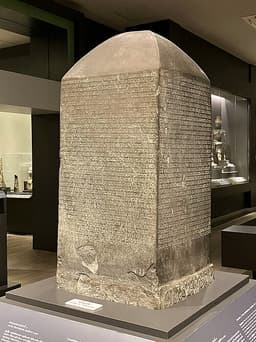
Ram Khamhaeng
Emperor · Medieval
58.3Total

Vladislaus II of Hungary
Emperor · Medieval
48.8Total
Basic Information
Born
1237
1456
Died
1298
1516
Era
Medieval
Medieval
Nationality
Thailand
Bohemia
Occupation
Emperor
Emperor
Civilization
Eastern
Western
Score Comparison
Military (10%)
40.0
50.0
Political (20%)
68.0
43.7
Influence (20%)
55.0
51.8
Legacy (20%)
72.0
43.3
Leadership (15%)
53.2
65.7
Strategy (15%)
43.3
35.7
TOTAL
58.3
48.8
Ram Khamhaeng — Complete Timeline
1280 AD
Expansion of the Sukhothai KingdomWar◆ Major
King Ram Khamhaeng expanded Sukhothai's territory through military campaigns, extending its influence from modern-day Laos to the Malay Peninsula. This created the largest Thai kingdom of its time.
Territorial ExpansionSukhothaiThai History
Impact: regional
1283 AD
Invention of the Thai AlphabetInvention
King Ram Khamhaeng created the Thai alphabet, based on Mon and Khmer scripts. This writing system allowed for the recording of Thai language and literature, becoming the foundation of modern Thai script.
AlphabetLanguageThai Culture
Impact: nationalconstructive
1292 AD
Promulgation of the Ram Khamhaeng InscriptionCultural◆ Major
King Ram Khamhaeng commissioned the Ram Khamhaeng Inscription, a stone stele that describes the kingdom's prosperity, governance, and culture. It is considered the earliest known example of Thai writing and a key historical source.
InscriptionHistorical RecordThai Culture
Impact: nationalconstructive
1294 AD
Establishment of Diplomatic Relations with ChinaPolitical Action
King Ram Khamhaeng sent an embassy to the Yuan dynasty court of Kublai Khan, establishing formal diplomatic and trade relations. This opened Sukhothai to Chinese influence and trade.
DiplomacyYuan DynastyTrade
Impact: regional
Vladislaus II of Hungary — Complete Timeline
1479 AD
Peace of OlomoucPolitical Action◆ Major
Vladislaus II signed the Peace of Olomouc with Matthias Corvinus, dividing the Bohemian crown lands. Vladislaus retained Bohemia while Matthias held Moravia, Silesia, and Lusatia, ending a period of conflict between the two kings.
TreatyTerritorial DivisionConflict Resolution
Impact: regional
1490 AD
Vladislaus BenePolitical Action◆ Major
Vladislaus II was elected King of Hungary after the death of Matthias Corvinus. His reign was marked by weak governance, earning him the nickname 'Vladislaus Bene' for his tendency to agree with all petitioners, leading to administrative decay.
ElectionWeak RuleHungary
Impact: regional
Expert Analysis
Origins
**Ram Khamhaeng** was born around 1239 in the Sukhothai Kingdom, as the son of King Si Inthrathit, the founder of the Phra Ruang dynasty. His early life was shaped by the kingdom's emergence from Khmer domination. He received military training and likely learned from Buddhist monks, which later influenced his cultural reforms.
**Vladislaus II of Hungary** was born on March 1, 1456, in Kraków, Poland, as the son of King Casimir IV of Poland and Elizabeth of Habsburg. He was educated by humanist scholars, including John Dlugosz, and groomed for the throne. His Habsburg ancestry connected him to Central European power struggles.
Rise to Power
Ram Khamhaeng became king after his father's death around 1279. He quickly expanded Sukhothai's territory through military campaigns, subduing neighboring principalities. His most significant achievement was the creation of the Thai alphabet in 1283, which unified the kingdom's administration and culture. He also established diplomatic ties with the Yuan dynasty in 1294, sending embassies to Kublai Khan's court.
Vladislaus II was elected King of Bohemia in 1471 after the death of George of Poděbrady. He faced opposition from Matthias Corvinus, who claimed the Bohemian throne. The Peace of Olomouc in 1479 divided the crown lands: Vladislaus kept Bohemia, while Matthias held Moravia and Silesia. In 1490, after Matthias's death, Vladislaus was elected King of Hungary, but his rule was marked by concessions to the nobility.
Leadership & Governance
Ram Khamhaeng ruled as a paternalistic monarch, promoting trade, agriculture, and Buddhist culture. The Ram Khamhaeng Inscription (1292) describes a prosperous kingdom with fair governance: 'In the time of King Ram Khamhaeng, this land of Sukhothai is thriving. There are fish in the water and rice in the fields.' He encouraged local autonomy and established a system of justice that allowed citizens to ring a bell at the palace gate to appeal directly to the king.
Vladislaus II, by contrast, was a weak ruler who earned the nickname 'Vladislaus Bene' (King 'All Right') for his passive acquiescence to noble demands. He signed the 1492 Treaty of Pressburg, ceding royal revenues to the aristocracy. In 1498, he approved laws that reduced royal power and increased serfdom. His inability to control the nobility led to the decline of central authority.
Triumph & Tragedy
Ram Khamhaeng's greatest triumph was the creation of the Thai alphabet, which standardized the Thai language and fostered a distinct cultural identity. The inscription also provides a detailed record of 13th-century Thai society. His military expansion extended Sukhothai's influence from present-day Laos to the Malay Peninsula. However, after his death around 1298, the kingdom gradually declined under weaker successors, and by 1350 it was absorbed by Ayutthaya.
Vladislaus II's triumph was securing the crowns of Bohemia and Hungary, uniting them under a single ruler. However, his reign was a tragedy of missed opportunities. He failed to mount an effective defense against the Ottoman Empire, and his son Louis II died at the Battle of Mohács in 1526, leading to the partition of Hungary. Vladislaus's weakness exacerbated internal strife and prepared the ground for Habsburg domination.
Character & Destiny
Ram Khamhaeng was a visionary leader who combined military prowess with cultural innovation. His decision to create a writing system reflected a desire to preserve Thai identity and governance. He scored 53.2 in leadership and 68.0 in political skill, but his military score of 40.0 indicates his expansion relied more on diplomacy than conquest. His character shaped a golden age for Sukhothai.
Vladislaus II was indecisive and prone to compromise. His leadership score of 65.7 is inflated by his ability to maintain power, but his strategy score of 35.7 reveals a lack of long-term planning. His nickname 'Bene' epitomizes his passive approach. He prioritized personal comfort over statecraft, leading to the erosion of royal authority.
Legacy
Ram Khamhaeng's legacy endures through the Thai alphabet, still used today. The Ram Khamhaeng Inscription is a UNESCO Memory of the World document. He is revered as a national hero and a symbol of Thai cultural independence. His political score of 68.0 and legacy score of 72.0 reflect his lasting impact.
Vladislaus II's legacy is one of decline. His rule weakened both Bohemia and Hungary, paving the way for Habsburg ascendancy. He is often remembered as a failure. His legacy score of 43.3 is the lowest among comparable rulers. The Battle of Mohács, which occurred after his death, is seen as a national catastrophe.
Conclusion
Ram Khamhaeng had a greater impact than Vladislaus II. His total score of 58.3 surpasses Vladislaus's 48.8 by 9.5 points. While Vladislaus held larger titles, his weak governance led to long-term decline. Ram Khamhaeng's invention of the Thai alphabet and his model of benevolent rule created a lasting cultural legacy that outshines Vladislaus's temporary dynastic union. In the contest of historical influence, the Thai king clearly prevails.
Rankings
🥇
Ram KhamhaengLeader
Mil: 40.0Pol: 68.0Inf: 55.0
58.3
🥈
Vladislaus II of Hungary
Mil: 50.0Pol: 43.7Inf: 51.8
48.8
+9.5 behind
How This Comparison Works
Algorithm
Each figure is scored on 6 dimensions (0—100 scale) based on structured historical data: Military (10%), Political (20%), Influence (20%), Legacy (20%), Leadership (15%), Strategy (15%). The weighted total produces the final ranking.
Data Sources
Scores are computed from structured sub-indicators in the database. Scale factors adjust for era (Ancient ×0.85, Modern ×1.0) and civilization size (Eastern ×1.05, Other ×0.80) to account for differences in population and military scale.
Maximum 3 Figures
Comparisons are limited to 2—3 figures to ensure readability and statistical meaningfulness.
Error Margins
±5 points per dimension — Sub-scores are derived from historical records with inherent uncertainty. Two figures within 5 points on a dimension should be considered roughly equivalent in that area.
Total Score Accuracy
±3 points overall — The weighted combination of 6 dimensions produces a total score with approximately ±3 points of uncertainty. Differences of less than 3 points are not statistically significant— the figures are effectively tied.
Known Limitations
- Historical records are incomplete and uneven across civilizations
- Figures from oral-tradition societies may be underrepresented
- Occupation labels can misclassify multi-role figures
- Scores measure capability and impact, not moral character
- Quantitative scoring is a comparison tool, not absolute truth
Capability Radar
Military (10%) — Battles & Warfare
Battles
40
20
Win Rate
45
25
Expansion
50
10
Political (20%) — Governance & Reform
Reform
70
30
Diplomacy
55
55
Economy
50
35
Influence (20%) — Cultural & Global Reach
Cultural
75
30
Global
55
20
Legacy (20%) — Historical Impact
Historical
70
35
Longevity
80
25
Leadership (15%) — Power & Stability
Tenure
60
60
Stability
60
25
Strategy (15%) — Tactics & Innovation
Strategy
40
20
Tactics
35
15
Reform
30
10
Similar Comparisons
Comments & Discussion
No comments yet. Be the first to share your thoughts!