Loading...
Topa Inca Yupanqui vs Vladislaus II of Hungary
Topa Inca Yupanqui leads by 13.7 pts · 2 figures compared
…

Topa Inca Yupanqui
Emperor · Medieval
62.5Total
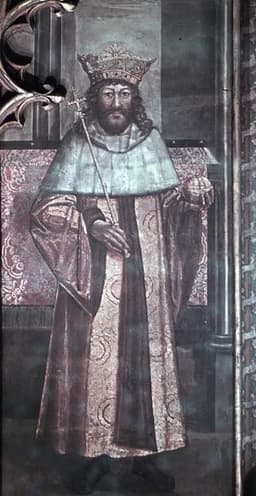
Vladislaus II of Hungary
Emperor · Medieval
48.8Total
Basic Information
Born
1441
1456
Died
1493
1516
Era
Medieval
Medieval
Nationality
Inca Empire
Bohemia
Occupation
Emperor
Emperor
Civilization
Other
Western
Score Comparison
Military (10%)
78.5
50.0
Political (20%)
55.0
43.7
Influence (20%)
58.3
51.8
Legacy (20%)
52.0
43.3
Leadership (15%)
80.0
65.7
Strategy (15%)
68.0
35.7
TOTAL
62.5
48.8
Topa Inca Yupanqui — Complete Timeline
1463 AD
Expanded the Inca Empire into Modern-Day Ecuador and ColombiaWar◆ Major
Topa Inca Yupanqui led military campaigns that extended Inca control into the northern highlands of Ecuador and southern Colombia, conquering the Ca
Inca ExpansionMilitary CampaignNorthern Conquest
Impact: regional
1470 AD
Conquered the Chimú EmpireWar
Topa Inca Yupanqui defeated the Chim
Inca ExpansionChimú ConquestMilitary Victory
Impact: regional
Constructed the Fortress of SacsayhuamánCultural◆ Major
Topa Inca Yupanqui oversaw the construction of Sacsayhuam
ArchitectureFortificationInca Engineering
Impact: regionalconstructive
1475 AD
Established the Inca Province of CollasuyuWar◆ Major
Topa Inca Yupanqui led campaigns into the Altiplano region of Bolivia and northern Argentina, conquering the Colla and Lupaca peoples. He established the province of Collasuyu, incorporating Lake Titicaca and its resources into the empire.
Inca ExpansionSouthern CampaignProvince
Impact: regional
Vladislaus II of Hungary — Complete Timeline
1479 AD
Peace of OlomoucPolitical Action◆ Major
Vladislaus II signed the Peace of Olomouc with Matthias Corvinus, dividing the Bohemian crown lands. Vladislaus retained Bohemia while Matthias held Moravia, Silesia, and Lusatia, ending a period of conflict between the two kings.
TreatyTerritorial DivisionConflict Resolution
Impact: regional
1490 AD
Vladislaus BenePolitical Action◆ Major
Vladislaus II was elected King of Hungary after the death of Matthias Corvinus. His reign was marked by weak governance, earning him the nickname 'Vladislaus Bene' for his tendency to agree with all petitioners, leading to administrative decay.
ElectionWeak RuleHungary
Impact: regional
Expert Analysis
Origins
Topa Inca Yupanqui was born around 1441 in Cusco, the son of Emperor Pachacuti. As a prince, he was trained in military command and statecraft. He accompanied his father on campaigns, learning the strategies that would later define his rule. His education included Inca traditions, Quipu record-keeping, and the imperial administration system.
Vladislaus II was born in 1456 in Kraków, the son of King Casimir IV of Poland and Elizabeth of Austria. He was raised in the Jagiellonian dynasty, with a focus on diplomacy and governance. His early life was marked by the political intricacies of Central Europe, and he was educated in Latin, law, and courtly etiquette. He became King of Bohemia in 1471 at age 15, following the death of George of Poděbrady.
Rise to Power
Topa Inca Yupanqui rose to power through military conquest. As a general under Pachacuti, he led the campaign against the Chimú Empire in the 1460s, capturing their capital Chan Chan and incorporating their territory. This victory established him as a capable commander. He became emperor around 1471 after Pachacuti's abdication, and immediately launched expansionist campaigns. By 1475, he had conquered the Inca province of Collasuyu in the Altiplano, and by 1480 he extended Inca control into Ecuador and southern Colombia, defeating the Cañari and other tribes. His military score of 78.5 reflects these successes.
Vladislaus II's rise was more political. He was elected King of Bohemia in 1471 after the Hussite Wars. In 1490, after the death of Matthias Corvinus, he was elected King of Hungary, largely due to his family connections and the support of the nobility who wanted a weak ruler. His nickname 'Vladislaus Bene' (or 'Vladislaus the Benevolent') stemmed from his tendency to agree with everyone, a trait that facilitated his election but undermined his authority. His political score of 43.7 indicates his lack of forceful governance.
Leadership & Governance
Topa Inca Yupanqui ruled with a centralized, autocratic style. He implemented the Inca system of mitma (forced resettlement) to pacify conquered peoples and built roads and storage facilities to integrate the empire. He oversaw the construction of Sacsayhuamán, a fortress with massive stone blocks fitted without mortar, demonstrating his ability to mobilize labor and resources. He also established a network of royal administrators and used Quipu for record-keeping. His leadership score of 80.0 reflects his effective command.
Vladislaus II's governance was weak and indecisive. He relied heavily on the nobility and made concessions that eroded royal power. In 1492, he signed the Peace of Olomouc with Matthias Corvinus, dividing Bohemian lands. In Hungary, he failed to curb the power of the magnates, leading to fiscal mismanagement and military decline. His military score of 50.0 and strategy of 35.7 illustrate his inability to defend his realms. The Ottoman threat grew, and his son Louis II's death at Mohács in 1526 was a direct consequence of this neglect.
Triumph & Tragedy
Topa Inca Yupanqui's greatest triumph was the expansion of the Inca Empire to its maximum extent, covering modern Peru, Ecuador, Bolivia, and parts of Colombia, Chile, and Argentina. He successfully integrated diverse ethnic groups through state-sponsored religion and infrastructure. His tragedy was the overextension of resources; his campaigns strained the empire's administrative capacity, and after his death, a civil war between his sons Huayna Capac and Atahualpa weakened the state, facilitating Spanish conquest.
Vladislaus II's triumph was his diplomatic ability to secure thrones: he became King of Bohemia at 15 and Hungary at 34, maintaining the Jagiellonian dynasty's influence. However, his tragedy was his failure to govern effectively. He allowed the nobility to dominate, leading to economic stagnation and military unpreparedness. The Battle of Mohács in 1526, where his son died, marked the end of Hungarian independence for centuries. His legacy score of 43.3 reflects this negative impact.
Character & Destiny
Topa Inca Yupanqui was decisive and ambitious. He personally led campaigns and was known for his strategic acumen. His character drove the empire's expansion but also its overreach. Historical accounts from Spanish chroniclers like Pedro Sarmiento de Gamboa describe him as a capable ruler who consolidated Inca power. His leadership score of 80.0 aligns with his effective command.
Vladislaus II was indecisive and passive, earning the nickname 'Vladislaus Bene' for his accommodating nature. He preferred peace and diplomacy but lacked the strength to enforce his will. His character led to a weak reign that allowed external threats to grow. His total score of 48.8 is the lowest among compared rulers, reflecting his ineffectiveness.
Legacy
Topa Inca Yupanqui's legacy is the Inca Empire at its height. He established administrative systems, road networks, and cultural integration that lasted until the Spanish conquest. The fortress of Sacsayhuamán remains a symbol of Inca engineering. His influence score of 58.3 reflects his lasting impact on Andean history.
Vladislaus II's legacy is one of decline. His weak rule accelerated the fragmentation of Hungary and Bohemia, paving the way for Ottoman domination. The Jagiellonian dynasty lost influence after his son's death. He is remembered as a cautionary tale of ineffective leadership. His legacy score of 43.3 is among the lowest.
Conclusion
Topa Inca Yupanqui had a greater impact than Vladislaus II, as evidenced by his higher total score of 62.5 against 48.8. Yupanqui's military conquests and administrative reforms shaped the largest empire in pre-Columbian America, while Vladislaus's weak governance led to the collapse of Hungarian independence. The 13.7-point gap reflects Yupanqui's decisive leadership and lasting influence. Vladislaus's reign, marked by inaction and decline, cannot compare to Yupanqui's era of expansion and consolidation.
Rankings
🥇
Topa Inca YupanquiLeader
Mil: 78.5Pol: 55.0Inf: 58.3
62.5
🥈
Vladislaus II of Hungary
Mil: 50.0Pol: 43.7Inf: 51.8
48.8
+13.7 behind
How This Comparison Works
Algorithm
Each figure is scored on 6 dimensions (0—100 scale) based on structured historical data: Military (10%), Political (20%), Influence (20%), Legacy (20%), Leadership (15%), Strategy (15%). The weighted total produces the final ranking.
Data Sources
Scores are computed from structured sub-indicators in the database. Scale factors adjust for era (Ancient ×0.85, Modern ×1.0) and civilization size (Eastern ×1.05, Other ×0.80) to account for differences in population and military scale.
Maximum 3 Figures
Comparisons are limited to 2—3 figures to ensure readability and statistical meaningfulness.
Error Margins
±5 points per dimension — Sub-scores are derived from historical records with inherent uncertainty. Two figures within 5 points on a dimension should be considered roughly equivalent in that area.
Total Score Accuracy
±3 points overall — The weighted combination of 6 dimensions produces a total score with approximately ±3 points of uncertainty. Differences of less than 3 points are not statistically significant— the figures are effectively tied.
Known Limitations
- Historical records are incomplete and uneven across civilizations
- Figures from oral-tradition societies may be underrepresented
- Occupation labels can misclassify multi-role figures
- Scores measure capability and impact, not moral character
- Quantitative scoring is a comparison tool, not absolute truth
Capability Radar
Military (10%) — Battles & Warfare
Battles
85
20
Win Rate
90
25
Expansion
90
10
Political (20%) — Governance & Reform
Reform
70
30
Diplomacy
75
55
Economy
70
35
Influence (20%) — Cultural & Global Reach
Cultural
65
30
Global
55
20
Legacy (20%) — Historical Impact
Historical
70
35
Longevity
60
25
Leadership (15%) — Power & Stability
Tenure
80
60
Stability
75
25
Strategy (15%) — Tactics & Innovation
Strategy
85
20
Tactics
80
15
Reform
75
10
Similar Comparisons
Comments & Discussion
No comments yet. Be the first to share your thoughts!