Loading...
This comparison has not been analyzed yet.
One-time AI generation (~1 minute). Scores and timeline are already available below.
Rajiv Gandhi vs Yves Leterme
Rajiv Gandhi leads by 3.8 pts · 2 figures compared
…
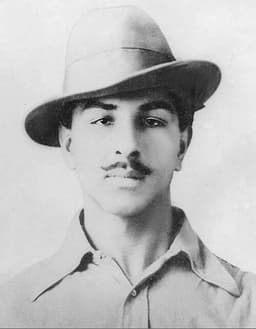
Rajiv Gandhi
Politician · Modern
47.1Total
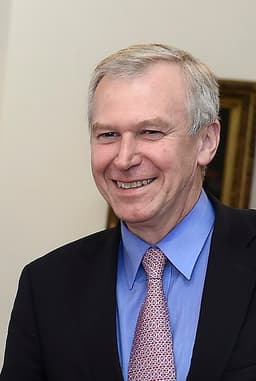
Yves Leterme
Politician · Modern
43.3Total
Basic Information
Born
1944
1960
Died
—
—
Era
Modern
Modern
Nationality
India
Belgium
Occupation
Politician
Politician
Civilization
Indian
Western
Score Comparison
Military (10%)
38.3
50.0
Political (20%)
45.0
36.5
Influence (20%)
60.0
47.1
Legacy (20%)
46.7
37.5
Leadership (15%)
40.0
48.4
Strategy (15%)
38.3
44.4
TOTAL
47.1
43.3
Rajiv Gandhi — Complete Timeline
1984 AD
Became Prime Minister of IndiaPolitical Action◆ Major
After the assassination of his mother, Prime Minister Indira Gandhi, Rajiv Gandhi was appointed Prime Minister. He was the youngest person to hold the office, at age 40.
Prime MinisterSuccessionIndia
Impact: national
Bhopal Gas Tragedy ResponsePolitical Action◆ Major
Rajiv Gandhi's government faced the aftermath of the Bhopal gas leak, the world's worst industrial disaster. The government's response, including compensation and legal action against Union Carbide, was criticized as inadequate.
DisasterIndustrial AccidentCriticism
Impact: nationaltragic
1985 AD
Shah Bano Case ControversyPolitical Action◆ Major
Rajiv Gandhi's government overturned a Supreme Court ruling granting alimony to a divorced Muslim woman, passing the Muslim Women (Protection of Rights on Divorce) Act. This was seen as pandering to conservative Muslim leaders and sparked debate on secularism.
Muslim LawSecularismWomen's Rights
Impact: national
1991 AD
Assassinated by LTTEPolitical Action
Rajiv Gandhi was assassinated by a suicide bomber of the Liberation Tigers of Tamil Eelam (LTTE) during an election rally in Sriperumbudur, Tamil Nadu. His death was a major blow to Indian politics.
AssassinationLTTETamil Nadu
Impact: nationaltragic
Yves Leterme — Complete Timeline
2008 AD
Prime Minister of Belgium (first term)Political Action◆ Major
Yves Leterme became Prime Minister of Belgium, leading a coalition government. His tenure was marked by political instability due to the ongoing linguistic conflict between Flemish and French-speaking parties.
Prime MinisterBelgian Politics
Impact: national
Resignation over Fortis affairPolitical Action◆ Major
Prime Minister Yves Leterme resigned after the Supreme Court revealed that his government had attempted to influence a judicial decision regarding the sale of Fortis bank. The resignation was accepted by the king, but Leterme later returned as PM.
ResignationScandalFortis
Impact: nationaldestructive
2010 AD
Resignation over political crisisPolitical Action◆ Major
Prime Minister Yves Leterme resigned again after the Open VLD party left the coalition over the unresolved linguistic dispute in the Brussels-Halle-Vilvoorde constituency. This triggered a 541-day political crisis without a government.
ResignationPolitical CrisisLinguistic Conflict
Impact: nationaldestructive
This comparison has not been analyzed yet.
One-time AI generation (~1 minute). Scores and timeline are already available below.
Rankings
🥇
Rajiv GandhiLeader
Mil: 38.3Pol: 45.0Inf: 60.0
47.1
🥈
Yves Leterme
Mil: 50.0Pol: 36.5Inf: 47.1
43.3
+3.8 behind
How This Comparison Works
Algorithm
Each figure is scored on 6 dimensions (0—100 scale) based on structured historical data: Military (10%), Political (20%), Influence (20%), Legacy (20%), Leadership (15%), Strategy (15%). The weighted total produces the final ranking.
Data Sources
Scores are computed from structured sub-indicators in the database. Scale factors adjust for era (Ancient ×0.85, Modern ×1.0) and civilization size (Eastern ×1.05, Other ×0.80) to account for differences in population and military scale.
Maximum 3 Figures
Comparisons are limited to 2—3 figures to ensure readability and statistical meaningfulness.
Error Margins
±5 points per dimension — Sub-scores are derived from historical records with inherent uncertainty. Two figures within 5 points on a dimension should be considered roughly equivalent in that area.
Total Score Accuracy
±3 points overall — The weighted combination of 6 dimensions produces a total score with approximately ±3 points of uncertainty. Differences of less than 3 points are not statistically significant— the figures are effectively tied.
Known Limitations
- Historical records are incomplete and uneven across civilizations
- Figures from oral-tradition societies may be underrepresented
- Occupation labels can misclassify multi-role figures
- Scores measure capability and impact, not moral character
- Quantitative scoring is a comparison tool, not absolute truth
Capability Radar
Military (10%) — Battles & Warfare
Battles
0
30
Win Rate
0
29
Expansion
0
36
Political (20%) — Governance & Reform
Reform
60
20
Diplomacy
65
25
Economy
55
20
Influence (20%) — Cultural & Global Reach
Cultural
45
10
Global
45
10
Legacy (20%) — Historical Impact
Historical
50
15
Longevity
30
10
Leadership (15%) — Power & Stability
Tenure
55
30
Stability
40
10
Strategy (15%) — Tactics & Innovation
Strategy
0
40
Tactics
0
43
Reform
10
45
Similar Comparisons
Comments & Discussion
No comments yet. Be the first to share your thoughts!