Loading...
Brian Mulroney vs Rajiv Gandhi
Brian Mulroney leads by 13.7 pts · 2 figures compared
…
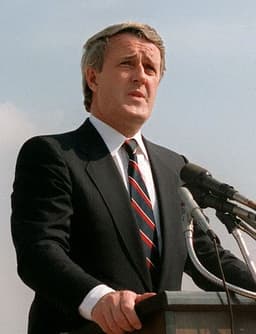
Brian Mulroney
Politician · Modern
60.8Total
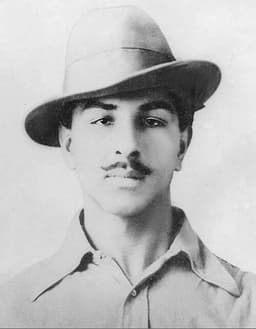
Rajiv Gandhi
Politician · Modern
47.1Total
Basic Information
Born
1939
1944
Died
—
—
Era
Modern
Modern
Nationality
Canada
India
Occupation
Politician
Politician
Civilization
Western
Indian
Score Comparison
Military (10%)
48.4
38.3
Political (20%)
78.0
45.0
Influence (20%)
61.0
60.0
Legacy (20%)
56.0
46.7
Leadership (15%)
72.0
40.0
Strategy (15%)
42.5
38.3
TOTAL
60.8
47.1
Brian Mulroney — Complete Timeline
1988 AD
Negotiation of the Canada-US Free Trade AgreementPolitical Action◆ Major
Mulroney's government negotiated the Canada-US Free Trade Agreement (CUSFTA), which eliminated tariffs and trade barriers between the two countries. The deal was controversial in Canada but passed after a federal election fought largely on the issue.
Free TradeUS-Canada RelationsEconomic Policy
Impact: regionalconstructive
1991 AD
Introduction of the Goods and Services TaxReform◆ Major
Mulroney's government implemented a 7% federal Goods and Services Tax (GST) to replace the hidden Manufacturers' Sales Tax. The GST was deeply unpopular and contributed to the Progressive Conservative Party's electoral collapse in 1993.
Tax ReformGSTFiscal Policy
Impact: nationaldestructive
1992 AD
Signing of the North American Free Trade AgreementPolitical Action◆ Major
Mulroney signed NAFTA alongside US President George H.W. Bush and Mexican President Carlos Salinas de Gortari. The agreement expanded CUSFTA to include Mexico, creating a trilateral trade bloc that reshaped North American commerce.
NAFTATrade BlocNorth America
Impact: regionalconstructive
Rajiv Gandhi — Complete Timeline
1984 AD
Became Prime Minister of IndiaPolitical Action◆ Major
After the assassination of his mother, Prime Minister Indira Gandhi, Rajiv Gandhi was appointed Prime Minister. He was the youngest person to hold the office, at age 40.
Prime MinisterSuccessionIndia
Impact: national
Bhopal Gas Tragedy ResponsePolitical Action◆ Major
Rajiv Gandhi's government faced the aftermath of the Bhopal gas leak, the world's worst industrial disaster. The government's response, including compensation and legal action against Union Carbide, was criticized as inadequate.
DisasterIndustrial AccidentCriticism
Impact: nationaltragic
1985 AD
Shah Bano Case ControversyPolitical Action◆ Major
Rajiv Gandhi's government overturned a Supreme Court ruling granting alimony to a divorced Muslim woman, passing the Muslim Women (Protection of Rights on Divorce) Act. This was seen as pandering to conservative Muslim leaders and sparked debate on secularism.
Muslim LawSecularismWomen's Rights
Impact: national
1991 AD
Assassinated by LTTEPolitical Action
Rajiv Gandhi was assassinated by a suicide bomber of the Liberation Tigers of Tamil Eelam (LTTE) during an election rally in Sriperumbudur, Tamil Nadu. His death was a major blow to Indian politics.
AssassinationLTTETamil Nadu
Impact: nationaltragic
Expert Analysis
Origins
Brian Mulroney was born on March 20, 1939, in Baie-Comeau, Quebec, to an electrician father and homemaker mother. He grew up in a bilingual, working-class environment and studied political science at St. Francis Xavier University, later earning a law degree from Université Laval. His early career included labor law practice and involvement with the Progressive Conservative Party.
Rajiv Gandhi was born on August 20, 1944, in Bombay, into the Nehru-Gandhi political dynasty. His grandfather Jawaharlal Nehru was India's first prime minister, and his mother Indira Gandhi later held the same office. Rajiv studied at the Doon School and then at Trinity College, Cambridge, though he did not complete his degree. He trained as a pilot and worked for Indian Airlines, initially showing little interest in politics.
Rise to Power
Mulroney entered politics in 1976, running for the Progressive Conservative leadership but losing to Joe Clark. He returned to law and business, then won the leadership in 1983. In the 1984 federal election, he led the PCs to a landslide victory, winning 211 of 282 seats—the largest majority in Canadian history. Key to his rise was his appeal to Quebec nationalists and his promise of free trade with the United States.
Rajiv Gandhi was thrust into politics after his younger brother Sanjay died in 1980. He won a parliamentary seat in 1981 and became prime minister on October 31, 1984, hours after his mother Indira Gandhi was assassinated by her Sikh bodyguards. The sympathy wave and his untarnished image led the Congress party to a sweeping victory in the 1984 elections, securing 404 of 533 seats.
Leadership & Governance
Mulroney's leadership focused on economic integration and fiscal reform. He negotiated the Canada-US Free Trade Agreement (CUSFTA) in 1988, which eliminated tariffs between the two countries, and later expanded it into NAFTA in 1994. Domestically, he introduced the Goods and Services Tax (GST) in 1991, replacing the hidden Manufacturers' Sales Tax. The GST was deeply unpopular but improved tax efficiency. His government also privatized several state-owned enterprises, including Air Canada and Petro-Canada. Mulroney scored 72.0 in leadership and 42.5 in strategy, reflecting his pragmatic but sometimes reactive approach.
Rajiv Gandhi aimed to modernize India's economy and administration. He reduced import tariffs, encouraged foreign investment, and promoted technology, earning the nickname "Mr. Clean" for his anti-corruption stance. He introduced the Anti-Defection Law and lowered the voting age from 21 to 18. However, his response to the Bhopal gas tragedy in 1984 was criticized as inadequate; the government's compensation and cleanup efforts were slow. In the Shah Bano case, he overturned a Supreme Court ruling to appease conservative Muslims, which was seen as pandering. His leadership score of 40.0 and strategy of 38.3 reflect mixed results.
Triumph & Tragedy
Mulroney's greatest triumph was the negotiation of NAFTA, which created the world's largest free trade area and reshaped North American commerce. He also played a key role in opposing apartheid in South Africa and in the 1990 Oka Crisis resolution. His tragedies include the failure of the Meech Lake Accord (1990) and Charlottetown Accord (1992), which sought to bring Quebec into the constitution but were rejected. The GST alienated voters, contributing to the PCs' collapse in the 1993 election, where they won only two seats.
Rajiv Gandhi's triumphs include modernizing India's telecommunications and education systems, and his early economic reforms laid groundwork for later liberalization. He also sent the Indian Peace Keeping Force to Sri Lanka in 1987 to mediate the ethnic conflict. His tragedy was his assassination on May 21, 1991, by an LTTE suicide bomber during an election rally. Additionally, his government's handling of the Bhopal disaster and the Shah Bano case damaged his reputation. He scored 46.7 in legacy.
Character & Destiny
Mulroney was known for his charm, negotiation skills, and willingness to compromise. He built coalitions across party lines, but his unpopularity on the GST and constitutional failures cost him. His character—pragmatic and deal-making—shaped his destiny as a transformative but divisive figure. Historians note his ability to achieve major trade deals despite public opposition.
Rajiv Gandhi was idealistic and tech-savvy, but inexperienced. He surrounded himself with advisors and struggled with political maneuvering. His decision to send troops to Sri Lanka backfired, leading to his assassination. His character—naive but well-intentioned—led to both reforms and disasters. He scored 60.0 in influence, reflecting his global profile.
Legacy
Mulroney's legacy is dominated by NAFTA, which continues to govern trade among Canada, the US, and Mexico. The GST remains a key revenue source. He is remembered as a prime minister who integrated Canada into global trade but failed on constitutional unity. His political score of 78.0 indicates strong impact.
Rajiv Gandhi's legacy is mixed: he is credited with starting economic reforms and promoting technology, but his tenure is also marked by the Bhopal tragedy and the rise of militancy in Punjab and Sri Lanka. His assassination made him a martyr, but his long-term impact is less than his mother's. His total score of 47.1 reflects this.
Conclusion
Brian Mulroney had greater impact than Rajiv Gandhi, with a total score of 60.8 versus 47.1—a gap of 13.7 points. Mulroney's trade policies reshaped North America's economy for decades, while Gandhi's reforms were cut short by assassination. Mulroney's legacy endures through NAFTA, whereas Gandhi's contributions were largely overshadowed by crises. Taking a clear position: Mulroney's lasting institutional changes outweigh Gandhi's unfulfilled potential.
Rankings
🥇
Brian MulroneyLeader
Mil: 48.4Pol: 78.0Inf: 61.0
60.8
🥈
Rajiv Gandhi
Mil: 38.3Pol: 45.0Inf: 60.0
47.1
+13.7 behind
How This Comparison Works
Algorithm
Each figure is scored on 6 dimensions (0—100 scale) based on structured historical data: Military (10%), Political (20%), Influence (20%), Legacy (20%), Leadership (15%), Strategy (15%). The weighted total produces the final ranking.
Data Sources
Scores are computed from structured sub-indicators in the database. Scale factors adjust for era (Ancient ×0.85, Modern ×1.0) and civilization size (Eastern ×1.05, Other ×0.80) to account for differences in population and military scale.
Maximum 3 Figures
Comparisons are limited to 2—3 figures to ensure readability and statistical meaningfulness.
Error Margins
±5 points per dimension — Sub-scores are derived from historical records with inherent uncertainty. Two figures within 5 points on a dimension should be considered roughly equivalent in that area.
Total Score Accuracy
±3 points overall — The weighted combination of 6 dimensions produces a total score with approximately ±3 points of uncertainty. Differences of less than 3 points are not statistically significant— the figures are effectively tied.
Known Limitations
- Historical records are incomplete and uneven across civilizations
- Figures from oral-tradition societies may be underrepresented
- Occupation labels can misclassify multi-role figures
- Scores measure capability and impact, not moral character
- Quantitative scoring is a comparison tool, not absolute truth
Capability Radar
Military (10%) — Battles & Warfare
Battles
31
0
Win Rate
32
0
Expansion
36
0
Political (20%) — Governance & Reform
Reform
75
60
Diplomacy
80
65
Economy
75
55
Influence (20%) — Cultural & Global Reach
Cultural
40
45
Global
65
45
Legacy (20%) — Historical Impact
Historical
65
50
Longevity
55
30
Leadership (15%) — Power & Stability
Tenure
65
55
Stability
60
40
Strategy (15%) — Tactics & Innovation
Strategy
38
0
Tactics
39
0
Reform
46
10
Similar Comparisons
Comments & Discussion
No comments yet. Be the first to share your thoughts!