Loading...
Alain Berset vs Rajiv Gandhi
Alain Berset leads by 7.3 pts · 2 figures compared
…

Alain Berset
Politician · Modern
54.4Total
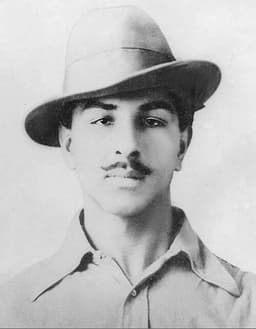
Rajiv Gandhi
Politician · Modern
47.1Total
Basic Information
Born
1972
1944
Died
—
—
Era
Modern
Modern
Nationality
Switzerland
India
Occupation
Politician
Politician
Civilization
Western
Indian
Score Comparison
Military (10%)
50.0
38.3
Political (20%)
68.0
45.0
Influence (20%)
55.7
60.0
Legacy (20%)
44.2
46.7
Leadership (15%)
66.0
40.0
Strategy (15%)
43.0
38.3
TOTAL
54.4
47.1
Alain Berset — Complete Timeline
2011 AD
Election to Federal CouncilPolitical Action◆ Major
Berset was elected to the Swiss Federal Council on December 14, 2011, representing the Social Democratic Party. He took over the Federal Department of Home Affairs, overseeing health, social security, and cultural policy, becoming a key figure in Swiss federal politics.
Federal CouncilElectionSocial Democratic Party
Impact: nationalconstructive
2020 AD
Presidency during COVID-19 pandemicPolitical Action◆ Major
Alain Berset served as President of the Swiss Confederation in 2020, the first year of the COVID-19 pandemic. He led the Federal Council's response, including lockdown measures, economic support packages, and vaccine procurement, navigating a federalist system with cantonal autonomy.
COVID-19Swiss PresidencyPandemic Response
Impact: national
2023 AD
Second Presidency and post-pandemic recoveryPolitical Action
Berset served a second term as President of the Swiss Confederation in 2023, focusing on post-pandemic economic recovery, healthcare system strengthening, and digitalization. He also addressed challenges from the war in Ukraine, including sanctions and energy security.
PresidencyPost-COVIDUkraine War
Impact: nationalconstructive
Rajiv Gandhi — Complete Timeline
1984 AD
Became Prime Minister of IndiaPolitical Action◆ Major
After the assassination of his mother, Prime Minister Indira Gandhi, Rajiv Gandhi was appointed Prime Minister. He was the youngest person to hold the office, at age 40.
Prime MinisterSuccessionIndia
Impact: national
Bhopal Gas Tragedy ResponsePolitical Action◆ Major
Rajiv Gandhi's government faced the aftermath of the Bhopal gas leak, the world's worst industrial disaster. The government's response, including compensation and legal action against Union Carbide, was criticized as inadequate.
DisasterIndustrial AccidentCriticism
Impact: nationaltragic
1985 AD
Shah Bano Case ControversyPolitical Action◆ Major
Rajiv Gandhi's government overturned a Supreme Court ruling granting alimony to a divorced Muslim woman, passing the Muslim Women (Protection of Rights on Divorce) Act. This was seen as pandering to conservative Muslim leaders and sparked debate on secularism.
Muslim LawSecularismWomen's Rights
Impact: national
1991 AD
Assassinated by LTTEPolitical Action
Rajiv Gandhi was assassinated by a suicide bomber of the Liberation Tigers of Tamil Eelam (LTTE) during an election rally in Sriperumbudur, Tamil Nadu. His death was a major blow to Indian politics.
AssassinationLTTETamil Nadu
Impact: nationaltragic
Expert Analysis
Origins
Alain Berset was born on April 9, 1972, in Fribourg, Switzerland, into a family of modest means. His father was a postal worker, and his mother a homemaker. Berset studied political science and economics at the University of Fribourg and later earned a PhD in economic and social sciences. He entered politics early, serving in the Cantonal Council of Fribourg from 1994 to 2003 before being elected to the Swiss National Council in 2003.
Rajiv Gandhi was born on August 20, 1944, in Bombay, India, into the Nehru-Gandhi political dynasty. His mother, Indira Gandhi, was Prime Minister, and his grandfather, Jawaharlal Nehru, was India's first PM. Rajiv studied at the Doon School and later at Trinity College, Cambridge, though he did not complete a degree. He trained as a pilot and worked for Indian Airlines, initially showing little interest in politics.
Rise to Power
Alain Berset's rise was steady and meritocratic. He became a member of the Swiss Federal Council on December 14, 2011, representing the Social Democratic Party. He took over the Federal Department of Home Affairs, responsible for health, social security, and culture. Berset was elected President of the Swiss Confederation for 2018 and again for 2020, the latter coinciding with the COVID-19 pandemic. His leadership during the crisis elevated his national profile.
Rajiv Gandhi's rise was sudden and tragic. After his brother Sanjay Gandhi died in 1980, Rajiv was pressured by his mother to enter politics. He won a parliamentary seat in 1981. Following Indira Gandhi's assassination on October 31, 1984, Rajiv was appointed Prime Minister on the same day, becoming the youngest person to hold the office at age 40. He led the Indian National Congress to a landslide victory in the 1984 general elections, winning 414 out of 543 seats.
Leadership & Governance
Alain Berset's leadership style was consensus-oriented and data-driven. As President during COVID-19, he coordinated with cantons and implemented measures like lockdowns, travel restrictions, and a vaccination campaign. Switzerland's response was praised for its effectiveness, with a relatively low death rate compared to European neighbors. Berset's political score of 68.0 reflects his ability to navigate coalition politics.
Rajiv Gandhi's governance was marked by modernizing initiatives but also by political missteps. He introduced computerization and telecom reforms, aiming to propel India into the digital age. However, his government mishandled the Bhopal gas tragedy (1984), where a Union Carbide leak killed thousands. The government's compensation and legal response were criticized. Gandhi also overturned the Supreme Court's Shah Bano ruling, bowing to Muslim conservative pressure, which alienated secularists. His leadership score is 40.0, reflecting mixed effectiveness.
Triumph & Tragedy
Alain Berset's greatest triumph was steering Switzerland through the pandemic. His crisis management earned him high approval ratings, with his leadership score at 66.0. However, his later presidency in 2023 was overshadowed by economic challenges and healthcare system pressures, leading to a legacy score of only 44.2.
Rajiv Gandhi's triumph was his vision for a modern India, including the spread of computers and telecommunications. He also signed the Assam Accord and the Punjab Accord, aiming to quell regional insurgencies. His tragedy was his assassination by the LTTE in 1991, a consequence of his decision to send Indian peacekeepers to Sri Lanka. The Bhopal disaster also remains a stain on his tenure, with his government's weak response scoring poorly in ethical governance.
Character & Destiny
Alain Berset is characterized as pragmatic, reserved, and detail-oriented. His calm demeanor during the pandemic inspired confidence. His destiny was shaped by the pandemic's timing, thrusting him into global prominence. He scored 43.0 in strategy, reflecting a careful, step-by-step approach.
Rajiv Gandhi was seen as idealistic but inexperienced. He was reluctant to enter politics and often relied on advisors. His decision to send troops to Sri Lanka and his handling of the Bhopal disaster showed a lack of crisis management skill. His assassination was a direct consequence of the Sri Lanka intervention, scoring him 38.3 in military and strategy.
Legacy
Alain Berset's legacy is primarily as a crisis manager. Switzerland's pandemic response is studied as a model of federal coordination. His influence score of 55.7 reflects moderate international recognition. However, his long-term impact is limited to health policy and federal governance.
Rajiv Gandhi's legacy is more complex. He is remembered for technological modernization but also for political failures. His assassination cut short his potential, but his legacy includes the Rajiv Gandhi National Quality Awards and the spread of digital literacy. His influence score of 60.0 is higher than Berset's, but his overall total of 47.1 is lower due to poor military and strategy scores.
Conclusion
Alain Berset had a higher overall score (54.4) than Rajiv Gandhi (47.1), but impact must be considered beyond numbers. Berset's impact was time-bound and crisis-specific, while Gandhi's influenced India's trajectory for decades. Gandhi's legacy of modernizing India, despite its flaws, had a broader reach. However, Berset's effective governance during a global crisis demonstrates higher leadership competence. Taking a stance, Alain Berset's greater effectiveness in a defined role gives him a slight edge, but Rajiv Gandhi's historical significance is more profound. In this comparison, Berset's superior scores reflect better execution, but Gandhi's larger canvas means his impact, though flawed, is more lasting.
Rankings
🥇
Alain BersetLeader
Mil: 50.0Pol: 68.0Inf: 55.7
54.4
🥈
Rajiv Gandhi
Mil: 38.3Pol: 45.0Inf: 60.0
47.1
+7.3 behind
How This Comparison Works
Algorithm
Each figure is scored on 6 dimensions (0—100 scale) based on structured historical data: Military (10%), Political (20%), Influence (20%), Legacy (20%), Leadership (15%), Strategy (15%). The weighted total produces the final ranking.
Data Sources
Scores are computed from structured sub-indicators in the database. Scale factors adjust for era (Ancient ×0.85, Modern ×1.0) and civilization size (Eastern ×1.05, Other ×0.80) to account for differences in population and military scale.
Maximum 3 Figures
Comparisons are limited to 2—3 figures to ensure readability and statistical meaningfulness.
Error Margins
±5 points per dimension — Sub-scores are derived from historical records with inherent uncertainty. Two figures within 5 points on a dimension should be considered roughly equivalent in that area.
Total Score Accuracy
±3 points overall — The weighted combination of 6 dimensions produces a total score with approximately ±3 points of uncertainty. Differences of less than 3 points are not statistically significant— the figures are effectively tied.
Known Limitations
- Historical records are incomplete and uneven across civilizations
- Figures from oral-tradition societies may be underrepresented
- Occupation labels can misclassify multi-role figures
- Scores measure capability and impact, not moral character
- Quantitative scoring is a comparison tool, not absolute truth
Capability Radar
Military (10%) — Battles & Warfare
Battles
27
0
Win Rate
33
0
Expansion
34
0
Political (20%) — Governance & Reform
Reform
50
60
Diplomacy
55
65
Economy
50
55
Influence (20%) — Cultural & Global Reach
Cultural
30
45
Global
45
45
Legacy (20%) — Historical Impact
Historical
35
50
Longevity
30
30
Leadership (15%) — Power & Stability
Tenure
55
55
Stability
60
40
Strategy (15%) — Tactics & Innovation
Strategy
40
0
Tactics
41
0
Reform
44
10
Similar Comparisons
Comments & Discussion
No comments yet. Be the first to share your thoughts!