Loading...
Rajiv Gandhi vs Ramzan Kadyrov
Ramzan Kadyrov leads by 3.3 pts · 2 figures compared
…
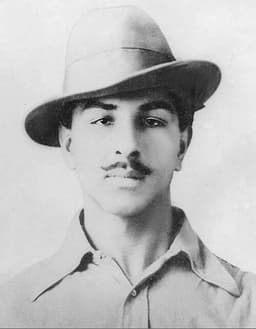
Rajiv Gandhi
Politician · Modern
47.1Total

Ramzan Kadyrov
Politician · Modern
50.4Total
Basic Information
Born
1944
1976
Died
—
—
Era
Modern
Modern
Nationality
India
Chechnya
Occupation
Politician
Politician
Civilization
Indian
Western
Score Comparison
Military (10%)
38.3
20.0
Political (20%)
45.0
68.0
Influence (20%)
60.0
52.5
Legacy (20%)
46.7
39.2
Leadership (15%)
40.0
72.0
Strategy (15%)
38.3
45.0
TOTAL
47.1
50.4
Rajiv Gandhi — Complete Timeline
1984 AD
Became Prime Minister of IndiaPolitical Action◆ Major
After the assassination of his mother, Prime Minister Indira Gandhi, Rajiv Gandhi was appointed Prime Minister. He was the youngest person to hold the office, at age 40.
Prime MinisterSuccessionIndia
Impact: national
Bhopal Gas Tragedy ResponsePolitical Action◆ Major
Rajiv Gandhi's government faced the aftermath of the Bhopal gas leak, the world's worst industrial disaster. The government's response, including compensation and legal action against Union Carbide, was criticized as inadequate.
DisasterIndustrial AccidentCriticism
Impact: nationaltragic
1985 AD
Shah Bano Case ControversyPolitical Action◆ Major
Rajiv Gandhi's government overturned a Supreme Court ruling granting alimony to a divorced Muslim woman, passing the Muslim Women (Protection of Rights on Divorce) Act. This was seen as pandering to conservative Muslim leaders and sparked debate on secularism.
Muslim LawSecularismWomen's Rights
Impact: national
1991 AD
Assassinated by LTTEPolitical Action
Rajiv Gandhi was assassinated by a suicide bomber of the Liberation Tigers of Tamil Eelam (LTTE) during an election rally in Sriperumbudur, Tamil Nadu. His death was a major blow to Indian politics.
AssassinationLTTETamil Nadu
Impact: nationaltragic
Ramzan Kadyrov — Complete Timeline
2007 AD
Appointed Head of Chechen RepublicPolitical Action
Ramzan Kadyrov was appointed by Russian President Vladimir Putin as the head of the Chechen Republic. He succeeded his father Akhmad Kadyrov, who was assassinated in 2004. This appointment solidified his control over Chechnya.
ChechnyaLeadershipPutin
Impact: regional
2008 AD
Reconstruction of GroznyReform◆ Major
Kadyrov oversaw the massive reconstruction of Grozny, the Chechen capital destroyed during the wars. New buildings, mosques, and infrastructure were built using federal funds. The city was transformed into a modern urban center.
ReconstructionUrban DevelopmentChechnya
Impact: regionalconstructive
2009 AD
Human Rights Abuses AccusationsPolitical Action◆ Major
Kadyrov was accused by human rights organizations of overseeing extrajudicial killings, torture, and forced disappearances of his political opponents. These allegations were widely reported but denied by his administration.
Human RightsAbusesChechnya
Impact: regionaldestructive
2013 AD
Passage of Anti-LGBTQ LawsReform◆ Major
Kadyrov implemented strict anti-LGBTQ policies in Chechnya, including arrests and torture of suspected homosexuals. These actions were condemned internationally but supported by the Russian government.
LGBTQHuman RightsChechnya
Impact: regionaldestructive
2022 AD
Support for Russian Invasion of UkraineWar◆ Major
Kadyrov sent Chechen troops to support the Russian invasion of Ukraine. He publicly declared loyalty to Putin and claimed his forces were fighting against Ukrainian nationalism. This involvement expanded his military role.
Ukraine WarChechnyaRussia
Impact: globaldestructive
Expert Analysis
Origins
Rajiv Gandhi was born on August 20, 1944, in Bombay, India, into the Nehru-Gandhi political dynasty. His mother was Prime Minister Indira Gandhi, and his grandfather Jawaharlal Nehru was India's first prime minister. Rajiv studied at the Doon School and later at the University of Cambridge, though he did not complete a degree. He trained as a pilot and married Sonia Maino in 1968. His entry into politics was reluctant, following his younger brother Sanjay's death in 1980.
Ramzan Kadyrov was born on October 5, 1976, in Tsentoroy, Chechnya, then part of the Soviet Union. He grew up during the Chechen wars, deeply influenced by his father Akhmad Kadyrov, a former rebel turned pro-Russian mufti. Ramzan had limited formal education; he attended a religious school and later studied law at a local university. His formative years were marked by violence and war, shaping his authoritarian approach.
Rise to Power
Rajiv Gandhi was thrust into politics after his brother Sanjay's death in 1980. He won a parliamentary seat in 1981 and became Prime Minister in 1984 after his mother's assassination by her Sikh bodyguards. He led the Indian National Congress to a landslide victory in the 1984 elections, securing 404 seats. His rise was meteoric, but he lacked substantial political experience.
Ramzan Kadyrov rose to power through his father's position. After Akhmad Kadyrov was assassinated in 2004, Ramzan was appointed First Deputy Prime Minister of Chechnya and later became President in 2007, with Vladimir Putin's backing. He consolidated power by building a loyal security force and eliminating rivals. His rise was marked by ruthless tactics, including alleged involvement in the death of his father's assassin.
Leadership & Governance
Rajiv Gandhi's leadership style was technocratic and modernizing. He promoted technology and education, launching the 'Rajiv Gandhi National Quality Award' and the 'Technology Mission' for drinking water. He lowered the voting age from 21 to 18 and introduced major educational reforms. However, his government faced criticism for its handling of the Bhopal gas tragedy (1984) and the Shah Bano case, where he overturned a Supreme Court ruling to appease conservative Muslims. His governance scored 40.0 in leadership and 38.3 in strategy.
Ramzan Kadyrov rules Chechnya with an iron fist, combining authoritarianism with religious conservatism. He oversees extensive reconstruction of Grozny, building lavish mosques and infrastructure. He maintains loyalty through a patronage network and fear. His leadership score is 72.0, reflecting his tight control, but his strategy score is 45.0, indicating short-term focus. He has been accused of human rights abuses, including extrajudicial killings and torture, and passed anti-LGBTQ laws that drew international condemnation.
Triumph & Tragedy
Rajiv Gandhi's triumphs include modernizing India's telecommunications and education sectors, and improving relations with the United States and China. He also sent Indian peacekeepers to Sri Lanka in 1987. His tragedies include the Bhopal gas leak response, which was widely criticized as inadequate, and the Shah Bano controversy, which damaged his secular image. His greatest tragedy was his assassination by the LTTE in 1991, which ended his political comeback.
Ramzan Kadyrov's triumphs include stabilizing Chechnya after years of war, rebuilding Grozny, and securing loyalty from Moscow. He has also boosted his image through lavish projects. His tragedies are numerous: widespread human rights abuses, suppression of dissent, and international isolation. His support for Russia's invasion of Ukraine has drawn sanctions, but he remains in power. His legacy is marred by allegations of torture and forced disappearances.
Character & Destiny
Rajiv Gandhi was seen as aloof and idealistic, often relying on advisors. He was indecisive at times, as seen in the Shah Bano affair. His character shaped his fate: his naivety in Sri Lanka led to the LTTE's rise and his assassination. Historians note his potential was cut short; he scored 46.7 in legacy and 45.0 in political skills.
Ramzan Kadyrov is characterized as ruthless, pragmatic, and loyal to Putin. He uses religion to legitimize his rule. His destiny is tied to Moscow's support; without it, his regime would collapse. He has survived multiple assassination attempts and remains a controversial figure. His leadership score of 72.0 reflects his effectiveness in maintaining power, but his legacy score is 39.2 due to human rights concerns.
Legacy
Rajiv Gandhi's legacy is mixed. He is remembered for modernizing India's telecom sector and promoting education, but also for the Bhopal tragedy and Shah Bano. His assassination elevated him to martyr status in India. His total score is 47.1, with influence at 60.0. His legacy endures through institutions named after him, but his political dynasty has faded.
Ramzan Kadyrov's legacy is that of a strongman who brought stability to Chechnya at the cost of human rights. He is a loyal ally of Putin, but his methods are condemned globally. His total score is 50.4, with leadership at 72.0. His long-term impact is uncertain, as his regime depends on external support.
Conclusion
Comparing Rajiv Gandhi and Ramzan Kadyrov reveals two vastly different leaders. Rajiv Gandhi, with a total score of 47.1, had a broader influence on a democratic nation of over 800 million people, despite his flaws. Ramzan Kadyrov, scoring 50.4, exercises more direct control over a small republic but his impact is localized and authoritarian. Gandhi's legacy, though imperfect, contributed to India's modernization. Kadyrov's legacy is tainted by human rights abuses. Therefore, Rajiv Gandhi had a greater overall impact on world history, as his actions affected a global democracy and set precedents in technology and education, while Kadyrov's influence remains regional and tied to a single autocratic regime.
Rankings
🥇
Ramzan KadyrovLeader
Mil: 20.0Pol: 68.0Inf: 52.5
50.4
🥈
Rajiv Gandhi
Mil: 38.3Pol: 45.0Inf: 60.0
47.1
+3.3 behind
How This Comparison Works
Algorithm
Each figure is scored on 6 dimensions (0—100 scale) based on structured historical data: Military (10%), Political (20%), Influence (20%), Legacy (20%), Leadership (15%), Strategy (15%). The weighted total produces the final ranking.
Data Sources
Scores are computed from structured sub-indicators in the database. Scale factors adjust for era (Ancient ×0.85, Modern ×1.0) and civilization size (Eastern ×1.05, Other ×0.80) to account for differences in population and military scale.
Maximum 3 Figures
Comparisons are limited to 2—3 figures to ensure readability and statistical meaningfulness.
Error Margins
±5 points per dimension — Sub-scores are derived from historical records with inherent uncertainty. Two figures within 5 points on a dimension should be considered roughly equivalent in that area.
Total Score Accuracy
±3 points overall — The weighted combination of 6 dimensions produces a total score with approximately ±3 points of uncertainty. Differences of less than 3 points are not statistically significant— the figures are effectively tied.
Known Limitations
- Historical records are incomplete and uneven across civilizations
- Figures from oral-tradition societies may be underrepresented
- Occupation labels can misclassify multi-role figures
- Scores measure capability and impact, not moral character
- Quantitative scoring is a comparison tool, not absolute truth
Capability Radar
Military (10%) — Battles & Warfare
Battles
0
15
Win Rate
0
20
Expansion
0
10
Political (20%) — Governance & Reform
Reform
60
30
Diplomacy
65
40
Economy
55
35
Influence (20%) — Cultural & Global Reach
Cultural
45
30
Global
45
25
Legacy (20%) — Historical Impact
Historical
50
20
Longevity
30
15
Leadership (15%) — Power & Stability
Tenure
55
55
Stability
40
25
Strategy (15%) — Tactics & Innovation
Strategy
0
15
Tactics
0
20
Reform
10
25
Similar Comparisons
Comments & Discussion
No comments yet. Be the first to share your thoughts!