Loading...
Jiang Zemin vs Rajiv Gandhi
Jiang Zemin leads by 11.5 pts · 2 figures compared
…
Jiang Zemin
Politician · Modern
58.6Total
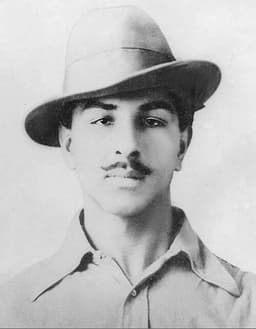
Rajiv Gandhi
Politician · Modern
47.1Total
Basic Information
Born
1926
1944
Died
—
—
Era
Modern
Modern
Nationality
China
India
Occupation
Politician
Politician
Civilization
Eastern
Indian
Score Comparison
Military (10%)
10.7
38.3
Political (20%)
82.0
45.0
Influence (20%)
65.0
60.0
Legacy (20%)
55.0
46.7
Leadership (15%)
78.0
40.0
Strategy (15%)
35.1
38.3
TOTAL
58.6
47.1
Jiang Zemin — Complete Timeline
1989 AD
Appointed General Secretary of the Communist PartyPolitical Action◆ Major
Jiang Zemin succeeded Zhao Ziyang as General Secretary after the Tiananmen Square crackdown. He consolidated power and led China through a period of rapid economic growth.
Party LeadershipPost-Tiananmen
Impact: national
2000 AD
Promoted the 'Three Represents' TheoryPolitical Action◆ Major
Jiang Zemin introduced the 'Three Represents' theory, which allowed private entrepreneurs to join the Communist Party. This ideological shift accommodated China's market economy reforms.
IdeologyEconomic Reform
Impact: nationalconstructive
2001 AD
Oversaw China's Entry into the WTOPolitical Action
Under Jiang Zemin's leadership, China joined the World Trade Organization. This integration accelerated economic growth and opened Chinese markets to global trade.
WTOGlobalization
Impact: globalconstructive
Shanghai Cooperation Organization FoundedPolitical Action◆ Major
Jiang Zemin was instrumental in founding the Shanghai Cooperation Organization with Russia and Central Asian states. The SCO focused on security cooperation and counterterrorism.
DiplomacySecurity
Impact: regionalconstructive
Rajiv Gandhi — Complete Timeline
1984 AD
Became Prime Minister of IndiaPolitical Action◆ Major
After the assassination of his mother, Prime Minister Indira Gandhi, Rajiv Gandhi was appointed Prime Minister. He was the youngest person to hold the office, at age 40.
Prime MinisterSuccessionIndia
Impact: national
Bhopal Gas Tragedy ResponsePolitical Action◆ Major
Rajiv Gandhi's government faced the aftermath of the Bhopal gas leak, the world's worst industrial disaster. The government's response, including compensation and legal action against Union Carbide, was criticized as inadequate.
DisasterIndustrial AccidentCriticism
Impact: nationaltragic
1985 AD
Shah Bano Case ControversyPolitical Action◆ Major
Rajiv Gandhi's government overturned a Supreme Court ruling granting alimony to a divorced Muslim woman, passing the Muslim Women (Protection of Rights on Divorce) Act. This was seen as pandering to conservative Muslim leaders and sparked debate on secularism.
Muslim LawSecularismWomen's Rights
Impact: national
1991 AD
Assassinated by LTTEPolitical Action
Rajiv Gandhi was assassinated by a suicide bomber of the Liberation Tigers of Tamil Eelam (LTTE) during an election rally in Sriperumbudur, Tamil Nadu. His death was a major blow to Indian politics.
AssassinationLTTETamil Nadu
Impact: nationaltragic
Expert Analysis
Origins
Jiang Zemin was born on August 17, 1926, in Yangzhou, Jiangsu, China, into a middle-class family. He studied electrical engineering at Shanghai Jiao Tong University, graduating in 1947. His early career included work in food processing and later in the automotive industry, where he rose through technical and managerial ranks. He joined the Chinese Communist Party in 1946.
Rajiv Gandhi was born on August 20, 1944, in Bombay, India, into the Nehru-Gandhi political dynasty. He studied at the Doon School and later at Trinity College, Cambridge, and Imperial College London, though he did not complete a degree. He worked as a commercial pilot for Indian Airlines, staying out of politics until his younger brother Sanjay died in 1980.
Rise to Power
Jiang Zemin's rise was gradual and bureaucratic. After the Tiananmen Square crackdown in 1989, hardliners sought a leader acceptable to both reformers and conservatives. Jiang, then party chief of Shanghai, was appointed General Secretary of the Communist Party on June 24, 1989. He consolidated power by balancing factions and later became President in 1993.
Rajiv Gandhi entered politics after his brother's death, winning a parliamentary seat in 1981. Following his mother Indira Gandhi's assassination on October 31, 1984, he became Prime Minister at age 40, the youngest in Indian history. He called a snap election and won a landslide victory, securing 415 of 545 Lok Sabha seats.
Leadership & Governance
Jiang Zemin oversaw China's economic transformation. His government pursued market reforms while maintaining tight political control. He promoted the 'Three Represents' theory in 2000, allowing private entrepreneurs to join the Communist Party, a shift to accommodate capitalism. Under his leadership, China joined the World Trade Organization in 2001, accelerating growth. His political score of 82.0 reflects his ability to navigate factional politics.
Rajiv Gandhi aimed to modernize India's economy and technology. He lowered import tariffs, promoted computerization, and launched the telecom revolution. However, his government faced major crises: the Bhopal gas tragedy (1984) response was criticized; the Shah Bano case (1985) saw him overturn a Supreme Court ruling to appease Muslim conservatives, appeasing but undermining secularism. His political score of 45.0 indicates weaker coalition management.
Triumph & Tragedy
Jiang Zemin's triumph was economic integration: China's GDP grew from $390 billion in 1990 to $1.2 trillion in 2000. The Three Represents modernized party ideology. However, his legacy is marred by the 1989 crackdown, though he was not the primary architect. His strategy score of 35.1 reflects a cautious, incremental approach.
Rajiv Gandhi's triumph was technological push: he introduced computers to government and expanded education. His military score of 38.3 reflects the 1987 Indian Peace Keeping Force intervention in Sri Lanka, which failed. His tragedy was assassination by the LTTE in 1991, partly due to that intervention. The Bhopal response and Shah Bano damaged his reputation.
Character & Destiny
Jiang Zemin was pragmatic, patient, and adept at building consensus. He enjoyed poetry and music, projecting a cultured image. His cautious nature helped him survive the Tiananmen aftermath and lead effectively. His leadership score of 78.0 indicates steady, if uncharismatic, management.
Rajiv Gandhi was idealistic but inexperienced. He was seen as a reluctant politician, thrust into power. His indecisiveness and poor judgment in the Shah Bano case and Sri Lanka intervention weakened his authority. His leadership score of 40.0 reflects his inability to handle crises.
Legacy
Jiang Zemin's legacy is China's economic rise. His policies set the stage for double-digit growth under successors. The Three Represents is now part of party doctrine. His influence score of 65.0 and legacy of 55.0 reflect lasting impact on China's trajectory.
Rajiv Gandhi's legacy is mixed. He is credited with modernizing India's technology sector, but his political missteps and the Bhopal tragedy overshadow achievements. His influence score of 60.0 and legacy of 46.7 indicate a leader whose potential was unfulfilled.
Conclusion
Jiang Zemin had greater impact than Rajiv Gandhi. With a total score of 58.6 against 47.1, Jiang's economic reforms transformed a nation of 1.2 billion, while Rajiv's reforms were partial and cut short. Jiang's political acumen (82.0 vs 45.0) and leadership (78.0 vs 40.0) enabled sustained change. Rajiv's untimely death and flawed decisions limit his legacy. Jiang Zemin's China became a global power; Rajiv Gandhi's India remained mired in crises. The data supports Jiang Zemin as the more consequential leader.
Rankings
🥇
Jiang ZeminLeader
Mil: 10.7Pol: 82.0Inf: 65.0
58.6
🥈
Rajiv Gandhi
Mil: 38.3Pol: 45.0Inf: 60.0
47.1
+11.5 behind
How This Comparison Works
Algorithm
Each figure is scored on 6 dimensions (0—100 scale) based on structured historical data: Military (10%), Political (20%), Influence (20%), Legacy (20%), Leadership (15%), Strategy (15%). The weighted total produces the final ranking.
Data Sources
Scores are computed from structured sub-indicators in the database. Scale factors adjust for era (Ancient ×0.85, Modern ×1.0) and civilization size (Eastern ×1.05, Other ×0.80) to account for differences in population and military scale.
Maximum 3 Figures
Comparisons are limited to 2—3 figures to ensure readability and statistical meaningfulness.
Error Margins
±5 points per dimension — Sub-scores are derived from historical records with inherent uncertainty. Two figures within 5 points on a dimension should be considered roughly equivalent in that area.
Total Score Accuracy
±3 points overall — The weighted combination of 6 dimensions produces a total score with approximately ±3 points of uncertainty. Differences of less than 3 points are not statistically significant— the figures are effectively tied.
Known Limitations
- Historical records are incomplete and uneven across civilizations
- Figures from oral-tradition societies may be underrepresented
- Occupation labels can misclassify multi-role figures
- Scores measure capability and impact, not moral character
- Quantitative scoring is a comparison tool, not absolute truth
Capability Radar
Military (10%) — Battles & Warfare
Battles
16
0
Win Rate
18
0
Expansion
21
0
Political (20%) — Governance & Reform
Reform
85
60
Diplomacy
80
65
Economy
90
55
Influence (20%) — Cultural & Global Reach
Cultural
60
45
Global
75
45
Legacy (20%) — Historical Impact
Historical
70
50
Longevity
65
30
Leadership (15%) — Power & Stability
Tenure
75
55
Stability
85
40
Strategy (15%) — Tactics & Innovation
Strategy
23
0
Tactics
27
0
Reform
28
10
Similar Comparisons
Comments & Discussion
No comments yet. Be the first to share your thoughts!