Loading...
Abdoulaye Wade vs Rajiv Gandhi
Abdoulaye Wade leads by 4.7 pts · 2 figures compared
…

Abdoulaye Wade
Politician · Modern
51.8Total
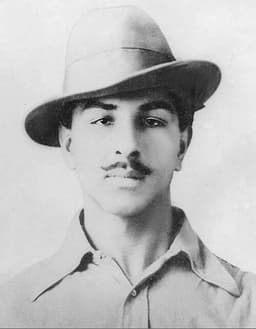
Rajiv Gandhi
Politician · Modern
47.1Total
Basic Information
Born
1926
1944
Died
—
—
Era
Modern
Modern
Nationality
Senegal
India
Occupation
Politician
Politician
Civilization
Other
Indian
Score Comparison
Military (10%)
19.6
38.3
Political (20%)
68.0
45.0
Influence (20%)
56.4
60.0
Legacy (20%)
43.3
46.7
Leadership (15%)
68.0
40.0
Strategy (15%)
44.8
38.3
TOTAL
51.8
47.1
Abdoulaye Wade — Complete Timeline
2000 AD
Elected President of SenegalPolitical Action
Abdoulaye Wade won the presidential election, defeating incumbent Abdou Diouf. His victory marked the first peaceful transfer of power in Senegal's history and was hailed as a democratic milestone.
ElectionDemocracy
Impact: nationalconstructive
2007 AD
Re-elected for a Second TermPolitical Action◆ Major
Wade was re-elected in the first round with 55.9% of the vote. The election was criticized by opposition for irregularities, but Wade's victory was confirmed by the Constitutional Council.
Re-electionControversy
Impact: national
2011 AD
Attempted to Change Constitution for Third TermPolitical Action◆ Major
Wade proposed a constitutional amendment to allow a third term, sparking massive protests. The move was seen as a power grab and led to violent clashes, damaging his democratic legacy.
Constitutional CrisisProtests
Impact: nationaldestructive
2012 AD
Defeated in Presidential ElectionPolitical Action◆ Major
Wade lost the presidential election to Macky Sall in a runoff. He conceded defeat, marking a peaceful transition of power despite the earlier tensions over his third-term bid.
Election DefeatTransition
Impact: national
Rajiv Gandhi — Complete Timeline
1984 AD
Became Prime Minister of IndiaPolitical Action◆ Major
After the assassination of his mother, Prime Minister Indira Gandhi, Rajiv Gandhi was appointed Prime Minister. He was the youngest person to hold the office, at age 40.
Prime MinisterSuccessionIndia
Impact: national
Bhopal Gas Tragedy ResponsePolitical Action◆ Major
Rajiv Gandhi's government faced the aftermath of the Bhopal gas leak, the world's worst industrial disaster. The government's response, including compensation and legal action against Union Carbide, was criticized as inadequate.
DisasterIndustrial AccidentCriticism
Impact: nationaltragic
1985 AD
Shah Bano Case ControversyPolitical Action◆ Major
Rajiv Gandhi's government overturned a Supreme Court ruling granting alimony to a divorced Muslim woman, passing the Muslim Women (Protection of Rights on Divorce) Act. This was seen as pandering to conservative Muslim leaders and sparked debate on secularism.
Muslim LawSecularismWomen's Rights
Impact: national
1991 AD
Assassinated by LTTEPolitical Action
Rajiv Gandhi was assassinated by a suicide bomber of the Liberation Tigers of Tamil Eelam (LTTE) during an election rally in Sriperumbudur, Tamil Nadu. His death was a major blow to Indian politics.
AssassinationLTTETamil Nadu
Impact: nationaltragic
Expert Analysis
Origins
Abdoulaye Wade was born on May 29, 1926, in Kébémer, Senegal, into a Muslim family. His father was a marabout and his mother a homemaker. Wade studied law in France, earning a doctorate in legal and economic sciences from the University of Paris. He became a professor and later a prominent opposition lawyer in Senegal.
Rajiv Gandhi was born on August 20, 1944, in Bombay, India, into the Nehru-Gandhi political dynasty. His mother was Prime Minister Indira Gandhi and his grandfather Jawaharlal Nehru. He studied at the Doon School and later at Cambridge University, but did not complete his degree. He worked as a commercial pilot before entering politics.
Rise to Power
Wade's rise was decades-long. He founded the Senegalese Democratic Party (PDS) in 1974 and ran for president multiple times. In 2000, after 26 years of opposition, he defeated incumbent Abdou Diouf in the second round, securing 58.8% of the vote. This marked Senegal's first peaceful transfer of power, a turning point for the nation.
Rajiv Gandhi's rise was sudden and tragic. After the assassination of his brother Sanjay in 1980, he entered politics reluctantly. Following Indira Gandhi's assassination on October 31, 1984, Rajiv was appointed Prime Minister within hours. At 40, he became India's youngest PM. He led the Congress party to a landslide victory in the 1984 elections, winning 414 of 543 seats.
Leadership & Governance
Wade's leadership style was flamboyant and confrontational. He pursued economic liberalization, reducing state control and attracting foreign investment. He launched infrastructure projects like the toll highway and the new airport. However, his governance became increasingly autocratic; he centralized power and marginalized rivals. His political score is 68.0, reflecting his ability to win elections but also his divisive tactics.
Rajiv Gandhi aimed to modernize India. He promoted technology and telecommunications, launching the 'computer revolution' and lowering import tariffs. He introduced the Anti-Defection Law and lowered the voting age to 18. However, his government mishandled the Bhopal gas tragedy in 1984, where over 3,000 died, and his response was criticized as inadequate. His leadership score is 40.0, reflecting his inexperience and reactive crisis management.
Triumph & Tragedy
Wade's greatest triumph was the peaceful transfer of power in 2000, ending 40 years of Socialist rule. He also stabilized the economy with growth rates averaging 4-5%. His tragedy was his attempt to change the constitution for a third term in 2011, which sparked violent protests. He lost the 2012 election to Macky Sall and conceded, but his legacy was tarnished by the power grab.
Rajiv Gandhi's triumph was his vision for a 21st-century India, including the spread of computers and the launch of the space program. He also sent Indian peacekeepers to Sri Lanka in 1987. His tragedy was the Bhopal disaster, where his government's slow compensation and lack of accountability drew global condemnation. He was assassinated by the LTTE in 1991 while campaigning, a direct result of his Sri Lanka policy.
Character & Destiny
Wade was charismatic and persistent, but also stubborn and arrogant. His long opposition tenure gave him a sense of entitlement, leading to his undoing. His character score of 68.0 in leadership reflects his ability to inspire but also his refusal to groom successors. He was known for his flamboyant style, often wearing colorful robes and driving a convertible.
Rajiv Gandhi was introverted and idealistic, thrust into power without preparation. He was often called the 'reluctant prince'. His indecisiveness and trust in advisors led to policy failures. His assassination cut short his potential; he scored 60.0 in influence, indicating his global standing but also his unfulfilled promise.
Legacy
Wade's legacy is mixed. He is credited with consolidating Senegal's democracy through the first alternation of power. However, his attempt to manipulate term limits weakened democratic institutions. His economic reforms laid groundwork for growth, but inequality persisted. He scored 43.3 in legacy, reflecting a partial success.
Rajiv Gandhi's legacy is tied to India's modernization. He is remembered for bringing computers to India and reducing red tape. However, the Bhopal disaster and his Sri Lanka policy remain negative marks. His assassination made him a martyr for the Congress party. His legacy score of 46.7 is slightly higher than Wade's, reflecting his long-term impact on India's technological trajectory.
Conclusion
Between these two leaders, Abdoulaye Wade had a greater impact on his nation's political trajectory. Despite his flaws, he demonstrated that democratic transitions are possible in Africa, setting a precedent for peaceful power transfers. His political score of 68.0 and total of 51.8 exceed Rajiv Gandhi's 45.0 and 47.1 respectively. Wade's governance, though imperfect, advanced Senegal's democratic consolidation, while Gandhi's promising start was cut short by tragedy and poor crisis management. Thus, Wade's comparative success in leaving a democratic legacy gives him the edge.
Rankings
🥇
Abdoulaye WadeLeader
Mil: 19.6Pol: 68.0Inf: 56.4
51.8
🥈
Rajiv Gandhi
Mil: 38.3Pol: 45.0Inf: 60.0
47.1
+4.7 behind
How This Comparison Works
Algorithm
Each figure is scored on 6 dimensions (0—100 scale) based on structured historical data: Military (10%), Political (20%), Influence (20%), Legacy (20%), Leadership (15%), Strategy (15%). The weighted total produces the final ranking.
Data Sources
Scores are computed from structured sub-indicators in the database. Scale factors adjust for era (Ancient ×0.85, Modern ×1.0) and civilization size (Eastern ×1.05, Other ×0.80) to account for differences in population and military scale.
Maximum 3 Figures
Comparisons are limited to 2—3 figures to ensure readability and statistical meaningfulness.
Error Margins
±5 points per dimension — Sub-scores are derived from historical records with inherent uncertainty. Two figures within 5 points on a dimension should be considered roughly equivalent in that area.
Total Score Accuracy
±3 points overall — The weighted combination of 6 dimensions produces a total score with approximately ±3 points of uncertainty. Differences of less than 3 points are not statistically significant— the figures are effectively tied.
Known Limitations
- Historical records are incomplete and uneven across civilizations
- Figures from oral-tradition societies may be underrepresented
- Occupation labels can misclassify multi-role figures
- Scores measure capability and impact, not moral character
- Quantitative scoring is a comparison tool, not absolute truth
Capability Radar
Military (10%) — Battles & Warfare
Battles
25
0
Win Rate
29
0
Expansion
32
0
Political (20%) — Governance & Reform
Reform
55
60
Diplomacy
60
65
Economy
50
55
Influence (20%) — Cultural & Global Reach
Cultural
40
45
Global
40
45
Legacy (20%) — Historical Impact
Historical
40
50
Longevity
30
30
Leadership (15%) — Power & Stability
Tenure
60
55
Stability
45
40
Strategy (15%) — Tactics & Innovation
Strategy
35
0
Tactics
37
0
Reform
41
10
Similar Comparisons
Comments & Discussion
No comments yet. Be the first to share your thoughts!