Loading...
Quett Masire vs Tomas Garrigue Masaryk
Quett Masire leads by 4.5 pts · 2 figures compared
…
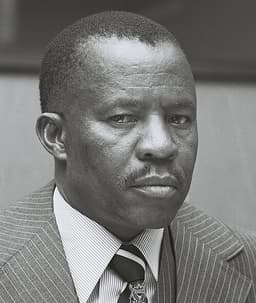
Quett Masire
Politician · Modern
61.8Total
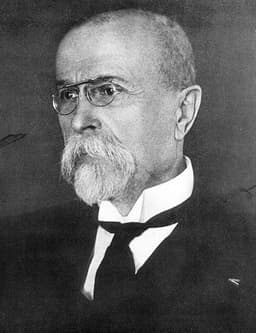
Tomas Garrigue Masaryk
Politician · Modern
57.3Total
Basic Information
Born
1925
1850
Died
—
1937
Era
Modern
Modern
Nationality
Botswana
Czech Republic
Occupation
Politician
Politician
Civilization
Other
Western
Score Comparison
Military (10%)
38.0
48.2
Political (20%)
85.0
62.7
Influence (20%)
60.0
56.7
Legacy (20%)
54.0
52.0
Leadership (15%)
83.3
78.0
Strategy (15%)
42.3
42.3
TOTAL
61.8
57.3
Quett Masire — Complete Timeline
1966 AD
Elected Vice President of BotswanaPolitical Action◆ Major
Masire was elected Vice President of Botswana upon independence in 1966, serving under President Seretse Khama. He was a key architect of Botswana's economic policies.
Vice PresidencyEconomic Planning
Impact: nationalconstructive
1980 AD
Led Botswana through diamond boomReform◆ Major
Masire oversaw the expansion of diamond mining through Debswana, a joint venture with De Beers. Revenue from diamonds funded infrastructure, education, and healthcare, transforming Botswana into a middle-income country.
Economic DevelopmentDiamond Revenue
Impact: nationalconstructive
Became President of BotswanaPolitical Action
Masire became President of Botswana on July 13, 1980, following the death of Seretse Khama. He continued Khama's policies of democracy, fiscal discipline, and diamond-led development.
PresidencyContinuity
Impact: nationalconstructive
1984 AD
Re-elected President (1984, 1989, 1994)Political Action◆ Major
Masire was re-elected in 1984, 1989, and 1994, each time with large majorities. His Botswana Democratic Party maintained power through free and fair elections, reinforcing Botswana's democratic reputation.
Re-electionDemocratic Stability
Impact: nationalconstructive
1998 AD
Retired as PresidentPolitical Action◆ Major
Masire retired as President in March 1998, handing power to his Vice President, Festus Mogae. His retirement was voluntary and peaceful, setting a precedent for democratic transitions in Africa.
RetirementDemocratic Transition
Impact: nationalconstructive
Tomas Garrigue Masaryk — Complete Timeline
1918 AD
Establishment of CzechoslovakiaPolitical Action
Masaryk, as leader of the Czechoslovak National Council, declared the independence of Czechoslovakia from Austria-Hungary. He became the first president, founding a democratic state in Central Europe.
IndependenceCzechoslovakia
Impact: regionalconstructive
First President of CzechoslovakiaPolitical Action◆ Major
Masaryk was elected the first president of Czechoslovakia by the National Assembly. He served until 1935, guiding the country through its early years of statehood and democratic consolidation.
PresidencyCzechoslovakia
Impact: nationalconstructive
1935 AD
Resignation from PresidencyPolitical Action
Masaryk resigned the presidency due to ill health, handing power to Edvard Bene
ResignationCzechoslovakia
Impact: national
Expert Analysis
Origins
Quett Masire was born on July 23, 1925, in Kanye, Botswana, then the Bechuanaland Protectorate. He came from a modest farming family and received his education at a local mission school before training as a teacher at Tiger Kloof in South Africa. Masire later worked as a journalist and farmer, entering politics through his involvement in the Bechuanaland Democratic Party (BDP), founded by Seretse Khama.
Tomas Garrigue Masaryk was born on March 7, 1850, in Hodonín, Moravia (then Austrian Empire). His father was a coachman, his mother a cook. Masaryk studied philosophy at the University of Vienna, earning a doctorate in 1876. He became a professor of philosophy at Charles University in Prague, gaining prominence as an intellectual and advocate for Czech national rights.
Rise to Power
Masire rose through the ranks of the BDP, becoming its secretary-general. Upon Botswana's independence in 1966, he was appointed Vice President under Seretse Khama. Masire played a key role in economic policy, negotiating the establishment of the Debswana diamond partnership with De Beers in 1969. When Khama died in 1980, Masire succeeded him peacefully as President, continuing the democratic tradition.
Masaryk's rise was rooted in his intellectual leadership of the Czech independence movement. During World War I, he traveled to Western Europe and Russia, building support for Czechoslovak independence. He founded the Czechoslovak National Council in Paris and, with Edvard Beneš and Milan Štefánik, organized the Czechoslovak Legions. On October 28, 1918, he declared independence from Austria-Hungary and was elected first president of Czechoslovakia in November 1918.
Leadership & Governance
Masire's leadership was characterized by fiscal conservatism and democratic consolidation. He maintained Botswana's multi-party democracy, with free elections every five years. His government used diamond revenues to invest in infrastructure, education, and healthcare, transforming Botswana from one of the world's poorest countries into a middle-income nation. Masire's political score of 85.0 reflects his ability to sustain stability and growth. He voluntarily retired in 1998, handing power to his vice president, Festus Mogae.
Masaryk's governance focused on nation-building and democracy. He oversaw the creation of a parliamentary democracy with a strong presidency, though he often acted as a unifying figure above partisan politics. Masaryk advocated for human rights and social reform, including women's suffrage and minority rights. However, his leadership score of 78.0 is lower than Masire's 83.3, partly due to the challenges of managing a multi-ethnic state. Masaryk resigned in 1935 due to ill health, leaving a fragile democracy that would fall to Nazi aggression in 1939.
Triumph & Tragedy
Masire's greatest triumph was overseeing Botswana's economic transformation. Under his leadership, GDP per capita grew from about $70 in 1966 to over $3,000 by 1998, driven by diamond exports. He also maintained a stable democracy with no coups or major political crises. His tragedy was the failure to diversify the economy sufficiently; Botswana remained heavily dependent on diamonds, making it vulnerable to commodity price fluctuations.
Masaryk's triumph was founding Czechoslovakia, a democratic state in Central Europe that survived for two decades. He successfully navigated ethnic tensions between Czechs and Slovaks, and his intellectual leadership inspired many. His tragedy was the eventual collapse of his creation: the Munich Agreement of 1938 and Nazi occupation in 1939. Masaryk died in 1937, just before the crisis, but his legacy was tarnished by the failure of the state he built.
Character & Destiny
Masire was pragmatic, humble, and consensus-driven. He avoided personal aggrandizement and focused on institutional building. His character led to a peaceful transfer of power, setting a precedent for Botswana's democracy. His destiny was to be the steward of a nation that prospered under his steady hand.
Masaryk was an intellectual idealist, committed to democratic principles and national self-determination. He was often called "President Liberator." His character drove him to create a state based on universal values, but the ethnic and geopolitical tensions of Europe overwhelmed his vision. His destiny was to be the founding father of a nation that could not survive the forces of nationalism and totalitarianism.
Legacy
Masire's legacy is a stable, prosperous democracy in Africa. Botswana is often cited as an example of good governance and economic management on the continent. His leadership score of 83.3 and political score of 85.0 reflect his effectiveness. However, his influence score of 60.0 and legacy score of 54.0 indicate a more limited global footprint.
Masaryk's legacy is as the founder of Czechoslovakia, a state that, despite its demise, inspired other Central European nations. His ideas about democracy and human rights influenced the region. His influence score of 56.7 and legacy score of 52.0 are slightly lower than Masire's, but his place in Czech and Slovak history is iconic.
Conclusion
Quett Masire had a greater impact than Tomas Masaryk when measured by outcomes: his country remained democratic and prosperous for decades after his tenure, while Masaryk's creation collapsed. Masire's total score of 61.8 versus Masaryk's 57.3 reflects this. While Masaryk faced more difficult geopolitical circumstances, Masire's ability to build durable institutions gives him the edge. The data supports Masire as the more effective leader in terms of lasting positive change.
Rankings
🥇
Quett MasireLeader
Mil: 38.0Pol: 85.0Inf: 60.0
61.8
🥈
Tomas Garrigue Masaryk
Mil: 48.2Pol: 62.7Inf: 56.7
57.3
+4.5 behind
How This Comparison Works
Algorithm
Each figure is scored on 6 dimensions (0—100 scale) based on structured historical data: Military (10%), Political (20%), Influence (20%), Legacy (20%), Leadership (15%), Strategy (15%). The weighted total produces the final ranking.
Data Sources
Scores are computed from structured sub-indicators in the database. Scale factors adjust for era (Ancient ×0.85, Modern ×1.0) and civilization size (Eastern ×1.05, Other ×0.80) to account for differences in population and military scale.
Maximum 3 Figures
Comparisons are limited to 2—3 figures to ensure readability and statistical meaningfulness.
Error Margins
±5 points per dimension — Sub-scores are derived from historical records with inherent uncertainty. Two figures within 5 points on a dimension should be considered roughly equivalent in that area.
Total Score Accuracy
±3 points overall — The weighted combination of 6 dimensions produces a total score with approximately ±3 points of uncertainty. Differences of less than 3 points are not statistically significant— the figures are effectively tied.
Known Limitations
- Historical records are incomplete and uneven across civilizations
- Figures from oral-tradition societies may be underrepresented
- Occupation labels can misclassify multi-role figures
- Scores measure capability and impact, not moral character
- Quantitative scoring is a comparison tool, not absolute truth
Capability Radar
Military (10%) — Battles & Warfare
Battles
20
29
Win Rate
26
34
Expansion
27
36
Political (20%) — Governance & Reform
Reform
70
80
Diplomacy
80
85
Economy
85
70
Influence (20%) — Cultural & Global Reach
Cultural
40
65
Global
50
60
Legacy (20%) — Historical Impact
Historical
55
70
Longevity
60
65
Leadership (15%) — Power & Stability
Tenure
75
85
Stability
90
75
Strategy (15%) — Tactics & Innovation
Strategy
32
35
Tactics
31
42
Reform
38
45
Similar Comparisons
Comments & Discussion
No comments yet. Be the first to share your thoughts!