Loading...
Mohamed Muizzu vs Tomas Garrigue Masaryk
Tomas Garrigue Masaryk leads by 14.7 pts · 2 figures compared
…

Mohamed Muizzu
Politician · Modern
42.6Total
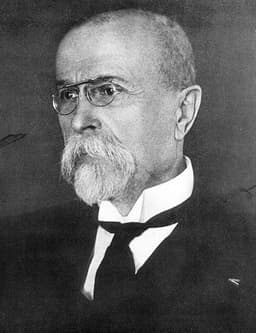
Tomas Garrigue Masaryk
Politician · Modern
57.3Total
Basic Information
Born
1978
1850
Died
—
1937
Era
Modern
Modern
Nationality
Maldives
Czech Republic
Occupation
Politician
Politician
Civilization
Other
Western
Score Comparison
Military (10%)
50.0
48.2
Political (20%)
35.1
62.7
Influence (20%)
49.4
56.7
Legacy (20%)
35.8
52.0
Leadership (15%)
45.0
78.0
Strategy (15%)
43.0
42.3
TOTAL
42.6
57.3
Mohamed Muizzu — Complete Timeline
2023 AD
Became President of the MaldivesPolitical Action◆ Major
Muizzu was elected President, defeating incumbent Ibrahim Mohamed Solih. His campaign focused on reducing Indian influence and strengthening ties with China, marking a significant shift in Maldivian foreign policy.
PresidentMaldivesForeign Policy Shift
Impact: national
Pursued pro-China foreign policyPolitical Action◆ Major
Muizzu prioritized China relations, signing agreements on infrastructure and trade. He visited China early in his term, signaling a pivot away from India, which had been the Maldives' traditional ally.
Foreign PolicyChina RelationsDiplomacy
Impact: regional
2024 AD
Demanded withdrawal of Indian military personnelPolitical Action◆ Major
Muizzu's government formally requested the withdrawal of Indian military personnel stationed in the Maldives, straining bilateral relations. The move was part of his 'India Out' campaign promise.
India RelationsMilitary WithdrawalDiplomatic Tension
Impact: regional
Signed free trade agreement with ChinaPolitical Action◆ Major
Muizzu signed a free trade agreement with China, aiming to boost economic ties and reduce dependence on India. The agreement was criticized by opposition parties as potentially compromising Maldivian sovereignty.
Free Trade AgreementChinaEconomic Policy
Impact: regional
Tomas Garrigue Masaryk — Complete Timeline
1918 AD
Establishment of CzechoslovakiaPolitical Action
Masaryk, as leader of the Czechoslovak National Council, declared the independence of Czechoslovakia from Austria-Hungary. He became the first president, founding a democratic state in Central Europe.
IndependenceCzechoslovakia
Impact: regionalconstructive
First President of CzechoslovakiaPolitical Action◆ Major
Masaryk was elected the first president of Czechoslovakia by the National Assembly. He served until 1935, guiding the country through its early years of statehood and democratic consolidation.
PresidencyCzechoslovakia
Impact: nationalconstructive
1935 AD
Resignation from PresidencyPolitical Action
Masaryk resigned the presidency due to ill health, handing power to Edvard Bene
ResignationCzechoslovakia
Impact: national
Expert Analysis
Origins
Mohamed Muizzu was born in 1978 in Malé, Maldives. He studied civil engineering at the University of Malaya and later earned a PhD in construction management. His early career included work as a consultant and academic. He entered politics as a member of the Progressive Party of Maldives (PPM) and served as Housing Minister from 2012 to 2018. Tomas Garrigue Masaryk was born in 1850 in Hodonín, Moravia (then Austrian Empire). He studied philosophy at the University of Vienna and earned a doctorate. He became a professor at Charles University in Prague. His intellectual work focused on Czech identity and nationalism. He married Charlotte Garrigue, an American, and took her surname.
Rise to Power
Muizzu rose to prominence as a close ally of former President Abdulla Yameen. He served as Minister of Housing and Infrastructure, overseeing large projects. In 2023, he ran for president as the PPM candidate, defeating incumbent Ibrahim Mohamed Solih. His campaign emphasized reducing Indian influence and strengthening ties with China. Masaryk rose to power through intellectual and political activism. During World War I, he led the Czechoslovak National Council abroad, lobbying Allied powers for independence. In 1918, he declared Czechoslovakia's independence and became its first president. He was re-elected multiple times, serving until 1935.
Leadership & Governance
Muizzu's leadership is characterized by a sharp pivot toward China. He signed a free trade agreement with China and requested the withdrawal of Indian military personnel. His governance style is centralized and nationalist, focusing on infrastructure development funded by Chinese loans. Critics argue his policies increase debt and reduce sovereignty. Masaryk's leadership was democratic and inclusive. He built Czechoslovakia's institutions, emphasizing human rights and education. He maintained neutrality in foreign policy and fostered a multi-ethnic state. His governance scored 78.0 in leadership, compared to Muizzu's 45.0.
Triumph & Tragedy
Muizzu's greatest success is his election victory, breaking the pro-India consensus. He secured Chinese investment for infrastructure projects, like the Maldives-China Friendship Bridge. His greatest failure is the potential debt trap and isolation from India, which traditionally provides security and tourism revenue. The withdrawal of Indian military personnel may leave the Maldives vulnerable. Masaryk's triumph is founding Czechoslovakia and guiding it through 17 years of stability. He established a democratic system that survived until 1938. His tragedy was the rise of Nazi Germany and the eventual dissolution of Czechoslovakia after his death. He resigned in 1935 due to ill health, unable to prevent later crises.
Character & Destiny
Muizzu is pragmatic and ambitious, willing to realign foreign policy for immediate gains. His character reflects a desire for autonomy from regional powers. However, his decisions may lead to long-term dependence on China. Masaryk was idealistic and principled, committed to democracy and national self-determination. His character earned him the title "President Liberator." His destiny was to create a nation that, while short-lived, inspired future generations.
Legacy
Muizzu's legacy is uncertain. If his policies succeed, he may be remembered as a leader who diversified Maldives' alliances. If they fail, he could be seen as a pawn in China's expansion. His total score is 42.6, reflecting limited global impact. Masaryk's legacy is secure. He is revered as the founding father of Czechoslovakia, a symbol of democracy in Central Europe. His ideas influenced the Velvet Revolution and the peaceful split of Czechoslovakia. His total score of 57.3 reflects enduring influence.
Conclusion
Tomas Garrigue Masaryk had greater impact than Mohamed Muizzu. Masaryk's score of 57.3 significantly exceeds Muizzu's 42.6. Masaryk founded a nation that shaped European history, while Muizzu's influence is limited to a small island state. Even if Muizzu's policies succeed, they cannot match Masaryk's creation of a democratic state that stood as a bastion of freedom. Masaryk's leadership score of 78.0 dwarfs Muizzu's 45.0. The data supports a clear conclusion: Masaryk's legacy is more profound.
Rankings
🥇
Tomas Garrigue MasarykLeader
Mil: 48.2Pol: 62.7Inf: 56.7
57.3
🥈
Mohamed Muizzu
Mil: 50.0Pol: 35.1Inf: 49.4
42.6
+14.7 behind
How This Comparison Works
Algorithm
Each figure is scored on 6 dimensions (0—100 scale) based on structured historical data: Military (10%), Political (20%), Influence (20%), Legacy (20%), Leadership (15%), Strategy (15%). The weighted total produces the final ranking.
Data Sources
Scores are computed from structured sub-indicators in the database. Scale factors adjust for era (Ancient ×0.85, Modern ×1.0) and civilization size (Eastern ×1.05, Other ×0.80) to account for differences in population and military scale.
Maximum 3 Figures
Comparisons are limited to 2—3 figures to ensure readability and statistical meaningfulness.
Error Margins
±5 points per dimension — Sub-scores are derived from historical records with inherent uncertainty. Two figures within 5 points on a dimension should be considered roughly equivalent in that area.
Total Score Accuracy
±3 points overall — The weighted combination of 6 dimensions produces a total score with approximately ±3 points of uncertainty. Differences of less than 3 points are not statistically significant— the figures are effectively tied.
Known Limitations
- Historical records are incomplete and uneven across civilizations
- Figures from oral-tradition societies may be underrepresented
- Occupation labels can misclassify multi-role figures
- Scores measure capability and impact, not moral character
- Quantitative scoring is a comparison tool, not absolute truth
Capability Radar
Military (10%) — Battles & Warfare
Battles
24
29
Win Rate
27
34
Expansion
26
36
Political (20%) — Governance & Reform
Reform
20
80
Diplomacy
30
85
Economy
25
70
Influence (20%) — Cultural & Global Reach
Cultural
10
65
Global
15
60
Legacy (20%) — Historical Impact
Historical
10
70
Longevity
5
65
Leadership (15%) — Power & Stability
Tenure
15
85
Stability
20
75
Strategy (15%) — Tactics & Innovation
Strategy
29
35
Tactics
36
42
Reform
36
45
Similar Comparisons
Comments & Discussion
No comments yet. Be the first to share your thoughts!