Loading...
Mariano Rajoy vs Tomas Garrigue Masaryk
Tomas Garrigue Masaryk leads by 0.7 pts · 2 figures compared
…

Mariano Rajoy
Politician · Modern
56.6Total
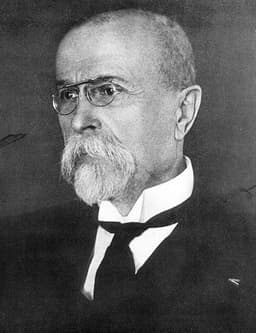
Tomas Garrigue Masaryk
Politician · Modern
57.3Total
Basic Information
Born
1955
1850
Died
—
1937
Era
Modern
Modern
Nationality
Spain
Czech Republic
Occupation
Politician
Politician
Civilization
Western
Western
Score Comparison
Military (10%)
47.0
48.2
Political (20%)
72.0
62.7
Influence (20%)
58.0
56.7
Legacy (20%)
46.7
52.0
Leadership (15%)
72.0
78.0
Strategy (15%)
41.4
42.3
TOTAL
56.6
57.3
Mariano Rajoy — Complete Timeline
2011 AD
Election as Prime Minister of SpainPolitical Action◆ Major
Rajoy's Popular Party won a landslide victory in the 2011 general election, and he became Prime Minister on December 21. He took office during the Eurozone crisis, inheriting high unemployment and a large budget deficit.
ElectionGovernment
Impact: national
2012 AD
Bank Bailout and AusterityPolitical Action◆ Major
Rajoy's government requested a
Economic CrisisAusterity
Impact: nationaldestructive
2017 AD
Catalan Independence ReferendumPolitical Action◆ Major
Rajoy's government opposed the Catalan independence referendum held on October 1, 2017, which was declared illegal by the Constitutional Court. He invoked Article 155 of the Constitution to suspend Catalan autonomy and call new regional elections.
Catalan CrisisConstitutional
Impact: national
2018 AD
No-Confidence Vote and ResignationPolitical Action◆ Major
Rajoy lost a no-confidence motion on June 1, 2018, after corruption convictions of former Popular Party officials. He resigned as Prime Minister, replaced by Socialist leader Pedro S
CorruptionPolitical Change
Impact: nationaldestructive
Tomas Garrigue Masaryk — Complete Timeline
1918 AD
Establishment of CzechoslovakiaPolitical Action
Masaryk, as leader of the Czechoslovak National Council, declared the independence of Czechoslovakia from Austria-Hungary. He became the first president, founding a democratic state in Central Europe.
IndependenceCzechoslovakia
Impact: regionalconstructive
First President of CzechoslovakiaPolitical Action◆ Major
Masaryk was elected the first president of Czechoslovakia by the National Assembly. He served until 1935, guiding the country through its early years of statehood and democratic consolidation.
PresidencyCzechoslovakia
Impact: nationalconstructive
1935 AD
Resignation from PresidencyPolitical Action
Masaryk resigned the presidency due to ill health, handing power to Edvard Bene
ResignationCzechoslovakia
Impact: national
Expert Analysis
Origins
**Mariano Rajoy** was born on March 27, 1955, in Santiago de Compostela, Spain, into a family of lawyers and politicians. His father was a civil law notary, and his grandfather had been a mayor. Rajoy studied law at the University of Santiago de Compostela, graduating in 1977. He entered politics early, joining the conservative Popular Alliance (later People's Party) and becoming a member of the Galician regional parliament in 1981.
**Tomáš Garrigue Masaryk** was born on March 7, 1850, in Hodonín, Moravia (then Austrian Empire), to a Slovak father and Czech mother. He studied philosophy at the University of Vienna, earning a doctorate in 1876. Masaryk later became a professor at Charles University in Prague. He married Charlotte Garrigue, an American, adding her surname to his. His intellectual background shaped his political philosophy of democracy and humanism.
Rise to Power
Rajoy rose through the ranks of the People's Party, serving as Minister of Public Administration (1996-1999), Minister of Education (1999-2000), and Minister of the Interior (2001-2002). He was a key figure in José María Aznar's government. After Aznar's retirement, Rajoy became party leader in 2004. He lost two general elections (2004, 2008) before winning a landslide victory in 2011, with the Popular Party securing 186 seats in the Congress of Deputies. He became Prime Minister on December 21, 2011, amid the Eurozone debt crisis.
Masaryk's rise was intellectual and political. He founded the Realist Party in 1900 and advocated for Czech autonomy within Austria-Hungary. During World War I, he went into exile, organizing the Czechoslovak National Council. He gained Allied support for an independent Czechoslovakia, notably through the Czechoslovak Legions in Russia. On October 28, 1918, he declared independence in Washington, D.C., and was elected first president on November 14, 1918, by the National Assembly. His political score of 62.7 reflects his diplomatic skill in securing international recognition.
Leadership & Governance
Rajoy's leadership was characterized by crisis management. He implemented austerity measures to address the economic crisis, cutting spending and raising taxes. In 2012, he requested a €100 billion EU bailout for Spanish banks, with conditions. His government passed labor reforms that reduced worker protections. In the Catalan crisis, Rajoy rejected negotiations, invoked Article 155 of the Constitution to impose direct rule over Catalonia after the illegal October 1, 2017 referendum. His leadership score of 72.0 indicates firmness but also rigidity.
Masaryk's governance focused on building a democratic state. He served as president from 1918 to 1935, establishing Czechoslovakia as a stable multi-ethnic democracy. He promoted land reform, social welfare, and education. Masaryk's leadership score of 78.0 reflects his ability to unify diverse groups, though his political score of 62.7 shows limitations in managing internal tensions. He was re-elected three times, but faced challenges from Slovak autonomists and German minorities.
Triumph & Tragedy
Rajoy's greatest success was stabilizing Spain's economy after the 2008 crisis. By 2014, Spain returned to growth, and the bailout was repaid early. His handling of the Catalan crisis prevented immediate secession but deepened divisions. His greatest failure was the corruption scandal involving the People's Party, leading to a no-confidence vote on June 1, 2018, which he lost 180-169. He resigned, replaced by Pedro Sánchez. His legacy score of 46.7 reflects the taint of corruption.
Masaryk's triumph was founding Czechoslovakia and guiding it through its first 17 years. He established a functioning democracy, earning him the title "President Liberator." His failure was the inability to fully integrate Slovak and German minorities, sowing seeds for future dissolution. He resigned in 1935 due to ill health, and his death in 1937 preceded the Munich Agreement that dismembered Czechoslovakia. His legacy score of 52.0 acknowledges his foundational role but also the fragility of his creation.
Character & Destiny
Rajoy was known for his cautious, pragmatic style, often described as "inertia" in decision-making. He avoided confrontation until forced to act, as seen in the Catalan crisis. His strategy score of 41.4 indicates a lack of long-term planning. His character led to political survival until the corruption scandal broke his support. He scored 72.0 in political and leadership, but his military score of 47.0 is irrelevant for a civilian leader.
Masaryk was an intellectual idealist, driven by moral principles. He believed in democracy and human rights, which shaped his foreign policy alignment with Western powers. His strategy score of 42.3 reflects naivety in handling ethnic tensions. He was respected internationally, but his domestic policies could not prevent future disintegration. His leadership score of 78.0 shows his ability to inspire, but his political score of 62.7 indicates practical limitations.
Legacy
Rajoy's legacy is mixed. He is remembered for economic recovery but also for austerity's social costs and the Catalan crisis. The corruption scandal damaged his reputation. His influence score of 58.0 reflects his impact on Spanish politics, including the rise of Vox and Podemos. He did not leave a lasting institutional legacy.
Masaryk's legacy is more profound. He is the founding father of Czechoslovakia, revered in Czech and Slovak history. His ideas influenced democratic movements in Central Europe. His influence score of 56.7 is lower than expected, but his legacy score of 52.0 acknowledges his role as a nation-builder. Czechoslovakia's peaceful dissolution in 1993 shows the endurance of his democratic framework.
Conclusion
Tomáš Garrigue Masaryk had greater historical impact than Mariano Rajoy. Masaryk founded a nation that lasted 75 years, shaping Central Europe. Rajoy managed a crisis within an existing state but did not create lasting change. Masaryk's total score of 57.3 slightly edges Rajoy's 56.6, but the gap is small. However, Masaryk's foundational role in nation-building outweighs Rajoy's crisis management. Masaryk's leadership score of 78.0 versus Rajoy's 72.0 reflects his superior ability to inspire and build. While Rajoy's economic stabilization was significant, it was within established structures. Masaryk's creation of a democratic state from the ruins of an empire has a more enduring legacy. Thus, Masaryk is the greater historical figure.
Rankings
🥇
Tomas Garrigue MasarykLeader
Mil: 48.2Pol: 62.7Inf: 56.7
57.3
🥈
Mariano Rajoy
Mil: 47.0Pol: 72.0Inf: 58.0
56.6
+0.7 behind
How This Comparison Works
Algorithm
Each figure is scored on 6 dimensions (0—100 scale) based on structured historical data: Military (10%), Political (20%), Influence (20%), Legacy (20%), Leadership (15%), Strategy (15%). The weighted total produces the final ranking.
Data Sources
Scores are computed from structured sub-indicators in the database. Scale factors adjust for era (Ancient ×0.85, Modern ×1.0) and civilization size (Eastern ×1.05, Other ×0.80) to account for differences in population and military scale.
Maximum 3 Figures
Comparisons are limited to 2—3 figures to ensure readability and statistical meaningfulness.
Error Margins
±5 points per dimension — Sub-scores are derived from historical records with inherent uncertainty. Two figures within 5 points on a dimension should be considered roughly equivalent in that area.
Total Score Accuracy
±3 points overall — The weighted combination of 6 dimensions produces a total score with approximately ±3 points of uncertainty. Differences of less than 3 points are not statistically significant— the figures are effectively tied.
Known Limitations
- Historical records are incomplete and uneven across civilizations
- Figures from oral-tradition societies may be underrepresented
- Occupation labels can misclassify multi-role figures
- Scores measure capability and impact, not moral character
- Quantitative scoring is a comparison tool, not absolute truth
Capability Radar
Military (10%) — Battles & Warfare
Battles
30
29
Win Rate
34
34
Expansion
38
36
Political (20%) — Governance & Reform
Reform
55
80
Diplomacy
60
85
Economy
55
70
Influence (20%) — Cultural & Global Reach
Cultural
30
65
Global
40
60
Legacy (20%) — Historical Impact
Historical
40
70
Longevity
30
65
Leadership (15%) — Power & Stability
Tenure
65
85
Stability
45
75
Strategy (15%) — Tactics & Innovation
Strategy
38
35
Tactics
38
42
Reform
44
45
Similar Comparisons
Comments & Discussion
No comments yet. Be the first to share your thoughts!