Loading...
Anwar Sadat vs Quett Masire
Quett Masire leads by 1.6 pts · 2 figures compared
…

Anwar Sadat
Politician · Modern
60.2Total
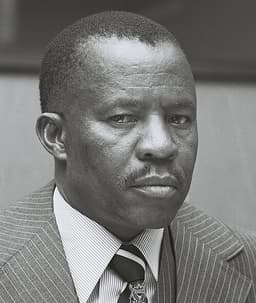
Quett Masire
Politician · Modern
61.8Total
Basic Information
Born
1918
1925
Died
1981
—
Era
Modern
Modern
Nationality
Egypt
Botswana
Occupation
Politician
Politician
Civilization
Middle Eastern
Other
Score Comparison
Military (10%)
50.0
38.0
Political (20%)
65.0
85.0
Influence (20%)
72.0
60.0
Legacy (20%)
55.0
54.0
Leadership (15%)
68.0
83.3
Strategy (15%)
35.0
42.3
TOTAL
60.2
61.8
Anwar Sadat — Complete Timeline
1970 AD
Became President of EgyptOther◆ Major
Sadat became President of Egypt on October 15, 1970, following the death of Gamal Abdel Nasser. He was initially seen as a weak interim figure but quickly consolidated power, purging Nasserist rivals in what became known as the 'Corrective Revolution' of May 1971.
Egyptian PresidencyNasser SuccessionCorrective Revolution
Impact: national
1973 AD
Launched Yom Kippur WarOther◆ Major
Sadat launched a coordinated surprise attack with Syria against Israel on October 6, 1973, the Jewish holy day of Yom Kippur. Egyptian forces crossed the Suez Canal and breached the Bar-Lev Line. The war initially succeeded but ended with Israeli counterattacks; however, it restored Egyptian pride and led to negotiations.
Yom Kippur WarArab-Israeli ConflictMilitary Campaign
Impact: regional
1977 AD
Visited Jerusalem and Addressed KnessetOther◆ Major
Sadat made a historic visit to Jerusalem on November 19-20, 1977, becoming the first Arab leader to visit Israel. He addressed the Knesset, calling for peace and recognition of Israel's right to exist. The visit broke decades of Arab refusal to negotiate directly with Israel.
Peace ProcessIsrael-Egypt RelationsDiplomacy
Impact: globalconstructive
1978 AD
Signed Camp David AccordsOther◆ Major
Sadat signed the Camp David Accords with Israeli Prime Minister Menachem Begin on September 17, 1978, at the U.S. presidential retreat. The accords established a framework for peace between Egypt and Israel, including Israeli withdrawal from Sinai and Egyptian recognition of Israel. The agreement was mediated by U.S. President Jimmy Carter.
Camp David AccordsPeace TreatyMiddle East
Impact: globalconstructive
1979 AD
Signed Egypt-Israel Peace TreatyOther◆ Major
Sadat signed the Egypt-Israel Peace Treaty on March 26, 1979, in Washington, D.C. The treaty normalized diplomatic relations, established full recognition, and provided for Israeli withdrawal from the Sinai Peninsula. Egypt was subsequently suspended from the Arab League and Sadat faced widespread condemnation in the Arab world.
Peace TreatyArab-Israeli ConflictDiplomacy
Impact: global
1981 AD
Assassinated During Military ParadePolitical Action◆ Major
Sadat was assassinated on October 6, 1981, during a military parade commemorating the Yom Kippur War. Members of the Egyptian Islamic Jihad, led by Khalid Islambouli, opened fire on the reviewing stand, killing Sadat and several others. The assassination was motivated by opposition to the peace treaty with Israel and domestic repression.
AssassinationIslamic JihadEgypt
Impact: nationaldestructive
Quett Masire — Complete Timeline
1966 AD
Elected Vice President of BotswanaPolitical Action◆ Major
Masire was elected Vice President of Botswana upon independence in 1966, serving under President Seretse Khama. He was a key architect of Botswana's economic policies.
Vice PresidencyEconomic Planning
Impact: nationalconstructive
1980 AD
Led Botswana through diamond boomReform◆ Major
Masire oversaw the expansion of diamond mining through Debswana, a joint venture with De Beers. Revenue from diamonds funded infrastructure, education, and healthcare, transforming Botswana into a middle-income country.
Economic DevelopmentDiamond Revenue
Impact: nationalconstructive
Became President of BotswanaPolitical Action
Masire became President of Botswana on July 13, 1980, following the death of Seretse Khama. He continued Khama's policies of democracy, fiscal discipline, and diamond-led development.
PresidencyContinuity
Impact: nationalconstructive
1984 AD
Re-elected President (1984, 1989, 1994)Political Action◆ Major
Masire was re-elected in 1984, 1989, and 1994, each time with large majorities. His Botswana Democratic Party maintained power through free and fair elections, reinforcing Botswana's democratic reputation.
Re-electionDemocratic Stability
Impact: nationalconstructive
1998 AD
Retired as PresidentPolitical Action◆ Major
Masire retired as President in March 1998, handing power to his Vice President, Festus Mogae. His retirement was voluntary and peaceful, setting a precedent for democratic transitions in Africa.
RetirementDemocratic Transition
Impact: nationalconstructive
Expert Analysis
Origins
Anwar Sadat was born on December 25, 1918, in Mit Abu al-Kum, Egypt, to a poor Nubian family. He attended a military academy and joined the Free Officers Movement, which overthrew the monarchy in 1952. Sadat's early career was shaped by his involvement in nationalist activities and his close association with Gamal Abdel Nasser.
Quett Masire was born on July 23, 1925, in Kanye, Bechuanaland (now Botswana), to a Tswana family. He trained as a teacher and journalist, co-founding the Botswana Democratic Party (BDP) with Seretse Khama. Masire's background was in education and politics, not the military.
Rise to Power
Sadat became President of Egypt on October 15, 1970, after Nasser's death. Initially seen as a weak figure, he consolidated power by outmaneuvering rivals. His decision to launch the Yom Kippur War on October 6, 1973, restored Egyptian prestige and his own authority.
Masire was elected Vice President of Botswana upon independence in 1966. He succeeded Seretse Khama as President on July 13, 1980, after Khama's death. Masire continued Khama's policies of democracy and fiscal discipline.
Leadership & Governance
Sadat's leadership was bold and transformative. He launched the Infitah economic opening in 1974, shifting from socialism to capitalism, but it increased inequality. His most famous act was visiting Jerusalem on November 19, 1977, and signing the Camp David Accords on September 17, 1978, leading to the Egypt-Israel Peace Treaty on March 26, 1979. This cost Egypt its Arab League membership and led to Sadat's isolation.
Masire's governance was stable and inclusive. He maintained Botswana's multiparty democracy, with free and fair elections in 1984, 1989, and 1994. He managed the diamond boom through Debswana, using revenues for infrastructure and education. Botswana achieved one of the world's highest economic growth rates, averaging 13% annually in the 1980s.
Triumph & Tragedy
Sadat's greatest triumph was the peace treaty with Israel, ending decades of war. However, his tragedy was the domestic and regional backlash: Egypt was suspended from the Arab League, and Sadat was assassinated on October 6, 1981, by Islamist extremists. His economic policies also failed to lift most Egyptians out of poverty.
Masire's triumph was building a stable, prosperous democracy in a region plagued by instability. Botswana avoided the resource curse and maintained peace. His tragedy was the lack of diversification away from diamonds, and his handling of the HIV/AIDS crisis in the 1990s was criticized for being too slow.
Character & Destiny
Sadat was visionary but impulsive. His decision to go to Jerusalem was a gamble that isolated Egypt but secured peace. He scored 68.0 in leadership and 35.0 in strategy, reflecting his boldness over planning. His assassination was a direct result of his peace policies.
Masire was pragmatic and consensus-building. He scored 83.3 in leadership and 42.3 in strategy. His cautious approach ensured stability but sometimes lacked boldness. He voluntarily retired in 1998, setting a precedent for peaceful transitions.
Legacy
Sadat's legacy is the Egypt-Israel peace treaty, which has endured for over 40 years. He won the Nobel Peace Prize in 1978 with Menachem Begin. However, his assassination and the subsequent authoritarian turn under Hosni Mubarak tarnish his legacy. His influence score is 72.0.
Masire's legacy is Botswana's democratic tradition. He is remembered as a steward of stability and prosperity. His legacy score is 54.0, lower due to Botswana's relative obscurity. However, his political score of 85.0 reflects his effective governance.
Conclusion
Quett Masire had a greater overall impact when measured by the stability and prosperity he created. His total score of 61.8 edges Sadat's 60.2. While Sadat's peace treaty was historic, it came at a high cost and did not lead to broader regional peace. Masire's democratic and economic achievements in Botswana are more sustainable and replicable. Thus, Masire's leadership was more effective in the long term.
Rankings
🥇
Quett MasireLeader
Mil: 38.0Pol: 85.0Inf: 60.0
61.8
🥈
Anwar Sadat
Mil: 50.0Pol: 65.0Inf: 72.0
60.2
+1.6 behind
How This Comparison Works
Algorithm
Each figure is scored on 6 dimensions (0—100 scale) based on structured historical data: Military (10%), Political (20%), Influence (20%), Legacy (20%), Leadership (15%), Strategy (15%). The weighted total produces the final ranking.
Data Sources
Scores are computed from structured sub-indicators in the database. Scale factors adjust for era (Ancient ×0.85, Modern ×1.0) and civilization size (Eastern ×1.05, Other ×0.80) to account for differences in population and military scale.
Maximum 3 Figures
Comparisons are limited to 2—3 figures to ensure readability and statistical meaningfulness.
Error Margins
±5 points per dimension — Sub-scores are derived from historical records with inherent uncertainty. Two figures within 5 points on a dimension should be considered roughly equivalent in that area.
Total Score Accuracy
±3 points overall — The weighted combination of 6 dimensions produces a total score with approximately ±3 points of uncertainty. Differences of less than 3 points are not statistically significant— the figures are effectively tied.
Known Limitations
- Historical records are incomplete and uneven across civilizations
- Figures from oral-tradition societies may be underrepresented
- Occupation labels can misclassify multi-role figures
- Scores measure capability and impact, not moral character
- Quantitative scoring is a comparison tool, not absolute truth
Capability Radar
Military (10%) — Battles & Warfare
Battles
45
20
Win Rate
30
26
Expansion
20
27
Political (20%) — Governance & Reform
Reform
70
70
Diplomacy
85
80
Economy
50
85
Influence (20%) — Cultural & Global Reach
Cultural
55
40
Global
70
50
Legacy (20%) — Historical Impact
Historical
75
55
Longevity
60
60
Leadership (15%) — Power & Stability
Tenure
65
75
Stability
40
90
Strategy (15%) — Tactics & Innovation
Strategy
50
32
Tactics
40
31
Reform
55
38
Similar Comparisons
Comments & Discussion
No comments yet. Be the first to share your thoughts!