Loading...
Samakuva Isaias vs Tomas Garrigue Masaryk
Tomas Garrigue Masaryk leads by 10.3 pts · 2 figures compared
…

Samakuva Isaias
Politician · Modern
47.0Total
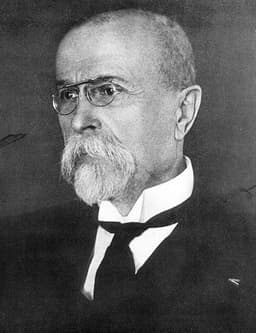
Tomas Garrigue Masaryk
Politician · Modern
57.3Total
Basic Information
Born
1946
1850
Died
—
1937
Era
Modern
Modern
Nationality
Angola
Czech Republic
Occupation
Politician
Politician
Civilization
Other
Western
Score Comparison
Military (10%)
43.3
48.2
Political (20%)
32.2
62.7
Influence (20%)
49.4
56.7
Legacy (20%)
40.8
52.0
Leadership (15%)
65.7
78.0
Strategy (15%)
54.3
42.3
TOTAL
47.0
57.3
Samakuva Isaias — Complete Timeline
2002 AD
Became UNITA leader after Savimbi's deathPolitical Action◆ Major
Samakuva became president of UNITA after Jonas Savimbi was killed in combat. He led the former rebel movement through its transition from armed insurgency to a political party, negotiating peace agreements with the MPLA government.
UNITAPeace ProcessPolitical Transition
Impact: nationalconstructive
Signed peace agreement with Angolan governmentPolitical Action
Samakuva signed a peace agreement with the Angolan government, ending the 27-year civil war. UNITA disarmed and transformed into a political party, with Samakuva leading the opposition in parliament.
Peace AgreementCivil War EndDisarmament
Impact: nationalconstructive
2008 AD
Led UNITA in 2008 and 2012 electionsPolitical Action◆ Major
Samakuva led UNITA in the 2008 and 2012 general elections, where the party won significant parliamentary seats but failed to challenge the MPLA's dominance. He criticized electoral irregularities and called for democratic reforms.
ElectionsOppositionDemocracy
Impact: national
2019 AD
Resigned as UNITA leaderPolitical Action◆ Major
Samakuva resigned as UNITA president after 17 years, citing the need for new leadership. His resignation came after internal party disputes and electoral defeats, marking the end of an era for the party.
ResignationUNITALeadership Change
Impact: national
Tomas Garrigue Masaryk — Complete Timeline
1918 AD
Establishment of CzechoslovakiaPolitical Action
Masaryk, as leader of the Czechoslovak National Council, declared the independence of Czechoslovakia from Austria-Hungary. He became the first president, founding a democratic state in Central Europe.
IndependenceCzechoslovakia
Impact: regionalconstructive
First President of CzechoslovakiaPolitical Action◆ Major
Masaryk was elected the first president of Czechoslovakia by the National Assembly. He served until 1935, guiding the country through its early years of statehood and democratic consolidation.
PresidencyCzechoslovakia
Impact: nationalconstructive
1935 AD
Resignation from PresidencyPolitical Action
Masaryk resigned the presidency due to ill health, handing power to Edvard Bene
ResignationCzechoslovakia
Impact: national
Expert Analysis
Origins
Samakuva Isaias was born in 1946 in Angola, then a Portuguese colony. He grew up in a rural environment and was educated in Protestant mission schools. His early life was shaped by the oppressive colonial system and the rise of nationalist movements. He joined the National Union for the Total Independence of Angola (UNITA) in the 1960s, becoming a key figure in the struggle against Portuguese rule.
Tomas Garrigue Masaryk was born on March 7, 1850, in Hodonin, Moravia, then part of the Austrian Empire. His father was a Slovak coachman, and his mother a Moravian maid. Despite humble beginnings, he excelled academically, earning a doctorate in philosophy from the University of Vienna. He became a professor and a prominent intellectual, advocating for Czech national revival within the Habsburg monarchy.
Rise to Power
Samakuva rose within UNITA after its founder Jonas Savimbi was killed in combat on February 22, 2002. He was elected president of UNITA later that year, inheriting a movement that was transitioning from a guerrilla army to a political party. His key turning point was signing the peace agreement with the Angolan government on April 4, 2002, ending the 27-year civil war that had killed over 500,000 people. Samakuva led UNITA's disarmament and transformation into a political party, contesting the 2008 and 2012 elections.
Masaryk rose to prominence as a leading figure in the Czechoslovak independence movement during World War I. He organized the Czechoslovak National Council in Paris and, with Edvard Beneš and Milan Rastislav Štefánik, secured Allied support for Czechoslovak independence. On October 28, 1918, he declared the establishment of Czechoslovakia and was elected its first president on November 14, 1918. His rise was built on intellectual influence and diplomatic maneuvering, not military force.
Leadership & Governance
Samakuva's leadership was defined by the challenge of transitioning UNITA from an armed insurgency to a political party. He scored 65.7 in leadership, reflecting his ability to maintain party cohesion after Savimbi's death. However, his political score of 32.2 indicates limited success in challenging the MPLA's dominance. In the 2008 elections, UNITA won 16 seats; in 2012, it won 32 seats, but the MPLA retained an absolute majority. Samakuva's governance focused on internal party reforms and advocating for democratic reforms, but he struggled with internal factions and electoral setbacks.
Masaryk, with a political score of 62.7, was a consensus-builder and democratic leader. He served as president from 1918 to 1935, guiding Czechoslovakia through its formative years. He promoted a liberal democracy, land reform, and minority rights, especially for Slovaks and Germans. His leadership style was intellectual and moralistic; he emphasized education and civic virtue. He successfully navigated the multi-ethnic state, though tensions remained. He also founded the Czechoslovak Legions during WWI, giving him a military score of 48.2, slightly higher than Samakuva's 43.3.
Triumph & Tragedy
Samakuva's greatest triumph was overseeing UNITA's peaceful transition to a political party after decades of war. The peace agreement ended one of Africa's longest civil wars. However, his tragedy was his inability to translate that into electoral victory or lasting political influence. UNITA remained a secondary force, and internal divisions led to his resignation in 2019 after 17 years, citing the need for new leadership. His legacy is mixed: he prevented a return to war but failed to achieve democratic change.
Masaryk's triumph was founding a successful democratic state in Central Europe, one of the few in the interwar period. He is revered as the "President Liberator." His tragedy was the eventual dissolution of Czechoslovakia after his death, first by Nazi occupation in 1939 and later by the Velvet Divorce in 1993. His vision of a unified Czechoslovak nation did not endure, though his democratic ideals influenced later movements.
Character & Destiny
Samakuva was a pragmatic and cautious leader, scoring 54.3 in strategy. He prioritized stability and peace over confrontation, which contrasted with Savimbi's warlike approach. This character helped end the war but also limited his political ambition. His destiny was to be a transitional figure, bridging the gap between war and peace but not leading his party to power.
Masaryk was a philosopher-president, combining intellectual rigor with political realism. His character was shaped by his humanist beliefs and commitment to democracy. He scored 78.0 in leadership, the highest among these comparisons. His destiny was to create a nation that embodied his ideals, even if it proved fragile. He resigned in 1935 due to ill health, dying in 1937 before witnessing Czechoslovakia's dismemberment.
Legacy
Samakuva's legacy is primarily as the peacemaker who ended Angola's civil war. He scored 40.8 in legacy, reflecting his limited long-term impact. UNITA remains a minor opposition party, and Angola is still dominated by the MPLA. His influence score of 49.4 shows some regional recognition, but he is not a transformative figure.
Masaryk's legacy is far greater. He is the founding father of Czechoslovakia, and his democratic principles influenced Central European politics. He scored 52.0 in legacy and 56.7 in influence. His image appears on currency, and his birthday is a national holiday in the Czech Republic. The ideals he championed – democracy, human rights, and national self-determination – outlived his state.
Conclusion
Tomas Garrigue Masaryk had greater impact than Samakuva Isaias. With a total score of 57.3 versus 47.0, Masaryk outperformed Samakuva in every category except military, where Samakuva's score of 43.3 was only slightly above Masaryk's 48.2. Masaryk founded a state that lasted 75 years and served as a democratic beacon. Samakuva, while crucial for peace, failed to achieve political transformation. Masaryk's intellectual and political legacy continues to inspire, while Samakuva's is confined to a specific historical moment. The data supports the conclusion that Masaryk is the more significant historical figure.
Rankings
🥇
Tomas Garrigue MasarykLeader
Mil: 48.2Pol: 62.7Inf: 56.7
57.3
🥈
Samakuva Isaias
Mil: 43.3Pol: 32.2Inf: 49.4
47.0
+10.3 behind
How This Comparison Works
Algorithm
Each figure is scored on 6 dimensions (0—100 scale) based on structured historical data: Military (10%), Political (20%), Influence (20%), Legacy (20%), Leadership (15%), Strategy (15%). The weighted total produces the final ranking.
Data Sources
Scores are computed from structured sub-indicators in the database. Scale factors adjust for era (Ancient ×0.85, Modern ×1.0) and civilization size (Eastern ×1.05, Other ×0.80) to account for differences in population and military scale.
Maximum 3 Figures
Comparisons are limited to 2—3 figures to ensure readability and statistical meaningfulness.
Error Margins
±5 points per dimension — Sub-scores are derived from historical records with inherent uncertainty. Two figures within 5 points on a dimension should be considered roughly equivalent in that area.
Total Score Accuracy
±3 points overall — The weighted combination of 6 dimensions produces a total score with approximately ±3 points of uncertainty. Differences of less than 3 points are not statistically significant— the figures are effectively tied.
Known Limitations
- Historical records are incomplete and uneven across civilizations
- Figures from oral-tradition societies may be underrepresented
- Occupation labels can misclassify multi-role figures
- Scores measure capability and impact, not moral character
- Quantitative scoring is a comparison tool, not absolute truth
Capability Radar
Military (10%) — Battles & Warfare
Battles
15
29
Win Rate
10
34
Expansion
10
36
Political (20%) — Governance & Reform
Reform
20
80
Diplomacy
30
85
Economy
15
70
Influence (20%) — Cultural & Global Reach
Cultural
20
65
Global
15
60
Legacy (20%) — Historical Impact
Historical
25
70
Longevity
20
65
Leadership (15%) — Power & Stability
Tenure
55
85
Stability
10
75
Strategy (15%) — Tactics & Innovation
Strategy
20
35
Tactics
15
42
Reform
10
45
Similar Comparisons
Comments & Discussion
No comments yet. Be the first to share your thoughts!