Loading...
This comparison has not been analyzed yet.
One-time AI generation (~1 minute). Scores and timeline are already available below.
Qalawun vs Valdemar I of Denmark
Qalawun leads by 7.5 pts · 2 figures compared
…

Qalawun
Emperor · Medieval
65.4Total
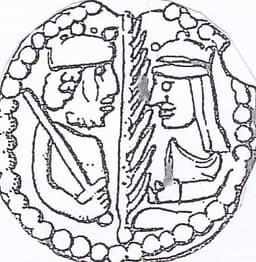
Valdemar I of Denmark
Emperor · Medieval
57.9Total
Basic Information
Born
1222
1131
Died
1290
1182
Era
Medieval
Medieval
Nationality
Egypt
Denmark
Occupation
Emperor
Emperor
Civilization
Middle Eastern
Western
Score Comparison
Military (10%)
82.0
70.0
Political (20%)
72.0
68.0
Influence (20%)
58.3
59.0
Legacy (20%)
58.0
50.0
Leadership (15%)
72.0
53.2
Strategy (15%)
65.4
55.0
TOTAL
65.4
57.9
Qalawun — Complete Timeline
1279 AD
Accession as Sultan (1279)Political Action◆ Major
Qalawun seized the sultanate after deposing his predecessor Al-Said Barakah, son of Baybars. He was a former Mamluk commander under Baybars. His accession marked the beginning of the Qalawunid dynasty, which ruled Egypt for over a century.
SuccessionMamluk SultanateDynasty
Impact: regional
1281 AD
Battle of Homs (1281)War◆ Major
Qalawun defeated a Mongol invasion led by Abaqa Khan of the Ilkhanate at the Second Battle of Homs. The Mamluk victory prevented Mongol incursions into Syria. This battle solidified Mamluk control over the region and deterred future Mongol attacks.
Mongol WarsBattleMamluk Victory
Impact: regionalconstructive
1285 AD
Capture of Margat and Latakia (1285-1287)War◆ Major
Qalawun captured the Crusader fortress of Margat (1285) and the port of Latakia (1287). These conquests further reduced Crusader territory in Syria. The fall of Margat was a significant blow to the Knights Hospitaller.
Crusader WarsConquestMamluk Expansion
Impact: regionaldestructive
1289 AD
Treaty of Tripoli (1289)Political Action◆ Major
Qalawun signed a truce with the Crusader County of Tripoli. However, he soon violated the treaty and captured Tripoli in 1289. The fall of Tripoli eliminated one of the last major Crusader states and paved the way for the capture of Acre.
Crusader WarsTreatyConquest
Impact: regionaldestructive
1290 AD
Death of Qalawun (1290)Other◆ Major
Qalawun died in Cairo while preparing a campaign to capture Acre. He was succeeded by his son Al-Ashraf Khalil, who completed the conquest of Acre. Qalawun's reign established the Qalawunid dynasty and strengthened the Mamluk state.
DeathSuccessionMamluk Sultanate
Impact: regional
Valdemar I of Denmark — Complete Timeline
1157 AD
Became King of DenmarkPolitical Action◆ Major
Valdemar I became King of Denmark after a civil war, defeating his rival Sweyn III at the Battle of Grathe Heath. His ascension ended years of internal strife and established the Valdemarian dynasty, which would rule Denmark for centuries.
Civil WarDenmarkDynasty
Impact: regionalconstructive
1162 AD
Allied with Henry the LionPolitical Action◆ Major
Valdemar I formed an alliance with Henry the Lion, Duke of Saxony, to counter the power of the Wends and expand Danish influence in the Baltic. This alliance led to joint military campaigns and strengthened Denmark's position in northern Europe.
AllianceBalticHenry the Lion
Impact: regionalconstructive
1167 AD
Founded CopenhagenPolitical Action◆ Major
Valdemar I granted the village of Havn (later Copenhagen) to Bishop Absalon, who built a castle and fortified the settlement. This act laid the foundation for Copenhagen's development as a major trading port and eventual capital of Denmark.
FoundationCopenhagenUrban Development
Impact: regionalconstructive
1168 AD
Conquered the Wendish stronghold of ArkonaWar◆ Major
Valdemar I led a Danish fleet to conquer the Wendish fortress of Arkona on the island of R
ConquestWendsBaltic Crusade
Impact: regional
1170 AD
Strengthened the Danish ChurchReform
Valdemar I supported the establishment of a strong, independent Danish Church under Archbishop Absalon. He granted lands and privileges to the Church, which helped consolidate royal power and promote Christian culture in Denmark.
ChurchReformAbsalon
Impact: nationalconstructive
This comparison has not been analyzed yet.
One-time AI generation (~1 minute). Scores and timeline are already available below.
Rankings
🥇
QalawunLeader
Mil: 82.0Pol: 72.0Inf: 58.3
65.4
🥈
Valdemar I of Denmark
Mil: 70.0Pol: 68.0Inf: 59.0
57.9
+7.5 behind
How This Comparison Works
Algorithm
Each figure is scored on 6 dimensions (0—100 scale) based on structured historical data: Military (10%), Political (20%), Influence (20%), Legacy (20%), Leadership (15%), Strategy (15%). The weighted total produces the final ranking.
Data Sources
Scores are computed from structured sub-indicators in the database. Scale factors adjust for era (Ancient ×0.85, Modern ×1.0) and civilization size (Eastern ×1.05, Other ×0.80) to account for differences in population and military scale.
Maximum 3 Figures
Comparisons are limited to 2—3 figures to ensure readability and statistical meaningfulness.
Error Margins
±5 points per dimension — Sub-scores are derived from historical records with inherent uncertainty. Two figures within 5 points on a dimension should be considered roughly equivalent in that area.
Total Score Accuracy
±3 points overall — The weighted combination of 6 dimensions produces a total score with approximately ±3 points of uncertainty. Differences of less than 3 points are not statistically significant— the figures are effectively tied.
Known Limitations
- Historical records are incomplete and uneven across civilizations
- Figures from oral-tradition societies may be underrepresented
- Occupation labels can misclassify multi-role figures
- Scores measure capability and impact, not moral character
- Quantitative scoring is a comparison tool, not absolute truth
Capability Radar
Military (10%) — Battles & Warfare
Battles
75
55
Win Rate
80
60
Expansion
70
60
Political (20%) — Governance & Reform
Reform
60
60
Diplomacy
75
55
Economy
65
50
Influence (20%) — Cultural & Global Reach
Cultural
55
45
Global
55
40
Legacy (20%) — Historical Impact
Historical
65
55
Longevity
60
50
Leadership (15%) — Power & Stability
Tenure
70
65
Stability
70
55
Strategy (15%) — Tactics & Innovation
Strategy
75
55
Tactics
70
50
Reform
65
45
Similar Comparisons
Comments & Discussion
No comments yet. Be the first to share your thoughts!