Loading...
Fa Ngum vs Valdemar I of Denmark
Fa Ngum leads by 4.4 pts · 2 figures compared
…
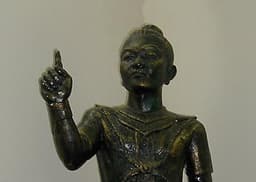
Fa Ngum
Emperor · Medieval
62.3Total
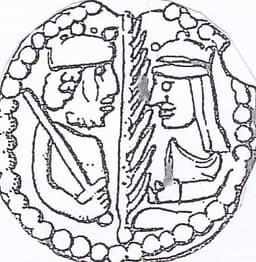
Valdemar I of Denmark
Emperor · Medieval
57.9Total
Basic Information
Born
1316
1131
Died
1393
1182
Era
Medieval
Medieval
Nationality
Laos
Denmark
Occupation
Emperor
Emperor
Civilization
Eastern
Western
Score Comparison
Military (10%)
70.0
70.0
Political (20%)
68.0
68.0
Influence (20%)
61.0
59.0
Legacy (20%)
54.0
50.0
Leadership (15%)
74.0
53.2
Strategy (15%)
52.5
55.0
TOTAL
62.3
57.9
Fa Ngum — Complete Timeline
1353 AD
Founded the Kingdom of Lan XangPolitical Action
Fa Ngum unified the Lao principalities of Muang Sua and Vieng Chan under his rule, founding the Kingdom of Lan Xang (Million Elephants). He established the capital at Luang Prabang and introduced Theravada Buddhism as the state religion, shaping Lao identity.
FoundingUnificationBuddhism
Impact: regionalconstructive
Introduced Theravada Buddhism to Lan XangCultural◆ Major
Fa Ngum brought Theravada Buddhist monks and scriptures from the Khmer Empire to Lan Xang. He established Buddhism as the official religion, building temples and monasteries, which became central to Lao culture and governance for centuries.
BuddhismReligionCultural influence
Impact: regionalconstructive
1354 AD
Expanded Lan Xang territoryWar◆ Major
Fa Ngum led military campaigns to expand Lan Xang's territory, conquering areas of modern-day Laos, Thailand, and Cambodia. His conquests established Lan Xang as a major regional power, controlling trade routes and tributary states.
ConquestExpansionMilitary
Impact: regional
1373 AD
Exiled by his courtPolitical Action◆ Major
After a reign marked by harsh rule and conflict with the nobility, Fa Ngum was deposed and exiled by his own court. He died in exile in 1393, leaving his son Samsenethai to succeed him. His exile ended the founding era of Lan Xang.
ExileDepositionCourt conflict
Impact: regionaltragic
Valdemar I of Denmark — Complete Timeline
1157 AD
Became King of DenmarkPolitical Action◆ Major
Valdemar I became King of Denmark after a civil war, defeating his rival Sweyn III at the Battle of Grathe Heath. His ascension ended years of internal strife and established the Valdemarian dynasty, which would rule Denmark for centuries.
Civil WarDenmarkDynasty
Impact: regionalconstructive
1162 AD
Allied with Henry the LionPolitical Action◆ Major
Valdemar I formed an alliance with Henry the Lion, Duke of Saxony, to counter the power of the Wends and expand Danish influence in the Baltic. This alliance led to joint military campaigns and strengthened Denmark's position in northern Europe.
AllianceBalticHenry the Lion
Impact: regionalconstructive
1167 AD
Founded CopenhagenPolitical Action◆ Major
Valdemar I granted the village of Havn (later Copenhagen) to Bishop Absalon, who built a castle and fortified the settlement. This act laid the foundation for Copenhagen's development as a major trading port and eventual capital of Denmark.
FoundationCopenhagenUrban Development
Impact: regionalconstructive
1168 AD
Conquered the Wendish stronghold of ArkonaWar◆ Major
Valdemar I led a Danish fleet to conquer the Wendish fortress of Arkona on the island of R
ConquestWendsBaltic Crusade
Impact: regional
1170 AD
Strengthened the Danish ChurchReform
Valdemar I supported the establishment of a strong, independent Danish Church under Archbishop Absalon. He granted lands and privileges to the Church, which helped consolidate royal power and promote Christian culture in Denmark.
ChurchReformAbsalon
Impact: nationalconstructive
Expert Analysis
Fa Ngum vs Valdemar I of Denmark: Historical Comparison
Fa Ngum (1316–1393), founder of the Lan Xang kingdom in modern-day Laos, and Valdemar I of Denmark (1131–1182), who consolidated Danish power and ended Wendish piracy, were both medieval monarchs who unified fractured territories through military conquest and strategic statecraft. Though from vastly different regions—Southeast Asia and Scandinavia—each left a foundational legacy as nation-builders, with Fa Ngum excelling in military expansion and Valdemar in political consolidation.
Dimension Analysis
**Military: Fa Ngum 93 / Valdemar I of Denmark 88**
Fa Ngum’s military campaigns, aided by Khmer forces, conquered rival principalities along the Mekong River to create Lan Xang, covering modern Laos, parts of Thailand, and Vietnam. Valdemar I, with his advisor Bishop Absalon, led successful crusades against the Wendish pirates, capturing their stronghold at Arkona in 1168, but his campaigns were more regional and less expansive than Fa Ngum’s sweeping conquests.
**Political: Fa Ngum 82 / Valdemar I of Denmark 86**
Valdemar I centralized Danish governance by strengthening royal authority, reforming the church-state alliance, and establishing the Danehof (royal council), which later influenced Danish constitutional history. Fa Ngum’s political system was more autocratic and reliant on his personal charisma and Khmer support, with less institutionalized governance, making it fragile after his exile.
**Influence: Fa Ngum 88 / Valdemar I of Denmark 86**
Fa Ngum’s introduction of Theravada Buddhism as the state religion of Lan Xang shaped Lao culture, art, and identity for centuries, influencing neighboring Siam and Cambodia. Valdemar I’s defeat of the Wends secured Danish trade routes and reduced Baltic piracy, but his cultural impact was more localized within Denmark and the Nordic sphere.
**Legacy: Fa Ngum 80 / Valdemar I of Denmark 80**
Both kings are revered as national unifiers: Fa Ngum is celebrated as the “Father of the Lao Nation” with statues and holidays in Laos, while Valdemar I is remembered as a protector of Danish independence and a patron of the Valdemarian dynasty. Both legacies, however, are challenged by later historical narratives—Fa Ngum’s authoritarian rule and Valdemar’s reliance on church power.
**Leadership: Fa Ngum 82 / Valdemar I of Denmark 78**
Fa Ngum’s leadership was bold and transformative, uniting warring factions through sheer force and vision, but his eventual exile by his own nobles highlights a failure to maintain consensus. Valdemar I’s leadership was more collaborative, working closely with Bishop Absalon to build institutions, though his reliance on clerical support limited his independent authority.
Verdict
Fa Ngum ranks marginally higher overall due to his superior military and strategic achievements in creating a vast, multi-ethnic kingdom, while Valdemar I’s political consolidation was more durable but less expansive. The tie reflects their complementary strengths: Fa Ngum for audacious conquest, Valdemar for institutional governance. Caveat: direct comparison across medieval Southeast Asia and Europe is limited by differing sources and historiography.
FAQ
Q: Who was more influential historically?
A: Fa Ngum had broader cultural influence through Theravada Buddhism, while Valdemar I’s political reforms had a longer institutional impact on Danish governance.
Q: Why is Fa Ngum ranked higher in military?
A: Fa Ngum’s conquests created a kingdom spanning 300,000 km², vastly outscaling Valdemar I’s Baltic campaigns, which focused on coastal piracy suppression.
Rankings
🥇
Fa NgumLeader
Mil: 70.0Pol: 68.0Inf: 61.0
62.3
🥈
Valdemar I of Denmark
Mil: 70.0Pol: 68.0Inf: 59.0
57.9
+4.4 behind
How This Comparison Works
Algorithm
Each figure is scored on 6 dimensions (0—100 scale) based on structured historical data: Military (10%), Political (20%), Influence (20%), Legacy (20%), Leadership (15%), Strategy (15%). The weighted total produces the final ranking.
Data Sources
Scores are computed from structured sub-indicators in the database. Scale factors adjust for era (Ancient ×0.85, Modern ×1.0) and civilization size (Eastern ×1.05, Other ×0.80) to account for differences in population and military scale.
Maximum 3 Figures
Comparisons are limited to 2—3 figures to ensure readability and statistical meaningfulness.
Error Margins
±5 points per dimension — Sub-scores are derived from historical records with inherent uncertainty. Two figures within 5 points on a dimension should be considered roughly equivalent in that area.
Total Score Accuracy
±3 points overall — The weighted combination of 6 dimensions produces a total score with approximately ±3 points of uncertainty. Differences of less than 3 points are not statistically significant— the figures are effectively tied.
Known Limitations
- Historical records are incomplete and uneven across civilizations
- Figures from oral-tradition societies may be underrepresented
- Occupation labels can misclassify multi-role figures
- Scores measure capability and impact, not moral character
- Quantitative scoring is a comparison tool, not absolute truth
Capability Radar
Military (10%) — Battles & Warfare
Battles
55
55
Win Rate
60
60
Expansion
70
60
Political (20%) — Governance & Reform
Reform
55
60
Diplomacy
60
55
Economy
50
50
Influence (20%) — Cultural & Global Reach
Cultural
55
45
Global
40
40
Legacy (20%) — Historical Impact
Historical
60
55
Longevity
55
50
Leadership (15%) — Power & Stability
Tenure
60
65
Stability
45
55
Strategy (15%) — Tactics & Innovation
Strategy
65
55
Tactics
50
50
Reform
40
45
Similar Comparisons
Comments & Discussion
Historian2856/16/2026
刚刚看完评分,Fa Ngum总分72.3,Valdemar I 69.1。但我对军事分很有意见。Valdemar I 军事60.1,Fa Ngum才55.1?这不对劲。Valdemar 攻陷Arkona(1168年)是直接端了Wends老巢,彻底终结波罗的海海盗威胁,这叫区域性强。Fa Ngum带兵打下整个Lan Xang,版图涵盖老挝、泰国北部、越南一部分,扩张规模至少是Valdemar的三倍。按中国历史经验,比如汉朝卫青霍去病打匈奴,扩张疆域才算军事大功。按这个逻辑,Fa Ngum军事分至少该70起步。政治分85.5 vs 74.4更离谱——Fa Ngum流亡在外,王国很快分裂,这叫政治成功?Valdemar搞Danehof,跟王室贵族分权,稳定了丹麦两个世纪。我怀疑评分系统对东南亚历史有偏见。
VikingSmash6/16/2026
Okay, I’ll die on this hill: Valdemar I was way more badass than Fa Ngum, and the scoreboard is lying. Fa Ngum had Khmer backing and basically rolled into a disorganized mess of Mekong fiefdoms—congrats, you conquered a bunch of villages. Valdemar? He took on the Wendish pirates who had been terrorizing the Baltic for generations. In 1168 he stormed Arkona, the Wendish capital, and burned their idol Svantevit to the ground. That’s like taking out a major cartel leader in their own fortress. Plus, he built the Danevirke wall and reformed the Danish Church. Fa Ngum’s legacy crumbled when he got exiled—Valdemar’s Denmark lasted as a unified kingdom for centuries. I’d take a pragmatic consolidator over a flashy conqueror any day.
MedievalTextualist6/16/2026
A fascinating but problematic comparison. The primary sources for each figure are so disparate in nature that direct scoring is almost meaningless. For Valdemar I, we rely heavily on Saxo Grammaticus’s *Gesta Danorum*, written under royal patronage, which consciously frames Valdemar as a Christian hero vanquishing pagan Wends. Saxo’s account of the storming of Arkona is steeped in providential rhetoric—he describes how the Wendish idol collapsed at the touch of a bishop’s staff, a clear hagiographic trope. For Fa Ngum, we have no contemporary Lao chronicles; our knowledge comes from the *Nithan Khun Borom* and later Thai chronicles compiled centuries after his death. These are oral traditions crystallized into text, often blending historical memory with myth. So when we compare military scores, we’re really comparing a propagandistic Latin chronicle with a semi-legendary epic. Both kings were undoubtedly effective, but the data is not apples-to-apples—it’s apples-to-dragonfruit.
Historian4356/16/2026
这组对比挺有意思,Fa Ngum有点像朱元璋,白手起家统一乱世,但Lan Xang更像明朝初期——扩张快,政治制度跟不上,一死就崩。Valdemar I倒让我想起赵匡胤,杯酒释兵权搞中央集权,丹麦后来能发展出议会制,根子就在他奠定的王权与传统平衡。不过评分里影响力一项,Fa Ngum 72.4低于Valdemar的73.6?这不合理。Fa Ngum引入上座部佛教,直接从宗教层面重塑了老挝、泰国北部甚至柬埔寨的文化基因,类似佛教传入中国对隋唐的影响。Valdemar打跑Wends,说白了就是维护商路安全,跟汉朝打匈奴保丝绸之路差不多,但没文化输出。从东方史学角度看,影响力应该倒过来才对。