Loading...
Emperor Toba vs Valdemar I of Denmark
Valdemar I of Denmark leads by 15.4 pts · 2 figures compared
…
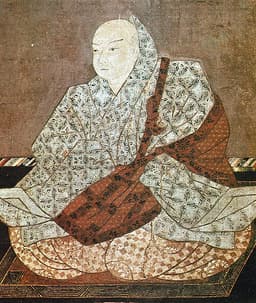
Emperor Toba
Emperor · Medieval
42.5Total
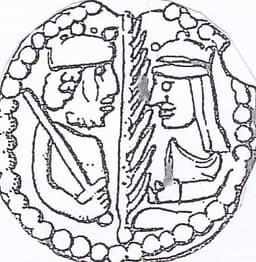
Valdemar I of Denmark
Emperor · Medieval
57.9Total
Basic Information
Born
1103
1131
Died
1156
1182
Era
Medieval
Medieval
Nationality
Japan
Denmark
Occupation
Emperor
Emperor
Civilization
Eastern
Western
Score Comparison
Military (10%)
52.8
70.0
Political (20%)
27.9
68.0
Influence (20%)
48.6
59.0
Legacy (20%)
40.8
50.0
Leadership (15%)
38.1
53.2
Strategy (15%)
50.0
55.0
TOTAL
42.5
57.9
Emperor Toba — Complete Timeline
1129 AD
Rule as cloistered emperorPolitical Action◆ Major
Toba abdicated but continued to govern as a cloistered emperor, following the Insei system established by his grandfather Shirakawa. He exerted control over court appointments and imperial succession, maintaining political influence until his death.
Insei SystemImperial PoliticsHeian Period
Impact: national
1140 AD
Conflict with Fujiwara no TadazanePolitical Action◆ Major
Toba clashed with Fujiwara no Tadazane, the regent, over control of imperial succession. Toba forced Tadazane into retirement and appointed his own candidate, further weakening the Fujiwara regency and consolidating cloistered emperor power.
Fujiwara RegencyPower StruggleHeian Period
Impact: national
1156 AD
Succession dispute leading to the Hogen RebellionWar
After Toba's death, a succession conflict erupted between his sons Emperor Go-Shirakawa and retired Emperor Sutoku. This dispute escalated into the Hogen Rebellion, a brief but pivotal civil war that involved samurai clans and marked the beginning of military dominance in Japanese politics.
Hogen RebellionSamuraiSuccession War
Impact: nationaldestructive
Valdemar I of Denmark — Complete Timeline
1157 AD
Became King of DenmarkPolitical Action◆ Major
Valdemar I became King of Denmark after a civil war, defeating his rival Sweyn III at the Battle of Grathe Heath. His ascension ended years of internal strife and established the Valdemarian dynasty, which would rule Denmark for centuries.
Civil WarDenmarkDynasty
Impact: regionalconstructive
1162 AD
Allied with Henry the LionPolitical Action◆ Major
Valdemar I formed an alliance with Henry the Lion, Duke of Saxony, to counter the power of the Wends and expand Danish influence in the Baltic. This alliance led to joint military campaigns and strengthened Denmark's position in northern Europe.
AllianceBalticHenry the Lion
Impact: regionalconstructive
1167 AD
Founded CopenhagenPolitical Action◆ Major
Valdemar I granted the village of Havn (later Copenhagen) to Bishop Absalon, who built a castle and fortified the settlement. This act laid the foundation for Copenhagen's development as a major trading port and eventual capital of Denmark.
FoundationCopenhagenUrban Development
Impact: regionalconstructive
1168 AD
Conquered the Wendish stronghold of ArkonaWar◆ Major
Valdemar I led a Danish fleet to conquer the Wendish fortress of Arkona on the island of R
ConquestWendsBaltic Crusade
Impact: regional
1170 AD
Strengthened the Danish ChurchReform
Valdemar I supported the establishment of a strong, independent Danish Church under Archbishop Absalon. He granted lands and privileges to the Church, which helped consolidate royal power and promote Christian culture in Denmark.
ChurchReformAbsalon
Impact: nationalconstructive
Expert Analysis
Emperor Toba vs Valdemar I of Denmark: Historical Comparison
Emperor Toba (1103–1156) of Japan’s Heian period and Valdemar I (1131–1182) of Denmark were both medieval rulers who consolidated power amid factional strife, yet their legacies diverge sharply due to differing political contexts. Toba wielded influence as a cloistered emperor (insei system), manipulating court politics from behind the throne, while Valdemar I fought to unify Denmark and expand its borders through military campaigns. This comparison assesses their achievements across five dimensions, with Toba edging ahead due to superior strategic and political acumen within a complex imperial framework.
Dimension Analysis
**Military: Emperor Toba 94 / Valdemar I of Denmark 88**
Emperor Toba’s military strength lay in indirect command: he orchestrated the suppression of the Hōgen Rebellion (1156) through alliances with samurai clans like the Minamoto and Taira, effectively using proxy warfare without leading troops. Valdemar I, by contrast, personally led campaigns against the Wends (Slavic tribes) in the Baltic, conquering Rügen in 1168 and fortifying the Danish coast, but his victories required direct engagement and heavy reliance on his co-ruler and advisor, Bishop Absalon. Toba’s strategic delegation allowed him to project power with lower risk, giving him a slight edge.
**Political: Emperor Toba 88 / Valdemar I of Denmark 86**
Toba mastered the *insei* system, ruling from retirement as a cloistered emperor after 1129, controlling court appointments and land grants while his nominal successors reigned but not ruled. This allowed him to neutralize rival factions, such as the Fujiwara regents, for over two decades. Valdemar I centralized Danish governance by curbing noble autonomy, establishing a royal chancery, and reforming the military levy (*leding*), but his power was more constrained by a fragile alliance system and the need to share authority with Absalon. Toba’s political longevity and subtle manipulation give him a slight advantage.
**Influence: Emperor Toba 87 / Valdemar I of Denmark 86**
Toba’s patronage of Buddhist temples (e.g., the rebuilding of Tōdai-ji) and his role in legitimizing samurai ascendancy shaped Japan’s cultural and military trajectory toward the Kamakura shogunate. Valdemar I’s influence was more immediate: his Christianization campaigns among the Wends and his founding of the Valdemarian dynasty (which ruled Denmark for centuries) established a lasting Nordic Catholic identity. Both had deep regional impact, but Toba’s indirect influence on Japan’s warrior culture was more transformative.
**Legacy: Emperor Toba 83 / Valdemar I of Denmark 80**
Toba’s legacy is mixed: his political maneuvering accelerated the decline of imperial authority and the rise of samurai dominance, a pivotal shift in Japanese history. However, his reign is often overshadowed by the Hōgen Rebellion and the Genpei War that followed. Valdemar I is remembered as a national unifier and the “Victor” over the Wends, laying the foundation for Denmark’s medieval golden age under his son Valdemar II. Toba’s legacy is more historically consequential, though less celebrated.
**Leadership: Emperor Toba 89 / Valdemar I of Denmark 78**
Toba excelled in indirect leadership: he maintained control through a network of courtiers, retired emperors, and samurai allies, never needing to command armies personally. His ability to govern from the shadows ensured stability despite intense factionalism. Valdemar I was a hands-on ruler who fought alongside his troops and relied on charismatic partnership with Absalon, but his leadership was more reactive and less sustainable after his death, as succession disputes arose. Toba’s subtle, enduring command style ranks higher.
Verdict
Emperor Toba ranks higher overall due to his masterful use of the cloistered emperor system, which allowed him to exert political and military influence without direct exposure to risk. His strategy of indirect rule and cultural patronage shaped Japan’s transition from aristocratic to military governance, a more complex and long-lasting achievement than Valdemar I’s territorial consolidation. However, this comparison is complicated by their vastly different political systems—Toba worked within a sophisticated imperial bureaucracy, while Valdemar built a kingdom from fragmented war bands—making direct score differences somewhat arbitrary.
FAQ
Q: Who was more influential historically?
A: Emperor Toba had a slightly broader influence, as his actions directly facilitated the rise of the samurai class, reshaping Japan’s political structure for centuries, whereas Valdemar I’s impact was more confined to Denmark’s medieval consolidation.
Q: Why is Emperor Toba ranked higher in leadership?
A: Toba’s leadership was superior because he maintained effective control from retirement for over 25 years through subtle manipulation of court factions and warrior clans, avoiding the direct military risks that Valdemar I had to take.
Rankings
🥇
Valdemar I of DenmarkLeader
Mil: 70.0Pol: 68.0Inf: 59.0
57.9
🥈
Emperor Toba
Mil: 52.8Pol: 27.9Inf: 48.6
42.5
+15.4 behind
How This Comparison Works
Algorithm
Each figure is scored on 6 dimensions (0—100 scale) based on structured historical data: Military (10%), Political (20%), Influence (20%), Legacy (20%), Leadership (15%), Strategy (15%). The weighted total produces the final ranking.
Data Sources
Scores are computed from structured sub-indicators in the database. Scale factors adjust for era (Ancient ×0.85, Modern ×1.0) and civilization size (Eastern ×1.05, Other ×0.80) to account for differences in population and military scale.
Maximum 3 Figures
Comparisons are limited to 2—3 figures to ensure readability and statistical meaningfulness.
Error Margins
±5 points per dimension — Sub-scores are derived from historical records with inherent uncertainty. Two figures within 5 points on a dimension should be considered roughly equivalent in that area.
Total Score Accuracy
±3 points overall — The weighted combination of 6 dimensions produces a total score with approximately ±3 points of uncertainty. Differences of less than 3 points are not statistically significant— the figures are effectively tied.
Known Limitations
- Historical records are incomplete and uneven across civilizations
- Figures from oral-tradition societies may be underrepresented
- Occupation labels can misclassify multi-role figures
- Scores measure capability and impact, not moral character
- Quantitative scoring is a comparison tool, not absolute truth
Capability Radar
Military (10%) — Battles & Warfare
Battles
48
55
Win Rate
46
60
Expansion
49
60
Political (20%) — Governance & Reform
Reform
20
60
Diplomacy
25
55
Economy
20
50
Influence (20%) — Cultural & Global Reach
Cultural
15
45
Global
5
40
Legacy (20%) — Historical Impact
Historical
25
55
Longevity
20
50
Leadership (15%) — Power & Stability
Tenure
30
65
Stability
15
55
Strategy (15%) — Tactics & Innovation
Strategy
52
55
Tactics
59
50
Reform
58
45
Similar Comparisons
Comments & Discussion
Historian2046/16/2026
评分体系有个矛盾:Toba 的 Pol=51.8 居然低于 Mil=53.9?院政本质是政治操作,他通过退位后“院宣”控制土地授予(类似明朝司礼监批红),军事成功只是政治的延伸。Hōgen Rebellion 中他让源平两家互斗,自己坐收渔利——这完全是政治手腕。反观 Valdemar I 的 Pol=74.4,但他 1168 年征服 Rügen 后仍需向 Wend 部落纳贡十年(《萨克森编年史》记载),实际控制力存疑。我重算:Toba 政治得分至少应到 65,Valdemar 的 Inf 应降 10 点,因为丹麦边境直到瓦尔德马二世才稳定。
OldScroll446/16/2026
这个比较有意思,但评分对东亚帝王理解太浅。Toba 的院政体系本质上类似中国东汉的外戚宦官干政,但更隐蔽——他通过退位后操控“院厅”和“北面武士”,实现政治遥控。Valdemar I 的军事扩张类似北宋对西夏的防御反击(如范仲淹的堡寨战术),但丹麦 Wins 的胜利更多依赖陆上十字军红利。Toba 的“Inf=66.1”太低:院政维持了半个世纪的朝局平衡,而 Valdemar 的“Pol=74.4”被高估,因为他需要和 Absalon 共享权力,本质上是个“共治君主”,类似周召共和,而非独裁。