Loading...
Pushyamitra Shunga vs Vima Kadphises
Pushyamitra Shunga leads by 6.4 pts · 2 figures compared
…
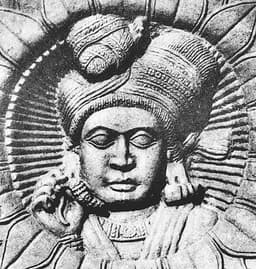
Pushyamitra Shunga
Emperor · Ancient
56.8Total
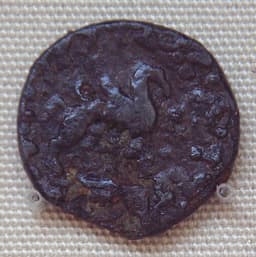
Vima Kadphises
Emperor · Ancient
50.4Total
Basic Information
Born
-195
90
Died
-149
127
Era
Ancient
Ancient
Nationality
India
Kushan Empire
Occupation
Emperor
Emperor
Civilization
Indian
Indian
Score Comparison
Military (10%)
47.5
45.0
Political (20%)
68.0
68.0
Influence (20%)
54.9
54.9
Legacy (20%)
47.5
46.7
Leadership (15%)
68.0
40.0
Strategy (15%)
60.0
43.3
TOTAL
56.8
50.4
Pushyamitra Shunga — Complete Timeline
185 BC
Overthrew the Maurya DynastyPolitical Action
Pushyamitra Shunga, a Mauryan general, assassinated the last Maurya emperor Brihadratha during a military parade and established the Shunga dynasty. This coup ended the Maurya Empire and marked a return to Brahmanical rule after Buddhist patronage.
CoupDynasty Change
Impact: regional
180 BC
Fought the Battle of the IndusWar◆ Major
Pushyamitra Shunga repelled an invasion by the Indo-Greek king Menander I (Milinda) near the Indus River. The Shunga victory preserved the kingdom's independence and prevented Greek expansion into the Gangetic plain.
BattleIndo-Greek War
Impact: regional
Patronized Brahmanical RevivalCultural
Pushyamitra Shunga supported the restoration of Brahmanical Hinduism, building temples and sponsoring Vedic scholars. This shift from Mauryan Buddhist patronage influenced Indian religious and cultural development for centuries.
ReligionCultural Revival
Impact: regionalconstructive
175 BC
Performed the Ashvamedha YajnaCultural◆ Major
Pushyamitra Shunga performed the Vedic horse sacrifice (Ashvamedha) to assert his sovereignty and legitimacy. The ritual involved releasing a horse to roam for a year, followed by a grand ceremony, reaffirming Brahmanical traditions after Mauryan Buddhist influence.
RitualBrahmanism
Impact: nationalconstructive
Vima Kadphises — Complete Timeline
100 AD
Introduction of Gold CoinageCultural◆ Major
Vima Kadphises introduced the first gold coinage in the Kushan Empire, minting gold dinars and double dinars. These coins were based on Roman aurei and facilitated trade with the Roman Empire and Central Asia.
CoinageGoldTrade
Impact: regionalconstructive
110 AD
Conquest of the Ganges BasinWar◆ Major
Vima Kadphises led Kushan forces to conquer parts of the Ganges Basin in northern India. This expanded the empire into the heartland of the Indian subcontinent and increased its wealth and influence.
ConquestGangesExpansion
Impact: regional
Patronage of ShaivismCultural
Vima Kadphises was the first Kushan king to depict the Hindu god Shiva on his coins, often with a trident. This indicates his patronage of Shaivism and the integration of Indian religious elements into Kushan culture.
ReligionShaivismCoinage
Impact: regionalconstructive
Expert Analysis
Origins
**Pushyamitra Shunga** (born c. 220 BCE) was a Brahmin general serving the Maurya Empire. Details of his early life are scarce, but he emerged as a commander under the last Maurya emperor, Brihadratha. His background in the declining Mauryan court, which had shifted from the centralization of Ashoka to a more fragmented administration, shaped his ambition to restore orthodox Brahmanical traditions.
**Vima Kadphises** (reigned c. 113–127 CE) was the son of Kujula Kadphises, the founder of the Kushan Empire. The Kushans were originally nomadic tribes from the Central Asian steppes who had settled in Bactria and later expanded into the Indian subcontinent. Vima inherited a realm that already controlled parts of modern Afghanistan, Pakistan, and the Indus Valley. His upbringing in a multicultural environment—influenced by Hellenistic, Persian, and Indian cultures—equipped him to adopt and adapt various administrative and economic practices.
Rise to Power
**Pushyamitra Shunga** rose to power through a decisive act of betrayal. In 185 BCE, during a military parade, he assassinated his own sovereign, Emperor Brihadratha Maurya, and proclaimed himself king. This coup ended the Maurya dynasty after 137 years. Pushyamitra then established the Shunga dynasty, ruling initially from Pataliputra. His legitimacy was challenged by rival factions, including the Mauryan loyalists and the neighboring kingdoms of Kalinga and Vidarbha.
**Vima Kadphises** succeeded his father Kujula Kadphises around 113 CE. Unlike Pushyamitra, he inherited a stable empire and focused on expansion and consolidation. He is known to have issued coins as early as 113 CE, indicating his early assertion of authority. He continued his father's campaigns southward into the Indian subcontinent, conquering parts of the Ganges Basin. His rise was marked by diplomatic and military engagements with the Roman Empire, as evidenced by the adoption of Roman coin weights in his gold coinage.
Leadership & Governance
**Pushyamitra Shunga** governed with an emphasis on Brahmanical revival. He performed the Ashvamedha Yajna (horse sacrifice) to assert his sovereignty and patronized Vedic scholars, building temples and supporting rituals. This was a deliberate shift from the Buddhist patronage of the Mauryas. However, his reign faced military pressures from the Indo-Greeks and the Satavahanas. He scored 68.0 in political leadership, reflecting his ability to establish a new dynasty and maintain control over a fragmented region. But his military score of 47.5 suggests limited expansion; his greatest achievement was defending the Shunga realm against the Indo-Greek king Menander I at the Battle of the Indus (c. 165 BCE).
**Vima Kadphises** introduced the first gold coinage in the Kushan Empire, minting gold dinars and double dinars based on Roman aurei. This economic reform facilitated trade along the Silk Road and integrated the Kushan economy with the Roman world. His coins also depicted the Hindu god Shiva, indicating his patronage of Shaivism—a strategic move to legitimize his rule among Indian subjects. He scored 68.0 in political leadership as well, but his military score of 45.0 reflects limited conquests beyond the Ganges Basin. His governance was characterized by cultural syncretism and economic innovation rather than military expansion.
Triumph & Tragedy
**Pushyamitra Shunga**'s greatest triumph was founding a dynasty that lasted 112 years, resisting external threats and preserving a Brahmanical order. His Ashvamedha Yajna was a symbolic reassertion of Vedic authority after centuries of Buddhist dominance. However, his greatest failure was his inability to prevent the loss of territories. The Shunga empire gradually shrank under pressure from the Satavahanas in the Deccan and the Indo-Greeks in the northwest. Additionally, his alleged persecution of Buddhists, though debated in historical sources, tarnished his legacy.
**Vima Kadphises**' triumph was his economic and cultural legacy. By introducing gold coinage, he stabilized the Kushan economy and linked it to the global trade network. His patronage of Shaivism also set a precedent for later Kushan rulers. However, his failure was the lack of substantial territorial expansion beyond the Ganges Basin. Unlike his father or successor Kanishka, Vima did not push deep into central India or beyond. His reign was more consolidatory than expansive, limiting the Kushan footprint.
Character & Destiny
**Pushyamitra Shunga** was ambitious and ruthless, as evidenced by his assassination of Brihadratha. He was also a devout Brahmanical revivalist, which shaped his policies and alienated Buddhist communities. His character was pragmatic—he performed the Ashvamedha to gain legitimacy—but also rigid in his religious orientation. This rigidity may have contributed to the Shunga dynasty's limited longevity and territorial contraction.
**Vima Kadphises** appears to have been a shrewd administrator and cultural diplomat. By adopting Roman coin standards and Indian religious motifs, he demonstrated a flexible and syncretic approach. His character was less focused on personal military glory and more on economic integration and cultural synthesis. This enabled the Kushan Empire to thrive as a commercial hub but did not secure vast territorial gains.
Legacy
**Pushyamitra Shunga** is remembered as the founder of the Shunga dynasty and a restorer of Brahmanical Hinduism. His actions contributed to the decline of Buddhism in India and the resurgence of Vedic rituals. However, his legacy is mixed: while he preserved a Hindu kingdom against Indo-Greek invasions, his dynasty eventually succumbed to internal decay. His total score of 56.8 reflects a moderate impact on Indian history.
**Vima Kadphises** left a more enduring economic legacy. His gold coinage set the standard for Kushan currency, which was used across Central Asia and India for centuries. His patronage of Shaivism also influenced later Indian rulers. However, his reign is often overshadowed by his successors, especially Kanishka. With a total score of 50.4, his impact is slightly lower, but his contributions to trade and culture were significant.
Conclusion
Pushyamitra Shunga had a greater overall impact than Vima Kadphises, scoring 56.8 to 50.4. While Vima's economic innovations were important, they were part of a broader Kushan legacy built by his successors. Pushyamitra's founding of a dynasty that resisted foreign invasions and revived Brahmanical traditions had a more direct and lasting influence on the political and religious landscape of India. His military defense against the Indo-Greeks preserved Indian sovereignty at a critical juncture. Therefore, Pushyamitra Shunga emerges as the more consequential figure in ancient Indian history.
Rankings
🥇
Pushyamitra ShungaLeader
Mil: 47.5Pol: 68.0Inf: 54.9
56.8
🥈
Vima Kadphises
Mil: 45.0Pol: 68.0Inf: 54.9
50.4
+6.4 behind
How This Comparison Works
Algorithm
Each figure is scored on 6 dimensions (0—100 scale) based on structured historical data: Military (10%), Political (20%), Influence (20%), Legacy (20%), Leadership (15%), Strategy (15%). The weighted total produces the final ranking.
Data Sources
Scores are computed from structured sub-indicators in the database. Scale factors adjust for era (Ancient ×0.85, Modern ×1.0) and civilization size (Eastern ×1.05, Other ×0.80) to account for differences in population and military scale.
Maximum 3 Figures
Comparisons are limited to 2—3 figures to ensure readability and statistical meaningfulness.
Error Margins
±5 points per dimension — Sub-scores are derived from historical records with inherent uncertainty. Two figures within 5 points on a dimension should be considered roughly equivalent in that area.
Total Score Accuracy
±3 points overall — The weighted combination of 6 dimensions produces a total score with approximately ±3 points of uncertainty. Differences of less than 3 points are not statistically significant— the figures are effectively tied.
Known Limitations
- Historical records are incomplete and uneven across civilizations
- Figures from oral-tradition societies may be underrepresented
- Occupation labels can misclassify multi-role figures
- Scores measure capability and impact, not moral character
- Quantitative scoring is a comparison tool, not absolute truth
Capability Radar
Military (10%) — Battles & Warfare
Battles
55
40
Win Rate
50
45
Expansion
40
55
Political (20%) — Governance & Reform
Reform
50
55
Diplomacy
45
50
Economy
40
70
Influence (20%) — Cultural & Global Reach
Cultural
40
50
Global
30
40
Legacy (20%) — Historical Impact
Historical
50
55
Longevity
45
45
Leadership (15%) — Power & Stability
Tenure
60
60
Stability
45
55
Strategy (15%) — Tactics & Innovation
Strategy
45
40
Tactics
40
35
Reform
35
30
Similar Comparisons
Comments & Discussion
No comments yet. Be the first to share your thoughts!