Loading...
Pushyamitra Shunga vs Sumu-abum
Pushyamitra Shunga leads by 14.0 pts · 2 figures compared
…
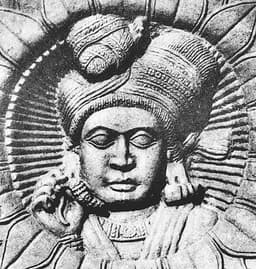
Pushyamitra Shunga
Emperor · Ancient
56.8Total

Sumu-abum
Emperor · Ancient
42.8Total
Basic Information
Born
-195
-1894
Died
-149
-1881
Era
Ancient
Ancient
Nationality
India
Babylon
Occupation
Emperor
Emperor
Civilization
Indian
Middle Eastern
Score Comparison
Military (10%)
47.5
47.5
Political (20%)
68.0
27.9
Influence (20%)
54.9
49.4
Legacy (20%)
47.5
44.2
Leadership (15%)
68.0
45.0
Strategy (15%)
60.0
36.8
TOTAL
56.8
42.8
Pushyamitra Shunga — Complete Timeline
185 BC
Overthrew the Maurya DynastyPolitical Action
Pushyamitra Shunga, a Mauryan general, assassinated the last Maurya emperor Brihadratha during a military parade and established the Shunga dynasty. This coup ended the Maurya Empire and marked a return to Brahmanical rule after Buddhist patronage.
CoupDynasty Change
Impact: regional
180 BC
Fought the Battle of the IndusWar◆ Major
Pushyamitra Shunga repelled an invasion by the Indo-Greek king Menander I (Milinda) near the Indus River. The Shunga victory preserved the kingdom's independence and prevented Greek expansion into the Gangetic plain.
BattleIndo-Greek War
Impact: regional
Patronized Brahmanical RevivalCultural
Pushyamitra Shunga supported the restoration of Brahmanical Hinduism, building temples and sponsoring Vedic scholars. This shift from Mauryan Buddhist patronage influenced Indian religious and cultural development for centuries.
ReligionCultural Revival
Impact: regionalconstructive
175 BC
Performed the Ashvamedha YajnaCultural◆ Major
Pushyamitra Shunga performed the Vedic horse sacrifice (Ashvamedha) to assert his sovereignty and legitimacy. The ritual involved releasing a horse to roam for a year, followed by a grand ceremony, reaffirming Brahmanical traditions after Mauryan Buddhist influence.
RitualBrahmanism
Impact: nationalconstructive
Sumu-abum — Complete Timeline
1894 BC
Foundation of the First Babylonian DynastyPolitical Action
Sumu-abum, an Amorite chieftain, established the first dynasty of Babylon by taking control of the small city-state. This event initiated Babylon's transformation from a minor settlement into a major political entity that would later dominate Mesopotamia.
Dynasty FoundationBabylonAmorite
Impact: globalconstructive
Expert Analysis
Origins
Pushyamitra Shunga was born into a Brahmin family, likely around the late 3rd century BCE in the Mauryan Empire. He served as a general (senapati) under the last Mauryan emperor, Brihadratha. His formative years were marked by the declining Mauryan central authority and the rise of provincial powers. Sumu-abum, an Amorite chieftain, emerged circa 1894 BCE in the city of Babylon, then a minor settlement in Mesopotamia. His background was tribal, with the Amorites being semi-nomadic Semitic people who had gradually infiltrated Mesopotamia. Sumu-abum's early life is obscure, but he likely leveraged military prowess to seize control of Babylon from the dominant city of Kazallu.
Rise to Power
Pushyamitra Shunga's rise was dramatic: in 185 BCE, during a military parade, he assassinated Emperor Brihadratha and proclaimed himself ruler, founding the Shunga dynasty. This coup exploited Mauryan weakness after Ashoka's death. Pushyamitra faced immediate challenges from the Indo-Greek kingdom of Menander I, who invaded the Indus region. In the Battle of the Indus (c. 180 BCE), Pushyamitra repelled the Greeks, securing his northern frontier. Sumu-abum's ascent was slower. He established the first Babylonian dynasty by fortifying the city, building walls, and forming alliances. His reign (1894-1881 BCE) focused on consolidating control over a small territory, fighting against rivals like Kazallu and Kish. Unlike Pushyamitra's sudden coup, Sumu-abum's rise was a gradual assertion of Amorite dominance.
Leadership & Governance
Pushyamitra Shunga's leadership was characterized by a revival of Brahmanical Hinduism. He performed the Ashvamedha Yajna (horse sacrifice) to legitimize his rule, a ritual abandoned by Buddhist Mauryas. He patronized Vedic scholars and built temples, reversing Mauryan Buddhist patronage. His military score of 47.5 reflects competent defense but not expansion. Politically, he scored 68.0, indicating effective consolidation. Sumu-abum, with a political score of 27.9, focused on building Babylon's infrastructure, including the city wall and temples. He issued land grants to soldiers, creating a loyal base. His leadership (45.0) was more tribal, relying on personal charisma. While Pushyamitra centralized power through ritual and patronage, Sumu-abum decentralized through land grants, setting a precedent for later Babylonian rulers.
Triumph & Tragedy
Pushyamitra's greatest triumph was overthrowing the Mauryas and establishing a dynasty that lasted 112 years. His victory over Menander I preserved Shunga independence. However, his greatest failure was the conflict with the Buddhist community; texts like the Divyavadana accuse him of persecuting Buddhists, though historical evidence is debated. This damaged his legacy. Sumu-abum's triumph was founding Babylon's first dynasty, which would later produce Hammurabi. His tragedy was the limited scope of his achievements: he ruled only a small city-state, and his dynasty faced constant threats. He scored 44.2 in legacy, lower than Pushyamitra's 47.5. Sumu-abum's failure to expand left Babylon vulnerable, though he secured its future.
Character & Destiny
Pushyamitra Shunga was decisive and ambitious, as shown by his assassination of Brihadratha. His embrace of Brahmanical orthodoxy suggests a strategic mind, using religion to legitimize power. However, this rigidity may have fueled conflicts. His total score of 56.8 reflects a balanced but not exceptional ruler. Sumu-abum was a pragmatist, building gradually. His low political score (27.9) indicates limited vision; he did not create lasting institutions. His character was that of a tribal chieftain rather than a state-builder. Historical assessments view Sumu-abum as a founder but not a great ruler. Pushyamitra, despite controversies, is seen as a restorer of Hindu traditions.
Legacy
Pushyamitra Shunga's legacy is mixed: he revived Brahmanical Hinduism and patronized Sanskrit literature, but his alleged persecution of Buddhists tarnishes his image. The Shunga dynasty maintained the Mauryan administrative structure but could not prevent further Greek incursions. Sumu-abum's legacy is foundational: his dynasty produced Hammurabi, and Babylon became a major power. However, his personal impact is overshadowed by later kings. Pushyamitra scored 47.5 in legacy, Sumu-abum 44.2. Both left dynasties, but Pushyamitra's cultural impact was greater, while Sumu-abum's political foundation was more consequential.
Conclusion
Pushyamitra Shunga had a greater overall impact than Sumu-abum, reflected in his higher total score (56.8 vs 42.8). While Sumu-abum founded a dynasty that later shaped history, his direct influence was minimal. Pushyamitra actively transformed his empire's religious and cultural trajectory, defending against Hellenistic expansion and reviving Vedic traditions. His political and leadership scores (68.0 and 68.0) far exceed Sumu-abum's (27.9 and 45.0). However, Sumu-abum's legacy as the founder of Babylon's first dynasty is undeniable. Ultimately, Pushyamitra's actions had more immediate and far-reaching consequences, making him the more significant figure in ancient history.
Rankings
🥇
Pushyamitra ShungaLeader
Mil: 47.5Pol: 68.0Inf: 54.9
56.8
🥈
Sumu-abum
Mil: 47.5Pol: 27.9Inf: 49.4
42.8
+14.0 behind
How This Comparison Works
Algorithm
Each figure is scored on 6 dimensions (0—100 scale) based on structured historical data: Military (10%), Political (20%), Influence (20%), Legacy (20%), Leadership (15%), Strategy (15%). The weighted total produces the final ranking.
Data Sources
Scores are computed from structured sub-indicators in the database. Scale factors adjust for era (Ancient ×0.85, Modern ×1.0) and civilization size (Eastern ×1.05, Other ×0.80) to account for differences in population and military scale.
Maximum 3 Figures
Comparisons are limited to 2—3 figures to ensure readability and statistical meaningfulness.
Error Margins
±5 points per dimension — Sub-scores are derived from historical records with inherent uncertainty. Two figures within 5 points on a dimension should be considered roughly equivalent in that area.
Total Score Accuracy
±3 points overall — The weighted combination of 6 dimensions produces a total score with approximately ±3 points of uncertainty. Differences of less than 3 points are not statistically significant— the figures are effectively tied.
Known Limitations
- Historical records are incomplete and uneven across civilizations
- Figures from oral-tradition societies may be underrepresented
- Occupation labels can misclassify multi-role figures
- Scores measure capability and impact, not moral character
- Quantitative scoring is a comparison tool, not absolute truth
Capability Radar
Military (10%) — Battles & Warfare
Battles
55
15
Win Rate
50
20
Expansion
40
25
Political (20%) — Governance & Reform
Reform
50
20
Diplomacy
45
25
Economy
40
20
Influence (20%) — Cultural & Global Reach
Cultural
40
20
Global
30
15
Legacy (20%) — Historical Impact
Historical
50
35
Longevity
45
40
Leadership (15%) — Power & Stability
Tenure
60
30
Stability
45
25
Strategy (15%) — Tactics & Innovation
Strategy
45
15
Tactics
40
10
Reform
35
5
Similar Comparisons
Comments & Discussion
No comments yet. Be the first to share your thoughts!