Loading...
King Zhaoxiang of Qin vs Pushyamitra Shunga
King Zhaoxiang of Qin leads by 5.1 pts · 2 figures compared
…

King Zhaoxiang of Qin
Emperor · Ancient
61.9Total
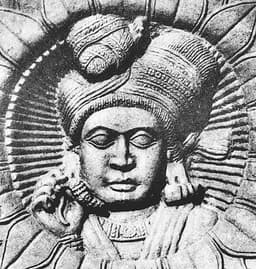
Pushyamitra Shunga
Emperor · Ancient
56.8Total
Basic Information
Born
-325
-195
Died
-251
-149
Era
Ancient
Ancient
Nationality
China
India
Occupation
Emperor
Emperor
Civilization
Eastern
Indian
Score Comparison
Military (10%)
77.5
47.5
Political (20%)
72.0
68.0
Influence (20%)
56.7
54.9
Legacy (20%)
40.0
47.5
Leadership (15%)
78.0
68.0
Strategy (15%)
75.0
60.0
TOTAL
61.9
56.8
King Zhaoxiang of Qin — Complete Timeline
293 BC
Battle of YiqueWar◆ Major
Qin general Bai Qi, under King Zhaoxiang's command, defeated a coalition of Wei and Han forces at Yique, killing 240,000 enemy troops. This victory eliminated the main military threat from the central plains and opened the way for Qin's eastward expansion.
BattleQin ExpansionBai Qi
Impact: regionaldestructive
266 BC
Reforms of Fan JuReform◆ Major
King Zhaoxiang appointed Fan Ju as chancellor, who implemented policies to centralize power, reduce the influence of noble families, and promote capable officials. These reforms strengthened Qin's administrative efficiency and military capacity, laying the foundation for unification.
ReformCentralizationFan Ju
Impact: nationalconstructive
260 BC
Battle of ChangpingWar
Qin forces under Bai Qi besieged and defeated the Zhao army at Changping. After the Zhao surrender, Bai Qi ordered the execution of 400,000 Zhao soldiers, the largest massacre in ancient Chinese history. This victory crippled Zhao and solidified Qin's dominance.
BattleMassacreQin Unification
Impact: regionaldestructive
256 BC
Conquest of the Zhou Royal DomainWar
King Zhaoxiang's forces conquered the remaining territory of the Eastern Zhou dynasty, capturing King Nan of Zhou. This ended the Zhou dynasty's nominal rule after 800 years, symbolically clearing the way for Qin's eventual unification of China.
ConquestZhou DynastyEnd of Era
Impact: national
Pushyamitra Shunga — Complete Timeline
185 BC
Overthrew the Maurya DynastyPolitical Action
Pushyamitra Shunga, a Mauryan general, assassinated the last Maurya emperor Brihadratha during a military parade and established the Shunga dynasty. This coup ended the Maurya Empire and marked a return to Brahmanical rule after Buddhist patronage.
CoupDynasty Change
Impact: regional
180 BC
Fought the Battle of the IndusWar◆ Major
Pushyamitra Shunga repelled an invasion by the Indo-Greek king Menander I (Milinda) near the Indus River. The Shunga victory preserved the kingdom's independence and prevented Greek expansion into the Gangetic plain.
BattleIndo-Greek War
Impact: regional
Patronized Brahmanical RevivalCultural
Pushyamitra Shunga supported the restoration of Brahmanical Hinduism, building temples and sponsoring Vedic scholars. This shift from Mauryan Buddhist patronage influenced Indian religious and cultural development for centuries.
ReligionCultural Revival
Impact: regionalconstructive
175 BC
Performed the Ashvamedha YajnaCultural◆ Major
Pushyamitra Shunga performed the Vedic horse sacrifice (Ashvamedha) to assert his sovereignty and legitimacy. The ritual involved releasing a horse to roam for a year, followed by a grand ceremony, reaffirming Brahmanical traditions after Mauryan Buddhist influence.
RitualBrahmanism
Impact: nationalconstructive
Expert Analysis
Origins
King Zhaoxiang of Qin (born 325 BCE, ruled 306–251 BCE) was the son of King Huiwen of Qin and a concubine, later elevated after his half-brother's death. He spent his early years as a hostage in the state of Zhao, an experience that shaped his cautious and strategic mindset. His education emphasized Legalist principles, military tactics, and statecraft under advisors like Bai Qi and Fan Ju. Pushyamitra Shunga (born c. 220 BCE, ruled 185–149 BCE) began as a Brahmin general under the Mauryan emperor Brihadratha. His background was rooted in the Hindu orthodoxy, and he likely served in the Mauryan military, gaining command experience. The Mauryan decline, marked by weak rulers and Greek incursions, provided the backdrop for his coup.
Rise to Power
King Zhaoxiang ascended the Qin throne in 306 BCE after his brother died, but real power initially lay with his mother, Queen Dowager Xuan, and her lover, Chancellor Wei Ran. Zhaoxiang patiently consolidated authority, finally ousting Wei Ran in 266 BCE with the help of Fan Ju. This internal victory allowed him to pursue aggressive expansion. Pushyamitra Shunga seized power in 185 BCE by assassinating Brihadratha during a military parade, capitalizing on Mauryan weakness and resentment against Buddhist patronage. He then performed the Ashvamedha Yajna (horse sacrifice) to legitimize his rule, a ritual not performed for centuries, signaling a return to Vedic traditions.
Leadership & Governance
King Zhaoxiang governed through a centralized bureaucracy based on Legalism. He appointed capable ministers like Fan Ju, who implemented reforms to weaken noble families and promote meritocracy. His military campaigns were ruthless, with Bai Qi ordering the execution of 400,000 Zhao prisoners after the Battle of Changping (260 BCE)—a calculated terror tactic to crush resistance. In contrast, Pushyamitra Shunga revived Brahmanical Hinduism, building temples and sponsoring Vedic scholars. He reversed Mauryan Buddhist patronage, but his rule was less centralized, relying on feudal lords. His military score of 47.5 reflects limited expansion, while Zhaoxiang's 77.5 in military underscores his conquests.
Triumph & Tragedy
King Zhaoxiang's greatest triumph was the conquest of the Zhou royal domain in 256 BCE, ending the Zhou dynasty that had nominally ruled for 800 years. He also annexed the states of Wei, Han, and Zhao, reducing them to shadows. His tragedies include the massacre at Changping, which, while effective, created deep hatred that later fueled anti-Qin sentiment. His failure to complete unification before his death left the task to his great-grandson, Qin Shi Huang. Pushyamitra Shunga's triumph was repelling the Indo-Greek king Menander I at the Battle of the Indus (c. 155 BCE), preserving the Shunga kingdom. His tragedy was the loss of the Deccan and parts of the northwest to the Satavahanas and Greeks, shrinking Mauryan borders. His legacy score of 47.5 reflects his dynasty's short-lived nature (112 years) compared to the Qin's permanent impact.
Character & Destiny
King Zhaoxiang was patient, calculating, and ruthless. His time as a hostage taught him to wait for opportunities, and he never hesitated to sacrifice thousands for strategic gains. His destiny was to lay the foundation for unification, but his longevity (75 years) meant he outlived many heirs, causing succession issues. Pushyamitra Shunga was a traditionalist and pragmatist. His coup was swift, but his Brahmanical revival alienated Buddhists, leading to internal strife. He scored 68.0 in political leadership, reflecting his ability to seize power, but his 60.0 in strategy shows he failed to consolidate gains.
Legacy
King Zhaoxiang's legacy is immense: he reduced the Zhou to vassals, decimated Zhao, and expanded Qin territory to encompass most of modern China. His policies and ministers directly enabled Qin Shi Huang's unification. He scored 56.7 in influence, but his role is often overshadowed by his more famous descendant. Pushyamitra Shunga's legacy is the revival of Hindu orthodoxy and the Ashvamedha ritual, which influenced later empires like the Guptas. However, his dynasty's relative weakness and short duration limit his impact; he scores 47.5 in legacy.
Conclusion
King Zhaoxiang of Qin had a greater impact on world history. His military conquests (score 77.5) and political reforms (72.0) directly led to China's first unification, a watershed event that shaped East Asian civilization for millennia. Pushyamitra Shunga (TOTAL 56.8) restored Hindu tradition but failed to build a lasting empire. The score gap of 5.1 points reflects Zhaoxiang's superior strategic execution and enduring geopolitical consequences.
Rankings
🥇
King Zhaoxiang of QinLeader
Mil: 77.5Pol: 72.0Inf: 56.7
61.9
🥈
Pushyamitra Shunga
Mil: 47.5Pol: 68.0Inf: 54.9
56.8
+5.1 behind
How This Comparison Works
Algorithm
Each figure is scored on 6 dimensions (0—100 scale) based on structured historical data: Military (10%), Political (20%), Influence (20%), Legacy (20%), Leadership (15%), Strategy (15%). The weighted total produces the final ranking.
Data Sources
Scores are computed from structured sub-indicators in the database. Scale factors adjust for era (Ancient ×0.85, Modern ×1.0) and civilization size (Eastern ×1.05, Other ×0.80) to account for differences in population and military scale.
Maximum 3 Figures
Comparisons are limited to 2—3 figures to ensure readability and statistical meaningfulness.
Error Margins
±5 points per dimension — Sub-scores are derived from historical records with inherent uncertainty. Two figures within 5 points on a dimension should be considered roughly equivalent in that area.
Total Score Accuracy
±3 points overall — The weighted combination of 6 dimensions produces a total score with approximately ±3 points of uncertainty. Differences of less than 3 points are not statistically significant— the figures are effectively tied.
Known Limitations
- Historical records are incomplete and uneven across civilizations
- Figures from oral-tradition societies may be underrepresented
- Occupation labels can misclassify multi-role figures
- Scores measure capability and impact, not moral character
- Quantitative scoring is a comparison tool, not absolute truth
Capability Radar
Military (10%) — Battles & Warfare
Battles
85
55
Win Rate
90
50
Expansion
95
40
Political (20%) — Governance & Reform
Reform
85
50
Diplomacy
80
45
Economy
75
40
Influence (20%) — Cultural & Global Reach
Cultural
65
40
Global
80
30
Legacy (20%) — Historical Impact
Historical
90
50
Longevity
85
45
Leadership (15%) — Power & Stability
Tenure
95
60
Stability
70
45
Strategy (15%) — Tactics & Innovation
Strategy
95
45
Tactics
80
40
Reform
70
35
Similar Comparisons
Comments & Discussion
No comments yet. Be the first to share your thoughts!