Loading...
This comparison has not been analyzed yet.
One-time AI generation (~1 minute). Scores and timeline are already available below.
Vima Kadphises vs Zoskales
Vima Kadphises leads by 10.1 pts · 2 figures compared
…
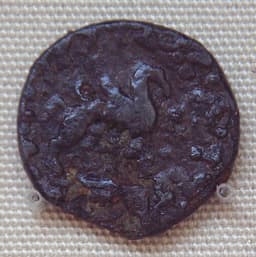
Vima Kadphises
Emperor · Ancient
50.4Total

Zoskales
Emperor · Ancient
40.3Total
Basic Information
Born
90
80
Died
127
120
Era
Ancient
Ancient
Nationality
Kushan Empire
Ethiopia
Occupation
Emperor
Emperor
Civilization
Indian
Other
Score Comparison
Military (10%)
45.0
50.0
Political (20%)
68.0
29.3
Influence (20%)
54.9
44.8
Legacy (20%)
46.7
35.8
Leadership (15%)
40.0
45.0
Strategy (15%)
43.3
39.6
TOTAL
50.4
40.3
Vima Kadphises — Complete Timeline
100 AD
Introduction of Gold CoinageCultural◆ Major
Vima Kadphises introduced the first gold coinage in the Kushan Empire, minting gold dinars and double dinars. These coins were based on Roman aurei and facilitated trade with the Roman Empire and Central Asia.
CoinageGoldTrade
Impact: regionalconstructive
110 AD
Conquest of the Ganges BasinWar◆ Major
Vima Kadphises led Kushan forces to conquer parts of the Ganges Basin in northern India. This expanded the empire into the heartland of the Indian subcontinent and increased its wealth and influence.
ConquestGangesExpansion
Impact: regional
Patronage of ShaivismCultural
Vima Kadphises was the first Kushan king to depict the Hindu god Shiva on his coins, often with a trident. This indicates his patronage of Shaivism and the integration of Indian religious elements into Kushan culture.
ReligionShaivismCoinage
Impact: regionalconstructive
Zoskales — Complete Timeline
100 AD
Mention in the Periplus of the Erythraean SeaCultural◆ Major
Zoskales is mentioned in the Periplus of the Erythraean Sea, a Greek merchant's guide to trade routes. The text describes him as the ruler of Aksum, controlling the port of Adulis and trading ivory, tortoiseshell, and spices with Roman Egypt.
Historical RecordTradeAksum
Impact: regional
110 AD
Expansion of Aksumite TradePolitical Action◆ Major
Zoskales oversaw the expansion of Aksum's trade networks through the port of Adulis, connecting the Red Sea trade with the interior of Ethiopia. This trade brought wealth and influence to Aksum, establishing it as a major regional power.
TradeEconomic GrowthAksum
Impact: regionalconstructive
This comparison has not been analyzed yet.
One-time AI generation (~1 minute). Scores and timeline are already available below.
Rankings
🥇
Vima KadphisesLeader
Mil: 45.0Pol: 68.0Inf: 54.9
50.4
🥈
Zoskales
Mil: 50.0Pol: 29.3Inf: 44.8
40.3
+10.1 behind
How This Comparison Works
Algorithm
Each figure is scored on 6 dimensions (0—100 scale) based on structured historical data: Military (10%), Political (20%), Influence (20%), Legacy (20%), Leadership (15%), Strategy (15%). The weighted total produces the final ranking.
Data Sources
Scores are computed from structured sub-indicators in the database. Scale factors adjust for era (Ancient ×0.85, Modern ×1.0) and civilization size (Eastern ×1.05, Other ×0.80) to account for differences in population and military scale.
Maximum 3 Figures
Comparisons are limited to 2—3 figures to ensure readability and statistical meaningfulness.
Error Margins
±5 points per dimension — Sub-scores are derived from historical records with inherent uncertainty. Two figures within 5 points on a dimension should be considered roughly equivalent in that area.
Total Score Accuracy
±3 points overall — The weighted combination of 6 dimensions produces a total score with approximately ±3 points of uncertainty. Differences of less than 3 points are not statistically significant— the figures are effectively tied.
Known Limitations
- Historical records are incomplete and uneven across civilizations
- Figures from oral-tradition societies may be underrepresented
- Occupation labels can misclassify multi-role figures
- Scores measure capability and impact, not moral character
- Quantitative scoring is a comparison tool, not absolute truth
Capability Radar
Military (10%) — Battles & Warfare
Battles
40
10
Win Rate
45
10
Expansion
55
15
Political (20%) — Governance & Reform
Reform
55
15
Diplomacy
50
25
Economy
70
30
Influence (20%) — Cultural & Global Reach
Cultural
50
15
Global
40
10
Legacy (20%) — Historical Impact
Historical
55
20
Longevity
45
15
Leadership (15%) — Power & Stability
Tenure
60
30
Stability
55
25
Strategy (15%) — Tactics & Innovation
Strategy
40
10
Tactics
35
10
Reform
30
5
Similar Comparisons
Comments & Discussion
No comments yet. Be the first to share your thoughts!