Loading...
Pushyamitra Shunga vs Shoshenq I
Shoshenq I leads by 0.2 pts · 2 figures compared
…
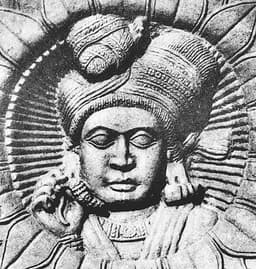
Pushyamitra Shunga
Emperor · Ancient
56.8Total
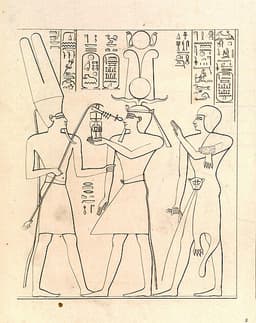
Shoshenq I
Emperor · Ancient
57.0Total
Basic Information
Born
-195
-943
Died
-149
-922
Era
Ancient
Ancient
Nationality
India
Third Intermediate Egypt
Occupation
Emperor
Emperor
Civilization
Indian
Middle Eastern
Score Comparison
Military (10%)
47.5
70.0
Political (20%)
68.0
68.0
Influence (20%)
54.9
54.9
Legacy (20%)
47.5
49.2
Leadership (15%)
68.0
53.2
Strategy (15%)
60.0
57.5
TOTAL
56.8
57.0
Pushyamitra Shunga — Complete Timeline
185 BC
Overthrew the Maurya DynastyPolitical Action
Pushyamitra Shunga, a Mauryan general, assassinated the last Maurya emperor Brihadratha during a military parade and established the Shunga dynasty. This coup ended the Maurya Empire and marked a return to Brahmanical rule after Buddhist patronage.
CoupDynasty Change
Impact: regional
180 BC
Fought the Battle of the IndusWar◆ Major
Pushyamitra Shunga repelled an invasion by the Indo-Greek king Menander I (Milinda) near the Indus River. The Shunga victory preserved the kingdom's independence and prevented Greek expansion into the Gangetic plain.
BattleIndo-Greek War
Impact: regional
Patronized Brahmanical RevivalCultural
Pushyamitra Shunga supported the restoration of Brahmanical Hinduism, building temples and sponsoring Vedic scholars. This shift from Mauryan Buddhist patronage influenced Indian religious and cultural development for centuries.
ReligionCultural Revival
Impact: regionalconstructive
175 BC
Performed the Ashvamedha YajnaCultural◆ Major
Pushyamitra Shunga performed the Vedic horse sacrifice (Ashvamedha) to assert his sovereignty and legitimacy. The ritual involved releasing a horse to roam for a year, followed by a grand ceremony, reaffirming Brahmanical traditions after Mauryan Buddhist influence.
RitualBrahmanism
Impact: nationalconstructive
Shoshenq I — Complete Timeline
943 BC
Foundation of the 22nd DynastyPolitical Action
Shoshenq I, a Libyan chieftain, founded the 22nd Dynasty, ruling from Bubastis. This marked the rise of Libyan influence in Egypt, with Shoshenq consolidating power by appointing family members to key priestly and military positions.
Dynasty FoundationLibyan RuleBubastis
Impact: national
925 BC
Sack of JerusalemWar
Shoshenq I invaded the Kingdom of Judah and sacked Jerusalem, looting the Temple of Solomon and the royal palace. This campaign, recorded in the Hebrew Bible and on the Bubastite Portal at Karnak, brought immense wealth to Egypt and weakened Judah.
JerusalemTemple LootingBiblical Shishak
Impact: regionaldestructive
Campaign in Palestine and the NegevWar◆ Major
Shoshenq I led a major military campaign through Palestine and the Negev, attacking over 150 cities and towns. The campaign reasserted Egyptian dominance in the region and is documented on the Bubastite Portal at Karnak.
PalestineMilitary CampaignKarnak
Impact: regionalconstructive
Construction of the Bubastite PortalCultural◆ Major
Shoshenq I commissioned the Bubastite Portal at the Temple of Karnak, a monumental gateway recording his military victories in Palestine. The portal served as a propaganda tool, showcasing his achievements and legitimizing his Libyan dynasty.
KarnakMonumentPropaganda
Impact: nationalconstructive
Expert Analysis
Origins
Pushyamitra Shunga was born around 250 BCE, likely into a Brahmin family. He served as a general under the Mauryan emperor Brihadratha. Little is known of his early life, but his rise came from within the Mauryan military. Shoshenq I was born around 940 BCE, the son of Nimlot A, a Libyan chief in the Meshwesh tribe. He grew up in the Nile Delta, where Libyan immigrants had settled and gained power. His father served as a commander under the 21st Dynasty pharaohs.
Rise to Power
Pushyamitra Shunga seized power in 185 BCE by assassinating Brihadratha during a military parade. He then established the Shunga dynasty, ruling from Pataliputra. His coup ended the Mauryan Empire, which had weakened after Ashoka's death. Shoshenq I rose through military and political maneuvering. He became the commander of the Libyan forces under Psusennes II and eventually took the throne, founding the 22nd Dynasty around 943 BCE. He consolidated power by marrying his son into the Theban priesthood, gaining control of Upper Egypt.
Leadership & Governance
Pushyamitra Shunga promoted Brahmanical Hinduism, reversing the Mauryan patronage of Buddhism. He performed the Ashvamedha Yajna (horse sacrifice) to assert his sovereignty. He sponsored Vedic scholars and rebuilt temples. His governance focused on centralizing power in the Ganges plain. Shoshenq I ruled from Bubastis in the Delta, but maintained control over Thebes through his son, who served as High Priest of Amun. He used military campaigns to project power, as seen in his invasion of Judah. Both rulers used religious legitimacy: Pushyamitra through Vedic rituals, Shoshenq through the Amun priesthood.
Triumph & Tragedy
Pushyamitra's greatest success was founding a dynasty that lasted 112 years. He repelled an Indo-Greek invasion by Menander I, preserving the Shunga kingdom. However, his policy of persecuting Buddhists, as recorded in Buddhist texts, led to internal strife. The Shunga empire eventually shrank. Shoshenq I's major triumph was his campaign in Palestine, where he sacked Jerusalem and looted the Temple of Solomon. This reasserted Egyptian influence. His tragedy was that his conquests did not endure; the 22nd Dynasty later fragmented. Both rulers scored 68.0 in political, but Shoshenq scored 70.0 in military versus Pushyamitra's 47.5.
Character & Destiny
Pushyamitra is often described as a strong-willed ruler who revived Hinduism. His actions against Buddhists show a willingness to enforce religious orthodoxy. His overthrow of the Mauryas was a calculated act of ambition. Shoshenq I was a capable military leader and diplomat. He integrated Libyan and Egyptian cultures, but his dynasty's reliance on Libyan chieftains led to decentralization. Historical assessments differ: Pushyamitra is seen as a Hindu revivalist, while Shoshenq is noted for his biblical connection as Shishak.
Legacy
Pushyamitra Shunga's legacy is the Shunga dynasty, which kept the Indo-Greeks at bay and preserved Vedic culture. His rule saw the growth of art and literature, including the building of the Bharhut stupa. Shoshenq I's legacy includes the Bubastite Portal at Karnak, which records his victories, and his mention in the Bible as Shishak. He reasserted Egyptian power in Canaan, but his dynasty declined after him. In terms of long-term impact, Pushyamitra's revival of Hinduism influenced later Gupta period, while Shoshenq's Libyan dynasty set a pattern of foreign rule in Egypt.
Conclusion
While Shoshenq I scores slightly higher overall (57.0 vs 56.8), Pushyamitra Shunga had a more lasting cultural impact by reviving Hinduism and defending northern India from Greek expansion. Shoshenq's military campaign was spectacular but ephemeral. Pushyamitra's legacy endured through the Shunga dynasty and its cultural contributions. Therefore, Pushyamitra Shunga had greater historical impact.
Rankings
🥇
Shoshenq ILeader
Mil: 70.0Pol: 68.0Inf: 54.9
57.0
🥈
Pushyamitra Shunga
Mil: 47.5Pol: 68.0Inf: 54.9
56.8
+0.2 behind
How This Comparison Works
Algorithm
Each figure is scored on 6 dimensions (0—100 scale) based on structured historical data: Military (10%), Political (20%), Influence (20%), Legacy (20%), Leadership (15%), Strategy (15%). The weighted total produces the final ranking.
Data Sources
Scores are computed from structured sub-indicators in the database. Scale factors adjust for era (Ancient ×0.85, Modern ×1.0) and civilization size (Eastern ×1.05, Other ×0.80) to account for differences in population and military scale.
Maximum 3 Figures
Comparisons are limited to 2—3 figures to ensure readability and statistical meaningfulness.
Error Margins
±5 points per dimension — Sub-scores are derived from historical records with inherent uncertainty. Two figures within 5 points on a dimension should be considered roughly equivalent in that area.
Total Score Accuracy
±3 points overall — The weighted combination of 6 dimensions produces a total score with approximately ±3 points of uncertainty. Differences of less than 3 points are not statistically significant— the figures are effectively tied.
Known Limitations
- Historical records are incomplete and uneven across civilizations
- Figures from oral-tradition societies may be underrepresented
- Occupation labels can misclassify multi-role figures
- Scores measure capability and impact, not moral character
- Quantitative scoring is a comparison tool, not absolute truth
Capability Radar
Military (10%) — Battles & Warfare
Battles
55
55
Win Rate
50
60
Expansion
40
60
Political (20%) — Governance & Reform
Reform
50
50
Diplomacy
45
55
Economy
40
50
Influence (20%) — Cultural & Global Reach
Cultural
40
45
Global
30
45
Legacy (20%) — Historical Impact
Historical
50
55
Longevity
45
50
Leadership (15%) — Power & Stability
Tenure
60
65
Stability
45
55
Strategy (15%) — Tactics & Innovation
Strategy
45
55
Tactics
40
50
Reform
35
40
Similar Comparisons
Comments & Discussion
No comments yet. Be the first to share your thoughts!