Loading...
Pushpa Kamal Dahal vs Zhang Xianzhong
Pushpa Kamal Dahal leads by 8.9 pts · 2 figures compared
…
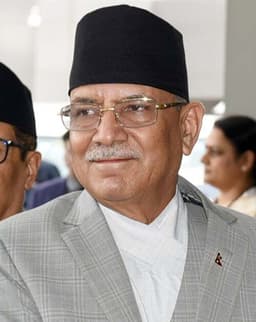
Pushpa Kamal Dahal
Revolutionary · Modern
50.0Total

Zhang Xianzhong
Revolutionary · Modern
41.1Total
Basic Information
Born
1954
1606
Died
—
1647
Era
Modern
Modern
Nationality
Nepal
China
Occupation
Revolutionary
Revolutionary
Civilization
Indian
Eastern
Score Comparison
Military (10%)
35.0
55.0
Political (20%)
54.7
35.0
Influence (20%)
51.0
44.8
Legacy (20%)
40.8
40.0
Leadership (15%)
62.0
35.4
Strategy (15%)
60.0
38.3
TOTAL
50.0
41.1
Pushpa Kamal Dahal — Complete Timeline
1996 AD
Launch of People's WarWar
Prachanda, as leader of the Communist Party of Nepal (Maoist), initiated a armed insurgency against the Nepalese state. The People's War began with attacks on police posts and government offices, escalating into a decade-long civil war.
InsurgencyCivil WarMaoist
Impact: nationaldestructive
2006 AD
Signing of Comprehensive Peace AccordPolitical Action◆ Major
Prachanda signed the Comprehensive Peace Accord with Prime Minister Girija Prasad Koirala, ending the civil war. The agreement committed the Maoists to lay down arms and join mainstream politics in exchange for integration into state institutions.
Peace TreatyCivil WarNepal
Impact: nationalconstructive
2008 AD
Election as Prime MinisterPolitical Action◆ Major
Following the Maoist victory in the Constituent Assembly elections, Prachanda became the first prime minister of the Federal Democratic Republic of Nepal. His tenure focused on integrating former Maoist combatants into the national army.
ElectionGovernmentRepublic
Impact: national
2009 AD
Resignation as Prime MinisterPolitical Action
Prachanda resigned as prime minister after a dispute with President Ram Baran Yadav over the dismissal of the army chief. The crisis highlighted tensions between the Maoists and the established political order.
ResignationPoliticsCrisis
Impact: national
Zhang Xianzhong — Complete Timeline
1630 AD
Launched Rebellion in ShaanxiWar◆ Major
Zhang Xianzhong joined a peasant rebellion in Shaanxi province during the late Ming dynasty. He quickly rose to become a major rebel leader, gathering a large army and establishing a base of operations in the region.
Ming DynastyRebellionShaanxi
Impact: regionaldestructive
1644 AD
Captured and Sacked ChengduWar◆ Major
Zhang Xianzhong captured the city of Chengdu, the capital of Sichuan province. He then proclaimed the Daxi dynasty and made Chengdu his capital. The capture was accompanied by widespread destruction and massacres of the local population.
Ming-Qing TransitionSichuanMassacre
Impact: regionaldestructive
Proclaimed the Daxi DynastyPolitical Action◆ Major
Zhang Xianzhong proclaimed the Daxi (Great Western) dynasty in Sichuan. He established a government and minted his own coinage. His rule was characterized by extreme violence, including the systematic killing of scholars, officials, and civilians.
Daxi DynastyProclamationSichuan
Impact: regionaldestructive
1647 AD
Killed in Battle Against Qing ForcesWar◆ Major
Zhang Xianzhong was killed in battle against Qing forces in Xichong, Sichuan. His death led to the collapse of the Daxi dynasty. The Qing conquest of Sichuan was completed shortly after, but the province had been devastated by years of warfare.
Qing DynastyBattleDeath
Impact: regionaltragic
Expert Analysis
Pushpa Kamal Dahal vs Zhang Xianzhong
# The Rebel’s Two Paths: Zhang Xianzhong and Prachanda
On a sweltering August day in 1644, the gates of Chengdu swung open to a conqueror who would become synonymous with terror. Zhang Xianzhong rode into the Sichuan capital not as a liberator but as a butcher, his soldiers soon turning the city’s streets into rivers of blood. Three and a half centuries later, in a very different corner of Asia, another revolutionary named Pushpa Kamal Dahal—known to his followers as Prachanda, “the Fierce One”—stepped into the prime minister’s office in Kathmandu, having traded his guerrilla fatigues for a business suit. Both men led peasant armies against established orders. Both sought to tear down old worlds and build new ones. But where one ended in a hail of arrows on a Sichuan battlefield, the other died in bed, a three-time prime minister. What explains the chasm between their fates?
Origins
Zhang Xianzhong was born in 1606 into the dying gasp of the Ming dynasty. Northern China was buckling under drought, famine, and a collapsed currency system. The imperial bureaucracy had rotted from within, and millions of desperate peasants roamed the countryside. Zhang grew up a rough man, a former soldier and sometime bandit, shaped by violence as a language of survival. There was no ideology here—only rage and hunger.
Prachanda, born in 1954 in a remote village in central Nepal, came of age in a different kind of decay. Nepal’s monarchy was feudal, its caste system rigid, its development stunted. But the world around him was changing: Mao’s China had just been born, and the Naxalite uprising in India had lit a spark. Prachanda was educated, a graduate in agriculture, and he read Marx, Lenin, and Mao with the devotion of a seminarian. His rebellion would be not a howl of hunger but a calculated act of political theory.
Rise to Power
Zhang’s ascent was brutal and swift. In 1630, he joined a peasant rebellion in Shaanxi, and within a decade he commanded tens of thousands. His strategy was simple: move fast, sack cities, and leave nothing behind. He was a creature of chaos, and chaos elevated him. By 1644, as the Ming dynasty collapsed under the weight of its own corruption and the Manchu invasion from the north, Zhang seized Chengdu and proclaimed the Daxi dynasty. His military score of 63.4 reflects a commander who could win battles but could not build beyond the sword.
Prachanda’s path was slower and more deliberate. In 1996, he launched the “People’s War” from the hills of western Nepal with a few hundred fighters armed with antiquated rifles. The Nepalese state, corrupt and indifferent, underestimated him. For a decade, his Maoist insurgency spread like a virus, not through mass slaughter but through political indoctrination, land reform, and a disciplined guerrilla campaign. By 2006, when he signed the Comprehensive Peace Accord, he had forced a king to his knees. His political score of 61.5 tells the story: he understood that a revolution must win minds, not just territory.
Leadership & Governance
Here the two men diverge most starkly. Zhang Xianzhong’s rule in Sichuan was a reign of terror. He is alleged to have massacred entire populations, destroyed infrastructure, and left the province depopulated for generations. His leadership score of 34.5 and political score of 34.4 reflect a man who could destroy but never govern. He minted coins and set up a court, but these were gestures, not institutions. When Qing forces finally cornered him in 1647, his regime evaporated within days of his death.
Prachanda, by contrast, proved a master of political survival. After the peace accord, he led his Maoist party into elections, won a plurality in 2008, and became prime minister of a federal republic. He resigned in 2009 over a constitutional dispute—a sign not of weakness but of strategic patience. He would return to power twice more, each time adapting to Nepal’s messy, fractious democracy. His leadership score of 75.7 is no accident: he understood that in the modern world, a revolutionary must learn to negotiate, compromise, and wait.
Triumph & Tragedy
Zhang’s greatest moment—capturing Chengdu and declaring himself emperor—was also his tragedy. He had no plan for peace, no vision beyond the sword. His death in battle against Qing forces in 1647 was almost anticlimactic, a footnote to a life of spectacular violence. He left behind no legacy but a legend of cruelty that persists in Chinese folklore to this day.
Prachanda’s triumph was the peace accord itself, a document that ended a civil war that had killed over 17,000 people. His tragedy was that the utopia he promised—a classless, egalitarian Nepal—never materialized. He became a politician, mired in coalitions, corruption, and compromise. The revolutionary became the establishment.
Character & Destiny
Zhang was a man of pure will, unencumbered by ideology or restraint. He once reportedly said, “Heaven has sent me to kill.” His destiny was shaped by the desperation of his era and his own inability to see beyond the next battle. Prachanda, by contrast, was a man of calculation. He could be ruthless—his insurgency used child soldiers and terror tactics—but he also knew when to stop. His destiny was shaped by the 20th century’s great lesson: that revolutions must evolve or die.
Legacy
Zhang Xianzhong’s total score of 49.1 places him as a historical footnote, a cautionary tale of what happens when rebellion becomes pure destruction. He is remembered in Sichuan folk tales as a monster, his name invoked to explain why the province’s population took centuries to recover.
Prachanda’s legacy is more ambiguous. His total score of 59.0 reflects a man who changed his country forever but could not fully remake it. He is both a peacemaker and a former warlord, a democrat and a former autocrat. In Nepal, his name stirs both gratitude and resentment. He showed that a revolutionary could enter the halls of power—but also that power has a way of taming the fiercest fire.
Conclusion
Two rebels, two centuries, two outcomes. Zhang Xianzhong burned bright and died fast, a comet of destruction. Prachanda burned longer, learning to bank his fire into the slow embers of politics. Their stories remind us that revolution is never just about ideology or circumstance—it is about the man at the center. One could only destroy. The other could build, even if the building was imperfect. In the end, the rebel who learns to govern outlives the rebel who only knows how to fight. It is a lesson as old as history itself, and as urgent as the next uprising.
Rankings
🥇
Pushpa Kamal DahalLeader
Mil: 35.0Pol: 54.7Inf: 51.0
50.0
🥈
Zhang Xianzhong
Mil: 55.0Pol: 35.0Inf: 44.8
41.1
+8.9 behind
How This Comparison Works
Algorithm
Each figure is scored on 6 dimensions (0—100 scale) based on structured historical data: Military (10%), Political (20%), Influence (20%), Legacy (20%), Leadership (15%), Strategy (15%). The weighted total produces the final ranking.
Data Sources
Scores are computed from structured sub-indicators in the database. Scale factors adjust for era (Ancient ×0.85, Modern ×1.0) and civilization size (Eastern ×1.05, Other ×0.80) to account for differences in population and military scale.
Maximum 3 Figures
Comparisons are limited to 2—3 figures to ensure readability and statistical meaningfulness.
Error Margins
±5 points per dimension — Sub-scores are derived from historical records with inherent uncertainty. Two figures within 5 points on a dimension should be considered roughly equivalent in that area.
Total Score Accuracy
±3 points overall — The weighted combination of 6 dimensions produces a total score with approximately ±3 points of uncertainty. Differences of less than 3 points are not statistically significant— the figures are effectively tied.
Known Limitations
- Historical records are incomplete and uneven across civilizations
- Figures from oral-tradition societies may be underrepresented
- Occupation labels can misclassify multi-role figures
- Scores measure capability and impact, not moral character
- Quantitative scoring is a comparison tool, not absolute truth
Capability Radar
Military (10%) — Battles & Warfare
Battles
35
55
Win Rate
40
50
Expansion
25
60
Political (20%) — Governance & Reform
Reform
40
5
Diplomacy
50
10
Economy
35
5
Influence (20%) — Cultural & Global Reach
Cultural
40
20
Global
35
15
Legacy (20%) — Historical Impact
Historical
45
35
Longevity
30
25
Leadership (15%) — Power & Stability
Tenure
55
30
Stability
30
5
Strategy (15%) — Tactics & Innovation
Strategy
50
40
Tactics
45
45
Reform
30
10
Similar Comparisons
Comments & Discussion
灰烬档案员6/16/2026
对比根本站不住脚。张献忠活在17世纪东亚大崩溃中,清军和饥荒双重碾压,哪来和平转型的条件?普拉昌达活在全球化时代,有联合国调停、印度担保、多党框架兜底。把两个时空硬绑在一起比较,就像让铁器时代的铁匠和硅谷工程师比生产力——荒唐。历史语境不是装饰,是地基。|| This comparison ignores time and space. Zhang faced Qing invaders and Ming collapse in 17th-century chaos—no UN mediators, no multiparty frameworks. Prachanda had globalization, Indian guarantees, and a ceasefire template. Forcing them into the same cage is like comparing a Bronze Age smith to a Silicon Valley coder. Context isn't decoration—it's the whole structure.
Slash-and-Burn Scholar6/16/2026
The "rebel-turned-politician" narrative is romantic nonsense. Prachanda's peace process was paid for by Nepali blood: 17,000 dead, 1,300 disappeared, countless tortured. He didn't "evolve"—he cut a deal when stalemate hit. Zhang at least stayed a rebel to the end. One traded ideology for power, the other died with his sword still drawn. I know which demands more respect, however ugly. || 所谓“从反贼到政客”的叙事纯属浪漫废话。普拉昌达的和平进程是用尼泊尔人的血付的账单:一万七千人死亡,一千三百人失踪,无数人遭受酷刑。他不是进化了——是在僵局时谈成了交易。张献忠至少反抗到了最后。一个用理想换了权力,一个
帝王两副脸6/16/2026
统计口径才暴露真相。张献忠“屠川”争议极大——人口锐减七成,但清军入川后的屠杀同样凶猛,大量死亡被甩锅给他。普拉昌达更干净?毛派十年内战,地雷、强迫征兵、儿童兵,哪个罪轻了?比较杀人数字
Historian4556/16/2026
Zhang wasn't just a rebel—he was a failed state-builder. His "Great Western Kingdom" collapsed within two years because he had zero administrative vision, just violence. Prachanda lasted three terms by adapting: he learned power-sharing, coalition politics, even global diplomacy. One died a bandit king, the other a prime minister. That's not fate—that's political evolution. || 张献忠不只是叛乱者,更是失败的建国者。“大西”政权两年就垮,因为他除了杀人毫无行政眼光。普拉昌达靠学会权力分享、联盟政治,甚至国际斡旋才熬了三届总理。一个死成土匪王,一个活成总理——这不是命运,是政治进化。