Loading...
Bhagat Singh vs Pushpa Kamal Dahal
Pushpa Kamal Dahal leads by 3.2 pts · 2 figures compared
…
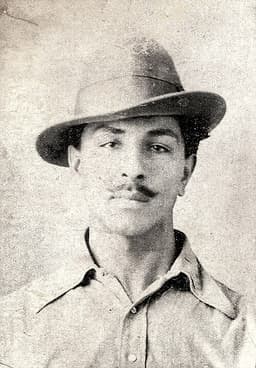
Bhagat Singh
Revolutionary · Modern
46.8Total
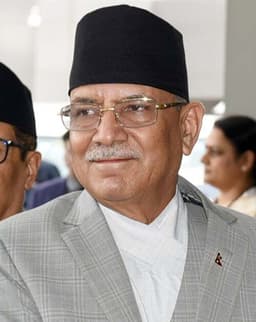
Pushpa Kamal Dahal
Revolutionary · Modern
50.0Total
Basic Information
Born
1907
1954
Died
1931
—
Era
Modern
Modern
Nationality
India
Nepal
Occupation
Revolutionary
Revolutionary
Civilization
Indian
Indian
Score Comparison
Military (10%)
30.0
35.0
Political (20%)
25.0
54.7
Influence (20%)
61.0
51.0
Legacy (20%)
50.0
40.8
Leadership (15%)
65.0
62.0
Strategy (15%)
25.0
60.0
TOTAL
46.8
50.0
Bhagat Singh — Complete Timeline
1928 AD
Killing of John SaundersPolitical Action◆ Major
Bhagat Singh and his associates killed British police officer John Saunders in Lahore, mistaking him for James Scott, who had ordered the lathi charge that killed Lala Lajpat Rai. This act of revenge escalated the revolutionary movement.
AssassinationRevolutionary Action
Impact: national
1929 AD
Central Legislative Assembly BombingPolitical Action◆ Major
Bhagat Singh and Batukeshwar Dutt threw bombs in the Central Legislative Assembly in Delhi to protest the Public Safety Bill and Trade Disputes Act. They were arrested and used the trial to propagate revolutionary ideas.
ProtestRevolutionary Action
Impact: national
Hunger Strike in JailPolitical Action◆ Major
Bhagat Singh and fellow prisoners went on a 116-day hunger strike in Lahore jail demanding better treatment for political prisoners. The strike drew national attention and forced the British to make concessions.
ProtestPrison Reform
Impact: national
1931 AD
Execution by HangingPolitical Action◆ Major
Bhagat Singh was executed by hanging at Lahore jail at age 23, along with Rajguru and Sukhdev. His execution sparked widespread protests and made him a martyr for the Indian independence movement.
ExecutionMartyrdom
Impact: nationaltragic
Pushpa Kamal Dahal — Complete Timeline
1996 AD
Launch of People's WarWar
Prachanda, as leader of the Communist Party of Nepal (Maoist), initiated a armed insurgency against the Nepalese state. The People's War began with attacks on police posts and government offices, escalating into a decade-long civil war.
InsurgencyCivil WarMaoist
Impact: nationaldestructive
2006 AD
Signing of Comprehensive Peace AccordPolitical Action◆ Major
Prachanda signed the Comprehensive Peace Accord with Prime Minister Girija Prasad Koirala, ending the civil war. The agreement committed the Maoists to lay down arms and join mainstream politics in exchange for integration into state institutions.
Peace TreatyCivil WarNepal
Impact: nationalconstructive
2008 AD
Election as Prime MinisterPolitical Action◆ Major
Following the Maoist victory in the Constituent Assembly elections, Prachanda became the first prime minister of the Federal Democratic Republic of Nepal. His tenure focused on integrating former Maoist combatants into the national army.
ElectionGovernmentRepublic
Impact: national
2009 AD
Resignation as Prime MinisterPolitical Action
Prachanda resigned as prime minister after a dispute with President Ram Baran Yadav over the dismissal of the army chief. The crisis highlighted tensions between the Maoists and the established political order.
ResignationPoliticsCrisis
Impact: national
Expert Analysis
Bhagat Singh vs Pushpa Kamal Dahal
# The Revolutionary’s Path: Bhagat Singh and Prachanda
In a Lahore jail cell on March 23, 1931, a 23-year-old man walked to the gallows with a copy of Lenin’s works tucked under his arm, shouting “Down with British imperialism!” as the trapdoor opened. Seven decades later and a thousand miles away, another revolutionary sat in a Kathmandu palace, having just been sworn in as prime minister of the very state he had once vowed to destroy. Between these two moments lies the entire arc of what it means to be a revolutionary in South Asia—one who dies for the cause, and one who lives to govern in its name.
Origins
Bhagat Singh was born in 1907 into a family of Punjabi Sikhs who had already tasted the bitterness of British repression. His father and uncles had been jailed for supporting the Ghadar Movement, and the Jallianwala Bagh massacre of 1919 occurred just miles from his home when he was twelve. The boy grew up breathing defiance, reading European anarchist literature alongside Hindu scriptures, and asking the question that would define his short life: How does one fight an empire that seems invincible?
Prachanda, born Pushpa Kamal Dahal in 1954, came of age in a different world. Nepal was a Hindu kingdom, poor and isolated, ruled by a Shah monarchy that had never been colonized but had never truly modernized either. The young Brahmin from a modest farming family watched his country stagnate under autocratic kings and a feudal elite. While Singh read Bakunin and Marx in colonial libraries, Prachanda joined the underground communist movement in the 1970s, when Nepal’s political parties were banned and revolution seemed the only language the monarchy understood.
Rise to Power
Bhagat Singh’s path was brutally direct. In 1928, he joined the Hindustan Socialist Republican Association and within months was involved in the killing of John Saunders, a British police officer, in a case of mistaken identity. The act was meant to avenge the death of Lala Lajpat Rai, but it also marked Singh as a marked man. He fled Lahore, grew a beard, and plotted his next move. Then came the 1929 bombing of the Central Legislative Assembly in Delhi—not to kill, but to make a point. Singh and Batukeshwar Dutt threw bombs into the empty benches of the chamber, then stood waiting to be arrested, shouting revolutionary slogans. They wanted the trial, not the escape.
Prachanda’s rise was slower, more patient. He spent the 1980s organizing peasants in the hills, building a Maoist party cell by cell, village by village. In 1996, he launched the “People’s War,” a decade-long insurgency that would kill over 17,000 people and displace hundreds of thousands. Unlike Singh, who acted alone with a small cadre, Prachanda commanded an army of thousands, controlled vast rural territories, and played a long game of attrition against the Nepalese state. His turning point came not with a dramatic arrest but with the 2006 Comprehensive Peace Accord, which ended the civil war and brought the Maoists into mainstream politics.
Leadership & Governance
Singh never governed. He never wanted to. His leadership was moral and symbolic, not administrative. In Lahore jail, he led a 116-day hunger strike demanding better treatment for political prisoners—not for himself alone, but for all those the British deemed “common criminals.” He wrote essays on atheism, on the meaning of revolution, on the necessity of violence. His strategy was to provoke the empire into revealing its cruelty, and in this he succeeded spectacularly. The British hanged him, Rajguru, and Sukhdev in secret, fearing public backlash. The backlash came anyway, and Singh became a martyr for generations.
Prachanda, by contrast, had to learn governance from scratch. After the 2008 elections made him prime minister, he faced the mundane realities of coalition politics, budget deficits, and army generals who had once been his enemies. His leadership score of 75.7 reflects this transformation—from guerrilla commander to head of state. He resigned in 2009 after a dispute with the president over dismissing the army chief, a move that revealed the tensions between revolutionary instinct and constitutional procedure. He would return as prime minister twice more, each time more pragmatic, less ideological.
Triumph & Tragedy
Bhagat Singh’s triumph was his death. It sounds paradoxical, but it is true. By refusing to beg for mercy, by using the courtroom as a platform, by writing his final letters with calm defiance, he turned execution into apotheosis. His tragedy is that he never saw the India he dreamed of—a socialist republic free of caste, religion, and empire. He died believing in a future he would never witness.
Prachanda’s triumph was survival. He led a revolution that did not end in a bloodbath but in a peace deal. He became prime minister not by coup but by ballot. His tragedy is the compromise that survival demands. The Maoist vision of a classless society has been diluted by power-sharing, corruption, and the slow grind of Nepali politics. Today, his party is one of many, his revolutionary aura faded.
Character & Destiny
Singh was a romantic revolutionary—the kind who reads poetry in prison and writes to his younger brother about the beauty of sacrifice. He was 23 when he died, an age when most are still discovering themselves. His destiny was sealed by his refusal to compromise, by his belief that some principles are worth dying for. “The sword of revolution is sharpened on the whetting stone of ideas,” he wrote. He meant it literally.
Prachanda is a survivor. He has been called ruthless, pragmatic, and opportunistic. He changed his party’s line, his alliances, even his name—Prachanda means “fierce” in Nepali—to adapt to changing circumstances. His character is that of a man who wants to win, not just to be right. Where Singh chose the gallows, Prachanda chose the negotiating table. Both are revolutionary paths, but they lead to very different destinations.
Legacy
Bhagat Singh’s legacy is frozen in time, pure and untarnished. His statues dot India’s towns, his face appears on posters, his name is invoked by everyone from leftist activists to right-wing politicians who would have despised his atheism. He is a symbol, not a blueprint. His total score of 53.4 understates his cultural power; no number can capture the electricity of his name.
Prachanda’s legacy is still being written. His scores are higher overall (59.0), especially in leadership (75.7) and political acumen (61.5), but legacy is about more than statistics. He will be remembered as the man who ended Nepal’s monarchy and brought Maoists into the democratic fold—but also as the revolutionary who made peace with the very system he once sought to destroy. Whether that is a triumph or a betrayal depends on who you ask.
Conclusion
In the end, these two revolutionaries illuminate the hardest question of political struggle: Is it better to die for your cause or to live and govern in its name? Bhagat Singh chose the first path and became immortal. Prachanda chose the second and became prime minister. One is remembered with tears and slogans, the other with mixed reviews and election results. South Asia has room for both kinds of heroes—the martyr and the survivor, the poet and the politician. But the distance between a Lahore gallows and a Kathmandu palace is not just geography. It is the distance between the revolution you dream of and the one you actually get.
Rankings
🥇
Pushpa Kamal DahalLeader
Mil: 35.0Pol: 54.7Inf: 51.0
50.0
🥈
Bhagat Singh
Mil: 30.0Pol: 25.0Inf: 61.0
46.8
+3.2 behind
How This Comparison Works
Algorithm
Each figure is scored on 6 dimensions (0—100 scale) based on structured historical data: Military (10%), Political (20%), Influence (20%), Legacy (20%), Leadership (15%), Strategy (15%). The weighted total produces the final ranking.
Data Sources
Scores are computed from structured sub-indicators in the database. Scale factors adjust for era (Ancient ×0.85, Modern ×1.0) and civilization size (Eastern ×1.05, Other ×0.80) to account for differences in population and military scale.
Maximum 3 Figures
Comparisons are limited to 2—3 figures to ensure readability and statistical meaningfulness.
Error Margins
±5 points per dimension — Sub-scores are derived from historical records with inherent uncertainty. Two figures within 5 points on a dimension should be considered roughly equivalent in that area.
Total Score Accuracy
±3 points overall — The weighted combination of 6 dimensions produces a total score with approximately ±3 points of uncertainty. Differences of less than 3 points are not statistically significant— the figures are effectively tied.
Known Limitations
- Historical records are incomplete and uneven across civilizations
- Figures from oral-tradition societies may be underrepresented
- Occupation labels can misclassify multi-role figures
- Scores measure capability and impact, not moral character
- Quantitative scoring is a comparison tool, not absolute truth
Capability Radar
Military (10%) — Battles & Warfare
Battles
0
35
Win Rate
0
40
Expansion
0
25
Political (20%) — Governance & Reform
Reform
15
40
Diplomacy
5
50
Economy
0
35
Influence (20%) — Cultural & Global Reach
Cultural
55
40
Global
50
35
Legacy (20%) — Historical Impact
Historical
60
45
Longevity
55
30
Leadership (15%) — Power & Stability
Tenure
0
55
Stability
0
30
Strategy (15%) — Tactics & Innovation
Strategy
5
50
Tactics
10
45
Reform
0
30
Similar Comparisons
Comments & Discussion
लाल सितारा6/16/2026
This comparison is fundamentally flawed because it conflates ideological purity with strategic evolution. Bhagat Singh was a martyr who never had to govern—his legacy remains pristine because he died at 23. Prachanda has had to navigate coalition politics, Indian pressure, and Nepal's actual ground realities for 30 years. Calling this a "sell-out" ignores that Singh himself was moving toward socialist internationalism, not just anti-colonial nationalism. Let the dead have their poetry, but let t
红月观察者6/16/2026
数据呢?这个对比从头到尾没有给出任何量化指标——Bhagat Singh到底影响了多少人起义?Prachanda统治下的尼泊尔GDP增长了多少?穷人的识字率变化呢?光说“理想主义vs现实政治”太廉价了。我用脚趾头都能写出这种叙事。真正的历史分析要看数字:1930年旁遮普的农民起义规模,或者2015年尼泊尔制宪会议的实际投票分布。没有数据的对比只是自high。
Khat-Patta Critic6/16/2026
You're romanticizing a terrorist and whitewashing a civil war architect. Bhagat Singh threw bombs in the Central Legislative Assembly—that's not "revolutionary theater," that's violent extremism by any standard. And Prachanda? He oversaw a decade-long insurgency that killed over 17,000 Nepalis, then cut a deal for prime minister's chair. Neither is a hero. One died young enough to become a myth, the other lived long enough to become a bureaucrat with blood on his hands.
古卷书生6/16/2026
把Bhagat Singh和Prachanda放在一起比较,本身就暴露了作者对南亚革命史缺乏深度理解。Bhagat Singh属于列宁时代的国际主义革命浪潮——他同时读马克思、列宁和爱尔兰共和军文献,是真正意义上的全球左翼知识分子。而Prachanda的毛主义是地方化的农民战争,受的是秘鲁“光辉道路”和尼泊尔特定封建结构的塑造。两个革命不同的不是“生死vs妥协”,而是整个思想谱系不同。这是比较政治学的ABC。
Martyrs & Ministers6/16/2026
Here's the uncomfortable truth: revolutions that succeed produce governments, governments produce corruption, and corruption produces disillusionment. Bhagat Singh never had to face that cycle because British bullets stopped him early. Prachanda got to see what happens when your comrades become ministers with Swiss bank accounts. Which is harder—dying for an ideal, or waking up every morning knowing you're the compromise you once swore to destroy? I know which one takes more courage.