Loading...
Pushpa Kamal Dahal vs Vladimir Lenin
Vladimir Lenin leads by 21.2 pts · 2 figures compared
…
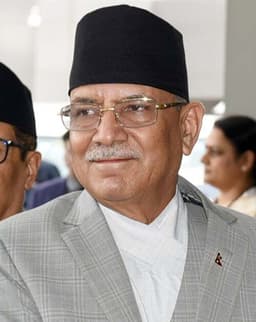
Pushpa Kamal Dahal
Revolutionary · Modern
50.0Total
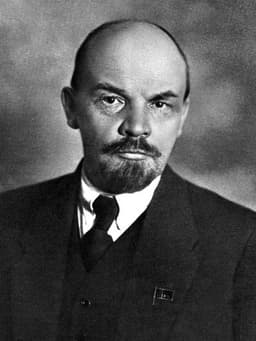
Vladimir Lenin
Revolutionary · Modern
71.2Total
Basic Information
Born
1954
1870
Died
—
1924
Era
Modern
Modern
Nationality
Nepal
Russia
Occupation
Revolutionary
Revolutionary
Civilization
Indian
Western
Score Comparison
Military (10%)
35.0
30.0
Political (20%)
54.7
78.0
Influence (20%)
51.0
82.0
Legacy (20%)
40.8
72.0
Leadership (15%)
62.0
80.0
Strategy (15%)
60.0
60.0
TOTAL
50.0
71.2
Pushpa Kamal Dahal — Complete Timeline
1996 AD
Launch of People's WarWar
Prachanda, as leader of the Communist Party of Nepal (Maoist), initiated a armed insurgency against the Nepalese state. The People's War began with attacks on police posts and government offices, escalating into a decade-long civil war.
InsurgencyCivil WarMaoist
Impact: nationaldestructive
2006 AD
Signing of Comprehensive Peace AccordPolitical Action◆ Major
Prachanda signed the Comprehensive Peace Accord with Prime Minister Girija Prasad Koirala, ending the civil war. The agreement committed the Maoists to lay down arms and join mainstream politics in exchange for integration into state institutions.
Peace TreatyCivil WarNepal
Impact: nationalconstructive
2008 AD
Election as Prime MinisterPolitical Action◆ Major
Following the Maoist victory in the Constituent Assembly elections, Prachanda became the first prime minister of the Federal Democratic Republic of Nepal. His tenure focused on integrating former Maoist combatants into the national army.
ElectionGovernmentRepublic
Impact: national
2009 AD
Resignation as Prime MinisterPolitical Action
Prachanda resigned as prime minister after a dispute with President Ram Baran Yadav over the dismissal of the army chief. The crisis highlighted tensions between the Maoists and the established political order.
ResignationPoliticsCrisis
Impact: national
Vladimir Lenin — Complete Timeline
1903 AD
Founding of the Bolshevik PartyPolitical Action
At the Second Congress of the Russian Social Democratic Labour Party in London, Lenin led a split that created the Bolshevik faction. The Bolsheviks advocated for a disciplined vanguard party of professional revolutionaries, a key element of Lenin's political strategy.
Political PartyRevolutionIdeology
Impact: global
1917 AD
April ThesesPolitical Action◆ Major
Lenin returned to Russia from exile and published the April Theses, calling for the overthrow of the Provisional Government, transfer of power to the soviets, and an end to World War I. This document set the Bolshevik agenda for the coming revolution.
RevolutionIdeologyPolitical Strategy
Impact: national
October RevolutionPolitical Action
Lenin led the Bolshevik seizure of power in Petrograd, capturing key government buildings and the Winter Palace. The revolution overthrew the Provisional Government and established the world's first socialist state, the Russian Soviet Federative Socialist Republic.
RevolutionCoupCommunism
Impact: global
1918 AD
Treaty of Brest-LitovskPolitical Action◆ Major
Lenin signed a separate peace treaty with the Central Powers, ceding vast territories including Ukraine, Belarus, and the Baltic states. The treaty ended Russia's involvement in World War I but caused significant territorial losses and internal opposition.
TreatyWorld War ITerritorial Loss
Impact: globaldestructive
1921 AD
New Economic Policy (NEP)Reform◆ Major
Lenin introduced the NEP, allowing limited private enterprise and market mechanisms to revive the war-torn Soviet economy. The policy replaced War Communism, permitting small-scale capitalism while the state retained control of major industries.
Economic ReformPolicyRecovery
Impact: nationalconstructive
1922 AD
Establishment of the Soviet UnionPolitical Action
Lenin oversaw the creation of the Union of Soviet Socialist Republics (USSR), a federation of Soviet republics. The new state consolidated Bolshevik control over much of the former Russian Empire and became a model for communist states worldwide.
State FormationCommunismFederation
Impact: global
Expert Analysis
Vladimir Lenin vs Pushpa Kamal Dahal
### The Revolutionary’s Dilemma: Lenin and Prachanda
In the winter of 1917, a balding, middle-aged intellectual stepped off a sealed train at Petrograd’s Finland Station, greeted by a roaring crowd. His name was Vladimir Lenin, and within eight months, he would topple an empire. In February 1996, a former schoolteacher with a Maoist pamphlet in his hand slipped into the hills of western Nepal, declaring war on a constitutional monarchy. His name was Pushpa Kamal Dahal—Prachanda—and his insurgency would last a decade. Both men were revolutionaries who sought to smash the old world and build a new one. Yet Lenin died in power, his body embalmed in a mausoleum, while Prachanda lives on, a three-time prime minister who traded guerrilla fatigues for a business suit. Their divergent fates reveal not just personal differences, but the profound ways that era, geography, and circumstance shape the revolutionary path.
### Origins
Lenin was born into privilege in 1870, the son of a school inspector in Simbirsk, Russia. His older brother’s execution for plotting to assassinate the tsar seared radicalism into his soul. He devoured Karl Marx in the quiet of his family’s library, emerging with a conviction that revolution was not an accident but a science. His Russia was a sprawling, backward autocracy, ripe for collapse, where the peasantry groaned under feudal remnants and a small industrial working class seethed in factories. Lenin’s era was one of total war—World War I would disintegrate the old order.
Prachanda, born in 1954 in a remote Nepali village, came from a poor Brahmin family. He lost his father early and scraped through school on scholarships. His Nepal was a feudal kingdom frozen in time, with a king who ruled absolutely and a population that was 90 percent peasant. The 1950s and 1960s brought global waves of decolonization and Maoist peasant revolutions in China and Peru. Prachanda, like Lenin, found his answer in Marxism, but he adapted it to a land without factories or a proletariat. His inspiration was not the industrial worker but the landless farmer. Lenin’s world was collapsing under its own weight; Prachanda’s had never been built.
### Rise to Power
Lenin’s rise was a masterpiece of exile and timing. At the 1903 Congress of the Russian Social Democratic Labour Party in London, he split the party, creating the Bolsheviks—a disciplined, vanguard elite. He spent years in Swiss libraries, writing and waiting. Then came 1917: the Tsar abdicated, a provisional government stumbled, and Lenin, in his famous April Theses, demanded “All Power to the Soviets.” He returned to Russia in a sealed train, financed by Germany, and on October 25, his Red Guards seized the Winter Palace almost without bloodshed. It was a coup d’état executed with surgical precision.
Prachanda’s rise was slower and bloodier. In 1996, he launched his “People’s War” from the hills of Rolpa, with perhaps 200 fighters and a few rusty rifles. The Nepali state, corrupt and indifferent, responded with brutal repression, which only swelled his ranks. For ten years, Prachanda’s Maoists ambushed police posts, collected “taxes” from villagers, and built a parallel government. By 2005, he controlled much of the countryside. Unlike Lenin, who seized a capital in hours, Prachanda fought a grinding war of attrition. His turning point came not from a single revolution but from a peace accord in 2006, when a popular uprising against the king forced the monarchy to negotiate. Prachanda walked into Kathmandu as a victor, but he had not taken the state—he had bargained his way into it.
### Leadership & Governance
Lenin ruled as a dictator, but a pragmatic one. He ruthlessly suppressed dissent, banned rival parties, and created the Cheka secret police. Yet when the economy collapsed, he reversed course. In 1921, he introduced the New Economic Policy (NEP), allowing small private businesses and peasant markets. It was a tactical retreat that saved his revolution. Lenin was a theorist who could adapt: he signed the humiliating Treaty of Brest-Litovsk in 1918, ceding vast territories to Germany, because he knew his state was too weak to fight. He was cold, calculating, and utterly convinced of his historical correctness.
Prachanda, as prime minister, faced a different reality. He had to govern a fragile democracy, not a one-party state. In 2008, after winning elections, he tried to dismiss the army chief—a power play that triggered a constitutional crisis. The president overruled him, and Prachanda resigned rather than escalate. It was a revolutionary’s worst nightmare: he had the will but not the absolute power. Where Lenin could crush a general, Prachanda had to negotiate with one. His governance was a series of compromises, alliances, and broken promises. He pursued land reform but met resistance; he tried to integrate his guerrilla army into the national forces but faced delays. He was a revolutionary forced to become a politician, and the transition was agonizing.
### Triumph & Tragedy
Lenin’s greatest moment was the October Revolution itself—a triumph of nerve and ideology. His tragedy came later: he died in 1924, his health shattered by strokes, just as the Soviet Union was born. He left no clear successor, and his legacy would be twisted by Stalin into terror. He never saw the famine or the purges, but he had built the machine.
Prachanda’s triumph was the 2006 Peace Accord, which ended a war that killed 17,000 people and brought him to power. His tragedy is that peace did not bring justice. The Maoists’ promises of land to the landless, of an end to caste discrimination, remain largely unfulfilled. He has been prime minister three times, but each term has been shorter and more disappointing. The fire of revolution has cooled into the gray ash of coalition politics. His greatest failure is that he won the war but lost the peace.
### Character & Destiny
Lenin was a man of iron certainty. He believed history was on his side, and that belief made him ruthless. He could sign a treaty ceding half of Russia, then later denounce it as a scrap of paper. He could order the execution of the Tsar’s family without a trial. His personality was that of a machine—driven, impersonal, and relentless. His destiny was to create a superpower that would split the world in half.
Prachanda is more human, and more conflicted. He is known as a charismatic speaker who can sway a crowd, but also as a man who has changed his ideology to survive. He began as a Maoist who rejected elections; he ended as a prime minister who campaigned for votes. His personality is that of a survivor, not a prophet. His destiny is to be a footnote in Nepal’s history—a man who broke the monarchy but could not build a new order. Lenin remade the world; Prachanda remade only his country, and even that remains incomplete.
### Legacy
Lenin’s body lies in Red Square, a shrine to a revolution that inspired half the planet. His ideas—Marxism-Leninism—shaped China, Cuba, Vietnam, and the Cold War. He is hated and loved, but never ignored. His legacy is a seismic shift in human history.
Prachanda’s legacy is quieter. He is remembered in Nepal as the man who ended the monarchy and brought federalism, but also as a politician who failed to deliver. His Maoist party has splintered; his reputation is tarnished by corruption and compromise. He is a living figure, still trying to write his own epitaph. His legacy is not a mausoleum but a question: can a revolutionary ever become a democratic leader without betraying the revolution itself?
### Conclusion
Lenin and Prachanda both answered the call of history, but history answered them differently. One lived in an age of empires, where a small, disciplined party could seize a state and remake the world. The other lived in an age of globalization, where borders are porous, armies are watched, and power is shared. Lenin’s revolution was a surgical strike; Prachanda’s was a long, messy war of attrition. In the end, Lenin became a monument, while Prachanda became a politician. Their stories remind us that the revolutionary’s path is not forged by will alone—it is carved by the times. And the times, as they say, are never kind.
Rankings
🥇
Vladimir LeninLeader
Mil: 30.0Pol: 78.0Inf: 82.0
71.2
🥈
Pushpa Kamal Dahal
Mil: 35.0Pol: 54.7Inf: 51.0
50.0
+21.2 behind
How This Comparison Works
Algorithm
Each figure is scored on 6 dimensions (0—100 scale) based on structured historical data: Military (10%), Political (20%), Influence (20%), Legacy (20%), Leadership (15%), Strategy (15%). The weighted total produces the final ranking.
Data Sources
Scores are computed from structured sub-indicators in the database. Scale factors adjust for era (Ancient ×0.85, Modern ×1.0) and civilization size (Eastern ×1.05, Other ×0.80) to account for differences in population and military scale.
Maximum 3 Figures
Comparisons are limited to 2—3 figures to ensure readability and statistical meaningfulness.
Error Margins
±5 points per dimension — Sub-scores are derived from historical records with inherent uncertainty. Two figures within 5 points on a dimension should be considered roughly equivalent in that area.
Total Score Accuracy
±3 points overall — The weighted combination of 6 dimensions produces a total score with approximately ±3 points of uncertainty. Differences of less than 3 points are not statistically significant— the figures are effectively tied.
Known Limitations
- Historical records are incomplete and uneven across civilizations
- Figures from oral-tradition societies may be underrepresented
- Occupation labels can misclassify multi-role figures
- Scores measure capability and impact, not moral character
- Quantitative scoring is a comparison tool, not absolute truth
Capability Radar
Military (10%) — Battles & Warfare
Battles
35
20
Win Rate
40
35
Expansion
25
70
Political (20%) — Governance & Reform
Reform
40
95
Diplomacy
50
75
Economy
35
60
Influence (20%) — Cultural & Global Reach
Cultural
40
80
Global
35
90
Legacy (20%) — Historical Impact
Historical
45
95
Longevity
30
85
Leadership (15%) — Power & Stability
Tenure
55
55
Stability
30
40
Strategy (15%) — Tactics & Innovation
Strategy
50
55
Tactics
45
30
Reform
30
85
Similar Comparisons
Comments & Discussion
EMBALMED MYTHS, LIVING DEALS6/16/2026
Let’s be real—Lenin was a genius tactician, but he died young and left a corpse cult. Prachanda survived to negotiate, betray, and reinvent himself three times over. That’s harder. Anyone can die a martyr. Try winning elections after leading a guerrilla army that recruited child soldiers. Prachanda’s dirty survival is more human than Lenin’s marble tomb.
经书与枪杆6/16/2026
从思想史看,列宁是马克思主义的律法颁布者——他“帝国主义论”把革命从欧洲工厂搬到了全球殖民地。普拉昌达不过是个地方毛主义翻版,连毛的“持久战”都没学好,十年游击只换来个君主立宪再变成共和,本质上还是种姓社会那一套。列宁写的是历史剧本,普拉昌达只是在念地方戏曲的台词。
BORSCHT AND BULLETS6/16/2026
Lenin wins, no contest. Prachanda’s a career politician who swapped a pistol for a podium. Lenin actually built a state from scratch—Gosplan, electrification, Red Army. Prachanda just joined the Nepali establishment, got his palaces, and made peace with the same monarchy he swore to bury. Apples and hand grenades.
数字幽灵6/16/2026
数据不会撒谎:列宁在十月革命后三年内就彻底粉碎了白军和外国干涉,而普拉昌达的十年人民战争连加德满都的郊区都没控制过。革命不是请客吃饭,更不是上电视接受采访。一个重塑了人类五分之一人口的世界,一个只是在联合政府里分到了几个部长席位。
SIBERIA VS SUDURPASCHIM6/16/2026
Map argument: Lenin operated in the heart of a dying empire with railways, telegraphs, and an industrial proletariat concentrated in two cities. Prachanda started from the most remote hills of Nepal, where the nearest telegraph was a runner with a letter. The context gap is so huge that comparing their “revolutionary skill” is like comparing a chess grandmaster to a poker player at a village fair. Different games, different odds.