Loading...
Pushpa Kamal Dahal vs Sun Yat-sen
Sun Yat-sen leads by 2.5 pts · 2 figures compared
…
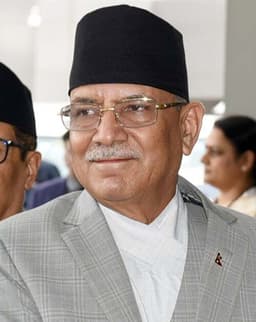
Pushpa Kamal Dahal
Revolutionary · Modern
50.0Total
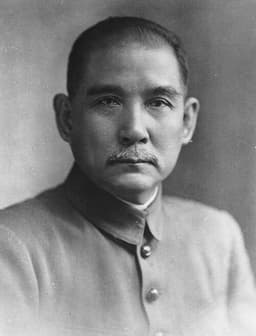
Sun Yat-sen
Revolutionary · Modern
52.5Total
Basic Information
Born
1954
1866
Died
—
1925
Era
Modern
Modern
Nationality
Nepal
China
Occupation
Revolutionary
Revolutionary
Civilization
Indian
Eastern
Score Comparison
Military (10%)
35.0
45.0
Political (20%)
54.7
68.0
Influence (20%)
51.0
61.0
Legacy (20%)
40.8
58.0
Leadership (15%)
62.0
33.5
Strategy (15%)
60.0
30.3
TOTAL
50.0
52.5
Pushpa Kamal Dahal — Complete Timeline
1996 AD
Launch of People's WarWar
Prachanda, as leader of the Communist Party of Nepal (Maoist), initiated a armed insurgency against the Nepalese state. The People's War began with attacks on police posts and government offices, escalating into a decade-long civil war.
InsurgencyCivil WarMaoist
Impact: nationaldestructive
2006 AD
Signing of Comprehensive Peace AccordPolitical Action◆ Major
Prachanda signed the Comprehensive Peace Accord with Prime Minister Girija Prasad Koirala, ending the civil war. The agreement committed the Maoists to lay down arms and join mainstream politics in exchange for integration into state institutions.
Peace TreatyCivil WarNepal
Impact: nationalconstructive
2008 AD
Election as Prime MinisterPolitical Action◆ Major
Following the Maoist victory in the Constituent Assembly elections, Prachanda became the first prime minister of the Federal Democratic Republic of Nepal. His tenure focused on integrating former Maoist combatants into the national army.
ElectionGovernmentRepublic
Impact: national
2009 AD
Resignation as Prime MinisterPolitical Action
Prachanda resigned as prime minister after a dispute with President Ram Baran Yadav over the dismissal of the army chief. The crisis highlighted tensions between the Maoists and the established political order.
ResignationPoliticsCrisis
Impact: national
Sun Yat-sen — Complete Timeline
1894 AD
Founded the Revive China SocietyPolitical Action◆ Major
Sun Yat-sen founded the Revive China Society (Xingzhonghui) in Honolulu, the first modern revolutionary organization among overseas Chinese. The society aimed to overthrow the Qing dynasty and establish a republic, marking the beginning of organized revolutionary activity.
RevolutionOverseas ChineseRepublic
Impact: nationalconstructive
1911 AD
Led the Xinhai RevolutionPolitical Action
Sun Yat-sen's revolutionary activities culminated in the Wuchang Uprising of October 1911, which sparked the Xinhai Revolution. The uprising spread across China, leading to the abdication of the Qing emperor in 1912 and the end of 2,000 years of imperial rule.
RevolutionQing DynastyRepublic
Impact: globalconstructive
1912 AD
Proclaimed the Republic of ChinaPolitical Action
On January 1, 1912, Sun Yat-sen was inaugurated as the provisional president of the Republic of China in Nanjing. He proclaimed the establishment of the first republic in Asia, based on his Three Principles of the People: nationalism, democracy, and livelihood.
RepublicPresidencyThree Principles
Impact: globalconstructive
Resigned Presidency in Favor of Yuan ShikaiPolitical Action◆ Major
To secure the abdication of the Qing emperor and avoid civil war, Sun Yat-sen resigned the provisional presidency in February 1912 in favor of Yuan Shikai. This decision, while pragmatic, allowed Yuan to consolidate power and later attempt to restore the monarchy.
Power TransferYuan ShikaiCompromise
Impact: national
1919 AD
Reorganized the KuomintangPolitical Action◆ Major
Sun Yat-sen reorganized the Chinese Revolutionary Party into the Kuomintang (KMT) in 1919, with a more centralized structure. He later accepted Soviet aid and CCP members into the party under the policy of 'alliance with Russia and the Communists,' reshaping the revolutionary movement.
KuomintangSoviet AllianceCCP
Impact: nationalconstructive
Expert Analysis
Sun Yat-sen vs Pushpa Kamal Dahal
### The Revolutionary's Dilemma: Sun Yat-sen and Prachanda
In the winter of 1912, Sun Yat-sen stood before the provisional assembly in Nanjing, his voice carrying the weight of two millennia. He had just toppled an empire, but within weeks, he would hand its reins to a former Qing general. A century later, in the spring of 2008, Pushpa Kamal Dahal—known as Prachanda—walked into the prime minister's office in Kathmandu, his Maoist rebels having traded their rifles for parliamentary seats. Both men had waged revolutionary wars against ancient orders. Both had tasted victory. Yet one became a founding father, while the other remains a polarizing figure in a fragile republic. Why did their paths diverge so sharply?
### Origins: The Making of a Revolutionary
Sun Yat-sen was born in 1866 in a small village in Guangdong, China, into a world of Confucian hierarchies and foreign humiliation. His family was poor, but his elder brother’s success in Hawaii allowed him to receive a Western education, exposing him to ideas of democracy, republicanism, and Christian social justice. This fusion of East and West shaped his vision: China’s salvation lay not in restoring old dynasties but in building a modern nation-state. He was a man of books and exile, spending most of his life abroad, organizing from Honolulu to London.
Prachanda, born in 1954 in a village in central Nepal, grew up in a kingdom where the Shah monarchy ruled with divine right, and feudal landlords controlled the land. His family was of modest means, but he rose through the ranks of communist student movements. Inspired by the Maoist insurgency in neighboring India and the Cultural Revolution in China, he saw revolution not as a constitutional reform but as a violent class war. Unlike Sun, he never left his homeland for long; his revolution was rooted in the hills and jungles of Nepal, where he learned to command a guerrilla army.
### Rise to Power: The Path of Persuasion vs. the Path of Violence
Sun Yat-sen’s rise was a slow, grinding effort of persuasion and failure. In 1894, he founded the Revive China Society in Honolulu, a tiny seed of resistance. He staged an abortive uprising in 1895 and spent sixteen years in exile, raising funds, writing pamphlets, and winning over overseas Chinese. His turning point came in 1911, when the Wuchang Uprising, sparked by a bomb explosion in a railway dispute, spread like wildfire. Sun, then in Denver, rushed home to become provisional president on January 1, 1912. But his power was fragile; he was a symbol, not a commander.
Prachanda’s rise was forged in blood. In 1996, he launched the “People’s War” with a series of coordinated attacks on police posts. For a decade, his Maoist army fought a brutal insurgency, controlling vast rural areas, using landmines and ambushes. The turning point came in 2006, when mass protests in Kathmandu forced King Gyanendra to abdicate. Prachanda signed the Comprehensive Peace Accord, and in 2008, his party won the Constituent Assembly elections, making him prime minister. Where Sun had negotiated from weakness, Prachanda bargained from strength.
### Leadership & Governance: The Ideologue and the Pragmatist
Sun Yat-sen’s leadership was visionary but flawed. His Three Principles of the People—nationalism, democracy, and livelihood—became the ideological bedrock of modern China, but he never governed effectively. As provisional president, he lasted only 44 days, resigning in February 1912 to Yuan Shikai, a military strongman, hoping to unify the country. It was a catastrophic miscalculation: Yuan soon declared himself emperor. Sun spent his later years rebuilding his party, the Kuomintang (KMT), and forging an alliance with the Soviet Union and the Chinese Communist Party. He was a revolutionary of ideas, not administration.
Prachanda’s leadership was pragmatic and ruthless. As prime minister in 2008, he faced the same dilemma: how to transform a guerrilla movement into a government. He legalized the Maoist army, promised land reforms, and tried to integrate former fighters into the national security forces. But he was hamstrung by coalition politics and a hostile army chief. In 2009, he resigned after a dispute with the president over the dismissal of the general—a crisis that exposed the fragility of his authority. Unlike Sun, he held power but could not wield it.
### Triumph & Tragedy: The Glory and the Fall
Sun Yat-sen’s greatest triumph was the Xinhai Revolution itself—the end of 2,000 years of imperial rule. His tragedy was that he never saw the republic he dreamed of. He died in 1925, a broken man, as warlords carved up China. Yet his ideas outlived him; the KMT and the Communist Party both claimed his mantle.
Prachanda’s triumph was ending Nepal’s monarchy and bringing a decade of civil war to a close. His tragedy is that the peace he brokered has proven fragile. The Maoist integration stalled, corruption festered, and Nepal’s political system remains paralyzed by infighting. He served two more terms as prime minister, but each time, he left office under a cloud of scandal and instability.
### Character & Destiny: The Saint and the Survivor
Sun Yat-sen was a man of unwavering conviction. He was called the “Father of the Nation” and revered as a saintly figure, even by his enemies. His personal honesty and selflessness earned him respect across factions. But his idealism often blinded him to the realities of power.
Prachanda is a survivor, a man who adapted from guerrilla leader to prime minister to backroom dealmaker. He is charismatic to his followers, but to many Nepalis, he is a symbol of broken promises and unfulfilled revolution. His legacy is contested—a hero of the poor or a warlord who traded ideology for power.
### Legacy: The Monument and the Memory
Sun Yat-sen’s legacy is monumental. In China, he is honored as a revolutionary forerunner; in Taiwan, he is the founding father. His Three Principles remain a touchstone for Chinese nationalism. He scored 70.6 overall, with political influence at 80.0 and legacy at 72.2.
Prachanda’s legacy is still unwritten. His overall score of 59.0 reflects a more ambiguous record. His military score of 25.6 is low, but his leadership at 75.7 shows his ability to command loyalty. Yet his political score of 61.5 and legacy of 54.7 suggest a man who changed his country but could not stabilize it.
### Conclusion: The Two Faces of Revolution
Sun Yat-sen and Prachanda both believed that revolution could remake their nations. One succeeded in overthrowing a dynasty but failed to build a republic. The other ended a monarchy but could not forge a stable democracy. Their differences lie not just in their personalities but in their eras—Sun’s world of empires and ideologies versus Prachanda’s world of Cold War hangovers and globalization. In the end, Sun’s ideas outlasted his failures, while Prachanda’s compromises have left his revolution incomplete. The revolutionary’s dilemma remains: how to destroy the old without becoming its prisoner.
Rankings
🥇
Sun Yat-senLeader
Mil: 45.0Pol: 68.0Inf: 61.0
52.5
🥈
Pushpa Kamal Dahal
Mil: 35.0Pol: 54.7Inf: 51.0
50.0
+2.5 behind
How This Comparison Works
Algorithm
Each figure is scored on 6 dimensions (0—100 scale) based on structured historical data: Military (10%), Political (20%), Influence (20%), Legacy (20%), Leadership (15%), Strategy (15%). The weighted total produces the final ranking.
Data Sources
Scores are computed from structured sub-indicators in the database. Scale factors adjust for era (Ancient ×0.85, Modern ×1.0) and civilization size (Eastern ×1.05, Other ×0.80) to account for differences in population and military scale.
Maximum 3 Figures
Comparisons are limited to 2—3 figures to ensure readability and statistical meaningfulness.
Error Margins
±5 points per dimension — Sub-scores are derived from historical records with inherent uncertainty. Two figures within 5 points on a dimension should be considered roughly equivalent in that area.
Total Score Accuracy
±3 points overall — The weighted combination of 6 dimensions produces a total score with approximately ±3 points of uncertainty. Differences of less than 3 points are not statistically significant— the figures are effectively tied.
Known Limitations
- Historical records are incomplete and uneven across civilizations
- Figures from oral-tradition societies may be underrepresented
- Occupation labels can misclassify multi-role figures
- Scores measure capability and impact, not moral character
- Quantitative scoring is a comparison tool, not absolute truth
Capability Radar
Military (10%) — Battles & Warfare
Battles
35
15
Win Rate
40
10
Expansion
25
5
Political (20%) — Governance & Reform
Reform
40
85
Diplomacy
50
60
Economy
35
20
Influence (20%) — Cultural & Global Reach
Cultural
40
70
Global
35
65
Legacy (20%) — Historical Impact
Historical
45
80
Longevity
30
75
Leadership (15%) — Power & Stability
Tenure
55
30
Stability
30
15
Strategy (15%) — Tactics & Innovation
Strategy
50
20
Tactics
45
10
Reform
30
40
Similar Comparisons
Comments & Discussion
BombsAwayBill6/16/2026
Sun Yat-sen was a better strategist—he secured foreign funding from Japan and Western powers without losing his soul. Prachanda’s mistake was trusting the Maoist insurgency would keep momentum after 2006. He should have consolidated power like the PLA did post-'49. You don't win revolutions and then hand over the military. Classic third-world amateur hour. Nepal’s still paying the price. Sun built a party; Prachanda just made deals.
废墟猎手6/16/2026
中山先生是真正的悲剧英雄:他推翻了一个王朝,却不得不把权杖交给袁世凯,因为他知道北洋军权他动不了。普拉昌达呢?他居然同意把毛主义武装整编进尼泊尔军队——这等于自废武功。革命者最重要的不是谈判桌,是枪杆子。你看孙中山后来搞护法运动,归根结底是明白了没有军队什么都白搭。普拉昌达现在就是个花瓶总理,可怜。
ThucydidesTrap6/16/2026
The divergence is a function of external legitimacy. Sun Yat-sen inherited the mantle of republican modernity when the Qing collapsed—the world expected a nation-state. Prachanda was leading a Maoist insurgency in a kingdom that was never fully decolonized. Nepal’s monarchy fell into a constitutional hole, not a revolution. Prachanda became a prime minister but never a Sun—no founding speech, no new calendar. His revolution was absorbed, not achieved.
数据拆弹专家6/16/2026
别被宏大叙事骗了。1970年代中国改开,孙中山被造神成“国父”,但真实历史里他民国只当了几十天总统,全靠海外汇款和青帮支持。普拉昌达至少打了十年游击战,2008年后的尼泊尔选举他真赢过。这俩人根本不对等——一个是被抬上神坛的符号,一个是没写完剧本的军阀。要比就比硬数据:普拉昌达治下尼泊尔GDP增长过6%,孙中山管过几个省?零。
ClassicsAreChecks6/16/2026
Sun Yat-sen's Three Principles of the People were fundamentally a Confucian-modernist synthesis—he believed in governance by virtue, not just force. Prachanda's 'New Democracy' was pure Leninist instrumentalism. That's why Sun's legacy endures: he offered a moral vision, even if incomplete. Prachanda offered only power realignment. Sun wrote a constitution; Prachanda signed a peace accord. One built a cathedral, the other a committee room.