Loading...
Pushpa Kamal Dahal vs Shamil Basayev
Pushpa Kamal Dahal leads by 6.9 pts · 2 figures compared
…
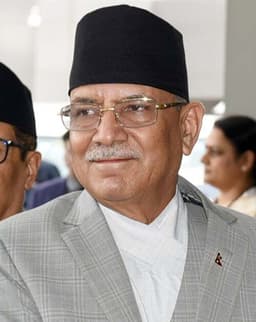
Pushpa Kamal Dahal
Revolutionary · Modern
50.0Total
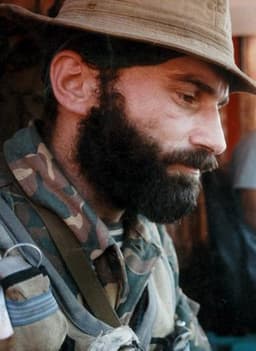
Shamil Basayev
Revolutionary · Modern
43.1Total
Basic Information
Born
1954
1965
Died
—
—
Era
Modern
Modern
Nationality
Nepal
Chechnya
Occupation
Revolutionary
Revolutionary
Civilization
Indian
Western
Score Comparison
Military (10%)
35.0
40.0
Political (20%)
54.7
35.0
Influence (20%)
51.0
45.5
Legacy (20%)
40.8
35.0
Leadership (15%)
62.0
57.1
Strategy (15%)
60.0
51.7
TOTAL
50.0
43.1
Pushpa Kamal Dahal — Complete Timeline
1996 AD
Launch of People's WarWar
Prachanda, as leader of the Communist Party of Nepal (Maoist), initiated a armed insurgency against the Nepalese state. The People's War began with attacks on police posts and government offices, escalating into a decade-long civil war.
InsurgencyCivil WarMaoist
Impact: nationaldestructive
2006 AD
Signing of Comprehensive Peace AccordPolitical Action◆ Major
Prachanda signed the Comprehensive Peace Accord with Prime Minister Girija Prasad Koirala, ending the civil war. The agreement committed the Maoists to lay down arms and join mainstream politics in exchange for integration into state institutions.
Peace TreatyCivil WarNepal
Impact: nationalconstructive
2008 AD
Election as Prime MinisterPolitical Action◆ Major
Following the Maoist victory in the Constituent Assembly elections, Prachanda became the first prime minister of the Federal Democratic Republic of Nepal. His tenure focused on integrating former Maoist combatants into the national army.
ElectionGovernmentRepublic
Impact: national
2009 AD
Resignation as Prime MinisterPolitical Action
Prachanda resigned as prime minister after a dispute with President Ram Baran Yadav over the dismissal of the army chief. The crisis highlighted tensions between the Maoists and the established political order.
ResignationPoliticsCrisis
Impact: national
Shamil Basayev — Complete Timeline
1995 AD
Budyonnovsk Hospital Hostage CrisisWar◆ Major
Basayev led a raid on the Russian town of Budyonnovsk, taking over 1,000 hostages in a hospital. The crisis ended with a negotiated settlement that allowed him to return to Chechnya. This attack demonstrated Chechen reach into Russia.
Hostage CrisisTerrorismChechnya
Impact: nationaldestructive
1999 AD
Invasion of DagestanWar
Basayev led Chechen and Islamist fighters into Dagestan to support local rebels. This invasion triggered the Second Chechen War as Russia responded with a full-scale military campaign. The invasion failed to gain local support.
DagestanChechnyaInvasion
Impact: regionaldestructive
2002 AD
Moscow Theater Hostage CrisisWar◆ Major
Basayev orchestrated the Moscow theater hostage crisis, where Chechen militants took 850 people hostage. Russian forces ended the siege with gas, killing 130 hostages. The attack increased international condemnation of Chechen rebels.
Hostage CrisisTerrorismMoscow
Impact: nationaldestructive
2004 AD
Beslan School SiegeWar◆ Major
Basayev planned the Beslan school siege, where militants took over 1,100 people hostage. The siege ended in a bloody assault, resulting in 334 deaths, mostly children. This attack was widely condemned globally.
Hostage CrisisTerrorismBeslan
Impact: globaltragic
2006 AD
Killed by Russian ExplosivesWar◆ Major
Basayev was killed in Ingushetia when a truck loaded with explosives detonated. Russian intelligence claimed responsibility. His death removed the most prominent Chechen rebel commander.
AssassinationChechnyaRussia
Impact: regional
Expert Analysis
Shamil Basayev vs Pushpa Kamal Dahal
# The Revolutionary's Crossroads: Prachanda and Basayev
On a sweltering July morning in 2006, two men faced very different fates. In a village in Nepal, Pushpa Kamal Dahal—known to the world as Prachanda—was preparing to sign a peace accord that would transform him from a guerrilla leader into a prime minister. Three days later and two thousand miles away, Shamil Basayev's body was being pulled from the wreckage of a truck in Ingushetia, blown apart by explosives he had intended for others. Both were revolutionaries; both led armed insurgencies that shook their nations. But their paths diverged so sharply that they seem to belong to different species of history. Why did one die in a hail of his own bombs while the other lived to govern?
Origins
Prachanda was born in 1954 in rural Nepal, the son of a poor peasant family in the hills of Kaski district. He grew up in a country still locked in feudal monarchy, where the king ruled by divine right and the vast majority lived on the edge of starvation. His education was a ladder out of poverty, and by the 1970s he had become a schoolteacher—but also a convert to Maoist ideology, which promised to smash the old order. Nepal's isolation and poverty shaped him: the revolution he sought was a response to centuries of stagnation, not a foreign import.
Basayev, born in 1965 in the Chechen village of Vedeno, grew up in a very different kind of pressure cooker. Chechnya was a mountainous region forcibly absorbed into the Russian Empire, then the Soviet Union. His namesake, Imam Shamil, had led a fierce nineteenth-century resistance against the Russians—a legacy that hung over every Chechen child. Basayev came of age during the Soviet collapse, when Moscow's grip loosened and Chechnya declared independence in 1991. But unlike Prachanda, who inherited a stable if oppressive state, Basayev inherited a war zone. The First Chechen War (1994–1996) was not a choice; it was the air he breathed.
Rise to Power
Prachanda's rise was slow, ideological, and organizational. He joined the Communist Party of Nepal in the 1980s, then broke away to form the Maoist faction in 1994. His great gamble came on February 13, 1996, when he launched the "People's War"—a coordinated attack on police posts and government offices across Nepal. The insurgency was initially small, but it grew methodically. Prachanda was not a battlefield commander; he was a strategist who understood that Mao's model of protracted war could work in Nepal's isolated villages. His turning point came not from a single battle, but from the slow erosion of the monarchy's legitimacy.
Basayev rose through violence. His first major operation was the 1995 Budyonnovsk hospital hostage crisis, where he seized over 1,000 hostages and demanded a ceasefire. The crisis ended with a negotiated withdrawal, but it made Basayev a folk hero in Chechnya and a terrorist in Moscow. He was not building a political party; he was building a reputation. By 1999, when he led fighters into Dagestan and triggered the Second Chechen War, Basayev had become the most feared rebel commander in the Caucasus. His power came from audacity, not patience.
Leadership & Governance
Prachanda's leadership was political first, military second. He commanded a guerrilla army, but his true skill lay in negotiation and coalition-building. After signing the Comprehensive Peace Accord in 2006, he led the Maoists into elections in 2008—and won. As prime minister, he governed a fractious coalition, balancing Maoist ideals against the realities of a dysfunctional state. His resignation in 2009, after a dispute over the army chief, showed his weakness: he could win a war, but not a political battle.
Basayev never governed. He fought, planned, and destroyed. His military score of 55.8 reflects a commander who could execute spectacular attacks—the Moscow theater siege in 2002, the Beslan school siege in 2004—but could not hold territory or build institutions. His political score of 38.8 is telling: he had no interest in governance. For Basayev, revolution was not about building a new state; it was about destroying the old one. He was a warrior, not a statesman.
Triumph & Tragedy
Prachanda's greatest triumph was the peace accord itself. In 2006, he walked into a room with Prime Minister Girija Prasad Koirala and signed an agreement that ended a decade of war. It was a moment of rare statesmanship: a revolutionary choosing compromise over annihilation. His tragedy came later—the slow unraveling of his coalition, the return to instability, the sense that the peace he won was fragile and incomplete.
Basayev's triumphs are nightmares. The Beslan school siege, which left 334 dead—186 of them children—was his masterpiece of terror. It was also his undoing. The global outrage, the Russian government's determination to hunt him, and the isolation from former allies all converged. His death in 2006, killed by explosives he was transporting, was ironic: a man who lived by the bomb died by it.
Character & Destiny
Prachanda's character was shaped by patience and pragmatism. He could wait years for a political opening, then seize it. His leadership score of 75.7 reflects a man who inspired loyalty, but also one who knew when to compromise. Basayev was the opposite: impulsive, charismatic, and ruthless. His leadership score of 34.5 suggests a commander who could terrify but not unite. Where Prachanda saw revolution as a long march, Basayev saw it as a series of spectacular strikes.
Their destinies were written by their choices. Prachanda chose the ballot box; Basayev chose the bomb. One became prime minister; the other became a corpse on a Russian road.
Legacy
Prachanda's legacy is ambiguous. He is remembered as a revolutionary who brought down a monarchy, but also as a politician who could not stabilize his country. His influence score of 68.8 and legacy score of 54.7 reflect a figure who changed Nepal but left it still broken. Basayev's legacy is darker. His influence score of 62.6 is high for a man who died in obscurity, but it is the influence of fear. He is a symbol of Chechen resistance to some, a terrorist to most. His legacy score of 47.7 suggests a figure who will be remembered, but not honored.
Conclusion
The difference between Prachanda and Basayev is not in their ideologies—both were revolutionaries who used violence—but in their relationship with power. Prachanda wanted to rule; Basayev wanted to destroy. One saw the state as something to capture and transform; the other saw it as something to burn. Their stories remind us that revolution is a crossroads, and the path a leader chooses determines not just their fate, but the fate of millions. In the end, the question is not whether you fight, but what you fight for—and whether you know when to stop.
Rankings
🥇
Pushpa Kamal DahalLeader
Mil: 35.0Pol: 54.7Inf: 51.0
50.0
🥈
Shamil Basayev
Mil: 40.0Pol: 35.0Inf: 45.5
43.1
+6.9 behind
How This Comparison Works
Algorithm
Each figure is scored on 6 dimensions (0—100 scale) based on structured historical data: Military (10%), Political (20%), Influence (20%), Legacy (20%), Leadership (15%), Strategy (15%). The weighted total produces the final ranking.
Data Sources
Scores are computed from structured sub-indicators in the database. Scale factors adjust for era (Ancient ×0.85, Modern ×1.0) and civilization size (Eastern ×1.05, Other ×0.80) to account for differences in population and military scale.
Maximum 3 Figures
Comparisons are limited to 2—3 figures to ensure readability and statistical meaningfulness.
Error Margins
±5 points per dimension — Sub-scores are derived from historical records with inherent uncertainty. Two figures within 5 points on a dimension should be considered roughly equivalent in that area.
Total Score Accuracy
±3 points overall — The weighted combination of 6 dimensions produces a total score with approximately ±3 points of uncertainty. Differences of less than 3 points are not statistically significant— the figures are effectively tied.
Known Limitations
- Historical records are incomplete and uneven across civilizations
- Figures from oral-tradition societies may be underrepresented
- Occupation labels can misclassify multi-role figures
- Scores measure capability and impact, not moral character
- Quantitative scoring is a comparison tool, not absolute truth
Capability Radar
Military (10%) — Battles & Warfare
Battles
35
45
Win Rate
40
40
Expansion
25
15
Political (20%) — Governance & Reform
Reform
40
5
Diplomacy
50
10
Economy
35
5
Influence (20%) — Cultural & Global Reach
Cultural
40
20
Global
35
20
Legacy (20%) — Historical Impact
Historical
45
25
Longevity
30
15
Leadership (15%) — Power & Stability
Tenure
55
10
Stability
30
5
Strategy (15%) — Tactics & Innovation
Strategy
50
35
Tactics
45
55
Reform
30
20
Similar Comparisons
Comments & Discussion
Bloodaxe Historian6/16/2026
Basayev lived by the sword of suicide bombing and died by it; Prachanda evolved from guerrilla to statesman because timing matters. Basayev's 2002 Dubrovka theater siege bought him worldwide infamy but zero political capital, while Prachanda's 2006 peace deal followed a decade of strategic restraint. The difference? One saw revolution as endless war, the other as a means to power. Tactics determine whether you die in a truck or die in office.
数据侦探6/16/2026
说PrachanDa比Basayev聪明的,先看看数字:尼泊尔内战死了约1.3万人,车臣战争直接丢了10万以上。但别忘了,尼泊尔人口比车臣多十倍,死亡率其实差不多。Prachanda的"和平过渡"成功,更多是因为印度和西方逼着国王让步,而车臣面对的是俄罗斯联邦——普京不可能让Basayev活着走进克里姆林宫。地形和对手决定了结局,不是领导人的品格。
Stratagem Sage6/16/2026
Prachanda's genius wasn't in fighting but in knowing when to stop. His 2003 ceasefire negotiations failed, but he used that time to build political wings and foreign contacts. Basayev, by contrast, rejected any political path after the 1996 Khasavyurt accord, doubling down on the 1999 apartment bombings and hostage-taking. That's not revolutionary purity—that's strategic suicide. A Maoist should know that political power grows from the barrel of a gun, but only if you eventually put the gun down
客观观察家6/16/2026
别把这两人神话了。Basayev在1995年布琼诺夫斯克医院劫持事件后,其实有过短暂的政治空间——车臣总统马斯哈多夫甚至想拉他入阁。但他选了继续打,结果变成俄军眼中的"恐怖分子"。Prachanda也一样,不是他想和平,是2004-2005年尼泊尔军方受了美国训练,毛派游击队打不动了。两个人都是被形势逼着走,一个硬扛到死,一个顺势投降。运气和风向,比什么"战略智慧"管用多了。
Revolutionary Realist6/16/2026
The core distinction here is class-based: Prachanda led a peasant army against a collapsing monarchy, while Basayev led a national liberation movement against a nuclear superpower. Check the numbers: by 2005, Nepal's king Gyanendra had lost all international legitimacy after his direct rule coup, while Putin's approval ratings hit 70% during Chechnya. Basayev could never win the PR war against Russian state media; Prachanda had the United Nations and India brokering his deals. Revolution isn't j