Loading...
Pushpa Kamal Dahal vs Qin Shi Huang
Qin Shi Huang leads by 35.2 pts · 2 figures compared
…
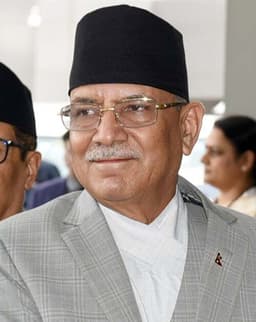
Pushpa Kamal Dahal
Revolutionary · Modern
50.0Total
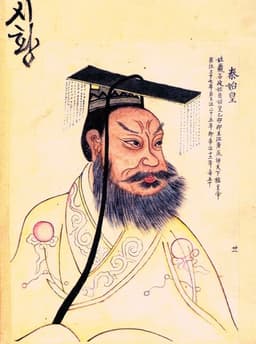
Qin Shi Huang
Emperor · Ancient
85.2Total
Basic Information
Born
1954
-259
Died
—
-210
Era
Modern
Ancient
Nationality
Nepal
China
Occupation
Revolutionary
Emperor
Civilization
Indian
Eastern
Score Comparison
Military (10%)
35.0
80.0
Political (20%)
54.7
90.0
Influence (20%)
51.0
85.0
Legacy (20%)
40.8
90.0
Leadership (15%)
62.0
78.0
Strategy (15%)
60.0
82.0
TOTAL
50.0
85.2
Pushpa Kamal Dahal — Complete Timeline
1996 AD
Launch of People's WarWar
Prachanda, as leader of the Communist Party of Nepal (Maoist), initiated a armed insurgency against the Nepalese state. The People's War began with attacks on police posts and government offices, escalating into a decade-long civil war.
InsurgencyCivil WarMaoist
Impact: nationaldestructive
2006 AD
Signing of Comprehensive Peace AccordPolitical Action◆ Major
Prachanda signed the Comprehensive Peace Accord with Prime Minister Girija Prasad Koirala, ending the civil war. The agreement committed the Maoists to lay down arms and join mainstream politics in exchange for integration into state institutions.
Peace TreatyCivil WarNepal
Impact: nationalconstructive
2008 AD
Election as Prime MinisterPolitical Action◆ Major
Following the Maoist victory in the Constituent Assembly elections, Prachanda became the first prime minister of the Federal Democratic Republic of Nepal. His tenure focused on integrating former Maoist combatants into the national army.
ElectionGovernmentRepublic
Impact: national
2009 AD
Resignation as Prime MinisterPolitical Action
Prachanda resigned as prime minister after a dispute with President Ram Baran Yadav over the dismissal of the army chief. The crisis highlighted tensions between the Maoists and the established political order.
ResignationPoliticsCrisis
Impact: national
Qin Shi Huang — Complete Timeline
246 BC
Construction of the Mausoleum and Terracotta ArmyOther◆ Major
Qin Shi Huang commissioned a vast mausoleum complex near Xi'an, guarded by thousands of life-sized terracotta soldiers, horses, and chariots. The project employed hundreds of thousands of workers and reflected his obsession with immortality and imperial power.
Impact: global
230 BC
Conquest of the Six Warring StatesWar
From 230 to 221 BCE, Ying Zheng led the Qin state in a series of campaigns that conquered the Han, Zhao, Wei, Chu, Yan, and Qi states. This unified China under a single ruler for the first time, ending the Warring States period.
Impact: global
221 BC
Standardization of Writing, Currency, and MeasurementsReform◆ Major
Qin Shi Huang ordered the standardization of Chinese script, currency, and weights and measures across the unified empire. This facilitated administration, trade, and cultural integration, laying a foundation for future dynasties.
Impact: globalconstructive
Proclamation of the Qin DynastyPolitical Action
After conquering the last independent state, Ying Zheng declared himself Shi Huangdi (First Emperor), founding the Qin Dynasty. He adopted a new title to signify his supreme authority and initiated centralized imperial rule.
Impact: global
214 BC
Initiation of the Great Wall ConstructionOther◆ Major
Qin Shi Huang ordered the connection and extension of existing northern fortifications to create a unified defensive wall against nomadic Xiongnu raids. This project involved massive conscripted labor and became the precursor to the later Great Wall.
Impact: regional
213 BC
Burning of Books and Burying of ScholarsPolitical Action◆ Major
On the advice of Li Si, Qin Shi Huang ordered the burning of historical records and philosophical texts not aligned with Legalist doctrine. He also had 460 Confucian scholars buried alive to suppress dissent and consolidate ideological control.
Impact: nationaldestructive
Expert Analysis
pushpa-kamal-dahal-vs-qin-shi-huang
# The Emperor and the Revolutionary
On a winter morning in 221 BC, a king from the western edge of the Chinese world stood before his assembled generals and declared himself the First Emperor, master of all under heaven. More than two thousand years later, on a spring day in 2008, a former schoolteacher from rural Nepal took the oath of office as prime minister of a federal republic, having brought a kingdom to its knees. One built his empire with iron and fire, the other with ideology and insurgency. Both sought to remake the world they inherited. But while Qin Shi Huang’s name became synonymous with the very idea of China, Pushpa Kamal Dahal—known to the world as Prachanda—remains a figure of contested memory, his revolution half-fulfilled.
Origins
Qin Shi Huang entered a world already ancient. Born in 259 BC as Ying Zheng, he was the son of a king and a concubine, raised in the palace of the Qin state during the Warring States period—a time when seven rival kingdoms bled each other dry for supremacy. The Qin were a frontier people, hardened by the harsh climate of the Wei River valley, and their legalist philosophy taught that order came through strict law and harsh punishment. Young Ying Zheng learned early that power was a blade: wield it or be cut by it.
Prachanda was born in 1954 in a mud-walled house in Kaski, a hill district of Nepal. His father was a farmer, his mother a homemaker. The world he knew was one of feudal landlords, a Hindu monarchy, and grinding poverty. Unlike the First Emperor, who inherited a throne, Prachanda inherited a grievance. He studied agriculture in college, taught school for a time, and then found his calling in the underground world of Nepali communism. The Maoist insurgency that swept China in the 1940s became his textbook, and the Nepali countryside became his classroom.
Rise to Power
Ying Zheng’s path to power was swift and brutal. He became king of Qin at thirteen, but real power came in 238 BC when, at twenty-one, he crushed a rebellion led by his mother’s lover and assumed full control. Over the next nine years, from 230 to 221 BC, he unleashed a campaign of conquest that devoured one kingdom after another—Han, Zhao, Wei, Chu, Yan, Qi. Each victory was a masterpiece of strategy and ruthlessness. When he was done, the map of China had been redrawn into a single empire.
Prachanda’s rise was slower and far more uncertain. In 1996, he launched the People’s War with a few hundred fighters armed with antique rifles and homemade bombs. For a decade, his Maoist army fought a shadow war against the Nepali state, ambushing police posts, taxing villagers, and building a parallel government in the hills. The turning point came not on a battlefield but at a negotiating table. In 2006, after King Gyanendra’s direct rule collapsed, Prachanda signed the Comprehensive Peace Accord with Prime Minister Girija Prasad Koirala. The civil war was over. Two years later, his party won the most seats in the Constituent Assembly, and he became prime minister.
Leadership & Governance
Qin Shi Huang governed as he conquered—with absolute authority. In 221 BC, he declared himself Shi Huangdi, the First Emperor, and set about erasing the old order. He standardized writing, currency, and weights and measures across his empire, turning a patchwork of warring states into a single economic zone. He ordered the construction of roads and canals, and in 214 BC, he began linking the northern fortifications into what would become the Great Wall. But his rule had a dark side. In 213 BC, on the advice of his chancellor Li Si, he ordered the burning of historical records and philosophical texts that did not align with his vision. Scholars who protested were buried alive. The emperor’s logic was simple: the past had to die so the empire could live.
Prachanda governed in a world of compromise. As prime minister, he faced a fractured parliament, a powerful army, and a monarchy that had not fully relinquished its grip. His revolutionary instincts clashed with the demands of coalition politics. In 2009, he resigned after a dispute with President Ram Baran Yadav over the dismissal of the army chief—a crisis that exposed the limits of his power. Unlike the First Emperor, who could command and be obeyed, Prachanda had to negotiate, cajole, and sometimes retreat.
Triumph & Tragedy
Qin Shi Huang’s greatest triumph was the unification itself—a feat that had eluded all his predecessors. But his greatest tragedy was his obsession with immortality. He sent expeditions in search of the elixir of life, consumed mercury pills prescribed by alchemists, and built a vast mausoleum guarded by thousands of life-sized terracotta soldiers. He died in 210 BC, at the age of forty-nine, possibly from mercury poisoning. His empire, so carefully constructed, collapsed within four years of his death.
Prachanda’s triumph was the peace accord itself—ending a war that had killed over 13,000 people and bringing the Maoists into mainstream politics. But his tragedy was the incomplete revolution. The promises of land reform, federalism, and social justice remain largely unfulfilled. He has served as prime minister three times, each term shorter and more contentious than the last. The fire that once burned in the hills of Nepal now flickers in the corridors of power.
Character & Destiny
Qin Shi Huang was paranoid, brilliant, and utterly convinced of his own destiny. He slept in a different room each night to avoid assassination, and he built an underground palace of bronze and mercury that mirrored the heavens. His character shaped his decisions: the standardization of writing was an act of genius, but the burning of books was an act of fear. He believed that unity required uniformity, and that history itself must bow to his will.
Prachanda is more opaque—a revolutionary who became a politician, a man of ideology who learned to love power. His nom de guerre, Prachanda, means “fierce” in Nepali, and he cultivated an image of revolutionary purity. But the compromises of governance have blurred that image. He is neither the savior his followers hoped for nor the demon his enemies feared. He is, perhaps, the most human of revolutionaries.
Legacy
Qin Shi Huang’s legacy is carved into the bones of China. The standardized script he imposed is still used today. The Great Wall, though much rebuilt, still winds across the northern landscape. The administrative system he created—prefectures and counties governed by appointed officials—became the template for imperial rule for two millennia. And the Terracotta Army, unearthed in 1974, has made him a global icon. His tomb remains unopened, a final mystery.
Prachanda’s legacy is still being written. He helped end a monarchy and bring a republic to Nepal. He brought Maoists from the jungle to the parliament. But whether he will be remembered as a liberator or a cautionary tale depends on what comes next. Nepal’s constitution of 2015 bears the imprint of his struggle, but the country remains one of the poorest in Asia, and the promises of the peace accord remain unfulfilled.
Conclusion
Two men, separated by two millennia, linked by the terrible ambition to remake their worlds. Qin Shi Huang succeeded so completely that his empire outlived him by two thousand years. Prachanda succeeded just enough to taste power, but not enough to transform his country. The difference lies not in their visions—both dreamed of a new order—but in the soil in which those visions were planted. The First Emperor ruled with the sword and the seal, in an age when absolute power was possible. Prachanda ruled with the ballot and the microphone, in an age of checks and balances, of global media and international pressure. One built an empire of stone and iron; the other built a peace of paper and promises. Which lasts longer is a question that remains unanswered.
Rankings
🥇
Qin Shi HuangLeader
Mil: 80.0Pol: 90.0Inf: 85.0
85.2
🥈
Pushpa Kamal Dahal
Mil: 35.0Pol: 54.7Inf: 51.0
50.0
+35.2 behind
How This Comparison Works
Algorithm
Each figure is scored on 6 dimensions (0—100 scale) based on structured historical data: Military (10%), Political (20%), Influence (20%), Legacy (20%), Leadership (15%), Strategy (15%). The weighted total produces the final ranking.
Data Sources
Scores are computed from structured sub-indicators in the database. Scale factors adjust for era (Ancient ×0.85, Modern ×1.0) and civilization size (Eastern ×1.05, Other ×0.80) to account for differences in population and military scale.
Maximum 3 Figures
Comparisons are limited to 2—3 figures to ensure readability and statistical meaningfulness.
Error Margins
±5 points per dimension — Sub-scores are derived from historical records with inherent uncertainty. Two figures within 5 points on a dimension should be considered roughly equivalent in that area.
Total Score Accuracy
±3 points overall — The weighted combination of 6 dimensions produces a total score with approximately ±3 points of uncertainty. Differences of less than 3 points are not statistically significant— the figures are effectively tied.
Known Limitations
- Historical records are incomplete and uneven across civilizations
- Figures from oral-tradition societies may be underrepresented
- Occupation labels can misclassify multi-role figures
- Scores measure capability and impact, not moral character
- Quantitative scoring is a comparison tool, not absolute truth
Capability Radar
Military (10%) — Battles & Warfare
Battles
35
85
Win Rate
40
90
Expansion
25
90
Political (20%) — Governance & Reform
Reform
40
95
Diplomacy
50
75
Economy
35
90
Influence (20%) — Cultural & Global Reach
Cultural
40
95
Global
35
85
Legacy (20%) — Historical Impact
Historical
45
95
Longevity
30
95
Leadership (15%) — Power & Stability
Tenure
55
70
Stability
30
65
Strategy (15%) — Tactics & Innovation
Strategy
50
85
Tactics
45
80
Reform
30
95
Similar Comparisons
Comments & Discussion
ExplodingSpears6/17/2026
Calling this a comparison is like comparing a forest fire to a bonfire. Qin Shi Huang actually unified a civilization, standardized writing, and built infrastructure that lasted millennia. Prachanda’s "ideology and insurgency" gave him a decade of chaos, followed by backroom deals with the very monarchy he swore to destroy. One created an empire; the other just got a fancy title. Stop romanticizing an incomplete revolution by comparing it to architecture built in blood and bronze.
战国扫地僧6/17/2026
焚书坑儒的暴君也配和普拉昌达比?秦始皇把七国文字统一了,普拉昌达连尼泊尔的毛派内部都没摆平,党内大佬各自拥兵自重。论铁腕,嬴政吊打他;论治国,老秦至少给你个青铜秦律体系,普拉昌达的呢?空头支票派发机。一个真改朝换代,一个换汤不换药,这对比是对历史的降维打击。
TerraCottaTroll6/17/2026
Data check: Qin Shi Huang’s kingdom conquered six rival states within roughly 9 years (230–221 BC) and ruled a territory from the Gobi to the South China Sea. Prachanda led a 10-year insurgency (1996–2006) that ended with a peace deal that didn’t even abolish the monarchy until 2008. One man erased centuries of division; the other struggled to erase a king he hated for two decades. The historical ROI isn’t even close. Qin gave us the Terracotta Army. Prachanda gave us… more committees?
河内省卷王6/17/2026
别被“人民领袖”的光环骗了。普拉昌达1996年发动人民战争时,手里多少枪?五百条左右。秦始皇灭六国,百万人马,商鞅变法后三代积累,军功爵制把士兵逼成杀人机器。这俩人起点根本不在一个引力场。普拉昌德连自己党内都搞零和博弈,杀起“叛徒”倒不手软,但比起秦国的连坐刑法?小巫见大巫。论革命烈度,大巫是大秦。
SilkRoadSkeptic6/17/2026
Let’s talk about legacy. Qin Shi Huang’s obsession with immortality and legalist control literally buried scholars alive and burned books—but it set the template for Chinese imperial governance for 2,000 years. Prachanda’s Maoist revolution? He abolished the monarchy, but Nepal’s still one of Asia’s poorest countries, wracked by coalition paralysis. He fought a king, won, and then turned into a standard-issue politician. One man’s brutality built a civilization; the other’s militancy built a rev