Loading...
Plato vs Qin Shi Huang
Qin Shi Huang leads by 25.8 pts · 2 figures compared
…

Plato
Philosopher · Ancient
59.4Total
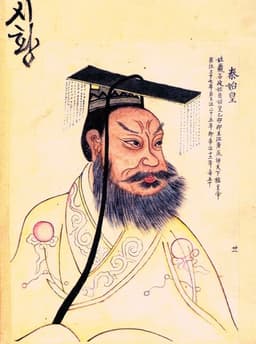
Qin Shi Huang
Emperor · Ancient
85.2Total
Basic Information
Born
-428
-259
Died
-348
-210
Era
Ancient
Ancient
Nationality
Greece
China
Occupation
Philosopher
Emperor
Civilization
Western
Eastern
Score Comparison
Military (10%)
8.6
80.0
Political (20%)
35.0
90.0
Influence (20%)
88.0
85.0
Legacy (20%)
87.0
90.0
Leadership (15%)
35.4
78.0
Strategy (15%)
41.8
82.0
TOTAL
59.4
85.2
Plato — Complete Timeline
387 BC
Founding of the AcademyCultural
Plato founded the Academy in Athens, a school dedicated to philosophical and scientific inquiry. It became the first institution of higher learning in the Western world, operating for nearly 900 years. Students studied mathematics, astronomy, and philosophy.
EducationPhilosophyAcademy
Impact: globalconstructive
375 BC
Writing of The RepublicCultural
Plato wrote The Republic, a Socratic dialogue exploring justice, the ideal state, and the philosopher-king. The work introduced the theory of Forms, the allegory of the cave, and concepts of education and governance that became foundational to Western philosophy.
PhilosophyPolitical theoryDialogue
Impact: globalconstructive
367 BC
Journey to SyracusePolitical Action◆ Major
Plato traveled to Syracuse to tutor the young ruler Dionysius II, hoping to create a philosopher-king. The experiment failed due to court intrigues and Dionysius's lack of aptitude. Plato narrowly escaped with his life, disillusioned with practical politics.
Political experimentSyracusePhilosopher-king
Impact: regional
350 BC
Writing of the LawsCultural◆ Major
Plato wrote the Laws, his longest dialogue, outlining a practical legal code for a hypothetical city-state. It addressed governance, education, and religion, reflecting his later, more pragmatic political philosophy. The work influenced later legal and political thought.
PhilosophyLawPolitical theory
Impact: globalconstructive
Qin Shi Huang — Complete Timeline
246 BC
Construction of the Mausoleum and Terracotta ArmyOther◆ Major
Qin Shi Huang commissioned a vast mausoleum complex near Xi'an, guarded by thousands of life-sized terracotta soldiers, horses, and chariots. The project employed hundreds of thousands of workers and reflected his obsession with immortality and imperial power.
Impact: global
230 BC
Conquest of the Six Warring StatesWar
From 230 to 221 BCE, Ying Zheng led the Qin state in a series of campaigns that conquered the Han, Zhao, Wei, Chu, Yan, and Qi states. This unified China under a single ruler for the first time, ending the Warring States period.
Impact: global
221 BC
Standardization of Writing, Currency, and MeasurementsReform◆ Major
Qin Shi Huang ordered the standardization of Chinese script, currency, and weights and measures across the unified empire. This facilitated administration, trade, and cultural integration, laying a foundation for future dynasties.
Impact: globalconstructive
Proclamation of the Qin DynastyPolitical Action
After conquering the last independent state, Ying Zheng declared himself Shi Huangdi (First Emperor), founding the Qin Dynasty. He adopted a new title to signify his supreme authority and initiated centralized imperial rule.
Impact: global
214 BC
Initiation of the Great Wall ConstructionOther◆ Major
Qin Shi Huang ordered the connection and extension of existing northern fortifications to create a unified defensive wall against nomadic Xiongnu raids. This project involved massive conscripted labor and became the precursor to the later Great Wall.
Impact: regional
213 BC
Burning of Books and Burying of ScholarsPolitical Action◆ Major
On the advice of Li Si, Qin Shi Huang ordered the burning of historical records and philosophical texts not aligned with Legalist doctrine. He also had 460 Confucian scholars buried alive to suppress dissent and consolidate ideological control.
Impact: nationaldestructive
Expert Analysis
plato-vs-qin-shi-huang
### The Emperor and the Philosopher: Two Visions of Order
On a spring morning in 221 BC, Ying Zheng, the king of Qin, stood before his assembled generals in the conquered palace of the last independent state. He had just accomplished what no Chinese ruler had done before: the unification of all the warring kingdoms under a single sword. He declared himself *Shi Huangdi*—the First Emperor—and set about reshaping the world with iron decrees. Half a world away and more than a century earlier, in the sun-drenched groves of Athens, another man had dreamed of a different kind of order. Plato, the student of Socrates, had watched his own city fall to corruption and war, and he responded not with armies but with ideas. He founded a school and wrote a book about a perfect city ruled by a philosopher-king. Both men sought to impose harmony on chaos. One did it with the sword and the seal; the other, with the pen and the dialogue. Why did their paths diverge so completely, and what drove their wildly different outcomes?
### Origins: The Forge of Two Worlds
Qin Shi Huang was born into blood and steel. In 259 BC, the Warring States period had torn China apart for two centuries. His father was a king, but a weak one; his mother, a concubine who later plotted against him. Young Ying Zheng grew up surrounded by assassins, spies, and the constant clatter of armies. He learned early that trust was a luxury and power the only currency that mattered. By thirteen, he was king. His world was one of survival—a crucible that forged a man who saw unity as the only alternative to annihilation.
Plato, born around 428 BC, came of age in a different kind of storm. Athens was at war with Sparta, and democracy was failing. Plato was an aristocrat; his family had produced statesmen and lawgivers. But the execution of his teacher, Socrates, in 399 BC, shattered his faith in the Athenian mob. Where Qin Shi Huang saw chaos and answered with control, Plato saw ignorance and answered with education. The emperor’s childhood taught him that men were beasts to be ruled. The philosopher’s youth taught him that men were souls to be enlightened.
### Rise to Power: Conquest and Conversation
Qin Shi Huang’s rise was a decade of relentless war. From 230 to 221 BC, he led his armies through the kingdoms of Han, Zhao, Wei, Chu, Yan, and Qi. Each campaign was a masterstroke of strategy and brutality. He did not conquer by negotiation; he conquered by annihilation. By the time he proclaimed the Qin Dynasty in 221 BC, he had no rivals left—only subjects.
Plato’s ascent was quieter but no less ambitious. He did not take power; he sought to shape it. In 387 BC, he founded the Academy in Athens, the first institution of higher learning in the Western world. There, he taught mathematics, astronomy, and philosophy, hoping to train a generation of wise rulers. His greatest political gamble came in 367 BC, when he sailed to Syracuse to tutor the young tyrant Dionysius II. He dreamed of turning a despot into a philosopher-king. The experiment failed spectacularly. Dionysius proved more interested in wine than wisdom, and Plato barely escaped with his life. The emperor conquered states; the philosopher could not conquer a single prince.
### Leadership & Governance: The Iron Hand and the Invisible Idea
As ruler, Qin Shi Huang was a revolutionary. He standardized writing, currency, and measurements across his empire—a feat that would make Chinese civilization coherent for millennia. He ordered the connection of existing northern fortifications into what would become the Great Wall, a project that cost countless lives but secured the realm against nomadic invaders. His governance was absolute: laws were uniform, punishments were harsh, and dissent was crushed. In 213 BC, on the advice of his chancellor Li Si, he ordered the burning of historical records and philosophical texts that did not align with his ideology. Scholars who protested were buried alive. For the First Emperor, order meant obedience.
Plato governed only in theory. In *The Republic*, written around 375 BC, he sketched a state ruled by philosopher-kings—guardians trained from childhood to love wisdom and justice. His ideal city was hierarchical, with rulers, warriors, and workers each performing their proper function. But unlike Qin Shi Huang, Plato never had the power to enforce his vision. His later work, *The Laws*, written around 350 BC, was a more practical attempt to design a legal code for a real city. It was a compromise—a recognition that perfect justice might never be achieved on earth. The emperor commanded reality; the philosopher could only imagine it.
### Triumph & Tragedy: The Mausoleum and the Prison of the Mind
Qin Shi Huang’s greatest triumph was his tomb. Beginning in 246 BC, he commissioned a vast mausoleum complex near Xi’an, guarded by thousands of life-sized terracotta soldiers, each with a unique face. It was a monument to his power, his ambition, and his terror of death. But the tragedy was that his empire did not outlast him. He died in 210 BC, and within four years, the Qin Dynasty collapsed into rebellion. His harsh laws and forced labor had sown the seeds of revolt. The First Emperor built an order that could not survive without his iron will.
Plato’s triumph was his Academy, which would operate for nearly 900 years. His tragedy was his failure in Syracuse. He had tried to shape a ruler and failed. He had tried to write a perfect constitution and watched it ignored. Yet his ideas—the theory of Forms, the allegory of the cave, the vision of the philosopher-king—outlasted every empire. He died around 348 BC, an old man in Athens, having never held a sword or a scepter. But his words became the foundation of Western philosophy.
### Character & Destiny: The Tyrant and the Teacher
Qin Shi Huang was consumed by fear and ambition. He feared death, so he sought immortality elixirs. He feared dissent, so he burned books. He feared disorder, so he built walls. His character was a fortress—impregnable but solitary. Plato, by contrast, was driven by hope. He believed that truth could set men free, that education could cure the sickness of the soul. His character was a school—open to all who would listen, but vulnerable to the world’s indifference.
Their destinies reflected their natures. The emperor’s life was a blaze of action that ended in ashes. The philosopher’s life was a slow fire that lit the ages. One conquered the world; the other conquered the mind.
### Legacy: Bones and Books
Qin Shi Huang’s legacy is the Great Wall, the Terracotta Army, and the administrative template of imperial China. He is remembered as a unifier and a tyrant, a builder and a destroyer. His influence score of 82.0 and legacy score of 85.0 reflect a man who shaped the physical and political landscape of a civilization.
Plato’s legacy is the Academy, the dialogues, and the very idea of philosophy as a discipline. He is remembered as the teacher of Aristotle, the father of Western thought, and the dreamer of a just city. His influence score of 87.8 and legacy score of 94.4 place him among the most influential minds in history.
Both men were, in their own ways, architects of order. One built with stone and bone; the other with words and ideas. The emperor’s walls still stand, but they are silent. The philosopher’s words still echo, and they still ask: What is justice? Who should rule? And how shall we live?
### Conclusion: The Two Orders
In the end, Qin Shi Huang and Plato represent two eternal responses to chaos. The emperor believed that order must be imposed from above, by force if necessary. The philosopher believed that order must be discovered from within, through reason and dialogue. One created an empire that crumbled; the other created an idea that endured. History has judged them both, but the question they posed remains open. When we face disorder, do we reach for the sword or the book? The answer may determine not only our own fate, but the shape of civilizations yet to come.
Rankings
🥇
Qin Shi HuangLeader
Mil: 80.0Pol: 90.0Inf: 85.0
85.2
🥈
Plato
Mil: 8.6Pol: 35.0Inf: 88.0
59.4
+25.8 behind
How This Comparison Works
Algorithm
Each figure is scored on 6 dimensions (0—100 scale) based on structured historical data: Military (10%), Political (20%), Influence (20%), Legacy (20%), Leadership (15%), Strategy (15%). The weighted total produces the final ranking.
Data Sources
Scores are computed from structured sub-indicators in the database. Scale factors adjust for era (Ancient ×0.85, Modern ×1.0) and civilization size (Eastern ×1.05, Other ×0.80) to account for differences in population and military scale.
Maximum 3 Figures
Comparisons are limited to 2—3 figures to ensure readability and statistical meaningfulness.
Error Margins
±5 points per dimension — Sub-scores are derived from historical records with inherent uncertainty. Two figures within 5 points on a dimension should be considered roughly equivalent in that area.
Total Score Accuracy
±3 points overall — The weighted combination of 6 dimensions produces a total score with approximately ±3 points of uncertainty. Differences of less than 3 points are not statistically significant— the figures are effectively tied.
Known Limitations
- Historical records are incomplete and uneven across civilizations
- Figures from oral-tradition societies may be underrepresented
- Occupation labels can misclassify multi-role figures
- Scores measure capability and impact, not moral character
- Quantitative scoring is a comparison tool, not absolute truth
Capability Radar
Military (10%) — Battles & Warfare
Battles
13
85
Win Rate
16
90
Expansion
18
90
Political (20%) — Governance & Reform
Reform
40
95
Diplomacy
35
75
Economy
20
90
Influence (20%) — Cultural & Global Reach
Cultural
95
95
Global
90
85
Legacy (20%) — Historical Impact
Historical
95
95
Longevity
95
95
Leadership (15%) — Power & Stability
Tenure
30
70
Stability
25
65
Strategy (15%) — Tactics & Innovation
Strategy
22
85
Tactics
24
80
Reform
28
95
Similar Comparisons
Comments & Discussion
QinBasher6/17/2026
Plato's Republic was intellectual pipe-dreaming; Qin Shihuang's Great Wall actually kept the Xiongnu at bay. While Plato wallowed in abstract forms, the First Emperor standardized weights, measures, and script across a continent. That's real order, not just a symposium spat. Give me the man who unified law with bronze arrows any day over a philosopher who couldn't even keep Athens from executing his teacher.
青铜霸刀6/17/2026
柏拉图在《理想国》里讨论哲人王,问题是,古雅典连个像样的帝国都没建起来。嬴政焚书坑儒是残忍,但他废分封、设郡县,这东西两千年都没垮。你跟我说谁是现实主义者?把理想写到纸上不难,难的是用刀把十三国切成一个国。治国不是写对话录,是修驰道。
TombRaiderChris6/17/2026
As a military historian, I'm fascinated that both men relied on ideology to control armies. Qin Shihuang used Legalism—reward and punishment—to forge a terrifying war machine. Plato thought philosopher-kings would inspire soldiers through wisdom. Guess which one actually conquered China? Plato's never-tested city never fought a single battle. Qin's army, with standardized crossbows and bronze swords, literally conquered the known world in his time.
百家争鸣枪6/17/2026
你们都说秦始皇残暴,可商鞅变法是他成功的底子。柏拉图那《理想国》连个实践者都没有,嬴政至少搞了"车同轨,书同文"。别跟我说哲学家更文明,没统一哪来的文明?你们现在写汉字,用的是小篆!这就是秦始皇的遗产,柏拉图最多留个橄榄枝。
NumberCruncherLeo6/17/2026
Let me be the data skeptic here. Plato's ideal state was a static, hierarchical fantasy with zero empirical backing. Qin Shihuang's unified empire, despite the harshness, produced actual measurable outcomes: a population increase from roughly 20 million to 30 million, standardized road networks spanning 6,800 kilometers, and a unified currency. Where's Plato's ROI? The philosopher never had to collect taxes or build irrigation. That's the difference between a dream and a dynasty.
竹简刻字人6/17/2026
嬴政统一度量衡这事儿被低估了。以前七国量器不同,你秦国的斗到楚国就没人认。柏拉图呢?他从来没解决过雅典城邦间的贸易混乱。嬴政是真干活的人,他把一个混乱的世界变得能用同一把尺子量。哲学再美,得先让老百姓能把粮食卖出去。