Loading...
Karl Marx vs Qin Shi Huang
Qin Shi Huang leads by 34.3 pts · 2 figures compared
…

Karl Marx
Philosopher · Modern
50.9Total
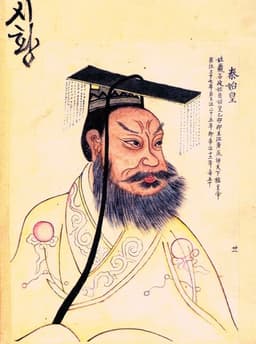
Qin Shi Huang
Emperor · Ancient
85.2Total
Basic Information
Born
1818
-259
Died
1883
-210
Era
Modern
Ancient
Nationality
Germany
China
Occupation
Philosopher
Emperor
Civilization
Western
Eastern
Score Comparison
Military (10%)
8.9
80.0
Political (20%)
32.2
90.0
Influence (20%)
75.0
85.0
Legacy (20%)
70.0
90.0
Leadership (15%)
30.0
78.0
Strategy (15%)
44.4
82.0
TOTAL
50.9
85.2
Karl Marx — Complete Timeline
1848 AD
Publication of The Communist ManifestoCultural
Marx and Engels published the Manifesto of the Communist Party, calling for the overthrow of bourgeois society and the establishment of a classless society. The pamphlet's closing line 'Workers of the world, unite!' became a rallying cry for socialist and communist movements worldwide.
CommunismSocialismRevolution
Impact: globalconstructive
1849 AD
Exile in LondonPolitical Action◆ Major
After the failure of the 1848 revolutions, Marx was expelled from Prussia and France and settled in London. He lived in poverty while researching at the British Museum, writing Das Kapital, and organizing the International Workingmen's Association (First International).
ExileLondonFirst International
Impact: global
1864 AD
Founding of the International Workingmen's AssociationPolitical Action◆ Major
Marx helped found the International Workingmen's Association (First International) in London, uniting socialist, communist, and anarchist groups from across Europe. He wrote its inaugural address and served on its General Council, shaping its political direction until its dissolution in 1876.
InternationalLabor MovementSocialism
Impact: globalconstructive
1867 AD
Publication of Das Kapital, Volume ICultural◆ Major
Marx published the first volume of his magnum opus, Das Kapital, a critical analysis of political economy. He developed the labor theory of value, the concept of surplus value, and the theory of capitalist crisis. The work became the foundational text of Marxist economics.
EconomicsCapitalismMarxism
Impact: globalconstructive
Qin Shi Huang — Complete Timeline
246 BC
Construction of the Mausoleum and Terracotta ArmyOther◆ Major
Qin Shi Huang commissioned a vast mausoleum complex near Xi'an, guarded by thousands of life-sized terracotta soldiers, horses, and chariots. The project employed hundreds of thousands of workers and reflected his obsession with immortality and imperial power.
Impact: global
230 BC
Conquest of the Six Warring StatesWar
From 230 to 221 BCE, Ying Zheng led the Qin state in a series of campaigns that conquered the Han, Zhao, Wei, Chu, Yan, and Qi states. This unified China under a single ruler for the first time, ending the Warring States period.
Impact: global
221 BC
Standardization of Writing, Currency, and MeasurementsReform◆ Major
Qin Shi Huang ordered the standardization of Chinese script, currency, and weights and measures across the unified empire. This facilitated administration, trade, and cultural integration, laying a foundation for future dynasties.
Impact: globalconstructive
Proclamation of the Qin DynastyPolitical Action
After conquering the last independent state, Ying Zheng declared himself Shi Huangdi (First Emperor), founding the Qin Dynasty. He adopted a new title to signify his supreme authority and initiated centralized imperial rule.
Impact: global
214 BC
Initiation of the Great Wall ConstructionOther◆ Major
Qin Shi Huang ordered the connection and extension of existing northern fortifications to create a unified defensive wall against nomadic Xiongnu raids. This project involved massive conscripted labor and became the precursor to the later Great Wall.
Impact: regional
213 BC
Burning of Books and Burying of ScholarsPolitical Action◆ Major
On the advice of Li Si, Qin Shi Huang ordered the burning of historical records and philosophical texts not aligned with Legalist doctrine. He also had 460 Confucian scholars buried alive to suppress dissent and consolidate ideological control.
Impact: nationaldestructive
Expert Analysis
karl-marx-vs-qin-shi-huang
# The Emperor and the Prophet: Qin Shi Huang and Karl Marx
On a winter morning in 221 BC, Ying Zheng stood before the walls of the last independent kingdom, his armies having conquered every rival state in a decade of relentless warfare. Two thousand years later, in a cramped London study, a bearded German exile stared at piles of manuscript, trying to finish a book that would attempt to conquer the world of ideas. One man built an empire of stone and bone; the other built an empire of ink and theory. Both sought to remake human society from the ground up. Both succeeded beyond measure—and failed in ways that still haunt us.
Origins
Qin Shi Huang was born into war. In 259 BC, China was a patchwork of seven warring states, locked in centuries of brutal conflict. His father was a hostage prince, his mother a concubine. The boy learned early that the world was a place of treachery and violence. When he ascended the throne of Qin at thirteen, his kingdom faced annihilation from rivals on all sides. He had no time for philosophy—only survival.
Karl Marx was born into a world of order. In 1818, Trier was a quiet Prussian town, and his father was a respected lawyer who had converted from Judaism to Christianity to practice law. Young Karl attended the finest schools, studied law and philosophy at university, and married the daughter of a nobleman. He had time to read Aristotle, Hegel, and the Greek tragedians. His revolution began not with a sword, but with a pen.
The difference in their origins explains everything. Qin Shi Huang inherited a war machine that had been perfecting itself for centuries; Marx inherited a library of Western thought that had been debating justice since Plato. One saw chaos and demanded unity; the other saw injustice and demanded equality.
Rise to Power
Ying Zheng’s path was direct. At twenty-two, he purged his regent and began planning conquest. From 230 to 221 BC, he unleashed the Qin military on the six other kingdoms, one by one. He bribed officials, assassinated generals, and broke treaties when convenient. By twenty-eight, he had unified China—a feat no one had achieved in five centuries. He declared himself Shi Huangdi, the First Emperor, and meant it literally.
Marx’s path was tortuous. He began as a journalist, then a revolutionary, then a fugitive. The 1848 revolutions that inspired *The Communist Manifesto* collapsed within months. He fled to London in 1849, where he lived in poverty, three of his children dying of malnutrition. His political organization, the International Workingmen's Association, splintered into factions. He never held power, never commanded an army, never saw a single state adopt his ideas. His rise came only after his death.
The contrast is stark: one conquered with violence in his lifetime; the other conquered with words only after he could no longer see the result.
Leadership & Governance
Qin Shi Huang ruled like a machine. He standardized writing, currency, and measurements across his empire—a stroke of genius that made China administratively possible. He connected northern fortifications into what would become the Great Wall. He built roads, canals, and a network of granaries. But he also burned books that disagreed with his philosophy and buried scholars alive. His legalist system treated all subjects as interchangeable parts of a state mechanism. There was no mercy, no debate, no dissent.
Marx governed nothing. But his ideas became a system of governance after his death. His theory of historical materialism argued that all societies evolve through class struggle toward communism. His critique of capitalism was devastatingly accurate in diagnosing its contradictions. But he wrote almost nothing about how a communist society would actually function. He left that to others—Lenin, Stalin, Mao—who interpreted his work in ways he might have rejected.
The difference is painful: Qin Shi Huang’s system worked, but at a terrible human cost. Marx’s system inspired millions, but its implementation produced horrors he never imagined.
Triumph & Tragedy
Qin Shi Huang’s greatest triumph was unification itself. He created China as a political entity that would endure, with interruptions, for over two thousand years. His standardization of script meant that a man from Beijing could read a document written in Guangzhou—a legacy that continues today. His mausoleum, guarded by the Terracotta Army, remains one of the world’s great archaeological wonders.
His tragedy came quickly. He died in 210 BC while searching for an elixir of immortality. Within three years, his dynasty collapsed in rebellion. His sons were murdered, his capital burned, his centralized system shredded. The man who wanted to rule forever saw his dynasty last only fifteen years.
Marx’s triumph is the most extraordinary in intellectual history. A penniless exile who died in obscurity became the most influential thinker of the modern era. By the mid-twentieth century, nearly half the world’s population lived under governments that claimed his authority. His analysis of capitalism remains essential reading for any serious economist.
His tragedy is that his name became synonymous with gulags, famines, and secret police. The man who dreamed of human liberation became the justification for the most oppressive regimes in history.
Character & Destiny
Qin Shi Huang was paranoid, ruthless, and obsessed with control. He slept in a different palace every night to avoid assassination. He believed he could conquer death itself. His personality shaped a system of total surveillance and absolute power that anticipated modern dictatorships.
Marx was arrogant, brilliant, and impractical. He could not manage his own finances; his household was chaotic. He alienated friends and allies with his savage criticism. His personality shaped a theory that demanded perfect rationality from imperfect humans.
Both men were driven by a vision of a transformed world. Both were utterly certain of their own correctness. Both left legacies that their followers would distort beyond recognition.
Legacy
Qin Shi Huang is remembered as both founder and tyrant. Chinese schoolchildren learn that he unified the motherland; they also learn that he burned books. His mausoleum draws millions of tourists, but his name remains controversial. In China today, he is celebrated as a unifier, but the Communist Party is careful not to praise his methods too openly.
Marx has undergone a similar transformation. In the West, he is studied as a philosopher and economist, his critiques of capitalism still relevant. In China, his portrait hangs in Tiananmen Square, but the country he inspired has embraced capitalism on a scale he could never have imagined. His ideas have been adapted, abandoned, and betrayed—yet they refuse to die.
Conclusion
Standing before the Terracotta Army in Xi’an, one feels the weight of empire—the sheer ambition of a man who wanted to command not just the living, but the dead. Reading *Das Kapital* in a quiet library, one feels the weight of ideas—the sheer ambition of a man who wanted to understand not just one society, but all of human history.
Qin Shi Huang and Karl Marx never met, never could have met. One lived in a world of bronze swords and bamboo scrolls; the other in a world of steam engines and printing presses. Yet they share a terrible kinship: both believed that human suffering could be overcome by human will. Both were right. Both were wrong. And their legacies remind us that the greatest builders are also the greatest destroyers—whether they build with armies or with words.
Rankings
🥇
Qin Shi HuangLeader
Mil: 80.0Pol: 90.0Inf: 85.0
85.2
🥈
Karl Marx
Mil: 8.9Pol: 32.2Inf: 75.0
50.9
+34.3 behind
How This Comparison Works
Algorithm
Each figure is scored on 6 dimensions (0—100 scale) based on structured historical data: Military (10%), Political (20%), Influence (20%), Legacy (20%), Leadership (15%), Strategy (15%). The weighted total produces the final ranking.
Data Sources
Scores are computed from structured sub-indicators in the database. Scale factors adjust for era (Ancient ×0.85, Modern ×1.0) and civilization size (Eastern ×1.05, Other ×0.80) to account for differences in population and military scale.
Maximum 3 Figures
Comparisons are limited to 2—3 figures to ensure readability and statistical meaningfulness.
Error Margins
±5 points per dimension — Sub-scores are derived from historical records with inherent uncertainty. Two figures within 5 points on a dimension should be considered roughly equivalent in that area.
Total Score Accuracy
±3 points overall — The weighted combination of 6 dimensions produces a total score with approximately ±3 points of uncertainty. Differences of less than 3 points are not statistically significant— the figures are effectively tied.
Known Limitations
- Historical records are incomplete and uneven across civilizations
- Figures from oral-tradition societies may be underrepresented
- Occupation labels can misclassify multi-role figures
- Scores measure capability and impact, not moral character
- Quantitative scoring is a comparison tool, not absolute truth
Capability Radar
Military (10%) — Battles & Warfare
Battles
15
85
Win Rate
17
90
Expansion
22
90
Political (20%) — Governance & Reform
Reform
85
95
Diplomacy
10
75
Economy
90
90
Influence (20%) — Cultural & Global Reach
Cultural
85
95
Global
85
85
Legacy (20%) — Historical Impact
Historical
90
95
Longevity
90
95
Leadership (15%) — Power & Stability
Tenure
0
70
Stability
0
65
Strategy (15%) — Tactics & Innovation
Strategy
26
85
Tactics
26
80
Reform
29
95
Similar Comparisons
Comments & Discussion
IronChariot6/17/2026
Comparing Marx to Qin Shi Huang is like comparing a blueprint to a wrecking ball. Qin united China through blood and iron, standardizing writing, measures, and even axle lengths—practical empire-building. Marx just wrote dense theory in the British Library while workers starved. One actually implemented a system; the other inspired dystopias. Show me oneMarxist state that unified a civilization for two millennia. Exactly.
书同文6/17/2026
这对比太离谱了。秦始皇焚书坑儒控制思想,马克思呢?他连自己那本《资本论》都没写完,靠恩格斯整理出版。一个靠暴力统一度量衡建立帝国,一个靠抽象理论招来后来者误读。非要说共同点?他们都想重塑社会,但一个成功得让人恐惧,一个失败得让后人背锅。别美化思想家,也别洗白暴君。
DataMancer6/17/2026
I checked the timeline. Qin's legalist reforms took about 15 years to unify China. Marx's Das Kapital took 20 years to write and still wasn't finished. By efficiency metrics alone, the emperor wins. But real data shows Marx's ideas influenced 20th-century governments controlling over a third of the world's population. Qin's legacy is one country. Both are statistically significant outliers, but for different reasons.
老秦人6/17/2026
作为历史迷,我得说:秦朝统一文字、货币、度量衡,这些实实在在影响我们到今天。马克思呢?他的理论在苏联实验了70年,最后解体了。汉字两千多年没变,这叫真功夫。你跟我说思想的力量?思想再好,没有秦始皇那样的执行力,最后就是图书馆里的灰尘。实干兴邦,空谈误国。
RevisionistQuill6/17/2026
Everyone misses the real parallel: both were system-builders who failed to control their own legacy. Qin thought his dynasty would last ten thousand generations—it fell in four years after his death. Marx insisted he wasn't a "Marxist" because his followers distorted everything. Both created engines they couldn't steer. The difference? Qin's empire left terra cotta warriors. Marx's left academic departments arguing about surplus value.