Loading...
Aristotle vs Qin Shi Huang
Qin Shi Huang leads by 25.9 pts · 2 figures compared
…
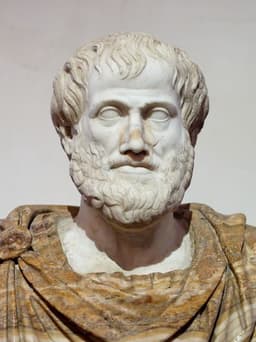
Aristotle
Philosopher · Ancient
59.3Total
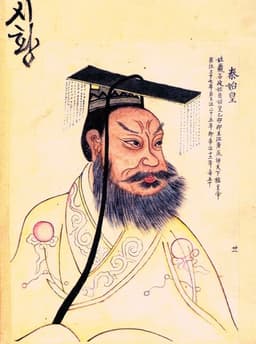
Qin Shi Huang
Emperor · Ancient
85.2Total
Basic Information
Born
-384
-259
Died
-322
-210
Era
Ancient
Ancient
Nationality
Greece
China
Occupation
Philosopher
Emperor
Civilization
Western
Eastern
Score Comparison
Military (10%)
8.8
80.0
Political (20%)
35.0
90.0
Influence (20%)
92.0
85.0
Legacy (20%)
87.0
90.0
Leadership (15%)
27.2
78.0
Strategy (15%)
43.6
82.0
TOTAL
59.3
85.2
Aristotle — Complete Timeline
350 BC
Development of Formal LogicInvention
Aristotle developed the first formal system of logic, including syllogistic logic, in his work 'Organon'. He identified the rules of valid reasoning, such as the syllogism, which became the foundation of Western logic for over two millennia.
LogicPhilosophyScience
Impact: globalprogressive
343 BC
Tutoring Alexander the GreatCultural◆ Major
Philip II of Macedon invited Aristotle to tutor his son Alexander. Aristotle taught Alexander for several years, instilling in him an interest in Greek culture, science, and philosophy. This relationship influenced Alexander's later policies of Hellenization in his conquered territories.
EducationMentorshipHellenization
Impact: globalconstructive
340 BC
Publication of 'Nicomachean Ethics'Cultural◆ Major
Aristotle wrote the 'Nicomachean Ethics', a treatise on virtue ethics. He argued that the highest good is eudaimonia (flourishing) achieved through virtuous activity and practical wisdom. This work became a cornerstone of Western moral philosophy.
EthicsPhilosophyVirtue
Impact: globalconstructive
335 BC
Founding of the LyceumCultural◆ Major
Aristotle founded the Lyceum, a school in Athens dedicated to philosophical and scientific research. He established a library and organized systematic studies across disciplines. The Lyceum became a major center of learning, rivaling Plato's Academy.
SchoolPhilosophyResearch
Impact: globalconstructive
323 BC
Departure from AthensPolitical Action
After Alexander's death, anti-Macedonian sentiment rose in Athens. Aristotle, associated with Macedon, left the city to avoid persecution, saying he would not allow Athens to 'sin twice against philosophy' (referring to Socrates' execution). He died in exile in Chalcis.
ExilePoliticsPhilosophy
Qin Shi Huang — Complete Timeline
246 BC
Construction of the Mausoleum and Terracotta ArmyOther◆ Major
Qin Shi Huang commissioned a vast mausoleum complex near Xi'an, guarded by thousands of life-sized terracotta soldiers, horses, and chariots. The project employed hundreds of thousands of workers and reflected his obsession with immortality and imperial power.
Impact: global
230 BC
Conquest of the Six Warring StatesWar
From 230 to 221 BCE, Ying Zheng led the Qin state in a series of campaigns that conquered the Han, Zhao, Wei, Chu, Yan, and Qi states. This unified China under a single ruler for the first time, ending the Warring States period.
Impact: global
221 BC
Standardization of Writing, Currency, and MeasurementsReform◆ Major
Qin Shi Huang ordered the standardization of Chinese script, currency, and weights and measures across the unified empire. This facilitated administration, trade, and cultural integration, laying a foundation for future dynasties.
Impact: globalconstructive
Proclamation of the Qin DynastyPolitical Action
After conquering the last independent state, Ying Zheng declared himself Shi Huangdi (First Emperor), founding the Qin Dynasty. He adopted a new title to signify his supreme authority and initiated centralized imperial rule.
Impact: global
214 BC
Initiation of the Great Wall ConstructionOther◆ Major
Qin Shi Huang ordered the connection and extension of existing northern fortifications to create a unified defensive wall against nomadic Xiongnu raids. This project involved massive conscripted labor and became the precursor to the later Great Wall.
Impact: regional
213 BC
Burning of Books and Burying of ScholarsPolitical Action◆ Major
On the advice of Li Si, Qin Shi Huang ordered the burning of historical records and philosophical texts not aligned with Legalist doctrine. He also had 460 Confucian scholars buried alive to suppress dissent and consolidate ideological control.
Impact: nationaldestructive
Expert Analysis
aristotle-vs-qin-shi-huang
# The Emperor and the Philosopher: Two Titans Who Shaped the World
In the winter of 221 BCE, a thirty-eight-year-old king stood on the walls of Xianyang, gazing at a China he had just conquered with blood and iron. Half a world away, a seventy-seven-year-old philosopher was fleeing Athens in fear for his life, his association with a conquering king having made him a target. Ying Zheng, now calling himself Shi Huangdi—First Emperor—was building an empire that would last, in some form, for two thousand years. Aristotle, fleeing to Chalcis, was leaving behind ideas that would last even longer. Their paths never crossed, yet they shared a pupil: Alexander the Great, whom Aristotle taught and whom Qin Shi Huang would have surely fought. The contrast between these two men—one a unifier of bodies, the other a unifier of minds—reveals the deepest fault line in human civilization: the tension between order and understanding.
Origins
Aristotle was born in 384 BCE in Stagira, a small Greek town on the Chalcidice peninsula. His father was court physician to the Macedonian king, and from childhood Aristotle breathed the air of both science and power. He lost his parents young, but inherited a tradition of empirical observation—the doctor’s way of looking at the world, of dissecting and classifying. When he traveled to Athens at seventeen, he entered Plato’s Academy, where he spent twenty years absorbing and then challenging his master’s idealism. Aristotle was not a revolutionary by temperament; he was a systematizer, a man who believed that truth lay not in abstract Forms but in the careful study of what is.
Qin Shi Huang was born in 259 BCE in the state of Zhao, where his father, a Qin prince, was a hostage. His childhood was a prison of shifting alliances and whispered conspiracies. He ascended the throne of Qin at thirteen, a boy surrounded by eunuchs, regents, and the ever-present threat of assassination. His mother’s lover, a eunuch named Lao Ai, attempted a coup. The young king watched his regent Lü Buwei—the man who had effectively ruled for him—forced to drink poison. By the time he was twenty-two, Qin Shi Huang had learned one lesson above all: trust nothing, crush everything.
Rise to Power
Aristotle’s rise was the rise of a mind. After Plato’s death in 347 BCE, he left Athens, perhaps disappointed at not being chosen to lead the Academy. He traveled to Assos, then to Lesbos, studying marine biology with Theophrastus. His great opportunity came in 343 BCE when Philip II of Macedon summoned him to tutor his son Alexander. For three years, Aristotle taught the future conqueror poetry, philosophy, and science. He gave Alexander a copy of the *Iliad* that the young king would carry on all his campaigns. But Aristotle was never a man of power; he was a man who advised power. When Alexander began his conquests, Aristotle returned to Athens and founded his own school, the Lyceum, in 335 BCE. His power was the power of the library, the lecture hall, the systematic treatise.
Qin Shi Huang’s rise was the rise of a sword. From 230 to 221 BCE, he unleashed his generals on the six Warring States—Han, Zhao, Wei, Chu, Yan, and Qi—one by one. He did not lead armies personally; his military score of 80 reflects competent strategy, not battlefield genius. But his political acumen, scored at 88, was terrifying. He understood that conquest required not just victory but annihilation of memory. When he conquered Zhao, he ordered the massacre of all who had insulted his mother. When he took Qi, he bribed its ministers into betrayal. By 221 BCE, he stood alone, proclaimed himself Shi Huangdi, and began the most radical project of unification the world had ever seen.
Leadership & Governance
Aristotle governed through ideas. At the Lyceum, he established a library, a museum, and a research program that covered everything from biology to politics. His *Nicomachean Ethics*, written around 340 BCE, argued that the highest good was *eudaimonia*—flourishing through virtuous activity. He classified constitutions, analyzed revolutions, and taught that the best government was a mixed polity where the middle class held sway. He was a teacher, not a ruler. His leadership score of 25 is not a mark of failure; it reflects that he led by persuasion, not command. He wrote about politics; he did not practice it—except once, when he advised Alexander to treat Greeks as leaders and barbarians as slaves, a counsel the conqueror wisely ignored.
Qin Shi Huang governed through terror and standardization. He ordered the writing system unified, so that a man from the former Chu could read a decree from the former Zhao. He standardized currency, axle widths, and weights and measures. In 214 BCE, he began connecting northern fortifications into what would become the Great Wall, a project that cost hundreds of thousands of lives. More darkly, in 213 BCE, on the advice of his chancellor Li Si, he ordered the burning of all historical records and philosophical texts not aligned with Legalist doctrine. Scholars who protested were buried alive. His reasoning was cold: the past must die so the empire could live. Where Aristotle sought to understand all things, Qin Shi Huang sought to control all things.
Triumph & Tragedy
Aristotle’s triumph was the *Organon*, his system of logic—the first formal system of reasoning in human history. He identified the syllogism, the categories, the laws of thought. This was not a conquest of territory but of method; for two millennia, every educated person in Europe and the Islamic world would reason through Aristotle’s framework. His tragedy came in 323 BCE, when Alexander died and Athens rose against Macedonian rule. Aristotle, associated with the conqueror, was charged with impiety—the same charge that had killed Socrates. Rather than let Athens “sin twice against philosophy,” he fled to Chalcis, where he died the next year at sixty-two.
Qin Shi Huang’s triumph was unity itself. He had created something unprecedented: a single state from the Yellow River to the south, with a centralized bureaucracy, a standardized script, and a common law. His tragedy was the cost. The Terracotta Army, commissioned around 246 BCE, is a wonder—thousands of life-sized soldiers, each face unique, guarding his tomb for eternity. But it is also a monument to obsession and fear. He searched for immortality, sending expeditions for the elixir of life, and died in 210 BCE at forty-nine, possibly from mercury poisoning—the very elixir he had consumed. Within three years, his dynasty collapsed.
Character & Destiny
Aristotle’s character was methodical, curious, and cautious. He believed in the golden mean—virtue as the midpoint between extremes. He wrote, “It is the mark of an educated mind to be able to entertain a thought without accepting it.” This intellectual openness was his strength and his limitation: he could analyze tyranny but not stop it, describe the ideal state but not build it. His destiny was to be remembered, not obeyed.
Qin Shi Huang’s character was paranoid, ruthless, and visionary. He believed that the world could be remade by will alone. He wrote no philosophy; he built roads and walls. His motto might be the Legalist maxim: “Reward the good, punish the evil, and the state will be well governed.” He was the first emperor, but he was also the last man of his kind—a tyrant so absolute that his dynasty could not survive his death. His destiny was to be obeyed, then forgotten, then rediscovered.
Legacy
Aristotle’s legacy is immeasurable. His influence score of 90 and legacy score of 94.4 reflect that he shaped not just one civilization but three: the Islamic Golden Age, medieval Christendom, and the modern scientific revolution. Every time someone classifies, defines, or reasons syllogistically, they walk in Aristotle’s footsteps. He was the teacher of the West.
Qin Shi Huang’s legacy is the Chinese state itself. His military score of 80, political score of 88, and influence score of 82 reflect that he created the template—the centralized bureaucracy, the unified script, the Great Wall—that every subsequent dynasty would inherit. He is remembered as both founder and monster, the man who made China possible and the man who buried its past alive.
Conclusion
One man conquered minds; the other conquered bodies. Aristotle taught Alexander, who conquered the world Qin Shi Huang would have envied. But Alexander’s empire fragmented; Qin Shi Huang’s empire endured, in spirit if not in name. Perhaps the deepest difference is this: Aristotle asked what is true, while Qin Shi Huang asked what is useful. The philosopher gave us tools to think; the emperor gave us a world to live in. We need both—but we must never confuse them. The First Emperor’s books are burned; Aristotle’s books are still read. In the end, the teacher outlasts the tyrant, and the question outlasts the answer.
Rankings
🥇
Qin Shi HuangLeader
Mil: 80.0Pol: 90.0Inf: 85.0
85.2
🥈
Aristotle
Mil: 8.8Pol: 35.0Inf: 92.0
59.3
+25.9 behind
How This Comparison Works
Algorithm
Each figure is scored on 6 dimensions (0—100 scale) based on structured historical data: Military (10%), Political (20%), Influence (20%), Legacy (20%), Leadership (15%), Strategy (15%). The weighted total produces the final ranking.
Data Sources
Scores are computed from structured sub-indicators in the database. Scale factors adjust for era (Ancient ×0.85, Modern ×1.0) and civilization size (Eastern ×1.05, Other ×0.80) to account for differences in population and military scale.
Maximum 3 Figures
Comparisons are limited to 2—3 figures to ensure readability and statistical meaningfulness.
Error Margins
±5 points per dimension — Sub-scores are derived from historical records with inherent uncertainty. Two figures within 5 points on a dimension should be considered roughly equivalent in that area.
Total Score Accuracy
±3 points overall — The weighted combination of 6 dimensions produces a total score with approximately ±3 points of uncertainty. Differences of less than 3 points are not statistically significant— the figures are effectively tied.
Known Limitations
- Historical records are incomplete and uneven across civilizations
- Figures from oral-tradition societies may be underrepresented
- Occupation labels can misclassify multi-role figures
- Scores measure capability and impact, not moral character
- Quantitative scoring is a comparison tool, not absolute truth
Capability Radar
Military (10%) — Battles & Warfare
Battles
17
85
Win Rate
16
90
Expansion
18
90
Political (20%) — Governance & Reform
Reform
30
95
Diplomacy
20
75
Economy
20
90
Influence (20%) — Cultural & Global Reach
Cultural
95
95
Global
95
85
Legacy (20%) — Historical Impact
Historical
95
95
Longevity
95
95
Leadership (15%) — Power & Stability
Tenure
10
70
Stability
10
65
Strategy (15%) — Tactics & Innovation
Strategy
21
85
Tactics
28
80
Reform
30
95
Similar Comparisons
Comments & Discussion
鲍参玄机6/17/2026
有人吹嘘秦始皇统一六国,亚里士多德只会空谈。荒谬!嬴政焚书坑儒,把活人思想埋进陪葬坑;亚里士多德却让知识生根发芽,创立生物学分类,写《政治学》探讨政体优劣。一个用铁血筑长城,一个用逻辑破迷障。你说谁更塑造世界?没有亚里士多德的范畴论,秦朝律法都谈不上严谨二字。动脑的永远胜于动刀。||SwordForger|en|Show me one text Qin Shi Huang wrote that changed how humans reason. You can’t. Aristotle gave us formal logic—syllogisms, the principle of non-contradiction—the tools every later empire used to build law and science. Qin built walls and roads, yes, but those decay without a framework to sustain them. Alexander carried Aristotle’s ethics to