Loading...
Mencius vs Qin Shi Huang
Qin Shi Huang leads by 30.3 pts · 2 figures compared
…

Mencius
Philosopher · Ancient
54.9Total
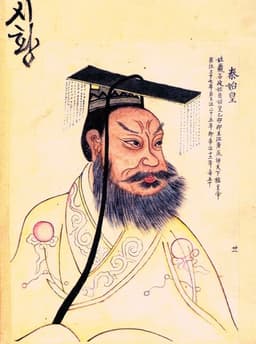
Qin Shi Huang
Emperor · Ancient
85.2Total
Basic Information
Born
-372
-259
Died
-289
-210
Era
Ancient
Ancient
Nationality
China
China
Occupation
Philosopher
Emperor
Civilization
Eastern
Eastern
Score Comparison
Military (10%)
8.7
80.0
Political (20%)
35.0
90.0
Influence (20%)
88.0
85.0
Legacy (20%)
75.0
90.0
Leadership (15%)
24.4
78.0
Strategy (15%)
43.8
82.0
TOTAL
54.9
85.2
Mencius — Complete Timeline
320 BC
Debate with Gaozi on Human NatureCultural◆ Major
Mencius debated Gaozi on whether human nature is inherently good or neutral. Mencius argued that humans possess four innate sprouts of virtue (benevolence, righteousness, propriety, wisdom) that must be cultivated. This debate shaped Confucian moral psychology.
ConfucianismPhilosophyDebate
Impact: regionalconstructive
Advice to King Xuan of QiPolitical Action◆ Major
Mencius advised King Xuan of Qi on benevolent governance, arguing that a ruler's legitimacy depends on the people's welfare. He criticized the king for failing to implement humane policies. This encounter exemplified Mencius's political philosophy of the people's primacy.
ConfucianismPolitical philosophyAdvice
Impact: regionalconstructive
300 BC
Compilation of the MenciusCultural
Mencius's disciples compiled his dialogues and teachings into the Mencius, a text of seven chapters. The work argues for innate human goodness and the right of the people to overthrow unjust rulers. It became one of the Four Books of Neo-Confucianism.
ConfucianismPhilosophyText compilation
Impact: globalconstructive
Qin Shi Huang — Complete Timeline
246 BC
Construction of the Mausoleum and Terracotta ArmyOther◆ Major
Qin Shi Huang commissioned a vast mausoleum complex near Xi'an, guarded by thousands of life-sized terracotta soldiers, horses, and chariots. The project employed hundreds of thousands of workers and reflected his obsession with immortality and imperial power.
Impact: global
230 BC
Conquest of the Six Warring StatesWar
From 230 to 221 BCE, Ying Zheng led the Qin state in a series of campaigns that conquered the Han, Zhao, Wei, Chu, Yan, and Qi states. This unified China under a single ruler for the first time, ending the Warring States period.
Impact: global
221 BC
Standardization of Writing, Currency, and MeasurementsReform◆ Major
Qin Shi Huang ordered the standardization of Chinese script, currency, and weights and measures across the unified empire. This facilitated administration, trade, and cultural integration, laying a foundation for future dynasties.
Impact: globalconstructive
Proclamation of the Qin DynastyPolitical Action
After conquering the last independent state, Ying Zheng declared himself Shi Huangdi (First Emperor), founding the Qin Dynasty. He adopted a new title to signify his supreme authority and initiated centralized imperial rule.
Impact: global
214 BC
Initiation of the Great Wall ConstructionOther◆ Major
Qin Shi Huang ordered the connection and extension of existing northern fortifications to create a unified defensive wall against nomadic Xiongnu raids. This project involved massive conscripted labor and became the precursor to the later Great Wall.
Impact: regional
213 BC
Burning of Books and Burying of ScholarsPolitical Action◆ Major
On the advice of Li Si, Qin Shi Huang ordered the burning of historical records and philosophical texts not aligned with Legalist doctrine. He also had 460 Confucian scholars buried alive to suppress dissent and consolidate ideological control.
Impact: nationaldestructive
Expert Analysis
mencius-vs-qin-shi-huang
### The First Emperor and the Philosopher King
In the year 213 BC, a decree echoed across the newly unified realm of China. The First Emperor, Qin Shi Huang, ordered the burning of all books of history, philosophy, and poetry that were not aligned with his Legalist doctrine. Meanwhile, almost a century earlier, a wandering philosopher named Mencius had traveled from court to court, arguing that a ruler who ignored the welfare of his people forfeited his right to rule. One man commanded armies and built walls; the other shaped minds and planted ideas. Both sought order, but their visions could not have been more different. How did two figures from the same ancient civilization arrive at such opposing answers to the same question: how should a land be governed?
### Origins
Qin Shi Huang was born Ying Zheng in 259 BC, a prince of the western state of Qin. His father was a king, his mother a former concubine, and his childhood was steeped in palace intrigue. The Qin state was a martial, frontier kingdom, hardened by constant warfare and shaped by Legalist philosophy—a brutal doctrine that valued strict law and absolute obedience over moral virtue. Ying Zheng learned early that power was a weapon to be wielded without mercy.
Mencius, born in 372 BC, came from the small state of Zou, in the heartland of Chinese civilization. He was a student of Confucius’s grandson, raised in a tradition of moral cultivation and scholarly reflection. Where Ying Zheng saw a world of chaos to be crushed, Mencius saw a world of potential to be nurtured. His era, the Warring States period, was equally violent, but Mencius believed the solution lay not in force but in the restoration of virtue.
### Rise to Power
Ying Zheng ascended the Qin throne at age thirteen. For years, he was a figurehead while his mother’s lover, the eunuch Lao Ai, and the prime minister Lü Buwei struggled for control. In 238 BC, at twenty-one, Ying Zheng staged a coup, executing Lao Ai, exiling Lü Buwei, and seizing absolute power. From 230 to 221 BC, he unleashed a relentless campaign of conquest, crushing the six rival states one by one—Han, Zhao, Wei, Chu, Yan, and finally Qi. By 221 BC, he declared himself Shi Huangdi, the First Emperor, founding the Qin Dynasty.
Mencius never held a sword or a throne. His rise was slower, built on reputation and the spoken word. He traveled to the courts of Qi, Liang, and other kingdoms, offering counsel to rulers. His turning point came around 320 BC, when he debated the philosopher Gaozi on human nature. Mencius argued that all people possess four innate seeds of virtue—compassion, shame, deference, and the ability to discern right from wrong. This was not abstract theory; it was a political argument. If rulers could cultivate these seeds, they could govern through moral example rather than coercion.
### Leadership & Governance
Qin Shi Huang’s leadership was a machine of efficiency and terror. He standardized writing, currency, and weights and measures across his empire, unifying a fractured land into a single administrative system. He ordered the connection of existing northern fortifications into what would become the Great Wall, a project that conscripted hundreds of thousands of laborers. His government was built on the Legalist principles of Shang Yang and Li Si: rewards and punishments, surveillance and control. He believed that history began with him, ordering the burning of all records of the past and the burying alive of scholars who disagreed. His mausoleum, begun in 246 BC, was a microcosm of his rule—a vast underground city guarded by thousands of life-sized terracotta soldiers, silent and eternal.
Mencius governed through ideas. In his advice to King Xuan of Qi, he argued that a ruler’s legitimacy depends entirely on the people’s welfare. If a king is cruel, the people have the right to overthrow him. This was radical: it placed moral authority above hereditary right. Mencius believed in benevolent governance, or *renzheng*, where the ruler provides for the people’s basic needs—food, education, justice—so that they may become virtuous. He did not command armies or build walls, but his dialogues, compiled by his disciples around 300 BC into the *Mencius*, became a blueprint for how a just society might function.
### Triumph & Tragedy
Qin Shi Huang’s greatest triumph was unification itself. He created a centralized empire that would, despite its short life, serve as the template for all future Chinese dynasties. His standardization of script and measures allowed trade and communication to flourish. His tragedy was equally vast. His rule was so harsh that rebellions erupted within months of his death in 210 BC. The Qin Dynasty crumbled in just three years. His obsession with immortality—he sent expeditions for the elixir of life, built a secret tomb, and died possibly from mercury poisoning—was a bitter irony for a man who sought to rule forever.
Mencius never saw his ideal realized. He died in 289 BC, a wandering teacher with no kingdom to call his own. His triumph was intellectual: he saved Confucianism from becoming a mere code of etiquette and transformed it into a philosophy of political morality. His tragedy was that his ideas were ignored in his own time. The Warring States continued, and it was the Legalist Qin, not the Confucian sage, that unified China.
### Character & Destiny
Qin Shi Huang was paranoid, ruthless, and driven by an insatiable hunger for control. He saw the world as a battlefield and people as resources to be managed. His personality shaped a destiny of conquest and collapse. Mencius was confident, ethical, and patient. He believed in the goodness of people and the power of persuasion. His destiny was to be remembered, not feared. One man built an empire that lasted a decade; the other built a philosophy that lasted two millennia.
### Legacy
Qin Shi Huang is remembered as the First Emperor, the unifier, the builder of the Great Wall, and the tyrant who burned books. His scores—Military 80, Political 88, Influence 82, Legacy 85, Leadership 88, Strategy 75—reflect a man of immense power but flawed vision. Mencius, with scores of Political 39, Influence 84, Legacy 89, and Leadership 24, is remembered as the second sage of Confucianism, the philosopher who gave the common people a voice. His ideas about innate goodness and the right to revolt would inspire generations of reformers and revolutionaries.
### Conclusion
Standing in the shadow of the Great Wall, one feels the weight of Qin Shi Huang’s ambition. Reading the *Mencius*, one hears the whisper of a different kind of power—the power of a moral argument that outlasts any fortress. Both men sought to answer the same question: how to bring order to chaos. One answered with iron and fire, the other with ink and reason. History chose both, but in different ways. The First Emperor built a stage; the philosopher wrote the script. And in the end, it is the script that survives.
Rankings
🥇
Qin Shi HuangLeader
Mil: 80.0Pol: 90.0Inf: 85.0
85.2
🥈
Mencius
Mil: 8.7Pol: 35.0Inf: 88.0
54.9
+30.3 behind
How This Comparison Works
Algorithm
Each figure is scored on 6 dimensions (0—100 scale) based on structured historical data: Military (10%), Political (20%), Influence (20%), Legacy (20%), Leadership (15%), Strategy (15%). The weighted total produces the final ranking.
Data Sources
Scores are computed from structured sub-indicators in the database. Scale factors adjust for era (Ancient ×0.85, Modern ×1.0) and civilization size (Eastern ×1.05, Other ×0.80) to account for differences in population and military scale.
Maximum 3 Figures
Comparisons are limited to 2—3 figures to ensure readability and statistical meaningfulness.
Error Margins
±5 points per dimension — Sub-scores are derived from historical records with inherent uncertainty. Two figures within 5 points on a dimension should be considered roughly equivalent in that area.
Total Score Accuracy
±3 points overall — The weighted combination of 6 dimensions produces a total score with approximately ±3 points of uncertainty. Differences of less than 3 points are not statistically significant— the figures are effectively tied.
Known Limitations
- Historical records are incomplete and uneven across civilizations
- Figures from oral-tradition societies may be underrepresented
- Occupation labels can misclassify multi-role figures
- Scores measure capability and impact, not moral character
- Quantitative scoring is a comparison tool, not absolute truth
Capability Radar
Military (10%) — Battles & Warfare
Battles
12
85
Win Rate
16
90
Expansion
22
90
Political (20%) — Governance & Reform
Reform
40
95
Diplomacy
30
75
Economy
20
90
Influence (20%) — Cultural & Global Reach
Cultural
85
95
Global
70
85
Legacy (20%) — Historical Impact
Historical
85
95
Longevity
90
95
Leadership (15%) — Power & Stability
Tenure
10
70
Stability
20
65
Strategy (15%) — Tactics & Innovation
Strategy
24
85
Tactics
25
80
Reform
30
95
Similar Comparisons
Comments & Discussion
TheBurnerScholar6/17/2026
Mencius was a teacher of ideals; Qin Shi Huang was a builder of realities. But let's cut the romanticism: Mencius' "mandate of heaven" was just a moral leash for rulers who already had the swords. The First Emperor had the guts to purge the philosophers who'd spent centuries bickering while states burned. His book burning? A surgical strike against ideological chaos. Mencius had pretty words; the Qin had a Great Wall.
秦岭剑客6/17/2026
焚书坑儒是千古骂名,但你们想过没有?孟子说「民贵君轻」,可战国哪个君主真听了?七国杀得血流成河时,儒家还在谈仁政。秦始皇至少用刀把天下砍平了。孟子是理想主义者的灯塔,只能照亮一小片地方;始皇是雷暴,劈开整个时代。要论实干,我站帝王不站书生。
StatisticalSage6/17/2026
Let's examine the body counts. Mencius proposed a moral economy; Qin Shi Huang enforced a legalist one. Under the Han, which inherited Qin's administrative bones, population rebounded to ~60 million from a war-torn low. Mencius' "humane government" sounds nice, but no pre-modern state actually implemented it at scale. Qin's standardization of weights, measures, and script—that's the kind of data-driven governance that actually worked, even if it was brutal.
逍遥墨客6/17/2026
孟子周游列国,说的都是「王道」,可哪个国君真把仁义当国策?孔子贵仁,孟子贵义,但这两字在刀兵面前弱得像纸。始皇用竹简统一文字,用法度统一人心,虽然狠,但狠出了个帝国骨架。孟子输在太相信人性,始皇赢在太了解人性。一个是杏坛的春雨,一个是皇城的铁砧。历史需要铁砧,哪怕它砸碎了很多花。
RevisionistSpectacle6/17/2026
The real tragedy? Both lost. Mencius' "right to rebel" was buried under centuries of imperial yes-men, while Qin Shi Huang's dynasty crumbled within a decade after his death. The Legalist state he built was too brittle—no mercy, no legitimacy. Mencius at least gave later rebels a moral vocabulary. The First Emperor gave us a blueprint for tyranny that every subsequent dynasty politely copied. So who won? The middle kingdom, actually—by stealing from both.