Loading...
Parakramabahu VI vs Yuwen Yong
Yuwen Yong leads by 2.4 pts · 2 figures compared
…

Parakramabahu VI
Emperor · Medieval
64.8Total
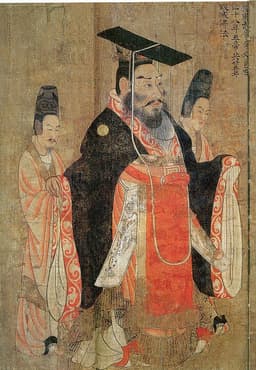
Yuwen Yong
Emperor · Medieval
67.2Total
Basic Information
Born
1412
543
Died
1467
578
Era
Medieval
Medieval
Nationality
Sri Lanka
China
Occupation
Emperor
Emperor
Civilization
Indian
Eastern
Score Comparison
Military (10%)
72.5
78.0
Political (20%)
72.0
78.0
Influence (20%)
60.0
58.0
Legacy (20%)
56.0
54.0
Leadership (15%)
85.0
85.0
Strategy (15%)
50.0
69.1
TOTAL
64.8
67.2
Parakramabahu VI — Complete Timeline
1420 AD
Construction of the Temple of the Tooth in KotteCultural◆ Major
Parakramabahu VI built a new Temple of the Tooth in his capital, Kotte. This reinforced Kotte's status as the religious and political center of the island.
BuddhismArchitectureCapital
Impact: nationalconstructive
1430 AD
Patronage of Literature and ArtsCultural◆ Major
Parakramabahu VI's court was a center of literary and artistic activity. He patronized poets and scholars, leading to a flourishing of Sinhalese literature, including the 'Sandesa' (message) poems.
LiteraturePatronageCultural Renaissance
Impact: nationalconstructive
1450 AD
Unification of Sri LankaWar
Parakramabahu VI unified the entire island of Sri Lanka under his rule for the first time since Parakramabahu I. He conquered the Kingdom of Jaffna in the north and brought the entire island under Kotte's control.
UnificationConquestMilitary Campaign
Impact: national
Conquest of the Kingdom of JaffnaWar◆ Major
Parakramabahu VI's forces, led by his adopted son Sapumal Kumaraya, conquered the Kingdom of Jaffna. This brought the Tamil north under Sinhalese rule and ended the Aryacakravarti dynasty.
ConquestMilitary CampaignTamil Kingdom
Impact: national
Yuwen Yong — Complete Timeline
574 AD
Suppression of Buddhism in Northern ZhouReform◆ Major
Emperor Wu of Northern Zhou (Yuwen Yong) ordered the suppression of Buddhism, confiscating monastic lands, forcing monks and nuns to return to lay life, and destroying temples. He aimed to increase state revenue and military manpower, strengthening the state.
Northern ZhouBuddhist PersecutionReform
Impact: nationaldestructive
577 AD
Conquest of Northern QiWar
Emperor Wu led a successful campaign against the rival Northern Qi dynasty, conquering its territory and unifying northern China under Northern Zhou. This victory ended the division of the north and set the stage for the Sui dynasty's unification of all China.
Northern ZhouUnificationNorthern Qi
Impact: regionalconstructive
578 AD
Death during campaign against the TurksWar◆ Major
Emperor Wu died of illness while leading a campaign against the G
Northern ZhouMilitary CampaignDeath
Impact: regionaltragic
Expert Analysis
Yuwen Yong vs Parakramabahu VI
# The Emperor and the Unifier
On a spring morning in 574, the Emperor Wu of Northern Zhou stood before his court in Chang'an and issued an order that would echo through Chinese history: the suppression of Buddhism. Monks were defrocked, monasteries seized, and centuries of religious practice dismantled by imperial decree. Half a world away, in the tropical capital of Kotte, King Parakramabahu VI was laying the foundation stone for a new Temple of the Tooth, enshrining Buddhist relics at the heart of his kingdom. Two rulers, two faiths, two paths to power—yet both sought the same thing: unity.
Origins
Yuwen Yong was born in 543 into a world of fractured war. Northern China lay divided between rival dynasties, and his own family, the Yuwen clan, had seized power through military force. His father was assassinated when Yuwen Yong was a child, and his elder brother—the emperor—was poisoned by a regent. Yuwen Yong grew up in the shadow of betrayal, learning that trust was a luxury he could not afford. The Northern Zhou he inherited was a warrior state, built on cavalry charges and shifting alliances, where a ruler's survival depended on his ability to outmaneuver enemies both foreign and domestic.
Parakramabahu VI, born in 1412, inherited a different kind of fragility. The island of Sri Lanka had been fractured for centuries, its kingdoms rising and falling like monsoon waves. The Kotte kingdom, where he was born, was prosperous but precarious, hemmed in by the rival kingdoms of Jaffna in the north and the mountainous principality of Kandy. Unlike the harsh northern plains of China, Sri Lanka's lush landscape bred a culture of negotiation and diplomacy. A king here needed not just swords, but subtlety.
Rise to Power
Yuwen Yong's ascent was forged in blood. He became emperor in 560 at the age of seventeen, but real power lay with his cousin Yuwen Hu, the regent who had murdered his brother. For twelve years, Yuwen Yong played the role of a compliant puppet, feigning weakness while waiting for his moment. In 572, he struck. With the help of trusted allies, he ambushed and killed Yuwen Hu in the palace, seizing control with a single, decisive blow. It was a masterclass in patience—a lesson learned from a childhood surrounded by daggers.
Parakramabahu VI's rise was more gradual, more cultural. He was not the eldest son, and his path to the throne required navigating the intricate web of Sinhalese court politics. He cultivated alliances with Buddhist monks, patronized poets, and built temples. When he finally became king in 1412, his authority rested not on a single assassination but on decades of careful relationship-building. Where Yuwen Yong used deception, Parakramabahu used diplomacy.
Leadership & Governance
As ruler, Yuwen Yong was a military strategist of rare ability. His total score of 74.0 hides a striking imbalance: his Strategy score of 81.8 towers over his Political score of 72.0. He was a commander who led from the front, a man who understood that wars are won through logistics and discipline as much as courage. In 577, he launched his greatest campaign against the rival Northern Qi dynasty. The conquest was swift and brutal—within months, he had unified northern China under his rule. But his governance reflected his military mind: efficient, ruthless, and uncompromising.
His suppression of Buddhism in 574 was not religious bigotry but state-building. Buddhist monasteries had grown wealthy and powerful, controlling vast lands and tax-exempt populations. Yuwen Yong saw them as a rival state within his state. He confiscated their wealth, conscripted their monks, and redirected their resources to his army. It was a cold calculation: the faith of millions was sacrificed for the strength of the realm.
Parakramabahu VI governed differently. His Leadership score of 83.9 and Political score of 84.3 reflect a ruler who understood that power flows through culture as much as conquest. When his armies conquered the Kingdom of Jaffna in 1450, he did not destroy its temples or suppress its Tamil culture. Instead, he appointed his adopted son Sapumal Kumaraya as viceroy, allowing local traditions to continue under Sinhalese oversight. The unification of Sri Lanka in the same year was achieved not through massacre but through marriage alliances, tribute systems, and the careful distribution of patronage.
Triumph & Tragedy
Yuwen Yong's greatest triumph—the conquest of Northern Qi in 577—was also the prelude to his tragedy. He died the following year, at just thirty-five, while leading a campaign against the Göktürks. His body gave out on the battlefield, and with it died the dream of a unified China under Northern Zhou. Within three years, his dynasty would fall, replaced by the Sui who would complete his work. His life was a sprint, not a marathon.
Parakramabahu VI's triumph was longer-lived. He ruled for fifty-five years, from 1412 to 1467, and saw his kingdom reach heights of cultural achievement unknown for centuries. His court produced the *Sandesa* poems, masterpieces of Sinhalese literature; his Temple of the Tooth became the spiritual heart of the island. But his tragedy was invisible at the time: after his death, no successor could hold his kingdom together. The Portuguese arrived within decades, and Sri Lanka's unity shattered into colonial fragments. Parakramabahu VI was the last strong king before the long darkness.
Character & Destiny
Yuwen Yong was a man of iron will and narrow vision. He saw the world in terms of enemies to be crushed and resources to be seized. His personality—cautious, calculating, and utterly focused—allowed him to unify the north but also made him unable to build institutions that would outlast him. He trusted no one, and so no one could succeed him.
Parakramabahu VI was a man of silk and steel. He understood that power must be adorned to be accepted. His patronage of the arts was not mere vanity; it was a political strategy to legitimize his rule in the eyes of both nobles and commoners. He built temples, sponsored poets, and honored traditions—all while his armies marched. His personality was inclusive, but that inclusivity could not survive his absence.
Legacy
Yuwen Yong is remembered as a destroyer and unifier. His suppression of Buddhism earned him the hatred of monks and the praise of Confucian officials. His conquest of Northern Qi paved the way for the Sui and Tang dynasties that would follow. Today, he is a footnote in Chinese history—a necessary precursor, but not a founder.
Parakramabahu VI is remembered as a golden age king. His name appears in every Sinhalese history textbook, his reign romanticized as the last moment of indigenous unity. The Temple of the Tooth he built still stands, and the literary works he sponsored are still read. He is a symbol of what Sri Lanka was before colonialism—and what it could be again.
Conclusion
Two unifiers, two legacies. Yuwen Yong burned temples to build an army; Parakramabahu VI built temples to build a kingdom. One died young, his work unfinished; the other died old, his work undone. Both understood that unity requires sacrifice—but they disagreed on what to sacrifice. In the end, their stories remind us that the hardest part of ruling is not winning power, but passing it on. The emperor who trusts no one and the king who trusts everyone both face the same fate: the slow unraveling of all they built.
Rankings
🥇
Yuwen YongLeader
Mil: 78.0Pol: 78.0Inf: 58.0
67.2
🥈
Parakramabahu VI
Mil: 72.5Pol: 72.0Inf: 60.0
64.8
+2.4 behind
How This Comparison Works
Algorithm
Each figure is scored on 6 dimensions (0—100 scale) based on structured historical data: Military (10%), Political (20%), Influence (20%), Legacy (20%), Leadership (15%), Strategy (15%). The weighted total produces the final ranking.
Data Sources
Scores are computed from structured sub-indicators in the database. Scale factors adjust for era (Ancient ×0.85, Modern ×1.0) and civilization size (Eastern ×1.05, Other ×0.80) to account for differences in population and military scale.
Maximum 3 Figures
Comparisons are limited to 2—3 figures to ensure readability and statistical meaningfulness.
Error Margins
±5 points per dimension — Sub-scores are derived from historical records with inherent uncertainty. Two figures within 5 points on a dimension should be considered roughly equivalent in that area.
Total Score Accuracy
±3 points overall — The weighted combination of 6 dimensions produces a total score with approximately ±3 points of uncertainty. Differences of less than 3 points are not statistically significant— the figures are effectively tied.
Known Limitations
- Historical records are incomplete and uneven across civilizations
- Figures from oral-tradition societies may be underrepresented
- Occupation labels can misclassify multi-role figures
- Scores measure capability and impact, not moral character
- Quantitative scoring is a comparison tool, not absolute truth
Capability Radar
Military (10%) — Battles & Warfare
Battles
60
75
Win Rate
65
80
Expansion
55
80
Political (20%) — Governance & Reform
Reform
65
85
Diplomacy
60
70
Economy
65
75
Influence (20%) — Cultural & Global Reach
Cultural
60
40
Global
40
40
Legacy (20%) — Historical Impact
Historical
65
65
Longevity
55
50
Leadership (15%) — Power & Stability
Tenure
70
60
Stability
70
70
Strategy (15%) — Tactics & Innovation
Strategy
60
75
Tactics
55
70
Reform
50
85
Similar Comparisons
Comments & Discussion
No comments yet. Be the first to share your thoughts!