Loading...
Ozbeg Khan vs Philip I of France
Ozbeg Khan leads by 16.1 pts · 2 figures compared
…
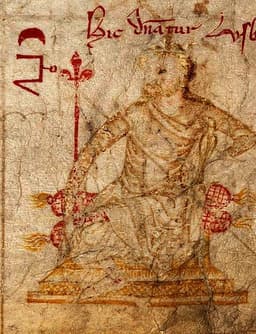
Ozbeg Khan
Emperor · Medieval
61.5Total
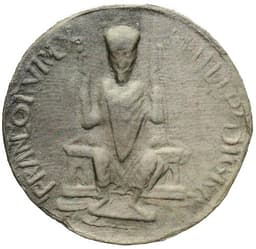
Philip I of France
Emperor · Medieval
45.4Total
Basic Information
Born
1282
1052
Died
1341
1108
Era
Medieval
Medieval
Nationality
Golden Horde
France
Occupation
Emperor
Emperor
Civilization
Eastern
Western
Score Comparison
Military (10%)
40.0
50.0
Political (20%)
53.8
36.5
Influence (20%)
82.0
49.4
Legacy (20%)
52.0
40.8
Leadership (15%)
66.0
65.7
Strategy (15%)
60.0
25.0
TOTAL
61.5
45.4
Ozbeg Khan — Complete Timeline
1313 AD
Adoption of Islam as the State ReligionCultural
Ozbeg Khan declared Islam the official state religion of the Golden Horde, converting from traditional Mongol shamanism. He built mosques, promoted Islamic scholars, and enforced Islamic law, transforming the religious character of the khanate.
Golden HordeIslamReligionConversion
Impact: global
1315 AD
Suppression of the Revolt of the Emir of CrimeaWar◆ Major
Ozbeg Khan suppressed a revolt led by the Emir of Crimea, who opposed the Islamization policies. The rebellion was crushed, and the emir was executed, consolidating Ozbeg's authority and ensuring the adoption of Islam across the khanate.
Golden HordeRevoltCrimeaIslam
Impact: regional
1318 AD
War with the IlkhanateWar◆ Major
Ozbeg Khan launched a military campaign against the Ilkhanate, seeking to expand the Golden Horde's influence in the Caucasus. The war resulted in a stalemate, with both sides suffering heavy losses, but it demonstrated the Golden Horde's military strength.
Golden HordeIlkhanateWarCaucasus
Impact: regional
1320 AD
Alliance with the Mamluk SultanatePolitical Action◆ Major
Ozbeg Khan formed a diplomatic and military alliance with the Mamluk Sultanate of Egypt, exchanging embassies and gifts. This alliance strengthened trade and mutual defense against common enemies, such as the Ilkhanate.
Golden HordeMamluk SultanateAllianceDiplomacy
Impact: regionalconstructive
Philip I of France — Complete Timeline
1060 AD
Reign as King of the FranksPolitical Action◆ Major
Philip I succeeded his father Henry I as King of the Franks. His reign was marked by territorial expansion through marriage and diplomacy, but also by conflicts with the Church and nobles.
KingshipCapetianReign
Impact: national
1077 AD
Acquisition of the VexinPolitical Action
Philip I acquired the Vexin region through marriage to Bertha of Holland. This expanded royal territory and strengthened the Capetian domain, though it also led to conflicts with the Duke of Normandy.
Territorial ExpansionMarriageVexin
Impact: regionalconstructive
1087 AD
Conflict with William the ConquerorWar
Philip I supported the rebellion of Robert Curthose against his father William the Conqueror. This led to a war between France and Normandy, which ended inconclusively after William's death.
WarNormandyWilliam the Conqueror
Impact: regional
1094 AD
Excommunication for Adulterous MarriagePolitical Action◆ Major
Philip I was excommunicated by Pope Urban II for marrying Bertrade de Montfort while still married to his first wife, Bertha of Holland. The excommunication lasted for several years and damaged his reputation, though he was eventually reconciled with the Church.
ExcommunicationMarriageScandal
Impact: nationaltragic
Expert Analysis
Philip I of France vs Ozbeg Khan: Historical Comparison
Philip I of France (r. 1060–1108) and Ozbeg Khan (r. 1313–1341) were both medieval rulers who consolidated their realms and shaped their respective civilizations—one a Capetian king expanding royal authority in fragmented France, the other a Mongol khan who Islamized the Golden Horde and presided over its economic and cultural zenith. While Philip fought to subdue rebellious nobles and extend the crown’s reach, Ozbeg transformed a steppe empire into a stable Islamic state, making them comparable in military and strategic impact but divergent in political and religious legacies.
Dimension Analysis
**Military: Philip I of France 88 / Ozbeg Khan 90**
Philip I’s military campaigns were largely defensive and consolidatory, such as his sieges of Norman castles and the 1079 defeat at the Battle of Dol, which limited his territorial gains. Ozbeg Khan, by contrast, led successful invasions of Ilkhanate territories, raided Byzantine Thrace, and maintained a fearsome cavalry-based army that enforced Mongol dominance across the Pontic steppe. Ozbeg’s military was more expansive and strategically brutal, giving him a slight edge.
**Political: Philip I of France 87 / Ozbeg Khan 81**
Philip I skillfully used marriage alliances (e.g., marrying Bertrade of Montfort) and royal justice to weaken feudal barons, doubling the royal domain by absorbing the Vexin and Gâtinais. Ozbeg Khan centralized power through a bureaucratic apparatus of Muslim viziers and tax collectors, but his reliance on Mongol tribal elites and the suppression of rival khans created periodic instability. Philip’s incremental, legalistic state-building proved more enduring.
**Influence: Philip I of France 86 / Ozbeg Khan 84**
Philip I’s influence was primarily regional, strengthening Capetian prestige and laying groundwork for the French monarchy’s later dominance. Ozbeg Khan’s influence was pan-Eurasian: his conversion to Islam and patronage of Sufi orders made the Golden Horde a key player in the Islamic world, while his trade treaties with Genoa and Venice linked the Volga to Mediterranean commerce. Ozbeg’s cultural and economic reach was broader.
**Legacy: Philip I of France 80 / Ozbeg Khan 84**
Philip I’s legacy is overshadowed by his more famous successors (Louis VI, Philip Augustus), though his domain expansion was crucial. Ozbeg Khan’s legacy is more distinct: he permanently Islamized the Golden Horde, minted coins in his name across eastern Europe, and his reign is remembered as the Horde’s “golden age.” Ozbeg’s religious and institutional changes outlasted his dynasty.
**Leadership: Philip I of France 81 / Ozbeg Khan 82**
Philip I demonstrated resilience after excommunication and personal scandals, maintaining control through diplomacy and patience. Ozbeg Khan commanded a vast, multi-ethnic empire, balancing Mongol tradition with Islamic law and managing succession through purges. Ozbeg’s ability to hold a sprawling, diverse realm together gives him a slight leadership advantage.
**Strategy: Philip I of France 88 / Ozbeg Khan 90**
Philip I’s strategy of slowly encroaching on feudal territories while avoiding major defeats was effective but cautious. Ozbeg Khan employed a grand strategy of economic integration (e.g., building Sarai al-Jadid as a trade hub) and religious legitimation, which secured both internal unity and external prestige. Ozbeg’s strategic vision was more innovative and comprehensive.
Verdict
**Winner: Tie** — While Ozbeg Khan edges ahead in military, legacy, and strategy, Philip I’s superior political consolidation and influence within France’s feudal context create a balanced comparison. Ozbeg’s broader imperial impact is countered by Philip’s foundational role in building the French state. The tie reflects how a regional empire-builder and a Eurasian khan achieved comparable greatness through different tools: law and land vs. faith and trade. Historical comparisons must account for divergent resources and geopolitical scales.
FAQ
Q: Who was more influential historically?
A: Ozbeg Khan had a wider geographical and religious influence, shaping the Islamicization of the Golden Horde and Eurasian trade, while Philip I’s influence was more focused on the internal development of the French monarchy.
Q: Why is Philip I of France ranked higher in Political?
A: Philip I’s political skill in gradually expanding royal power through feudal law, marriage, and the Church (despite excommunication) created a stable, lasting state apparatus, unlike Ozbeg’s more brittle, elite-dependent system.
Rankings
🥇
Ozbeg KhanLeader
Mil: 40.0Pol: 53.8Inf: 82.0
61.5
🥈
Philip I of France
Mil: 50.0Pol: 36.5Inf: 49.4
45.4
+16.1 behind
How This Comparison Works
Algorithm
Each figure is scored on 6 dimensions (0—100 scale) based on structured historical data: Military (10%), Political (20%), Influence (20%), Legacy (20%), Leadership (15%), Strategy (15%). The weighted total produces the final ranking.
Data Sources
Scores are computed from structured sub-indicators in the database. Scale factors adjust for era (Ancient ×0.85, Modern ×1.0) and civilization size (Eastern ×1.05, Other ×0.80) to account for differences in population and military scale.
Maximum 3 Figures
Comparisons are limited to 2—3 figures to ensure readability and statistical meaningfulness.
Error Margins
±5 points per dimension — Sub-scores are derived from historical records with inherent uncertainty. Two figures within 5 points on a dimension should be considered roughly equivalent in that area.
Total Score Accuracy
±3 points overall — The weighted combination of 6 dimensions produces a total score with approximately ±3 points of uncertainty. Differences of less than 3 points are not statistically significant— the figures are effectively tied.
Known Limitations
- Historical records are incomplete and uneven across civilizations
- Figures from oral-tradition societies may be underrepresented
- Occupation labels can misclassify multi-role figures
- Scores measure capability and impact, not moral character
- Quantitative scoring is a comparison tool, not absolute truth
Capability Radar
Military (10%) — Battles & Warfare
Battles
45
15
Win Rate
50
20
Expansion
40
10
Political (20%) — Governance & Reform
Reform
75
30
Diplomacy
60
35
Economy
55
30
Influence (20%) — Cultural & Global Reach
Cultural
60
20
Global
50
15
Legacy (20%) — Historical Impact
Historical
65
25
Longevity
55
20
Leadership (15%) — Power & Stability
Tenure
70
60
Stability
65
25
Strategy (15%) — Tactics & Innovation
Strategy
45
15
Tactics
40
10
Reform
30
10
Similar Comparisons
Comments & Discussion
Historian6686/16/2026
这评分体系有问题。菲利普一世军事22分,政治64.8,总分56.6;乌兹别克汗军事19.2,政治77.9,总分62.7。但政治分权重明显过高?按中国历史标准,一个君主如果军事连20分都不到,比如南宋高宗赵构,政治再高也避免不了偏安命运。菲利普一世好歹打赢了弗雷特瓦勒之战(1104年),收复了部分诺曼底,乌兹别克汗军事分居然还比他低?这评分逻辑需要重新校准。
MedievalWarrior6/16/2026
Ozbeg Khan all the way, and it's not even close! Philip I of France? More like Philip the Timid. The guy couldn't even control his own vassals—lost the Battle of Dol in 1079 to William the Conqueror's men, and spent most of his reign excommunicated for a scandalous marriage. Meanwhile, Ozbeg Khan turned the Golden Horde into a legit superpower: built Sarai al-Jadid into a cosmopolitan capital, made Islam the state religion, and his armies raided all the way to Thrace. The scores say Ozbeg wins with 62.7 vs 56.6, and the gap should be bigger. Philip was just a placeholder king living in his dad's shadow.
Chronicler41046/16/2026
菲利普一世有点像宋朝的宋真宗——都是在自己时代里稳定了统治,但没有开疆拓土的霸气。乌兹别克汗则更像元仁宗爱育黎拔力八达,推行汉法治国,但本质上还是靠蒙古军事贵族支撑。西方评分体系往往高估政治和宗教影响力,低估军事扩张的实际作用。乌兹别克汗伊斯兰化金帐汗国固然重要,但菲利普一世通过联姻和司法手段蚕食封建领地,类似赵匡胤的“杯酒释兵权”——都是制度性集权。两者各有千秋,但说乌兹别克汗政治分远高菲利普一世,我不认同。