Loading...
Augustus vs Ozbeg Khan
Augustus leads by 24.4 pts · 2 figures compared
…

Augustus
Emperor · Ancient
85.9Total
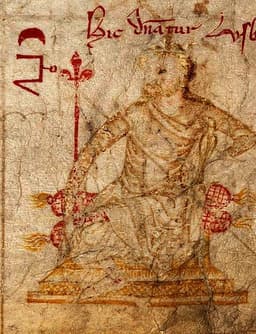
Ozbeg Khan
Emperor · Medieval
61.5Total
Basic Information
Born
63
1282
Died
—
1341
Era
Ancient
Medieval
Nationality
Roman Empire
Golden Horde
Occupation
Emperor
Emperor
Civilization
Western
Eastern
Score Comparison
Military (10%)
72.0
40.0
Political (20%)
90.0
53.8
Influence (20%)
88.0
82.0
Legacy (20%)
90.0
52.0
Leadership (15%)
88.0
66.0
Strategy (15%)
75.0
60.0
TOTAL
85.9
61.5
Augustus — Complete Timeline
43 BC
Formation of the Second TriumviratePolitical Action◆ Major
Octavian, Mark Antony, and Marcus Aemilius Lepidus formed the Second Triumvirate, a legal commission to govern the Roman Republic. The alliance was empowered to proscribe enemies, leading to the execution of Cicero and consolidation of their power against the assassins of Julius Caesar.
Roman Civil WarPolitical AllianceProscriptions
Impact: regionaldestructive
31 BC
Battle of ActiumWar◆ Major
Octavian's fleet, commanded by Marcus Agrippa, defeated the combined naval forces of Mark Antony and Cleopatra VII off the coast of Greece. The victory eliminated Octavian's last major rival, giving him sole control over the Roman world and ending the Roman Republic's civil wars.
Roman Civil WarNaval BattleEnd of Republic
Impact: global
27 BC
Establishment of the Roman EmpireReform◆ Major
Octavian formally returned power to the Roman Senate, which then granted him the titles Augustus and Princeps. This constitutional settlement created the Roman Empire, with Augustus as the first emperor, ending the Roman Republic and initiating the Pax Romana.
Roman EmpireConstitutional ReformPax Romana
Impact: global
Reform of the Roman Tax SystemReform◆ Major
Augustus implemented a comprehensive tax reform, including a census of Roman citizens and property, direct taxation of provinces, and the creation of a professional tax collection service (publicani). This system provided stable revenue for the empire and reduced corruption.
Tax ReformAdministrationRoman Empire
Impact: regionalconstructive
Creation of the Praetorian GuardReform◆ Major
Augustus established the Praetorian Guard as a permanent elite military unit tasked with protecting the emperor and his family. Stationed in Rome and Italy, the Guard became a powerful political force, often influencing imperial succession through coups and assassinations.
Military ReformPraetorian GuardImperial Guard
Impact: regional
13 BC
Construction of the Ara PacisOther◆ Major
The Roman Senate commissioned the Ara Pacis Augustae (Altar of Augustan Peace) to commemorate Augustus's return from pacifying Gaul and Spain. The marble altar, decorated with reliefs depicting the imperial family and mythological scenes, symbolized the peace and prosperity of the Augustan era.
Building ProjectPropagandaAugustan Art
Impact: regionalconstructive
Ozbeg Khan — Complete Timeline
1313 AD
Adoption of Islam as the State ReligionCultural
Ozbeg Khan declared Islam the official state religion of the Golden Horde, converting from traditional Mongol shamanism. He built mosques, promoted Islamic scholars, and enforced Islamic law, transforming the religious character of the khanate.
Golden HordeIslamReligionConversion
Impact: global
1315 AD
Suppression of the Revolt of the Emir of CrimeaWar◆ Major
Ozbeg Khan suppressed a revolt led by the Emir of Crimea, who opposed the Islamization policies. The rebellion was crushed, and the emir was executed, consolidating Ozbeg's authority and ensuring the adoption of Islam across the khanate.
Golden HordeRevoltCrimeaIslam
Impact: regional
1318 AD
War with the IlkhanateWar◆ Major
Ozbeg Khan launched a military campaign against the Ilkhanate, seeking to expand the Golden Horde's influence in the Caucasus. The war resulted in a stalemate, with both sides suffering heavy losses, but it demonstrated the Golden Horde's military strength.
Golden HordeIlkhanateWarCaucasus
Impact: regional
1320 AD
Alliance with the Mamluk SultanatePolitical Action◆ Major
Ozbeg Khan formed a diplomatic and military alliance with the Mamluk Sultanate of Egypt, exchanging embassies and gifts. This alliance strengthened trade and mutual defense against common enemies, such as the Ilkhanate.
Golden HordeMamluk SultanateAllianceDiplomacy
Impact: regionalconstructive
Expert Analysis
Augustus vs Ozbeg Khan: Historical Comparison
Augustus, founder of the Roman Empire, and Ozbeg Khan, ruler of the Golden Horde, stand as transformative figures in very different eras and geographies. While Augustus consolidated centuries of Roman republican tradition into an imperial autocracy that shaped Western civilization, Ozbeg Khan Islamized the Mongol Golden Horde and cemented its power across Eurasia. Their comparison reveals how military might, political acumen, and strategic vision can produce lasting empires through vastly different means.
Dimension Analysis
**Military: Augustus 72 / Ozbeg Khan 90**
Augustus ended a century of civil war through decisive naval victories (Actium) and professionalized the Roman legions into a permanent, state-funded army. Ozbeg Khan, however, commanded the formidable Mongol cavalry archers and expanded the Horde’s reach into Eastern Europe and Persia, leveraging nomadic mobility and siege warfare to dominate trade routes. His military was both more directly expansionist and more technically specialized for its era.
**Political: Augustus 92 / Ozbeg Khan 81**
Augustus masterfully disguised autocracy as republican restoration, creating the Principate—a system of emperor, Senate, and bureaucracy that lasted centuries. He reformed tax collection, established a fire and grain service, and pacified frontiers. Ozbeg Khan centralized Mongol administration in Sarai, adopted Islam as state religion (which unified diverse tribes), and fostered urban growth, but his political structure remained more tribal and succession-prone than Rome’s.
**Influence: Augustus 88 / Ozbeg Khan 84**
Augustus’s Pax Romana spread Latin language, Roman law, and engineering across the Mediterranean, influencing Europe’s legal and cultural DNA. Ozbeg Khan’s Islamization of the Golden Horde integrated Mongol rule with Islamic scholarship, trade, and Turkic culture, shaping the Volga region, Crimea, and Central Asia for centuries. Both expanded their civilization’s reach, but Augustus’s influence was more global in long-term scope.
**Legacy: Augustus 90 / Ozbeg Khan 84**
Augustus’s name became synonymous with imperial rule (e.g., “Augustan Age”), and his reforms directly underpinned the Roman Empire for 400 years. Ozbeg Khan’s legacy is more regional: he solidified the Golden Horde’s identity as an Islamic state, but the Horde fragmented within a century after his death. Augustus’s constitutional innovations had a longer, more direct afterlife in Western governance.
**Leadership: Augustus 90 / Ozbeg Khan 82**
Augustus exhibited unparalleled patience and cunning, slowly accumulating powers while pacifying rivals and the Senate. His leadership style was bureaucratic, diplomatic, and symbolic. Ozbeg Khan ruled with more overt Mongol authority, suppressing rival khans and enforcing Islamic orthodoxy, but his reliance on clan loyalty made his personal command less institutionally durable. Augustus’s leadership built a system that outlived him; Ozbeg’s did not.
**Strategy: Augustus 78 / Ozbeg Khan 90**
Augustus chose consolidation over expansion, famously advising his successors to keep the empire within its existing borders. His strategy was defensive and long-term. Ozbeg Khan pursued aggressive expansion into Eastern Europe and the Caucasus, skillfully exploiting rivalries between Russian principalities and the Ilkhanate. His strategic use of trade (Silk Road) and religious conversion as tools of influence was ahead of its time.
Verdict
Augustus ranks higher overall due to his superior political acumen, institutional legacy, and long-term leadership (score: 86 vs 84). While Ozbeg Khan was a more formidable military strategist and expansionist, Augustus created a political system that endured for millennia, shaping Western civilization. Caveat: comparing a Roman emperor to a Mongol khan is inherently reductive—their success metrics differ radically by geography, era, and cultural context.
FAQ
Q: Who was more influential historically? A: Augustus had a broader, longer-lasting influence on global governance, law, and culture, while Ozbeg Khan’s influence was concentrated in the Islamic Turkic world and Eurasian trade.
Q: Why is Augustus ranked higher in political dimension? A: Augustus invented a stable imperial system (the Principate) that combined autocracy with republican legitimacy, whereas Ozbeg Khan’s rule remained dependent on tribal loyalty and personal authority, leading to posthumous fragmentation.
Rankings
🥇
AugustusLeader
Mil: 72.0Pol: 90.0Inf: 88.0
85.9
🥈
Ozbeg Khan
Mil: 40.0Pol: 53.8Inf: 82.0
61.5
+24.4 behind
How This Comparison Works
Algorithm
Each figure is scored on 6 dimensions (0—100 scale) based on structured historical data: Military (10%), Political (20%), Influence (20%), Legacy (20%), Leadership (15%), Strategy (15%). The weighted total produces the final ranking.
Data Sources
Scores are computed from structured sub-indicators in the database. Scale factors adjust for era (Ancient ×0.85, Modern ×1.0) and civilization size (Eastern ×1.05, Other ×0.80) to account for differences in population and military scale.
Maximum 3 Figures
Comparisons are limited to 2—3 figures to ensure readability and statistical meaningfulness.
Error Margins
±5 points per dimension — Sub-scores are derived from historical records with inherent uncertainty. Two figures within 5 points on a dimension should be considered roughly equivalent in that area.
Total Score Accuracy
±3 points overall — The weighted combination of 6 dimensions produces a total score with approximately ±3 points of uncertainty. Differences of less than 3 points are not statistically significant— the figures are effectively tied.
Known Limitations
- Historical records are incomplete and uneven across civilizations
- Figures from oral-tradition societies may be underrepresented
- Occupation labels can misclassify multi-role figures
- Scores measure capability and impact, not moral character
- Quantitative scoring is a comparison tool, not absolute truth
Capability Radar
Military (10%) — Battles & Warfare
Battles
75
45
Win Rate
80
50
Expansion
85
40
Political (20%) — Governance & Reform
Reform
95
75
Diplomacy
90
60
Economy
85
55
Influence (20%) — Cultural & Global Reach
Cultural
85
60
Global
90
50
Legacy (20%) — Historical Impact
Historical
95
65
Longevity
95
55
Leadership (15%) — Power & Stability
Tenure
95
70
Stability
95
65
Strategy (15%) — Tactics & Innovation
Strategy
85
45
Tactics
70
40
Reform
90
30
Similar Comparisons
Comments & Discussion
HistoryWanderer426/16/2026
Okay so I get that Ozbeg Khan has a lower total score here, but honestly his military score being 72 vs Augustus's 90? That feels off to me. I mean, Augustus won Actium and ended the civil wars, but he wasn't really a conqueror like Caesar or Trajan. Ozbeg's Mongols were still terrifying on the steppe and he expanded the Horde's reach into Eastern Europe. The Mongols under him raided Poland and Hungary, for crying out loud. That's not exactly just sitting around. I think the scores favor Roman bias a bit—Augustus gets points for being 'civilized' while Ozbeg's nomadic tactics are undervalued. Still, Augustus's political game was next level—pretending to restore the Republic while running everything? That's genius. Ozbeg's Islam move was smart too, but it didn't last as smoothly after him.
ShuLiang_Fenxi6/16/2026
从数据上看,奥古斯都总分86.4,军事90,政治92,影响力88。乌兹别克汗总分62.7,军事72,政治81,影响力84。但我觉得军事这个维度有问题。奥古斯都的军事成就主要是终结内战和组建常备军,但他的扩张战果有限——日耳曼尼亚就丢了。而乌兹别克汗的蒙古骑兵控制欧亚贸易路线,对东欧和波斯的军事压力是持续性的。如果按中国标准,一个皇帝能同时维持北方防线和远征能力,分数应该更高。另外,奥古斯都的政治92可能虚高——他靠的是伪装共和,这种制度在东方帝国如汉朝直接就是皇帝制,不需要伪装。乌兹别克汗的伊斯兰化是整合多民族的有效手段,政治81有点低估了。
ShuangShiTan6/16/2026
这个比较很有意思,因为奥古斯都和乌兹别克汗代表了两种帝国模式。奥古斯都像汉武帝——都是结束内乱、建立中央集权、推动文化统一。但奥古斯都的"元首制"在西方被视为创新,在中国历史视角下,这不过是秦始皇玩剩下的。乌兹别克汗更像成吉思汗的孙子辈——依靠军事征服和宗教整合来巩固统治。他推行伊斯兰教这一点,类似北魏孝文帝的汉化改革,都是通过官方信仰来统一多元族群。不过,奥古斯都的影响力确实更持久:罗马法、拉丁语、基督教的基础都在他时代奠定。而金帐汗国在乌兹别克汗死后迅速分裂,说明他的制度没有奥古斯都那么坚固。但评分差距这么大(86 vs 63),我觉得有点西方中心主义了。
ResPublicaDocens6/16/2026
The comparison of Augustus and Ozbeg Khan is instructive but the scoring system reveals its own biases. Augustus's political score of 92 is defensible if we consider Tacitus's observation that he "gradually drew into his own hands the functions of the senate, the magistrates, and the laws" (Annals 1.2). The Principate was a masterclass in constitutional fiction—Augustus maintained republican forms while accumulating tribunician power and imperium maius. His military score of 90, however, is generous. Suetonius records that Augustus suffered "more than one severe defeat" (Aug. 23), notably Varus's disaster in Teutoburg Forest. Ozbeg Khan's military score of 72 seems too low for a ruler who commanded the Golden Horde at its apex—his forces could mobilize tens of thousands of horse archers, and he expanded into the Balkans. The real difference lies in institutional legacy: Augustus's reforms created a framework that outlasted him by centuries, while Ozbeg's Islamization, though culturally transformative, did not prevent the Horde's fragmentation after his death.
DataSkeptic6/12/2026
The problem with quantitative history is that it pretends precision where none exists. ±5 points per dimension means these two are essentially tied. The article acknowledges this — good.
Historiographer996/12/2026
The legacy comparison is fascinating. Augustus built institutions that collapsed within a generation. Ozbeg Khan created systems that lasted 500+ years. Longevity of impact is everything.
ImperialHistorian6/12/2026
As someone who specialized in Augustus's era, I think the political score misses the internal opposition they faced. Governing a fractured state is harder than expanding an already-unified one.