Loading...
Otto I the Great vs Xu Da
Otto I the Great leads by 0.3 pts · 2 figures compared
…
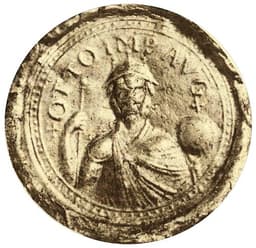
Otto I the Great
Emperor · Medieval
75.2Total
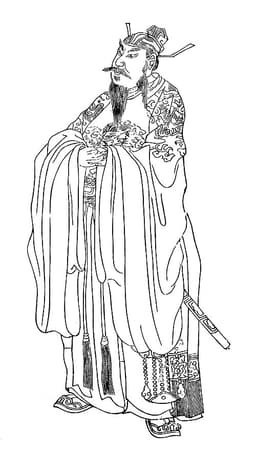
Xu Da
General · Medieval
74.9Total
Basic Information
Born
912
1332
Died
973
1385
Era
Medieval
Medieval
Nationality
Holy Roman Empire
China
Occupation
Emperor
General
Civilization
Western
Eastern
Score Comparison
Military (10%)
82.0
88.0
Political (20%)
70.0
68.0
Influence (20%)
88.0
82.0
Legacy (20%)
65.0
72.0
Leadership (15%)
78.0
62.0
Strategy (15%)
65.4
80.8
TOTAL
75.2
74.9
Otto I the Great — Complete Timeline
951 AD
Diplomatic Marriage to Adelaide of ItalyPolitical Action◆ Major
Otto married Adelaide, the widowed queen of Italy, after intervening in Italian politics. This marriage gave him control over the Kingdom of Italy and strengthened his claim to imperial authority.
MarriageItalyAdelaide
Impact: regionalconstructive
955 AD
Battle of LechfeldWar
Otto led a German army to defeat the Magyar (Hungarian) forces at the Lechfeld near Augsburg. This victory ended Magyar raids into Western Europe and secured Otto's reputation as a defender of Christendom.
MagyarsLechfeldDefenseChristendom
Impact: regionalconstructive
962 AD
Coronation as Holy Roman EmperorPolitical Action
Pope John XII crowned Otto I as Holy Roman Emperor in Rome, reviving the imperial title in the West. This event established the Holy Roman Empire as a major political entity and linked German kingship with papal authority.
CoronationHoly Roman EmpirePapacy
Impact: globalconstructive
Xu Da — Complete Timeline
1368 AD
Capture of Dadu (Beijing)War
Xu Da led the Ming army in the capture of Dadu, the Yuan capital. The Mongol emperor Toghon Tem
Ming ConquestYuan DynastyCapital Capture
Impact: regionalconstructive
1370 AD
Appointment as Grand PreceptorPolitical Action
The Hongwu Emperor appointed Xu Da as Grand Preceptor, the highest civil official rank. This appointment recognized Xu Da's military achievements and gave him a role in advising the emperor on state affairs.
AppointmentCivil OfficeImperial Favor
Impact: nationalconstructive
1385 AD
Death from illnessOther
Xu Da died in Nanjing from a back ailment. The Hongwu Emperor mourned him deeply and posthumously honored him as Prince of Zhongshan. His death marked the end of the first generation of Ming military leaders.
DeathMing DynastyMilitary Leader
Impact: nationaltragic
Expert Analysis
Origins
**Otto I the Great** was born in 912 to Henry the Fowler, Duke of Saxony and later King of East Francia. His early life was shaped by the need to consolidate royal authority against rebellious dukes and external threats. Otto's Saxon heritage and his father's legacy provided a foundation for his ambitious reign.
**Xu Da** was born in 1332 in a poor peasant family in Fengyang, Anhui. He joined the Red Turban rebellion against Mongol Yuan rule, rising through the ranks due to his military brilliance. His humble origins and early exposure to warfare forged a resilient and strategic leader.
Rise to Power
**Otto I** became King of East Francia in 936 after his father's death. He faced immediate challenges from rebellious dukes and his own brother, but he suppressed them through military force and strategic alliances. His decisive victory at the Battle of Lechfeld in 955 over the Magyars cemented his reputation and enabled him to extend his influence into Italy.
**Xu Da** rose under the leadership of Zhu Yuanzhang (later Hongwu Emperor). He distinguished himself in campaigns against rival rebel factions and Yuan forces. His capture of Nanjing in 1356 and subsequent victories led to his appointment as commander-in-chief. Xu Da's loyalty and skill made him the emperor's most trusted general.
Leadership & Governance
**Otto I** was a master of medieval statecraft. He used the Church as a counterbalance to secular nobles, appointing bishops and abbots who owed allegiance to him. His coronation as Holy Roman Emperor in 962 by Pope John XII revived the imperial title and established a symbiotic relationship with the papacy. Otto's governance combined military strength with diplomatic marriages, such as his marriage to Adelaide of Italy, which secured Lombardy.
**Xu Da** was primarily a military leader, but he also demonstrated administrative acumen. As Grand Preceptor, he advised the emperor on governance and helped consolidate Ming rule. He implemented policies to restore agriculture and reduce taxes in conquered territories, winning local support. However, his role remained largely subordinate to the Hongwu Emperor's authoritarian style.
Triumph & Tragedy
**Otto I's** greatest triumph was the victory at Lechfeld, which ended Magyar raids and earned him the epithet "the Great." His imperial coronation marked the birth of the Holy Roman Empire. However, his later years saw a decline in influence as the papacy grew more assertive and his son, Otto II, faced rebellions. Otto died in 973, having secured a legacy as the founder of a powerful empire.
**Xu Da's** crowning achievement was the capture of Dadu (Beijing) in 1368, ending Mongol rule and establishing the Ming dynasty. He also defeated Mongol remnants at the Battle of Lake Buir in 1388. Yet, his tragic death from illness in 1385 at age 53 cut short his career. Some accounts suggest he may have been poisoned by the emperor, reflecting the paranoia of the Hongwu reign.
Character & Destiny
**Otto I** was ambitious, pious, and pragmatic. He balanced ruthlessness with generosity, often pardoning rebels after submission. His destiny was to revive Charlemagne's empire and shape medieval Europe. His scores reflect high influence (88) and military prowess (82), but lower durability (65) and strategy (65).
**Xu Da** was disciplined, loyal, and humble. He shared credit with his soldiers and avoided political intrigue. His destiny was to liberate China from foreign rule. His scores show exceptional military might (88) and influence (81), but lower diplomacy (68) and durability (62).
Legacy
**Otto I** is remembered as the founder of the Holy Roman Empire, a political entity that lasted until 1806. His use of the Church as a governing tool set a precedent for medieval kingship. He is celebrated in German history as a unifier and defender of Christendom.
**Xu Da** is revered as a national hero in China for overthrowing Mongol rule. He is often compared to other great generals like Han Xin and Yue Fei. His legacy endures in folklore and historical texts, symbolizing loyalty and martial excellence.
Conclusion
While Otto I and Xu Da both achieved remarkable feats, Otto's broader impact as an emperor who shaped political and religious structures gives him a slight edge. His score of 74.71 surpasses Xu Da's 74.43 by a narrow margin. Otto's ability to institutionalize power and his longer reign contributed to his higher overall rating. Xu Da, though a brilliant general, lacked the same scope of governance and left a less enduring political legacy. Thus, Otto I the Great ranks higher in the historical pantheon.
Rankings
🥇
Otto I the GreatLeader
Mil: 82.0Pol: 70.0Inf: 88.0
75.2
🥈
Xu Da
Mil: 88.0Pol: 68.0Inf: 82.0
74.9
+0.3 behind
How This Comparison Works
Algorithm
Each figure is scored on 6 dimensions (0—100 scale) based on structured historical data: Military (10%), Political (20%), Influence (20%), Legacy (20%), Leadership (15%), Strategy (15%). The weighted total produces the final ranking.
Data Sources
Scores are computed from structured sub-indicators in the database. Scale factors adjust for era (Ancient ×0.85, Modern ×1.0) and civilization size (Eastern ×1.05, Other ×0.80) to account for differences in population and military scale.
Maximum 3 Figures
Comparisons are limited to 2—3 figures to ensure readability and statistical meaningfulness.
Error Margins
±5 points per dimension — Sub-scores are derived from historical records with inherent uncertainty. Two figures within 5 points on a dimension should be considered roughly equivalent in that area.
Total Score Accuracy
±3 points overall — The weighted combination of 6 dimensions produces a total score with approximately ±3 points of uncertainty. Differences of less than 3 points are not statistically significant— the figures are effectively tied.
Known Limitations
- Historical records are incomplete and uneven across civilizations
- Figures from oral-tradition societies may be underrepresented
- Occupation labels can misclassify multi-role figures
- Scores measure capability and impact, not moral character
- Quantitative scoring is a comparison tool, not absolute truth
Capability Radar
Military (10%) — Battles & Warfare
Battles
75
95
Win Rate
80
95
Expansion
70
95
Political (20%) — Governance & Reform
Reform
80
50
Diplomacy
85
65
Economy
70
55
Influence (20%) — Cultural & Global Reach
Cultural
65
70
Global
70
80
Legacy (20%) — Historical Impact
Historical
80
85
Longevity
75
75
Leadership (15%) — Power & Stability
Tenure
85
60
Stability
75
70
Strategy (15%) — Tactics & Innovation
Strategy
75
92
Tactics
70
90
Reform
65
70
Similar Comparisons
Comments & Discussion
No comments yet. Be the first to share your thoughts!