Loading...
Charles de Gaulle vs Otto I the Great
Otto I the Great leads by 7.0 pts · 2 figures compared
…
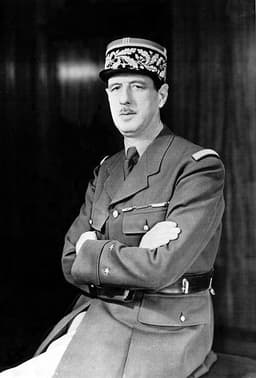
Charles de Gaulle
Politician · Modern
68.2Total
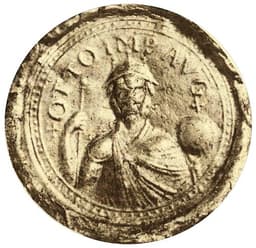
Otto I the Great
Emperor · Medieval
75.2Total
Basic Information
Born
1890
912
Died
1970
973
Era
Modern
Medieval
Nationality
France
Holy Roman Empire
Occupation
Politician
Emperor
Civilization
Western
Western
Score Comparison
Military (10%)
55.0
82.0
Political (20%)
75.0
70.0
Influence (20%)
65.0
88.0
Legacy (20%)
68.0
65.0
Leadership (15%)
78.0
78.0
Strategy (15%)
65.0
65.4
TOTAL
68.2
75.2
Charles de Gaulle — Complete Timeline
1940 AD
Appeal of 18 June 1940Political Action
From London, de Gaulle broadcast a radio appeal urging French resistance against Nazi occupation. He called on French soldiers and citizens to continue the fight, founding the Free French Forces and becoming the symbol of French defiance.
World War IIResistanceLeadership
Impact: nationalconstructive
1958 AD
Founding of the Fifth RepublicPolitical Action
De Gaulle returned to power during the Algerian crisis and oversaw the drafting of a new constitution. The Fifth Republic established a strong executive presidency, replacing the unstable parliamentary system of the Fourth Republic.
ConstitutionGovernment ReformPolitical System
Impact: nationalconstructive
1962 AD
End of the Algerian WarPolitical Action◆ Major
De Gaulle negotiated the
DecolonizationPeace TreatyAlgeria
Impact: regionalconstructive
1968 AD
May 1968 CrisisPolitical Action◆ Major
Mass student protests and general strikes paralyzed France, challenging de Gaulle's government. De Gaulle briefly fled to Germany, then returned to dissolve the National Assembly and call elections, which his party won, but his authority was weakened.
ProtestPolitical CrisisSocial Unrest
Impact: nationaldestructive
1969 AD
Resignation as PresidentPolitical Action
De Gaulle resigned after losing a referendum on regional reform and Senate restructuring. The defeat marked the end of his political career, as he withdrew from public life and died the following year.
ResignationPolitical DefeatReferendum
Impact: nationaltragic
Otto I the Great — Complete Timeline
951 AD
Diplomatic Marriage to Adelaide of ItalyPolitical Action◆ Major
Otto married Adelaide, the widowed queen of Italy, after intervening in Italian politics. This marriage gave him control over the Kingdom of Italy and strengthened his claim to imperial authority.
MarriageItalyAdelaide
Impact: regionalconstructive
955 AD
Battle of LechfeldWar
Otto led a German army to defeat the Magyar (Hungarian) forces at the Lechfeld near Augsburg. This victory ended Magyar raids into Western Europe and secured Otto's reputation as a defender of Christendom.
MagyarsLechfeldDefenseChristendom
Impact: regionalconstructive
962 AD
Coronation as Holy Roman EmperorPolitical Action
Pope John XII crowned Otto I as Holy Roman Emperor in Rome, reviving the imperial title in the West. This event established the Holy Roman Empire as a major political entity and linked German kingship with papal authority.
CoronationHoly Roman EmpirePapacy
Impact: globalconstructive
Expert Analysis
Charles de Gaulle vs Otto I the Great
### The Cross and the Crown: De Gaulle and Otto the Great
On a June evening in 1940, a solitary French general stood before a microphone in a London studio, his voice crackling across the English Channel to a defeated nation. Across the centuries, in the summer of 955, another leader—a towering Saxon king—watched his cavalry charge into a storm of Magyar arrows near the Lechfeld river. Both men faced existential threats: one against Nazi occupation, the other against nomadic invaders who had terrorized Europe for decades. Yet their paths to power, their methods of rule, and the empires they built could not have been more different. What drives a leader to forge a nation from ashes, and another to crown an empire with a sword?
### Origins
Charles de Gaulle was born in 1890 into a devoutly Catholic, nationalist family in Lille, France. His father, a professor, instilled in him a sense of French grandeur that would become an obsession. The trauma of France’s humiliating defeat in the Franco-Prussian War haunted his youth. De Gaulle was shaped by the modern crucible of two world wars—the trenches of Verdun, where he was captured, and the collapse of 1940. He was a man of the twentieth century, fluent in the language of tanks, radio, and constitutional crisis.
Otto I, born in 912, emerged from a very different world—the early medieval chaos of fractured Germanic duchies. His father, Henry the Fowler, was a duke who became king, but the realm was a patchwork of rivalries. Otto grew up in a world where power was personal, where loyalty was secured through marriage and battle, and where the Church was the only unifying institution. His era demanded a warrior-king who could ride, fight, and pray with equal conviction.
### Rise to Power
De Gaulle’s rise was a story of defiance from the margins. In 1940, as France surrendered, he was a little-known brigadier general. His Appeal of 18 June was a gamble—a voice from exile, claiming to represent a nation that had not yet chosen him. He built the Free French Forces from scratch, navigating the suspicion of Churchill and Roosevelt, who saw him as a difficult ally. Only after the liberation of Paris in 1944 did he solidify his authority, and even then, he was forced into political exile before the Algerian crisis of 1958 brought him back.
Otto’s path was more traditional, yet no less fraught. Crowned king of East Francia in 936, he faced immediate revolts from his own dukes and even his brother. He crushed them with brutal efficiency, using the Church as a counterweight to noble power. His turning point came in 951, when he married Adelaide of Italy, a strategic union that gave him control over the Italian kingdom. But it was the battlefield that sealed his destiny.
### Leadership & Governance
De Gaulle governed through the force of his personality and a vision of French greatness. He founded the Fifth Republic in 1958, crafting a constitution that concentrated power in the presidency—a system designed for his own dominance. His military genius was limited; he was a strategist of politics, not of war. Yet his political wisdom was profound: he ended the bloody Algerian War in 1962 through the Évian Accords, a decision that cost him the loyalty of the army and the far right but saved France from civil war. He modernized the economy and pursued an independent foreign policy, defying both Washington and Moscow.
Otto’s rule was a fusion of sword and sacrament. His victory at Lechfeld in 955 was not just a military triumph—it ended a century of Magyar raids and cemented his authority over the German nobles. He then turned to Italy, where he was crowned Holy Roman Emperor in 962, reviving an imperial title that had lain dormant for decades. His governance relied on the Church: he appointed bishops and abbots as loyal administrators, creating a theocratic state that blended spiritual and temporal power. He was a reformer of institutions, not of ideas.
### Triumph & Tragedy
De Gaulle’s greatest moment was the liberation of Paris in 1944, when he walked down the Champs-Élysées as the embodiment of a resurrected France. His most devastating failure came in 1968, when student protests and a general strike paralyzed the nation. He briefly fled to Germany, a humiliating retreat, and though he returned to win a snap election, his authority never recovered. He resigned in 1969 after losing a referendum on regional reform—a quiet end for a man who had once been the voice of France.
Otto’s triumph was Lechfeld, where he annihilated the Magyar threat and secured the eastern frontier. His tragedy was the failure of his imperial dream: the Holy Roman Empire he founded was a loose federation, constantly riven by conflict between popes and emperors. His own son, Otto II, would face rebellions that his father’s iron hand had only temporarily suppressed.
### Character & Destiny
De Gaulle was aloof, arrogant, and unyielding—a man who saw himself as the living embodiment of France. “I am France,” he once said, and he meant it. His personality drove him to resist compromise, to stand alone, and to resign rather than accept defeat. It was a destiny written in the solitary grandeur of his exile in Colombey-les-Deux-Églises.
Otto was a pragmatist, a warrior who understood the limits of power. He was ruthless when necessary—he executed rebellious nobles—but also shrewd, using marriage and coronation as tools of statecraft. His destiny was to build a structure that would last a thousand years, even if it was never as strong as he hoped.
### Legacy
De Gaulle left behind the Fifth Republic, a constitution that still governs France, and a tradition of presidential authority. He is remembered as the savior of French honor, a towering figure in a century of decline. But his legacy is contested: some see a nationalist who weakened Europe, others a visionary who restored French independence.
Otto’s legacy is the Holy Roman Empire, a political entity that shaped Central Europe until 1806. He is celebrated as “the Great” for ending the Magyar threat and reviving the imperial idea. Yet his empire was more a dream than a reality, a constant struggle between unity and fragmentation.
### Conclusion
Standing at the edge of their eras, de Gaulle and Otto I reveal the two faces of Western leadership: the modern prophet, speaking to a nation through the airwaves, and the medieval king, ruling through blood and faith. De Gaulle built a republic; Otto built an empire. One ended his life in quiet resignation; the other died in the saddle, still king. Their differences are not merely of time, but of the very nature of power—whether it comes from the voice of a people or the sword of a conqueror. And in that contrast, we see the long, winding road of Western civilization, from the battlefield to the ballot box.
Rankings
🥇
Otto I the GreatLeader
Mil: 82.0Pol: 70.0Inf: 88.0
75.2
🥈
Charles de Gaulle
Mil: 55.0Pol: 75.0Inf: 65.0
68.2
+7.0 behind
How This Comparison Works
Algorithm
Each figure is scored on 6 dimensions (0—100 scale) based on structured historical data: Military (10%), Political (20%), Influence (20%), Legacy (20%), Leadership (15%), Strategy (15%). The weighted total produces the final ranking.
Data Sources
Scores are computed from structured sub-indicators in the database. Scale factors adjust for era (Ancient ×0.85, Modern ×1.0) and civilization size (Eastern ×1.05, Other ×0.80) to account for differences in population and military scale.
Maximum 3 Figures
Comparisons are limited to 2—3 figures to ensure readability and statistical meaningfulness.
Error Margins
±5 points per dimension — Sub-scores are derived from historical records with inherent uncertainty. Two figures within 5 points on a dimension should be considered roughly equivalent in that area.
Total Score Accuracy
±3 points overall — The weighted combination of 6 dimensions produces a total score with approximately ±3 points of uncertainty. Differences of less than 3 points are not statistically significant— the figures are effectively tied.
Known Limitations
- Historical records are incomplete and uneven across civilizations
- Figures from oral-tradition societies may be underrepresented
- Occupation labels can misclassify multi-role figures
- Scores measure capability and impact, not moral character
- Quantitative scoring is a comparison tool, not absolute truth
Capability Radar
Military (10%) — Battles & Warfare
Battles
60
75
Win Rate
55
80
Expansion
20
70
Political (20%) — Governance & Reform
Reform
95
80
Diplomacy
90
85
Economy
70
70
Influence (20%) — Cultural & Global Reach
Cultural
70
65
Global
80
70
Legacy (20%) — Historical Impact
Historical
85
80
Longevity
75
75
Leadership (15%) — Power & Stability
Tenure
85
85
Stability
75
75
Strategy (15%) — Tactics & Innovation
Strategy
85
75
Tactics
70
70
Reform
80
65
Similar Comparisons
Comments & Discussion
No comments yet. Be the first to share your thoughts!