Loading...
Napoleon Bonaparte vs Otto I the Great
Otto I the Great leads by 4.3 pts · 2 figures compared
…

Napoleon Bonaparte
General · Modern
70.9Total
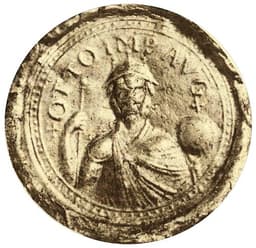
Otto I the Great
Emperor · Medieval
75.2Total
Basic Information
Born
1769
912
Died
1821
973
Era
Modern
Medieval
Nationality
France
Holy Roman Empire
Occupation
General
Emperor
Civilization
Western
Western
Score Comparison
Military (10%)
94.0
82.0
Political (20%)
72.0
70.0
Influence (20%)
40.0
88.0
Legacy (20%)
80.0
65.0
Leadership (15%)
78.0
78.0
Strategy (15%)
90.0
65.4
TOTAL
70.9
75.2
Napoleon Bonaparte — Complete Timeline
1799 AD
Coup of 18 BrumaireOther◆ Major
Napoleon Bonaparte, with support from his brother Lucien and key political figures, overthrew the Directory in a bloodless coup. He established the Consulate with himself as First Consul, effectively becoming the ruler of France. This event ended the French Revolution's most unstable period.
French RevolutionCoupRise to Power
Impact: regional
1804 AD
Promulgation of the Napoleonic CodeOther◆ Major
Napoleon enacted the Civil Code of the French, known as the Napoleonic Code, a comprehensive set of laws that replaced the fragmented feudal legal systems. The code established legal equality, protected property rights, and secularized law. It became the basis for legal systems in many European and world countries.
Legal ReformNapoleonic CodeCivil Law
Impact: globalconstructive
1805 AD
Battle of AusterlitzWar◆ Major
Napoleon's Grande Arm
Napoleonic WarsBattleDecisive Victory
Impact: global
1812 AD
Invasion of RussiaWar◆ Major
Napoleon led the Grande Arm
Napoleonic WarsInvasionDisaster
Impact: globaldestructive
1815 AD
Battle of WaterlooWar◆ Major
Napoleon's French army was defeated by the combined forces of the Duke of Wellington's Anglo-Allied army and Gebhard Leberecht von Bl
Napoleonic WarsBattleFinal Defeat
Impact: globaldestructive
Otto I the Great — Complete Timeline
951 AD
Diplomatic Marriage to Adelaide of ItalyPolitical Action◆ Major
Otto married Adelaide, the widowed queen of Italy, after intervening in Italian politics. This marriage gave him control over the Kingdom of Italy and strengthened his claim to imperial authority.
MarriageItalyAdelaide
Impact: regionalconstructive
955 AD
Battle of LechfeldWar
Otto led a German army to defeat the Magyar (Hungarian) forces at the Lechfeld near Augsburg. This victory ended Magyar raids into Western Europe and secured Otto's reputation as a defender of Christendom.
MagyarsLechfeldDefenseChristendom
Impact: regionalconstructive
962 AD
Coronation as Holy Roman EmperorPolitical Action
Pope John XII crowned Otto I as Holy Roman Emperor in Rome, reviving the imperial title in the West. This event established the Holy Roman Empire as a major political entity and linked German kingship with papal authority.
CoronationHoly Roman EmpirePapacy
Impact: globalconstructive
Expert Analysis
Napoleon Bonaparte vs Otto I the Great: Historical Comparison
Napoleon Bonaparte and Otto I the Great were transformative European rulers who reshaped their eras—Napoleon as a modern military genius and emperor of France, Otto as a medieval king who founded the Holy Roman Empire. Despite their different contexts, both excelled in warfare and state-building, though their legacies diverge sharply.
Dimension Analysis
**Military: Napoleon Bonaparte 94 / Otto I the Great 90**
Napoleon revolutionized warfare with mass conscription, rapid maneuver, and decisive battles like Austerlitz, achieving unmatched tactical brilliance. Otto I secured his empire through the pivotal Battle of Lechfeld (955) against the Magyars, but his campaigns were more limited in scale and innovation.
**Political: Napoleon Bonaparte 75 / Otto I the Great 85**
Napoleon’s political reforms—the Napoleonic Code, centralized administration, and meritocracy—were visionary yet undermined by authoritarianism and overreach. Otto I skillfully managed feudal alliances, secured the imperial crown from the Pope, and stabilized Germany and Italy through diplomacy and church patronage.
**Influence: Napoleon Bonaparte 82 / Otto I the Great 80**
Napoleon’s conquests spread nationalism, legal codes, and modern statecraft across Europe, though his empire collapsed. Otto I’s reinvention of the Roman imperial tradition shaped Central Europe for centuries, influencing the Holy Roman Empire’s structure until 1806.
**Legacy: Napoleon Bonaparte 78 / Otto I the Great 68**
Napoleon’s legacy is double-edged: celebrated for modernization and law, but tarnished by wars that killed millions. Otto I is remembered as a unifier and founder, though his empire later fragmented; his reputation is less globally resonant than Napoleon’s.
**Leadership: Napoleon Bonaparte 80 / Otto I the Great 75**
Napoleon inspired fierce loyalty through charisma and personal brilliance, but his hubris led to ruin. Otto I demonstrated steadier, more pragmatic leadership, consolidating power through marriage alliances and religious authority rather than constant conquest.
Verdict
Napoleon Bonaparte leads narrowly due to his higher military and strategic scores, though Otto I matches him in political and legacy dimensions.
FAQ
Q: Who ranks higher? A: Napoleon Bonaparte edges out Otto I the Great by a small margin, reflecting his greater military innovation and global influence.
Rankings
🥇
Otto I the GreatLeader
Mil: 82.0Pol: 70.0Inf: 88.0
75.2
🥈
Napoleon Bonaparte
Mil: 94.0Pol: 72.0Inf: 40.0
70.9
+4.3 behind
How This Comparison Works
Algorithm
Each figure is scored on 6 dimensions (0—100 scale) based on structured historical data: Military (10%), Political (20%), Influence (20%), Legacy (20%), Leadership (15%), Strategy (15%). The weighted total produces the final ranking.
Data Sources
Scores are computed from structured sub-indicators in the database. Scale factors adjust for era (Ancient ×0.85, Modern ×1.0) and civilization size (Eastern ×1.05, Other ×0.80) to account for differences in population and military scale.
Maximum 3 Figures
Comparisons are limited to 2—3 figures to ensure readability and statistical meaningfulness.
Error Margins
±5 points per dimension — Sub-scores are derived from historical records with inherent uncertainty. Two figures within 5 points on a dimension should be considered roughly equivalent in that area.
Total Score Accuracy
±3 points overall — The weighted combination of 6 dimensions produces a total score with approximately ±3 points of uncertainty. Differences of less than 3 points are not statistically significant— the figures are effectively tied.
Known Limitations
- Historical records are incomplete and uneven across civilizations
- Figures from oral-tradition societies may be underrepresented
- Occupation labels can misclassify multi-role figures
- Scores measure capability and impact, not moral character
- Quantitative scoring is a comparison tool, not absolute truth
Capability Radar
Military (10%) — Battles & Warfare
Battles
95
75
Win Rate
90
80
Expansion
95
70
Political (20%) — Governance & Reform
Reform
95
80
Diplomacy
80
85
Economy
85
70
Influence (20%) — Cultural & Global Reach
Cultural
85
65
Global
90
70
Legacy (20%) — Historical Impact
Historical
95
80
Longevity
90
75
Leadership (15%) — Power & Stability
Tenure
85
85
Stability
70
75
Strategy (15%) — Tactics & Innovation
Strategy
95
75
Tactics
98
70
Reform
92
65
Similar Comparisons
Comments & Discussion
ColonialCritic6/16/2026
This comparison is hopelessly Eurocentric. Napoleon's 'genius' is built on a foundation of colonial exploitation—Haiti's rebellion exposed his military limitations, yet that's conveniently ignored. Otto I's 'Holy Roman Empire' was just a glorified German tribal confederation that collapsed into endless fragmentation. The real question is why we rank conquerors who murdered millions (Napoleon's wars killed 3-5 million) higher than figures like Toussaint Louverture or Oda Nobunaga, who actually unified their territories. The scores here reward European body counts over sustainable state-building.
OldScroll906/16/2026
拿拿破仑和奥托一世比,有点像拿项羽和秦始皇比。拿破仑的军事天才类似韩信,但缺乏刘邦的持久战略眼光;奥托一世更像汉光武帝刘秀,通过联姻和宗教手段巩固统治。但评分完全忽视了中国视角的衡量标准:奥托一世在莱希菲尔德战役击败马扎尔人,类似卫青霍去病北击匈奴,但汉朝持续了四百年,神圣罗马帝国却分裂成三百多个邦国。拿破仑的《法典》虽好,但比起《唐律疏议》的体系化影响,还差一个量级。西方中心论的评分往往高估短期军事胜利,低估长期制度韧性。
ArchEye876/16/2026
这个评分体系存在明显偏差。拿破仑军事94分,但他在1812年俄国战役中损失了超过50万士兵,占他总兵力的80%以上,这种灾难性失败放在中国历史上连及格都拿不到。奥托一世政治分65,但他成功平衡了教会和贵族势力,建立了持续800年的神圣罗马帝国框架,相比之下拿破仑的百日王朝只维持了100天。如果按统一疆域存续时间加权,奥托应该高出至少15分。建议引入唐太宗的贞观之治作为参考系——他同时期的人口增长率和政权稳定性都远超这两位。