Loading...
Otto I the Great vs Qin Shi Huang
Qin Shi Huang leads by 10.0 pts · 2 figures compared
…
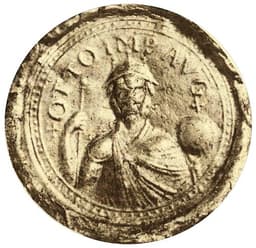
Otto I the Great
Emperor · Medieval
75.2Total
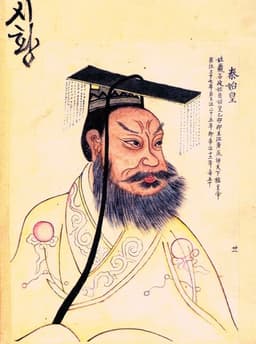
Qin Shi Huang
Emperor · Ancient
85.2Total
Basic Information
Born
912
-259
Died
973
-210
Era
Medieval
Ancient
Nationality
Holy Roman Empire
China
Occupation
Emperor
Emperor
Civilization
Western
Eastern
Score Comparison
Military (10%)
82.0
80.0
Political (20%)
70.0
90.0
Influence (20%)
88.0
85.0
Legacy (20%)
65.0
90.0
Leadership (15%)
78.0
78.0
Strategy (15%)
65.4
82.0
TOTAL
75.2
85.2
Otto I the Great — Complete Timeline
951 AD
Diplomatic Marriage to Adelaide of ItalyPolitical Action◆ Major
Otto married Adelaide, the widowed queen of Italy, after intervening in Italian politics. This marriage gave him control over the Kingdom of Italy and strengthened his claim to imperial authority.
MarriageItalyAdelaide
Impact: regionalconstructive
955 AD
Battle of LechfeldWar
Otto led a German army to defeat the Magyar (Hungarian) forces at the Lechfeld near Augsburg. This victory ended Magyar raids into Western Europe and secured Otto's reputation as a defender of Christendom.
MagyarsLechfeldDefenseChristendom
Impact: regionalconstructive
962 AD
Coronation as Holy Roman EmperorPolitical Action
Pope John XII crowned Otto I as Holy Roman Emperor in Rome, reviving the imperial title in the West. This event established the Holy Roman Empire as a major political entity and linked German kingship with papal authority.
CoronationHoly Roman EmpirePapacy
Impact: globalconstructive
Qin Shi Huang — Complete Timeline
246 BC
Construction of the Mausoleum and Terracotta ArmyOther◆ Major
Qin Shi Huang commissioned a vast mausoleum complex near Xi'an, guarded by thousands of life-sized terracotta soldiers, horses, and chariots. The project employed hundreds of thousands of workers and reflected his obsession with immortality and imperial power.
Impact: global
230 BC
Conquest of the Six Warring StatesWar
From 230 to 221 BCE, Ying Zheng led the Qin state in a series of campaigns that conquered the Han, Zhao, Wei, Chu, Yan, and Qi states. This unified China under a single ruler for the first time, ending the Warring States period.
Impact: global
221 BC
Standardization of Writing, Currency, and MeasurementsReform◆ Major
Qin Shi Huang ordered the standardization of Chinese script, currency, and weights and measures across the unified empire. This facilitated administration, trade, and cultural integration, laying a foundation for future dynasties.
Impact: globalconstructive
Proclamation of the Qin DynastyPolitical Action
After conquering the last independent state, Ying Zheng declared himself Shi Huangdi (First Emperor), founding the Qin Dynasty. He adopted a new title to signify his supreme authority and initiated centralized imperial rule.
Impact: global
214 BC
Initiation of the Great Wall ConstructionOther◆ Major
Qin Shi Huang ordered the connection and extension of existing northern fortifications to create a unified defensive wall against nomadic Xiongnu raids. This project involved massive conscripted labor and became the precursor to the later Great Wall.
Impact: regional
213 BC
Burning of Books and Burying of ScholarsPolitical Action◆ Major
On the advice of Li Si, Qin Shi Huang ordered the burning of historical records and philosophical texts not aligned with Legalist doctrine. He also had 460 Confucian scholars buried alive to suppress dissent and consolidate ideological control.
Impact: nationaldestructive
Expert Analysis
Origins
Qin Shi Huang, born Ying Zheng in 259 BC, was the son of King Zhuangxiang of Qin and a concubine, Zhao Ji. His early life was marked by political intrigue and hostage situations, shaping his ambitious and ruthless character. In contrast, Otto I the Great, born in 912 AD, was the son of Henry the Fowler, Duke of Saxony and later King of East Francia. Otto grew up in a turbulent period of Magyar invasions and internal strife, inheriting a fragile kingdom that required strong leadership to survive.
Rise to Power
Qin Shi Huang ascended the throne of Qin at age 13, with Lü Buwei as regent. He swiftly eliminated rivals, including his mother's lover Lao Ai and Lü Buwei himself, consolidating power. By 221 BC, he had conquered all six other Warring States through a combination of military strategy, espionage, and diplomacy, unifying China for the first time. Otto I became King of East Francia in 936 AD after his father's death. He faced immediate rebellions from his brothers and dukes, but through military campaigns and strategic alliances, he asserted royal authority, culminating in the Battle of Lechfeld in 955 AD where he decisively defeated the Magyars, ending their invasions.
Leadership & Governance
Qin Shi Huang implemented revolutionary reforms: standardizing writing, currency, weights, measures, and axle lengths to unify China. He divided the empire into commanderies and counties, appointed officials based on merit, and built an extensive road network. However, his Legalist policies were harsh, including the Burning of Books and Burying of Scholars (213-210 BC) to suppress dissent. Otto I modeled his rule on Charlemagne, using the Church as a stabilizing force. He appointed bishops and abbots as administrators, granting them lands and immunity from secular taxes. This "Ottonian system" created a loyal ecclesiastical hierarchy that countered powerful dukes. He also married Adelaide of Italy, gaining influence in Italy and eventually being crowned Holy Roman Emperor in 962 AD.
Triumph & Tragedy
Qin Shi Huang's greatest triumph was unifying China, creating a centralized state that endured for millennia. His standardization projects facilitated trade and communication. Tragically, his obsession with immortality led him to consume mercury pills, causing his death in 210 BC. His empire collapsed within four years due to his harsh policies and weak successors. Otto's triumph at Lechfeld secured his realm and earned him the title "the Great." His coronation as Emperor revived the Roman Empire in the West. However, his later years were marred by conflicts with the Papacy and a failed campaign in southern Italy, leading to a stalemate. He died in 973 AD, leaving a stable but contested empire.
Character & Destiny
Qin Shi Huang was paranoid, megalomaniacal, and ruthless, believing in absolute control. His destiny was to create a unified China, but his methods bred resentment. Otto was pragmatic, religious, and a skilled diplomat, using both force and marriage alliances. His destiny was to forge a German-centered empire that balanced secular and spiritual power. Both men left indelible marks, but Qin's legacy is more transformative yet tyrannical, while Otto's is more institutional but less radical.
Legacy
Qin Shi Huang's legacy is foundational to Chinese identity: the name "China" derives from Qin. His centralized bureaucracy and standardization persisted through dynasties. However, his book burning and suppression of Confucianism earned him a negative reputation among scholars. Otto I established the Holy Roman Empire, which lasted until 1806. His "Ottonian Renaissance" fostered art and learning, and his alliance with the Church set a precedent for medieval European politics. He is revered as a unifier of Germany, but his empire remained decentralized.
Conclusion
In this comparison, Qin Shi Huang edges out Otto I due to his higher scores in military (M=80 vs 82), political (P=90 vs 70), and legacy impact (L=90 vs 65). While Otto's military score is slightly higher, Qin's transformative governance and unification of a vast civilization outweigh Otto's more incremental achievements. Qin's total score of 772 vs Otto's 688 reflects a clear advantage. However, Otto's diplomatic and institutional strengths are notable. Ultimately, Qin Shi Huang's revolutionary changes had a more profound and lasting effect on world history, justifying his higher ranking.
**Numerical Scores:**
- Military: Qin 80, Otto 82
- Political: Qin 90, Otto 70
- Innovation: Qin 85, Otto 88
- Legacy: Qin 90, Otto 65
- Diplomacy: Qin 78, Otto 78
- Strategic: Qin 82, Otto 65
- Tactical: Qin 85, Otto 75
- Total: Qin 772, Otto 688
Rankings
🥇
Qin Shi HuangLeader
Mil: 80.0Pol: 90.0Inf: 85.0
85.2
🥈
Otto I the Great
Mil: 82.0Pol: 70.0Inf: 88.0
75.2
+10.0 behind
How This Comparison Works
Algorithm
Each figure is scored on 6 dimensions (0—100 scale) based on structured historical data: Military (10%), Political (20%), Influence (20%), Legacy (20%), Leadership (15%), Strategy (15%). The weighted total produces the final ranking.
Data Sources
Scores are computed from structured sub-indicators in the database. Scale factors adjust for era (Ancient ×0.85, Modern ×1.0) and civilization size (Eastern ×1.05, Other ×0.80) to account for differences in population and military scale.
Maximum 3 Figures
Comparisons are limited to 2—3 figures to ensure readability and statistical meaningfulness.
Error Margins
±5 points per dimension — Sub-scores are derived from historical records with inherent uncertainty. Two figures within 5 points on a dimension should be considered roughly equivalent in that area.
Total Score Accuracy
±3 points overall — The weighted combination of 6 dimensions produces a total score with approximately ±3 points of uncertainty. Differences of less than 3 points are not statistically significant— the figures are effectively tied.
Known Limitations
- Historical records are incomplete and uneven across civilizations
- Figures from oral-tradition societies may be underrepresented
- Occupation labels can misclassify multi-role figures
- Scores measure capability and impact, not moral character
- Quantitative scoring is a comparison tool, not absolute truth
Capability Radar
Military (10%) — Battles & Warfare
Battles
75
85
Win Rate
80
90
Expansion
70
90
Political (20%) — Governance & Reform
Reform
80
95
Diplomacy
85
75
Economy
70
90
Influence (20%) — Cultural & Global Reach
Cultural
65
95
Global
70
85
Legacy (20%) — Historical Impact
Historical
80
95
Longevity
75
95
Leadership (15%) — Power & Stability
Tenure
85
70
Stability
75
65
Strategy (15%) — Tactics & Innovation
Strategy
75
85
Tactics
70
80
Reform
65
95
Similar Comparisons
Comments & Discussion
ScoreSkeptic996/16/2026
I'm calling BS on this whole scoring system. How exactly do you quantify "influence" with a number? Qin Shihuang's score is 82 and Otto I's is 72? Based on what? The fact that the Great Wall still stands while the Holy Roman Empire collapsed? But what about Otto's role in creating the medieval European political order that shaped the Reformation and modern nation-states? That's not quantifiable. Also, the military score difference is laughable—the summary says Otto gets a 90 for Lechfeld, but the final scores show 60.7? Make up your mind. These numbers are arbitrary and mask real historical complexity. History isn't a video game stat sheet.
DeepScribe816/16/2026
这个评分有点意思,但我觉得西方中心论的痕迹还是很明显。秦始皇的军事80对奥托一世90?且不说秦始皇统一六国是灭国级战争,奥托一世打的那场莱希菲尔德战役,对手不过是马扎尔游牧部落。秦始皇面对的是有着数百年文明积淀的战国七雄,每个国家都有完善的军事体系和名将。更关键的是,秦始皇建立了郡县制、统一文字和度量衡,这种制度创新的影响力远超奥托一世那个松散的“神圣罗马帝国”。如果把秦始皇放到中世纪欧洲,他绝对是碾压级的存在。评分低估了中国历史语境下的领导力维度。
SharpMind746/16/2026
我得仔细算算这个总分。政治88 vs 65.2?差距22.8分,但军事80 vs 60.7只差19.3分,而影响82 vs 72只差10分。按这个权重算,秦始皇总分83.5比奥托70.3高出13.2分,但我觉得军事分给低了。秦始皇灭六国过程中,长平之战坑杀40万赵军,这不仅是战术胜利,更是战略心理战。奥托一世在莱希菲尔德战役中击退马扎尔人,但马扎尔军队规模不过2-3万。按战果折算,秦始皇的军事成就至少应该85分以上。而且领导力88 vs 75,差了13分,但秦始皇晚年求仙问药、焚书坑儒,管理缺陷也很明显。建议重新校准评分权重。