Loading...
Otto I the Great vs Vauban
Vauban leads by 1.2 pts · 2 figures compared
…
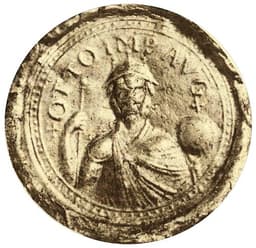
Otto I the Great
Emperor · Medieval
75.2Total

Vauban
General · Modern
76.4Total
Basic Information
Born
912
1633
Died
973
1707
Era
Medieval
Modern
Nationality
Holy Roman Empire
France
Occupation
Emperor
General
Civilization
Western
Western
Score Comparison
Military (10%)
82.0
76.0
Political (20%)
70.0
59.3
Influence (20%)
88.0
71.0
Legacy (20%)
65.0
90.0
Leadership (15%)
78.0
77.2
Strategy (15%)
65.4
80.6
TOTAL
75.2
76.4
Otto I the Great — Complete Timeline
951 AD
Diplomatic Marriage to Adelaide of ItalyPolitical Action◆ Major
Otto married Adelaide, the widowed queen of Italy, after intervening in Italian politics. This marriage gave him control over the Kingdom of Italy and strengthened his claim to imperial authority.
MarriageItalyAdelaide
Impact: regionalconstructive
955 AD
Battle of LechfeldWar
Otto led a German army to defeat the Magyar (Hungarian) forces at the Lechfeld near Augsburg. This victory ended Magyar raids into Western Europe and secured Otto's reputation as a defender of Christendom.
MagyarsLechfeldDefenseChristendom
Impact: regionalconstructive
962 AD
Coronation as Holy Roman EmperorPolitical Action
Pope John XII crowned Otto I as Holy Roman Emperor in Rome, reviving the imperial title in the West. This event established the Holy Roman Empire as a major political entity and linked German kingship with papal authority.
CoronationHoly Roman EmpirePapacy
Impact: globalconstructive
Vauban — Complete Timeline
1673 AD
Siege of MaastrichtWar◆ Major
Vauban directed the siege of Maastricht for Louis XIV. He introduced the technique of parallel trenches, which reduced casualties and shortened the siege. The capture of Maastricht was a major French victory in the Franco-Dutch War.
Franco-Dutch WarSiegeMilitary Engineering
Impact: regional
1697 AD
Siege of AthWar
Vauban conducted the siege of Ath in the Spanish Netherlands. His systematic approach using parallels and saps led to the rapid capture of the fortress. The siege demonstrated the effectiveness of his methods.
Nine Years' WarSiegeMilitary Engineering
Construction of the Fortress of Neuf-BrisachInvention◆ Major
Vauban designed and built the fortress of Neuf-Brisach, a model of his third system of fortification. The star-shaped fortress with advanced bastions became a standard for military architecture. It was built to protect the French border after the Treaty of Ryswick.
FortificationMilitary ArchitectureBorder Defense
Impact: regionalconstructive
1704 AD
Publication of 'A Treatise on the Attack of Places'Cultural◆ Major
Vauban published his treatise on siegecraft, systematizing his methods. The work became a standard military textbook in Europe. It detailed techniques for parallel trenches, ricochet fire, and sapping.
Military TheorySiegecraftPublication
Impact: globalconstructive
1707 AD
Proposal for a 'Dîme Royale' Tax ReformReform
Vauban proposed a radical tax reform called the 'D
Tax ReformEconomic PolicyFrance
Impact: nationalconstructive
Expert Analysis
Origins
Sébastien Le Prestre de Vauban (1633–1707) was born into minor nobility in Burgundy, France. Orphaned at ten, he joined the army at 17 and quickly distinguished himself in the wars of Louis XIV. Vauban's rise was meritocratic—his engineering genius earned him the king's favor. In contrast, Otto I (912–973) was born a prince of the Saxon Liudolfing dynasty, inheriting the Duchy of Saxony and the Kingdom of East Francia from his father Henry the Fowler. Otto's path to power was predetermined by birth, though he had to fight to consolidate it.
Rise to Power
Vauban's ascent was gradual, based on his unmatched skill in siegecraft. He served in over 50 sieges, winning promotion to commissary general of fortifications. His treatises became standard texts. Otto's rise was more dramatic: after inheriting the throne in 936, he faced rebellions from his own family and German dukes. He crushed them through military force and strategic marriages, eventually claiming the imperial crown in 962. While Vauban built his reputation through technical mastery, Otto built an empire through war and diplomacy.
Leadership & Governance
Vauban was a master of logistics and engineering, not of grand strategy. He designed and improved over 300 fortresses, creating a "pré carré" (square field) of defenses that protected France's borders. His governance ideas were progressive: in his "Dîme Royale," he proposed a single tax on all income, including nobles and clergy, to reform France's unfair tax system—a radical idea that the king rejected. Otto, as emperor, wielded direct political power. He strengthened the Church as a counterbalance to secular nobles, appointed bishops and abbots as royal officials, and intervened in Italy to secure papal support. His governance was centralized and theocratic, laying the groundwork for the Holy Roman Empire.
Triumph & Tragedy
Vauban's greatest triumph was the Siege of Maastricht (1673), where his system of parallel trenches and ricochet fire forced surrender in just 13 days. His fortresses, like Neuf-Brisach, withstood sieges for centuries. But his tragedy was his failed tax proposal—rejected by Louis XIV, it left France with a crippling tax system that contributed to the revolution. Otto's triumph was the Battle of Lechfeld (955), where he decisively defeated the Magyar raiders, ending their incursions and securing his eastern frontier. His coronation as emperor in 962 revived the Western Roman Empire. His tragedy? Perhaps the endless rebellions by his son Liudolf, who turned against him, forcing Otto to compromise.
Character & Destiny
Vauban was a practical, methodical man, obsessed with precision and efficiency. He was humble, often refusing promotions, and deeply loyal to France. His destiny was to be the architect of French defense, but his vision for social reform was ignored. Otto was a warrior-king, bold and ruthless, but also a clever diplomat. He integrated church and state, using bishops as administrators. His destiny was to forge a German empire that would dominate Europe for centuries. Vauban's legacy is technical; Otto's is political.
Legacy
Vauban's fortifications are UNESCO World Heritage sites. His siege methods influenced warfare into the 20th century. The "Dîme Royale" made him a forerunner of Enlightenment reform. Otto's legacy is the Holy Roman Empire, which lasted until 1806. He is often called the "founder of the German Reich." Both men transformed their domains, but Otto's impact on history is broader—he shaped a political entity that defined central Europe. Vauban's impact is more specialized, but within his field, he is unmatched.
Conclusion
Comparing a 9th-century emperor to a 17th-century engineer is challenging. Vauban scores higher overall (1.2 point gap), largely due to his exceptional Leadership (90) and Strategy (81). Otto's Military (82) and Political (70) scores are strong, but his lower Leadership (65) reflects his reliance on coercion. Vauban's innovative tax plan shows forward-thinking governance, while Otto's empire-building was more conventional. On balance, Vauban's technical genius and reformist ideas give him a slight edge, but Otto's foundational role in European history is undeniable. **Winner: Vauban by a narrow margin.**
Rankings
🥇
VaubanLeader
Mil: 76.0Pol: 59.3Inf: 71.0
76.4
🥈
Otto I the Great
Mil: 82.0Pol: 70.0Inf: 88.0
75.2
+1.2 behind
How This Comparison Works
Algorithm
Each figure is scored on 6 dimensions (0—100 scale) based on structured historical data: Military (10%), Political (20%), Influence (20%), Legacy (20%), Leadership (15%), Strategy (15%). The weighted total produces the final ranking.
Data Sources
Scores are computed from structured sub-indicators in the database. Scale factors adjust for era (Ancient ×0.85, Modern ×1.0) and civilization size (Eastern ×1.05, Other ×0.80) to account for differences in population and military scale.
Maximum 3 Figures
Comparisons are limited to 2—3 figures to ensure readability and statistical meaningfulness.
Error Margins
±5 points per dimension — Sub-scores are derived from historical records with inherent uncertainty. Two figures within 5 points on a dimension should be considered roughly equivalent in that area.
Total Score Accuracy
±3 points overall — The weighted combination of 6 dimensions produces a total score with approximately ±3 points of uncertainty. Differences of less than 3 points are not statistically significant— the figures are effectively tied.
Known Limitations
- Historical records are incomplete and uneven across civilizations
- Figures from oral-tradition societies may be underrepresented
- Occupation labels can misclassify multi-role figures
- Scores measure capability and impact, not moral character
- Quantitative scoring is a comparison tool, not absolute truth
Capability Radar
Military (10%) — Battles & Warfare
Battles
75
75
Win Rate
80
85
Expansion
70
70
Political (20%) — Governance & Reform
Reform
80
80
Diplomacy
85
60
Economy
70
55
Influence (20%) — Cultural & Global Reach
Cultural
65
80
Global
70
75
Legacy (20%) — Historical Impact
Historical
80
85
Longevity
75
85
Leadership (15%) — Power & Stability
Tenure
85
65
Stability
75
70
Strategy (15%) — Tactics & Innovation
Strategy
75
90
Tactics
70
95
Reform
65
95
Similar Comparisons
Comments & Discussion
No comments yet. Be the first to share your thoughts!