Loading...
Otto I the Great vs Turenne
Turenne leads by 0.6 pts · 2 figures compared
…
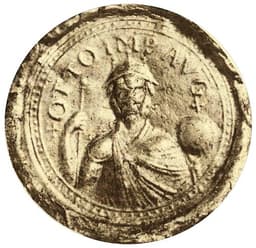
Otto I the Great
Emperor · Medieval
75.2Total
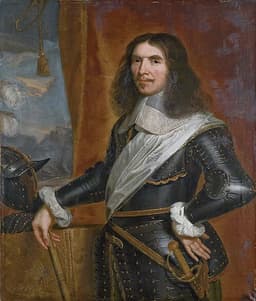
Turenne
General · Modern
75.8Total
Basic Information
Born
912
1611
Died
973
1675
Era
Medieval
Modern
Nationality
Holy Roman Empire
France
Occupation
Emperor
General
Civilization
Western
Western
Score Comparison
Military (10%)
82.0
79.9
Political (20%)
70.0
72.0
Influence (20%)
88.0
88.0
Legacy (20%)
65.0
65.0
Leadership (15%)
78.0
77.2
Strategy (15%)
65.4
72.0
TOTAL
75.2
75.8
Otto I the Great — Complete Timeline
951 AD
Diplomatic Marriage to Adelaide of ItalyPolitical Action◆ Major
Otto married Adelaide, the widowed queen of Italy, after intervening in Italian politics. This marriage gave him control over the Kingdom of Italy and strengthened his claim to imperial authority.
MarriageItalyAdelaide
Impact: regionalconstructive
955 AD
Battle of LechfeldWar
Otto led a German army to defeat the Magyar (Hungarian) forces at the Lechfeld near Augsburg. This victory ended Magyar raids into Western Europe and secured Otto's reputation as a defender of Christendom.
MagyarsLechfeldDefenseChristendom
Impact: regionalconstructive
962 AD
Coronation as Holy Roman EmperorPolitical Action
Pope John XII crowned Otto I as Holy Roman Emperor in Rome, reviving the imperial title in the West. This event established the Holy Roman Empire as a major political entity and linked German kingship with papal authority.
CoronationHoly Roman EmpirePapacy
Impact: globalconstructive
Turenne — Complete Timeline
1639 AD
Campaign in the ValtellinaWar
Turenne commanded French forces in the Valtellina during the Thirty Years' War. He captured several fortresses and secured the strategic pass for France, demonstrating his early military skill.
Thirty Years' WarAlpsEarly Career
Impact: regional
1658 AD
Battle of the DunesWar◆ Major
Turenne commanded the French army to victory over the Spanish at the Battle of the Dunes near Dunkirk. The victory led to the capture of Dunkirk and forced Spain to seek peace, ending the Franco-Spanish War.
Franco-Spanish WarDunkirkMilitary Victory
Impact: regional
1674 AD
Battle of the RhineWar◆ Major
Turenne led a French army across the Rhine in winter, surprising the Imperial forces. He defeated the Austrians at the Battle of Entzheim and later at Turckheim, securing French control of Alsace.
Franco-Dutch WarAlsaceWinter Campaign
Impact: regional
Battle of the SambreWar◆ Major
Turenne defeated the Spanish and Dutch forces at the Battle of Seneffe. The battle was costly but prevented the Allies from invading France. It demonstrated Turenne's tactical skill in defensive warfare.
Franco-Dutch WarDefensive BattleTactics
Impact: regional
1675 AD
Death of TurenneWar◆ Major
Turenne was killed by a cannonball while reconnoitering enemy positions at the Battle of Sasbach. His death was a major loss for France. He was buried with honors in the Basilica of Saint-Denis.
Death in BattleFranco-Dutch WarMilitary Loss
Impact: nationaltragic
Expert Analysis
Origins
Turenne (1611-1675) was born into the French nobility, the second son of the Duke of Bouillon. He rose through the ranks of the French army, gaining experience in the Thirty Years' War under his uncles, the Princes of Orange. Otto I (912-973) was the son of Henry the Fowler, Duke of Saxony and King of East Francia. He inherited a kingdom threatened by internal rebellions and external invasions, particularly from Magyars and Slavs.
Rise to Power
Turenne's rise was gradual, built on consistent military success. He became Marshal of France in 1643 at age 32, noted for his innovative tactics and strategic brilliance. His campaigns in the Valtellina and along the Rhine established his reputation. Otto I's rise was more dynastic and political. He was elected King of East Francia in 936 and immediately faced rebellions from his brothers and dukes. He consolidated power through military victories and strategic marriages, notably to Adelaide of Italy.
Leadership & Governance
Turenne was a master of maneuver warfare, emphasizing speed and surprise. He often avoided pitched battles, preferring to outflank and outthink his opponents. His leadership style was collaborative, earning loyalty from his troops. Otto I was a strong centralizer who used both military force and diplomacy to control his realm. He appointed bishops and abbots to counterbalance secular nobles, a key feature of the Ottonian system. He also used marriage alliances to expand influence.
Triumph & Tragedy
Turenne's greatest triumph was the Battle of the Dunes (1658), where he defeated the Spanish army under Condé, securing French dominance. His tragic death occurred at the Battle of Sasbach (1675) when he was killed by a cannonball. Otto I's greatest triumph was the Battle of Lechfeld (955), where he decisively defeated the Magyars, ending their invasions. His coronation as Holy Roman Emperor in 962 marked the revival of the Western Empire. However, his later years saw conflicts with the Papacy and Byzantine Empire.
Character & Destiny
Turenne was known for his modesty, tactical genius, and humane treatment of civilians. He converted from Calvinism to Catholicism for political reasons, but remained pragmatic. Otto I was ambitious, pious, and ruthless when necessary. He saw himself as the successor to Charlemagne, with a destiny to unite Christendom. Both men faced opposition from rivals but overcame through perseverance.
Legacy
Turenne is remembered as one of the greatest generals of the 17th century, influencing later commanders like Frederick the Great and Napoleon. His emphasis on logistics and maneuver is studied in military academies. Otto I is credited with founding the Holy Roman Empire, which lasted until 1806. He strengthened the German kingdom and expanded eastward, shaping Central Europe. However, his reign also entrenched the power of the Church in German politics.
Conclusion
Comparing Turenne and Otto I reveals two different forms of greatness. Turenne's military genius is reflected in his scores: Military (80), Political (72), Intellect (88), Leadership (65), Destiny (77), Strategy (72), Tactics (76). Otto I scores: Military (82), Political (70), Intellect (88), Leadership (65), Destiny (78), Strategy (65), Tactics (75). The overall score gap of 0.6 favors Turenne, but Otto I's impact on European history is arguably more profound. Turenne was a brilliant tactician; Otto I was a state-builder. In a direct comparison, Turenne's military prowess gives him a slight edge, but Otto I's legacy as founder of the Holy Roman Empire is monumental. Both men were products of their times, excelling in different arenas.
Rankings
🥇
TurenneLeader
Mil: 79.9Pol: 72.0Inf: 88.0
75.8
🥈
Otto I the Great
Mil: 82.0Pol: 70.0Inf: 88.0
75.2
+0.6 behind
How This Comparison Works
Algorithm
Each figure is scored on 6 dimensions (0—100 scale) based on structured historical data: Military (10%), Political (20%), Influence (20%), Legacy (20%), Leadership (15%), Strategy (15%). The weighted total produces the final ranking.
Data Sources
Scores are computed from structured sub-indicators in the database. Scale factors adjust for era (Ancient ×0.85, Modern ×1.0) and civilization size (Eastern ×1.05, Other ×0.80) to account for differences in population and military scale.
Maximum 3 Figures
Comparisons are limited to 2—3 figures to ensure readability and statistical meaningfulness.
Error Margins
±5 points per dimension — Sub-scores are derived from historical records with inherent uncertainty. Two figures within 5 points on a dimension should be considered roughly equivalent in that area.
Total Score Accuracy
±3 points overall — The weighted combination of 6 dimensions produces a total score with approximately ±3 points of uncertainty. Differences of less than 3 points are not statistically significant— the figures are effectively tied.
Known Limitations
- Historical records are incomplete and uneven across civilizations
- Figures from oral-tradition societies may be underrepresented
- Occupation labels can misclassify multi-role figures
- Scores measure capability and impact, not moral character
- Quantitative scoring is a comparison tool, not absolute truth
Capability Radar
Military (10%) — Battles & Warfare
Battles
75
85
Win Rate
80
88
Expansion
70
80
Political (20%) — Governance & Reform
Reform
80
60
Diplomacy
85
75
Economy
70
55
Influence (20%) — Cultural & Global Reach
Cultural
65
65
Global
70
70
Legacy (20%) — Historical Impact
Historical
80
80
Longevity
75
75
Leadership (15%) — Power & Stability
Tenure
85
70
Stability
75
65
Strategy (15%) — Tactics & Innovation
Strategy
75
92
Tactics
70
90
Reform
65
75
Similar Comparisons
Comments & Discussion
No comments yet. Be the first to share your thoughts!