Loading...
Otto I the Great vs Trajan
Trajan leads by 0.8 pts · 2 figures compared
…
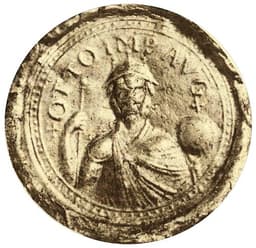
Otto I the Great
Emperor · Medieval
75.2Total

Trajan
Emperor · Ancient
76.0Total
Basic Information
Born
912
53
Died
973
117
Era
Medieval
Ancient
Nationality
Holy Roman Empire
Roman Empire
Occupation
Emperor
Emperor
Civilization
Western
Western
Score Comparison
Military (10%)
82.0
86.0
Political (20%)
70.0
79.2
Influence (20%)
88.0
82.0
Legacy (20%)
65.0
65.6
Leadership (15%)
78.0
73.2
Strategy (15%)
65.4
76.0
TOTAL
75.2
76.0
Otto I the Great — Complete Timeline
951 AD
Diplomatic Marriage to Adelaide of ItalyPolitical Action◆ Major
Otto married Adelaide, the widowed queen of Italy, after intervening in Italian politics. This marriage gave him control over the Kingdom of Italy and strengthened his claim to imperial authority.
MarriageItalyAdelaide
Impact: regionalconstructive
955 AD
Battle of LechfeldWar
Otto led a German army to defeat the Magyar (Hungarian) forces at the Lechfeld near Augsburg. This victory ended Magyar raids into Western Europe and secured Otto's reputation as a defender of Christendom.
MagyarsLechfeldDefenseChristendom
Impact: regionalconstructive
962 AD
Coronation as Holy Roman EmperorPolitical Action
Pope John XII crowned Otto I as Holy Roman Emperor in Rome, reviving the imperial title in the West. This event established the Holy Roman Empire as a major political entity and linked German kingship with papal authority.
CoronationHoly Roman EmpirePapacy
Impact: globalconstructive
Trajan — Complete Timeline
101 AD
Implemented the Alimenta Welfare ProgramReform◆ Major
Trajan expanded the Alimenta program, a state-funded welfare system that provided food subsidies and educational support for poor children in Italy. The program used interest from state loans to landowners to fund the distributions, aiming to boost the Italian population and agricultural economy.
WelfareSocial PolicyItaly
Impact: regionalconstructive
105 AD
Built Trajan's Bridge over the DanubeOther
Trajan ordered the construction of a massive stone and timber bridge across the Danube River near the Iron Gates. Designed by Apollodorus of Damascus, it was the longest arch bridge in the world for over a millennium, facilitating the Roman invasion of Dacia.
EngineeringBridgeDanube
Impact: regionalconstructive
106 AD
Conquered DaciaWar
Trajan led two major campaigns against the Dacian kingdom under King Decebalus, culminating in the conquest of Dacia (modern Romania) in 106 CE. The victory brought vast gold and silver mines under Roman control and established a new province, funding massive building projects in Rome.
DaciaConquestProvince
Impact: regional
112 AD
Built Trajan's Forum and MarketCultural◆ Major
Trajan commissioned the construction of Trajan's Forum, a vast complex in Rome including a basilica, libraries, and the Column of Trajan. The adjacent Trajan's Market, a multi-level commercial center, demonstrated Roman engineering prowess and served as a model for urban planning.
ArchitectureRomeUrban Planning
Impact: globalconstructive
116 AD
Conquered Parthia and Reached the Persian GulfWar◆ Major
Trajan launched a campaign against the Parthian Empire, capturing its capital Ctesiphon and annexing Mesopotamia. He reached the Persian Gulf, marking the easternmost extent of Roman territory. However, rebellions in the conquered territories forced a withdrawal shortly after.
ParthiaMesopotamiaExpansion
Impact: global
Expert Analysis
Origins
Trajan was born in 53 CE in Italica, Hispania (modern-day Spain), making him the first Roman emperor from a provincial background. His family was of Roman Italian descent but had settled in Spain for generations. His father was a prominent senator and governor, providing Trajan with a strong political and military foundation.
Otto I was born in 912 CE, the son of Henry the Fowler, Duke of Saxony and later King of East Francia. Otto's lineage came from the Liudolfing dynasty, a powerful Saxon noble family. His mother, Matilda, was a descendant of the legendary Saxon leader Widukind. Otto inherited a kingdom still consolidating after the breakup of Charlemagne's empire, facing threats from internal dukes and external invaders like the Magyars.
Rise to Power
Trajan rose through the ranks as a military commander under Emperor Domitian and later served as governor of Upper Germany. When Emperor Nerva adopted him as his successor in 97 CE, Trajan became the first emperor chosen solely on merit rather than blood ties. Nerva's decision was influenced by Trajan's reputation as a capable and popular general, ensuring stability after a period of turmoil. Trajan succeeded Nerva peacefully in 98 CE, marking the beginning of the Nerva-Antonine dynasty's golden age.
Otto I became King of East Francia upon his father's death in 936 CE. His reign began with challenges from rival dukes and his own brother, Henry. Otto suppressed rebellions and asserted royal authority, defeating the dukes of Bavaria, Franconia, and Lorraine. By 941 CE, he had consolidated power, but the greatest threat came from the Magyars, who had raided Europe for decades. Otto's victory at the Battle of Lechfeld in 955 CE was the turning point, ending Magyar invasions and cementing his reputation as a military leader.
Leadership & Governance
Trajan's governance combined military expansion with domestic welfare. He conquered Dacia (modern Romania) in two wars (101-102, 105-106 CE), annexing its gold mines and alleviating Rome's financial strain. His Parthian campaign (113-117 CE) extended Roman control to the Persian Gulf, but overextension strained resources. Domestically, he implemented the Alimenta program, providing state-funded food for poor children. He also launched massive building projects, including Trajan's Forum, Markets, and a bridge over the Danube. His leadership style emphasized justice, efficiency, and personal involvement in administration.
Otto I focused on centralizing royal power and strengthening the church as a counterbalance to secular nobles. He appointed bishops and abbots as imperial officials, granting them lands and authority. This Ottonian system created a loyal administrative class. Otto's marriage to Adelaide of Italy in 951 CE gave him influence over Italy, leading to his coronation as Holy Roman Emperor in 962 CE by Pope John XII. However, his later years saw conflicts with the papacy and Italian nobles. Otto's governance laid the foundation for the Holy Roman Empire, blending Germanic and Roman traditions.
Triumph & Tragedy
Trajan's greatest triumph was the conquest of Dacia, which brought immense wealth and prestige. His Forum and Column commemorated this victory. The Parthian campaign initially succeeded, but rebellions in newly conquered territories and his declining health forced a retreat. He died in 117 CE while returning to Rome, possibly from a stroke. His death occurred just as the empire reached its maximum extent, but his successor Hadrian abandoned some eastern conquests, suggesting overreach. Trajan's tragedy lies in the ephemeral nature of his eastern gains.
Otto I's triumph was the Battle of Lechfeld in 955 CE, where his heavy cavalry decisively defeated the Magyar army. This victory secured the eastern frontier and elevated Otto to legendary status. His coronation as emperor in 962 CE was another high point, reviving the imperial title in the West. However, Otto faced tragedy in his later years: his son and heir, Liudolf, rebelled and died in 957 CE. Otto's second marriage to Adelaide produced Otto II, but the succession remained uncertain. Otto died in 973 CE, having secured his dynasty but leaving unresolved tensions with the papacy.
Character & Destiny
Trajan was known for his modesty, approachability, and military prowess. Ancient sources describe him as "the best emperor" (Optimus Princeps) due to his effective governance and lack of tyranny. He personally led campaigns and shared hardships with soldiers. His destiny was to expand Rome to its greatest extent, but his ambition may have exceeded strategic limits. Trajan's character reflects the ideal of a philosopher-king combined with a warrior's drive.
Otto I was ambitious, calculating, and deeply religious. He saw himself as a Christian ruler destined to unite Christendom under imperial authority. His patronage of the church and missionary work among Slavs reflected this vision. Otto's personality was authoritative, brooking no dissent from nobles or the pope. His destiny to found the Holy Roman Empire shaped European politics for centuries. However, his reliance on church appointments created future conflicts between popes and emperors.
Legacy
Trajan's legacy endures through his architectural marvels and the empire's peak territorial extent. Trajan's Column in Rome remains a masterpiece of relief sculpture. His welfare program influenced later imperial policies. Trajan is often ranked among the "Five Good Emperors," symbolizing Rome's golden age. However, his eastern conquests were quickly lost, and the costs of expansion strained the empire.
Otto I's legacy is the Holy Roman Empire, which lasted until 1806. He established the precedent of German kings claiming imperial authority over Italy and the church. The Ottonian Renaissance in arts and learning revived classical traditions. His defeat of the Magyars prevented further invasions and stabilized Central Europe. Otto's empire was less centralized than Rome's but more enduring in its institutional framework.
Conclusion
Comparing Trajan and Otto I reveals two different models of imperial greatness. Trajan achieved military expansion and administrative efficiency but left a fragile empire. Otto I built a durable political structure that shaped medieval Europe. In terms of raw power and territorial extent, Trajan surpasses Otto. However, Otto's legacy had a longer-lasting impact on European governance.
Numerical Scores (1-10):
- Military Achievement: Trajan 9, Otto 8
- Governance: Trajan 8, Otto 7
- Cultural Influence: Trajan 9, Otto 8
- Long-term Impact: Trajan 7, Otto 9
- Personal Virtue: Trajan 9, Otto 7
Overall, Trajan edges Otto in immediate brilliance, but Otto's foundational role in the Holy Roman Empire gives him a more profound historical footprint. Both exemplify the heights of leadership in their respective eras.
Rankings
🥇
TrajanLeader
Mil: 86.0Pol: 79.2Inf: 82.0
76.0
🥈
Otto I the Great
Mil: 82.0Pol: 70.0Inf: 88.0
75.2
+0.8 behind
How This Comparison Works
Algorithm
Each figure is scored on 6 dimensions (0—100 scale) based on structured historical data: Military (10%), Political (20%), Influence (20%), Legacy (20%), Leadership (15%), Strategy (15%). The weighted total produces the final ranking.
Data Sources
Scores are computed from structured sub-indicators in the database. Scale factors adjust for era (Ancient ×0.85, Modern ×1.0) and civilization size (Eastern ×1.05, Other ×0.80) to account for differences in population and military scale.
Maximum 3 Figures
Comparisons are limited to 2—3 figures to ensure readability and statistical meaningfulness.
Error Margins
±5 points per dimension — Sub-scores are derived from historical records with inherent uncertainty. Two figures within 5 points on a dimension should be considered roughly equivalent in that area.
Total Score Accuracy
±3 points overall — The weighted combination of 6 dimensions produces a total score with approximately ±3 points of uncertainty. Differences of less than 3 points are not statistically significant— the figures are effectively tied.
Known Limitations
- Historical records are incomplete and uneven across civilizations
- Figures from oral-tradition societies may be underrepresented
- Occupation labels can misclassify multi-role figures
- Scores measure capability and impact, not moral character
- Quantitative scoring is a comparison tool, not absolute truth
Capability Radar
Military (10%) — Battles & Warfare
Battles
75
95
Win Rate
80
98
Expansion
70
95
Political (20%) — Governance & Reform
Reform
80
88
Diplomacy
85
85
Economy
70
90
Influence (20%) — Cultural & Global Reach
Cultural
65
85
Global
70
85
Legacy (20%) — Historical Impact
Historical
80
90
Longevity
75
88
Leadership (15%) — Power & Stability
Tenure
85
90
Stability
75
92
Strategy (15%) — Tactics & Innovation
Strategy
75
92
Tactics
70
88
Reform
65
85
Similar Comparisons
Comments & Discussion
No comments yet. Be the first to share your thoughts!