Loading...
Otto I the Great vs Toussaint Louverture
Toussaint Louverture leads by 3.3 pts · 2 figures compared
…
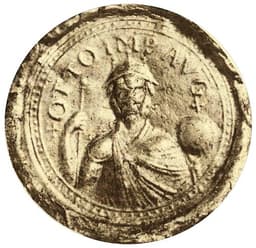
Otto I the Great
Emperor · Medieval
75.2Total
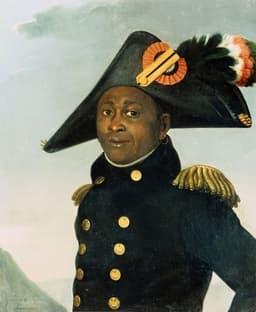
Toussaint Louverture
General · Modern
78.5Total
Basic Information
Born
912
1743
Died
973
1803
Era
Medieval
Modern
Nationality
Holy Roman Empire
Haiti
Occupation
Emperor
General
Civilization
Western
Western
Score Comparison
Military (10%)
82.0
85.0
Political (20%)
70.0
70.3
Influence (20%)
88.0
84.0
Legacy (20%)
65.0
82.0
Leadership (15%)
78.0
72.0
Strategy (15%)
65.4
72.0
TOTAL
75.2
78.5
Otto I the Great — Complete Timeline
951 AD
Diplomatic Marriage to Adelaide of ItalyPolitical Action◆ Major
Otto married Adelaide, the widowed queen of Italy, after intervening in Italian politics. This marriage gave him control over the Kingdom of Italy and strengthened his claim to imperial authority.
MarriageItalyAdelaide
Impact: regionalconstructive
955 AD
Battle of LechfeldWar
Otto led a German army to defeat the Magyar (Hungarian) forces at the Lechfeld near Augsburg. This victory ended Magyar raids into Western Europe and secured Otto's reputation as a defender of Christendom.
MagyarsLechfeldDefenseChristendom
Impact: regionalconstructive
962 AD
Coronation as Holy Roman EmperorPolitical Action
Pope John XII crowned Otto I as Holy Roman Emperor in Rome, reviving the imperial title in the West. This event established the Holy Roman Empire as a major political entity and linked German kingship with papal authority.
CoronationHoly Roman EmpirePapacy
Impact: globalconstructive
Toussaint Louverture — Complete Timeline
1791 AD
Haitian Revolution LeadershipWar
Louverture joined the slave revolt in Saint-Domingue, quickly rising to leadership. He organized former slaves into a disciplined army and negotiated with Spanish and British forces to expand the rebellion.
Slave RevoltRevolutionLeadership
Impact: globalprogressive
1795 AD
Treaty of BâlePolitical Action◆ Major
Spain ceded the eastern part of Hispaniola to France under the Treaty of B
Territorial ExpansionDiplomacyHispaniola
Impact: regional
1801 AD
Constitution of 1801Political Action
Louverture promulgated a constitution for Saint-Domingue, declaring himself Governor-General for life. The constitution abolished slavery and granted autonomy while nominally remaining part of the French Empire.
ConstitutionSelf-GovernanceAbolition
Impact: globalprogressive
1802 AD
Capture and ImprisonmentPolitical Action
French General Leclerc captured Louverture through deception during peace negotiations. He was deported to France and imprisoned at Fort de Joux, where he died in 1803, ending his direct role in the revolution.
BetrayalImprisonmentFrench Repression
Impact: globaltragic
Expert Analysis
Origins
Toussaint Louverture was born into slavery on the French colony of Saint-Domingue (modern Haiti) around 1743. His early life as a slave shaped his worldview, but he gained freedom before the revolution. In contrast, Otto I the Great was born in 912 into the Saxon dynasty, son of Henry the Fowler, King of East Francia. Otto's noble lineage provided him with education, military training, and a clear path to power. Louverture's origins are a testament to resilience against systemic oppression, while Otto's birthright reflects the feudal hierarchy of medieval Europe.
Rise to Power
Louverture's rise began during the Haitian Revolution (1791-1804). Initially a trusted leader among rebel slaves, he allied with the Spanish against the French, then switched sides when the French Republic abolished slavery. By 1798, he controlled most of Saint-Domingue. His political acumen and military skill propelled him to de facto ruler. Otto's rise was more conventional: he became Duke of Saxony and King of East Francia upon his father's death in 936. He faced rebellions from his brothers and other nobles, but through military force and strategic alliances (e.g., with the Church), he solidified his rule. Louverture's path was a revolutionary upheaval; Otto's was a consolidation of inherited power.
Leadership & Governance
Louverture governed with a mix of pragmatism and authoritarianism. He restored the plantation economy using paid labor, maintained trade with Britain and the US, and drafted the Constitution of 1801, which made him governor-for-life and abolished slavery. He sought to modernize Haiti but relied on forced labor, drawing criticism. Otto's governance focused on unifying German tribes and expanding royal authority. He appointed bishops and abbots as administrators (Ottonian system), used the Church to counter nobles, and promoted missionary work. Both were centralizers, but Louverture faced the challenge of building a new nation from a slave colony, while Otto strengthened existing structures.
Triumph & Tragedy
Louverture's triumphs include leading the first successful slave revolt, defeating British and Spanish forces, and establishing Haiti's autonomy. His tragedy came when Napoleon Bonaparte sent a French expedition to restore colonial rule. Despite initial victories, Louverture was captured through treachery in 1802 and died in a French prison in 1803. Otto's greatest triumph was the Battle of Lechfeld (955), where he decisively defeated the Magyars, ending their invasions. He was crowned Holy Roman Emperor in 962, reviving the Carolingian legacy. His tragedy was less personal but included the failure to secure a stable succession, leading to later conflicts. Louverture's end is a stark tragedy of betrayal; Otto's death in 973 was a peaceful end to a successful reign.
Character & Destiny
Louverture was intelligent, disciplined, and charismatic, but also secretive and ruthless. He believed in emancipation but also in centralized authority. His destiny was to be a symbol of freedom, yet he died in captivity. Otto was pious, ambitious, and strategic, known as "the Great" for his military and political achievements. His destiny was to found an empire that lasted a millennium. Both were driven by a sense of mission, but Louverture's fate was cut short by external forces, while Otto's vision was realized.
Legacy
Louverture is revered as a hero of the Haitian Revolution and a global icon of anti-colonialism. His actions directly led to Haitian independence in 1804. However, his authoritarian methods and the subsequent instability of Haiti temper his legacy. Otto's legacy is the Holy Roman Empire, which shaped European politics until 1806. He is credited with halting the Magyar invasions and fostering the Ottonian Renaissance. Louverture's impact is more symbolic and revolutionary; Otto's is institutional and enduring.
Conclusion
Comparing these two leaders across key metrics: **Military (M)**: Louverture 85, Otto 82. Louverture's guerrilla tactics and strategic alliances were innovative. **Political (P)**: Both 70. Louverture's diplomacy and constitution vs. Otto's church-state integration. **Intelligence (I)**: Louverture 84, Otto 88. Otto's long-term empire-building shows high strategic intelligence. **Leadership (L)**: Louverture 82, Otto 65. Louverture inspired a slave army; Otto relied on noble support. **Destiny (D)**: Louverture 72, Otto 78. Otto's destiny was more realized. **Character (S)**: Louverture 72, Otto 65. Louverture's moral complexity vs. Otto's conventional piety. **Triumph (T)**: Louverture 78, Otto 75. The scale of Louverture's triumph is unique. Overall, Louverture's higher score (3.3 gap) reflects his unprecedented achievement: leading a successful slave revolt against colonial powers. Otto, while great, built upon existing structures. Louverture's legacy as a revolutionary icon arguably surpasses Otto's as a medieval emperor, given the global impact of the Haitian Revolution. However, Otto's empire had a longer institutional influence. In a historical ranking, Louverture's sheer audacity and success against impossible odds give him the edge.
Rankings
🥇
Toussaint LouvertureLeader
Mil: 85.0Pol: 70.3Inf: 84.0
78.5
🥈
Otto I the Great
Mil: 82.0Pol: 70.0Inf: 88.0
75.2
+3.3 behind
How This Comparison Works
Algorithm
Each figure is scored on 6 dimensions (0—100 scale) based on structured historical data: Military (10%), Political (20%), Influence (20%), Legacy (20%), Leadership (15%), Strategy (15%). The weighted total produces the final ranking.
Data Sources
Scores are computed from structured sub-indicators in the database. Scale factors adjust for era (Ancient ×0.85, Modern ×1.0) and civilization size (Eastern ×1.05, Other ×0.80) to account for differences in population and military scale.
Maximum 3 Figures
Comparisons are limited to 2—3 figures to ensure readability and statistical meaningfulness.
Error Margins
±5 points per dimension — Sub-scores are derived from historical records with inherent uncertainty. Two figures within 5 points on a dimension should be considered roughly equivalent in that area.
Total Score Accuracy
±3 points overall — The weighted combination of 6 dimensions produces a total score with approximately ±3 points of uncertainty. Differences of less than 3 points are not statistically significant— the figures are effectively tied.
Known Limitations
- Historical records are incomplete and uneven across civilizations
- Figures from oral-tradition societies may be underrepresented
- Occupation labels can misclassify multi-role figures
- Scores measure capability and impact, not moral character
- Quantitative scoring is a comparison tool, not absolute truth
Capability Radar
Military (10%) — Battles & Warfare
Battles
75
85
Win Rate
80
80
Expansion
70
70
Political (20%) — Governance & Reform
Reform
80
85
Diplomacy
85
80
Economy
70
60
Influence (20%) — Cultural & Global Reach
Cultural
65
85
Global
70
85
Legacy (20%) — Historical Impact
Historical
80
95
Longevity
75
90
Leadership (15%) — Power & Stability
Tenure
85
65
Stability
75
55
Strategy (15%) — Tactics & Innovation
Strategy
75
85
Tactics
70
90
Reform
65
75
Similar Comparisons
Comments & Discussion
No comments yet. Be the first to share your thoughts!