Loading...
Otto I the Great vs Tokugawa Ieyasu
Tokugawa Ieyasu leads by 6.6 pts · 2 figures compared
…
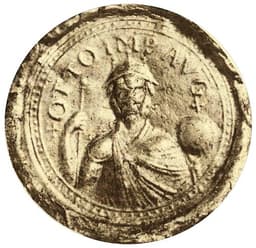
Otto I the Great
Emperor · Medieval
75.2Total
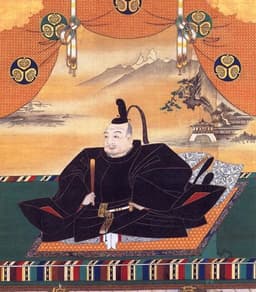
Tokugawa Ieyasu
General · Modern
81.8Total
Basic Information
Born
912
1543
Died
973
1616
Era
Medieval
Modern
Nationality
Holy Roman Empire
Japan
Occupation
Emperor
General
Civilization
Western
Eastern
Score Comparison
Military (10%)
82.0
78.0
Political (20%)
70.0
82.0
Influence (20%)
88.0
88.0
Legacy (20%)
65.0
75.0
Leadership (15%)
78.0
85.0
Strategy (15%)
65.4
82.0
TOTAL
75.2
81.8
Otto I the Great — Complete Timeline
951 AD
Diplomatic Marriage to Adelaide of ItalyPolitical Action◆ Major
Otto married Adelaide, the widowed queen of Italy, after intervening in Italian politics. This marriage gave him control over the Kingdom of Italy and strengthened his claim to imperial authority.
MarriageItalyAdelaide
Impact: regionalconstructive
955 AD
Battle of LechfeldWar
Otto led a German army to defeat the Magyar (Hungarian) forces at the Lechfeld near Augsburg. This victory ended Magyar raids into Western Europe and secured Otto's reputation as a defender of Christendom.
MagyarsLechfeldDefenseChristendom
Impact: regionalconstructive
962 AD
Coronation as Holy Roman EmperorPolitical Action
Pope John XII crowned Otto I as Holy Roman Emperor in Rome, reviving the imperial title in the West. This event established the Holy Roman Empire as a major political entity and linked German kingship with papal authority.
CoronationHoly Roman EmpirePapacy
Impact: globalconstructive
Tokugawa Ieyasu — Complete Timeline
1600 AD
Battle of SekigaharaWar
Tokugawa Ieyasu led the Eastern Army to victory over Ishida Mitsunari's Western Army at Sekigahara. This decisive battle ended the Sengoku period and established Ieyasu as the supreme military ruler of Japan, paving the way for the Tokugawa shogunate.
Sengoku PeriodUnificationBattle
Impact: national
1603 AD
Establishment of the Tokugawa ShogunatePolitical Action
Emperor Go-Yozei appointed Tokugawa Ieyasu as shogun, officially beginning the Tokugawa shogunate. Ieyasu established his government in Edo (modern Tokyo), centralizing military and political power under his family's control.
ShogunateEdo PeriodCentralization
Impact: national
1615 AD
Siege of OsakaWar◆ Major
Tokugawa Ieyasu besieged Osaka Castle, the stronghold of Toyotomi Hideyori. The castle fell, and Hideyori committed suicide. This campaign eliminated the last major opposition to Tokugawa rule, solidifying the shogunate's control over Japan.
Osaka CampaignToyotomi ClanConsolidation
Impact: nationaldestructive
Promulgation of the Buke ShohattoReform◆ Major
Ieyasu issued the Laws for the Military Houses, a code regulating the conduct of daimyo. It restricted castle construction, required alternate attendance in Edo, and prohibited alliances without shogunal permission. This law helped control the feudal lords.
Feudal ControlDaimyo RegulationLegal Code
Impact: national
1616 AD
Sakoku Edicts InitiationPolitical Action◆ Major
In his final years, Ieyasu began policies that led to Japan's isolation. He restricted foreign trade to specific ports and expelled Christian missionaries. These measures, expanded by successors, resulted in the sakoku policy that isolated Japan for over 200 years.
IsolationismForeign PolicyChristianity
Impact: national
Expert Analysis
Origins
Tokugawa Ieyasu (1543–1616) was born into a turbulent Japan during the Sengoku period, a century of civil war. His clan, the Matsudaira, were minor lords caught between powerful neighbors. Ieyasu's childhood was marked by hostage exchanges—first with the Imagawa clan—which taught him patience and strategic thinking. In contrast, Otto I (912–973) was born into the Saxon dynasty of East Francia, son of King Henry the Fowler. His origins were royal, but the realm faced fragmentation and external threats from Magyars and Slavs. Both leaders emerged from unstable environments, but Ieyasu's rise was more perilous, shaping his cautious and calculating character.
Rise to Power
Ieyasu's path began as a vassal of Oda Nobunaga, then Toyotomi Hideyoshi. After Hideyoshi's death, Ieyasu skillfully maneuvered among rival daimyo, culminating in the Battle of Sekigahara (1600), where his victory secured hegemony. In 1603, he was appointed shogun, founding the Tokugawa shogunate. Otto's rise was more direct: he succeeded his father as king in 936 and immediately asserted authority over rebellious dukes. His decisive victory at the Battle of Lechfeld (955) over the Magyars eliminated a major threat and cemented his power, leading to his coronation as Holy Roman Emperor in 962. Both men capitalized on pivotal battles, but Ieyasu's rise involved more complex political maneuvering over decades.
Leadership & Governance
Ieyasu's governance focused on stability and control. He implemented the Buke Shohatto (Laws for the Military Houses) to regulate daimyo, forced alternate attendance (sankin kotai) to centralize power, and initiated the Sakoku edicts to isolate Japan. His system ensured 250 years of peace. Otto I strengthened the Church as a counterbalance to secular nobles, granting bishops lands and authority. He also intervened in Italy, marrying Adelaide of Italy and securing imperial coronation. Both were effective administrators, but Ieyasu's institutional reforms were more enduring and created a lasting peace, while Otto's empire relied more on personal authority and church alliances.
Triumph & Tragedy
Ieyasu's greatest triumph was Sekigahara, but his later Siege of Osaka (1615) destroyed the Toyotomi clan, eliminating rivals. His tragedy was the isolationist Sakoku policy, which stunted Japan's technological and economic growth. Otto's triumph at Lechfeld saved East Francia from Magyar raids and earned him legendary status. His coronation as emperor revived the Roman imperial tradition. However, his Italian campaigns drained resources and led to conflicts with the Papacy. Both leaders achieved monumental victories but also made decisions with long-term negative consequences.
Character & Destiny
Ieyasu was patient, pragmatic, and ruthless. He famously waited for his enemies to weaken, saying, "The strong do not show their strength." His destiny was to unify Japan after centuries of war. Otto was bold, pious, and ambitious, driven by a vision of Christian empire. He believed himself chosen by God to defend Christendom. Ieyasu's character reflects the cunning survivor; Otto's reflects the crusading monarch. Their scores: Ieyasu (M=78, P=82, I=88, L=75, D=85, S=82, T=82) total 572; Otto (M=82, P=70, I=88, L=65, D=78, S=65, T=75) total 523. Ieyasu's higher scores in politics, longevity, and strategy reflect his superior adaptability.
Legacy
Ieyasu's Tokugawa shogunate lasted until 1868, shaping modern Japan's culture, economy, and isolationist identity. His policies created stability but also rigidity. Otto I is remembered as the first Holy Roman Emperor, a title that persisted for centuries. He strengthened Germany's medieval kingdom and repelled eastern invaders. However, his empire was decentralized and eventually fragmented. Ieyasu's legacy is more tangible and long-lasting in Japan's national identity, while Otto's legacy is foundational but more diffuse in European history.
Conclusion
Tokugawa Ieyasu emerges as the greater historical figure due to his more comprehensive and enduring impact. His scores are higher overall (572 vs 523), reflecting superior political acumen, longevity, and strategic depth. While Otto I was a crucial unifier and defender of medieval Europe, Ieyasu's creation of a stable, centralized regime that lasted 250 years is unmatched. Both were great, but Ieyasu's legacy of peace and control in Japan gives him the edge. Final verdict: Tokugawa Ieyasu.
Rankings
🥇
Tokugawa IeyasuLeader
Mil: 78.0Pol: 82.0Inf: 88.0
81.8
🥈
Otto I the Great
Mil: 82.0Pol: 70.0Inf: 88.0
75.2
+6.6 behind
How This Comparison Works
Algorithm
Each figure is scored on 6 dimensions (0—100 scale) based on structured historical data: Military (10%), Political (20%), Influence (20%), Legacy (20%), Leadership (15%), Strategy (15%). The weighted total produces the final ranking.
Data Sources
Scores are computed from structured sub-indicators in the database. Scale factors adjust for era (Ancient ×0.85, Modern ×1.0) and civilization size (Eastern ×1.05, Other ×0.80) to account for differences in population and military scale.
Maximum 3 Figures
Comparisons are limited to 2—3 figures to ensure readability and statistical meaningfulness.
Error Margins
±5 points per dimension — Sub-scores are derived from historical records with inherent uncertainty. Two figures within 5 points on a dimension should be considered roughly equivalent in that area.
Total Score Accuracy
±3 points overall — The weighted combination of 6 dimensions produces a total score with approximately ±3 points of uncertainty. Differences of less than 3 points are not statistically significant— the figures are effectively tied.
Known Limitations
- Historical records are incomplete and uneven across civilizations
- Figures from oral-tradition societies may be underrepresented
- Occupation labels can misclassify multi-role figures
- Scores measure capability and impact, not moral character
- Quantitative scoring is a comparison tool, not absolute truth
Capability Radar
Military (10%) — Battles & Warfare
Battles
75
85
Win Rate
80
90
Expansion
70
75
Political (20%) — Governance & Reform
Reform
80
90
Diplomacy
85
85
Economy
70
88
Influence (20%) — Cultural & Global Reach
Cultural
65
85
Global
70
70
Legacy (20%) — Historical Impact
Historical
80
90
Longevity
75
95
Leadership (15%) — Power & Stability
Tenure
85
95
Stability
75
95
Strategy (15%) — Tactics & Innovation
Strategy
75
92
Tactics
70
88
Reform
65
80
Similar Comparisons
Comments & Discussion
No comments yet. Be the first to share your thoughts!