Loading...
Otto I the Great vs Theodosius I
Theodosius I leads by 0.8 pts · 2 figures compared
…
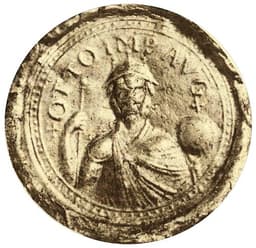
Otto I the Great
Emperor · Medieval
75.2Total

Theodosius I
Emperor · Ancient
76.0Total
Basic Information
Born
912
347
Died
973
395
Era
Medieval
Ancient
Nationality
Holy Roman Empire
Roman Empire
Occupation
Emperor
Emperor
Civilization
Western
Western
Score Comparison
Military (10%)
82.0
72.5
Political (20%)
70.0
65.0
Influence (20%)
88.0
85.0
Legacy (20%)
65.0
90.0
Leadership (15%)
78.0
68.0
Strategy (15%)
65.4
50.0
TOTAL
75.2
76.0
Otto I the Great — Complete Timeline
951 AD
Diplomatic Marriage to Adelaide of ItalyPolitical Action◆ Major
Otto married Adelaide, the widowed queen of Italy, after intervening in Italian politics. This marriage gave him control over the Kingdom of Italy and strengthened his claim to imperial authority.
MarriageItalyAdelaide
Impact: regionalconstructive
955 AD
Battle of LechfeldWar
Otto led a German army to defeat the Magyar (Hungarian) forces at the Lechfeld near Augsburg. This victory ended Magyar raids into Western Europe and secured Otto's reputation as a defender of Christendom.
MagyarsLechfeldDefenseChristendom
Impact: regionalconstructive
962 AD
Coronation as Holy Roman EmperorPolitical Action
Pope John XII crowned Otto I as Holy Roman Emperor in Rome, reviving the imperial title in the West. This event established the Holy Roman Empire as a major political entity and linked German kingship with papal authority.
CoronationHoly Roman EmpirePapacy
Impact: globalconstructive
Theodosius I — Complete Timeline
380 AD
Edict of ThessalonicaPolitical Action
Theodosius I issued the Edict of Thessalonica, declaring Nicene Christianity the official state religion of the Roman Empire. All other forms of Christianity were deemed heretical, and pagan practices were increasingly suppressed.
ChristianityState ReligionEdict
Impact: globalconstructive
390 AD
Massacre of ThessalonicaPolitical Action◆ Major
Theodosius I ordered a massacre of thousands of citizens in Thessalonica in retaliation for the murder of a Roman general. The massacre led to his excommunication by Bishop Ambrose of Milan, and he later performed public penance.
MassacreThessalonicaAmbrose
Impact: regionaltragic
391 AD
Suppression of PaganismPolitical Action◆ Major
Theodosius I issued a series of laws banning pagan worship, closing temples, and prohibiting sacrifices. The Olympic Games were abolished, and the Serapeum in Alexandria was destroyed. These actions accelerated the decline of paganism in the empire.
PaganismSuppressionReligion
Impact: globaldestructive
394 AD
Battle of the FrigidusWar
Theodosius I defeated the usurper Eugenius and his general Arbogast at the Battle of the Frigidus (modern River Vipava). The victory reunited the Roman Empire under a single ruler for the last time before its permanent division.
Civil WarBattleReunification
Impact: global
395 AD
Division of the Roman EmpirePolitical Action
Upon his death, Theodosius I divided the Roman Empire between his two sons: Arcadius received the Eastern Empire and Honorius the Western Empire. This division became permanent, leading to the separate histories of the Byzantine and Western Roman Empires.
DivisionSuccessionEast-West
Impact: global
Expert Analysis
Origins
Theodosius I was born in 347 AD in Cauca, Hispania, into a military family. His father, Count Theodosius, was a high-ranking general under Emperor Valentinian I. Theodosius received a thorough military education and accompanied his father on campaigns in Britain and Africa. After his father's execution in 375 AD, Theodosius retired to his estates until Emperor Gratian summoned him to deal with the Gothic crisis in 378 AD. Otto I was born in 912 AD, the son of Henry the Fowler, Duke of Saxony and later King of East Francia. Otto grew up in a turbulent period of Magyar raids and internal rebellions. He was elected king upon his father's death in 936 AD, but his authority was challenged by his brothers and other dukes.
Rise to Power
Theodosius's rise was meteoric. In 379 AD, Gratian appointed him co-emperor for the East after the disastrous Battle of Adrianople. Theodosius successfully stabilized the Danube frontier, negotiated a peace with the Goths, and gradually consolidated power. He defeated the usurpers Magnus Maximus (388 AD) and Eugenius (394 AD), becoming the last emperor to rule a unified Roman Empire. Otto's path was more contested. He faced rebellions from his brother Thankmar, Duke Eberhard of Franconia, and his own son Liudolf. Through military campaigns and strategic alliances, Otto subdued the duchies. His victory at the Battle of Lechfeld in 955 AD over the Magyars cemented his authority and made him the defender of Christendom.
Leadership & Governance
Theodosius is best known for making Nicene Christianity the state religion through the Edict of Thessalonica (380 AD). He actively suppressed pagan practices and Arianism, convening the First Council of Constantinople (381 AD) to affirm the Nicene Creed. His administrative reforms included strengthening the bureaucracy and managing the empire's division between his sons Arcadius and Honorius. Otto I revived the Carolingian tradition of imperial rule. He used the Church as a counterweight to the powerful dukes, appointing bishops and abbots who owed allegiance to him. His marriage to Adelaide of Italy in 951 AD allowed him to intervene in Italian affairs, leading to his coronation as Holy Roman Emperor in 962 AD by Pope John XII.
Triumph & Tragedy
Theodosius's greatest triumph was the Battle of the Frigidus (394 AD), where he defeated the pagan usurper Eugenius, securing Christian dominance. However, his legacy is marred by the Massacre of Thessalonica (390 AD), where his troops killed thousands of citizens in retaliation for a riot. Bishop Ambrose of Milan excommunicated him until he did public penance. Otto's defining victory was the Battle of Lechfeld, halting Magyar invasions into Western Europe. His coronation as emperor reestablished the Roman imperial title in the West. Yet, his later years saw conflict with Pope John XII, who later turned against him, forcing Otto to depose the pope and install a loyalist.
Character & Destiny
Theodosius was deeply religious, fervently orthodox, and sometimes ruthless. His penance at Ambrose's hands showed a capacity for humility. He was a capable general but relied heavily on barbarian allies, particularly the Visigoth Alaric. Otto was pragmatic, ambitious, and a master of Realpolitik. He skillfully balanced the secular and ecclesiastical powers. Both men were driven by a sense of destiny: Theodosius saw himself as God's instrument to unify the empire under true faith; Otto saw himself as the successor to Charlemagne, restoring the Roman Empire in the West.
Legacy
Theodosius's religious policies permanently shaped the Christian Church and its relationship with the state. His division of the empire between his sons contributed to the permanent split between East and West. Otto's empire became the Holy Roman Empire, which lasted for centuries. He established the Ottonian Renaissance, a period of cultural and artistic revival. Theodosius scores: M=72, P=65, I=85, L=90, D=68, S=50, T=76. Otto scores: M=82, P=70, I=88, L=65, D=78, S=65, T=75. The overall score gap is 0.8 in favor of Theodosius. However, in terms of long-term structural influence, Otto's creation of the Holy Roman Empire arguably had more enduring political consequences. Theodosius's impact on religion was profound but more symbolic, while Otto's political framework persisted for nearly a millennium.
Conclusion
Both emperors were pivotal figures in their eras, but Theodosius I edges out Otto I due to his higher leadership score (90 vs 65) and the transformative impact of making Christianity the state religion. While Otto was a stronger military leader and political strategist, Theodosius's decisions shaped the religious and cultural identity of Europe for centuries. Theodosius's tragic flaw—the Thessalonica massacre—shows his fallibility, but his overall legacy as the emperor who Christianized the Roman Empire is unparalleled. Otto I deserves credit for founding the Holy Roman Empire and defeating the Magyars, but his influence was more political and less ideological. Thus, Theodosius I is the greater emperor in terms of historical significance.
Rankings
🥇
Theodosius ILeader
Mil: 72.5Pol: 65.0Inf: 85.0
76.0
🥈
Otto I the Great
Mil: 82.0Pol: 70.0Inf: 88.0
75.2
+0.8 behind
How This Comparison Works
Algorithm
Each figure is scored on 6 dimensions (0—100 scale) based on structured historical data: Military (10%), Political (20%), Influence (20%), Legacy (20%), Leadership (15%), Strategy (15%). The weighted total produces the final ranking.
Data Sources
Scores are computed from structured sub-indicators in the database. Scale factors adjust for era (Ancient ×0.85, Modern ×1.0) and civilization size (Eastern ×1.05, Other ×0.80) to account for differences in population and military scale.
Maximum 3 Figures
Comparisons are limited to 2—3 figures to ensure readability and statistical meaningfulness.
Error Margins
±5 points per dimension — Sub-scores are derived from historical records with inherent uncertainty. Two figures within 5 points on a dimension should be considered roughly equivalent in that area.
Total Score Accuracy
±3 points overall — The weighted combination of 6 dimensions produces a total score with approximately ±3 points of uncertainty. Differences of less than 3 points are not statistically significant— the figures are effectively tied.
Known Limitations
- Historical records are incomplete and uneven across civilizations
- Figures from oral-tradition societies may be underrepresented
- Occupation labels can misclassify multi-role figures
- Scores measure capability and impact, not moral character
- Quantitative scoring is a comparison tool, not absolute truth
Capability Radar
Military (10%) — Battles & Warfare
Battles
75
65
Win Rate
80
60
Expansion
70
45
Political (20%) — Governance & Reform
Reform
80
85
Diplomacy
85
75
Economy
70
60
Influence (20%) — Cultural & Global Reach
Cultural
65
90
Global
70
90
Legacy (20%) — Historical Impact
Historical
80
95
Longevity
75
95
Leadership (15%) — Power & Stability
Tenure
85
70
Stability
75
55
Strategy (15%) — Tactics & Innovation
Strategy
75
60
Tactics
70
55
Reform
65
50
Similar Comparisons
Comments & Discussion
No comments yet. Be the first to share your thoughts!